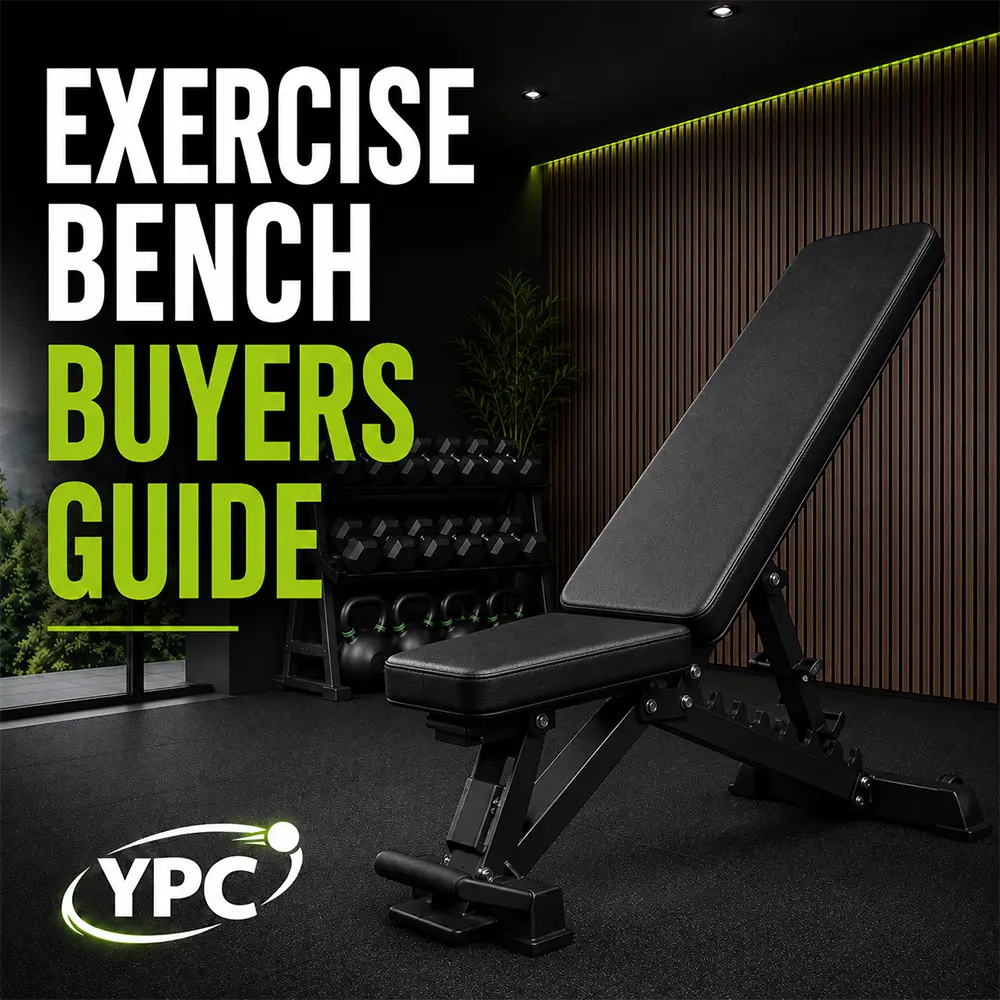
This guide explains how to choose an exercise bench for home strength training. Exercise benches vary in size, adjustability, frame design and load capacity, which affects how suitable they are for different lifting routines and spaces. This guide focuses on helping you understand those differences so you can compare options clearly and choose a bench that fits your training goals and available space.
Quick Product Comparison Framework
| Feature area | What varies between exercise benches |
|---|---|
| Bench type | Flat, adjustable, incline–decline |
| Overall size | Compact to full-length frames |
| Adjustability | Fixed angle or multi-position |
| Frame construction | Lightweight to heavier duty |
| Padding style | Thickness and firmness vary |
| Weight capacity | Depends on frame and design |
| Storage | Fixed frame or foldable designs |
| Versatility | Single-position or multi-angle use |
Specifications vary — see individual product pages for details.
Key Decision Criteria Explained
Available space and footprint
Bench length and width affect how easily the bench fits into a home gym or spare room. Larger benches require more permanent space.
Flat versus adjustable design
Flat benches offer simplicity and consistency. Adjustable benches provide multiple backrest angles for varied routines.
Stability under load
Frame design and base width influence how stable the bench feels during lifting, especially when used regularly.
Weight capacity
Benches have different rated load limits, which include both user weight and lifting load. Specifications vary — see individual product pages for details.
Padding comfort and support
Padding thickness and firmness affect comfort during seated or lying movements.
Storage requirements
Some benches fold or store upright to save space, while others remain fixed.
Product Type Differentiation and Variants
Flat exercise benches
These provide a fixed, horizontal surface with simple construction.
Adjustable benches
These allow multiple backrest positions to support varied lifting angles.
Incline–decline benches
These include both upward and downward adjustment ranges.
Compact or folding benches
These prioritise space efficiency for smaller rooms.
Specifications vary — see individual product pages for details.
Suitability by Reader Type or Need
- Complete beginners may prefer stable, simple flat benches.
- People new to free weights often benefit from adjustable designs for flexibility.
- Intermediate lifters may prioritise stability and higher weight capacity.
- Shared households should consider adjustability and ease of setup.
- Small spaces suit compact or folding benches.
- Multi-purpose training benefits from adjustable or incline–decline benches.
Suitability depends on space, lifting style and routine.
Common Mistakes and Misunderstandings
- Choosing adjustable benches without checking stability.
- Underestimating how much space the bench occupies during use.
- Assuming all benches support the same weight.
- Prioritising padding thickness without considering firmness.
- Overbuying complexity when a flat bench would suffice.
Safety and Suitability Caveats
Exercise benches are designed for indoor strength training on stable, level surfaces. Suitability depends on frame stability, weight capacity and available space. Always ensure the bench aligns with your training environment and manufacturer guidance. Specifications vary — see individual product pages for details.
Maintenance Expectations and Lifespan Considerations
Exercise benches are built for repeated load-bearing use. Longevity depends on frame construction, usage frequency and environment. Upholstery, adjustment mechanisms and hinges experience wear over time. General care expectations vary by design. Specifications vary — see individual product pages for details.
How to Compare Models Efficiently
Measure the space where the bench will be used and stored. Decide whether a flat or adjustable bench suits your routine. Compare frame stability and weight capacity. Consider padding comfort and ease of adjustment. Finally, assess whether foldable storage is necessary for your space.
Summary Buyer Decision Checklist
- Measure available floor space
- Choose flat or adjustable design
- Check stability and frame build
- Review weight capacity
- Assess padding comfort
- Consider storage needs
- Match versatility to training routine
Frequently Asked Questions
Are adjustable benches better than flat benches?
Adjustable benches offer more versatility, while flat benches provide simplicity. Suitability depends on training needs.
Do exercise benches take up much space?
Bench size varies by design. Compact and folding models suit smaller rooms.
Can one bench support multiple users?
Many benches are suitable for shared use, provided weight limits and adjustability match user needs.
Is padding thickness important?
Padding affects comfort, but firmness and support also matter. Preferences vary.
Can exercise benches be stored away when not in use?
Some benches fold or store upright, while others are designed to stay in place. Specifications vary — see individual product pages for details.
For products in this category, visit:
https://www.ypc.co.uk/product-category/diet-fitness-and-exercise-equipment/exercise-equipment/exercise-benches-and-racks/exercise-benches/