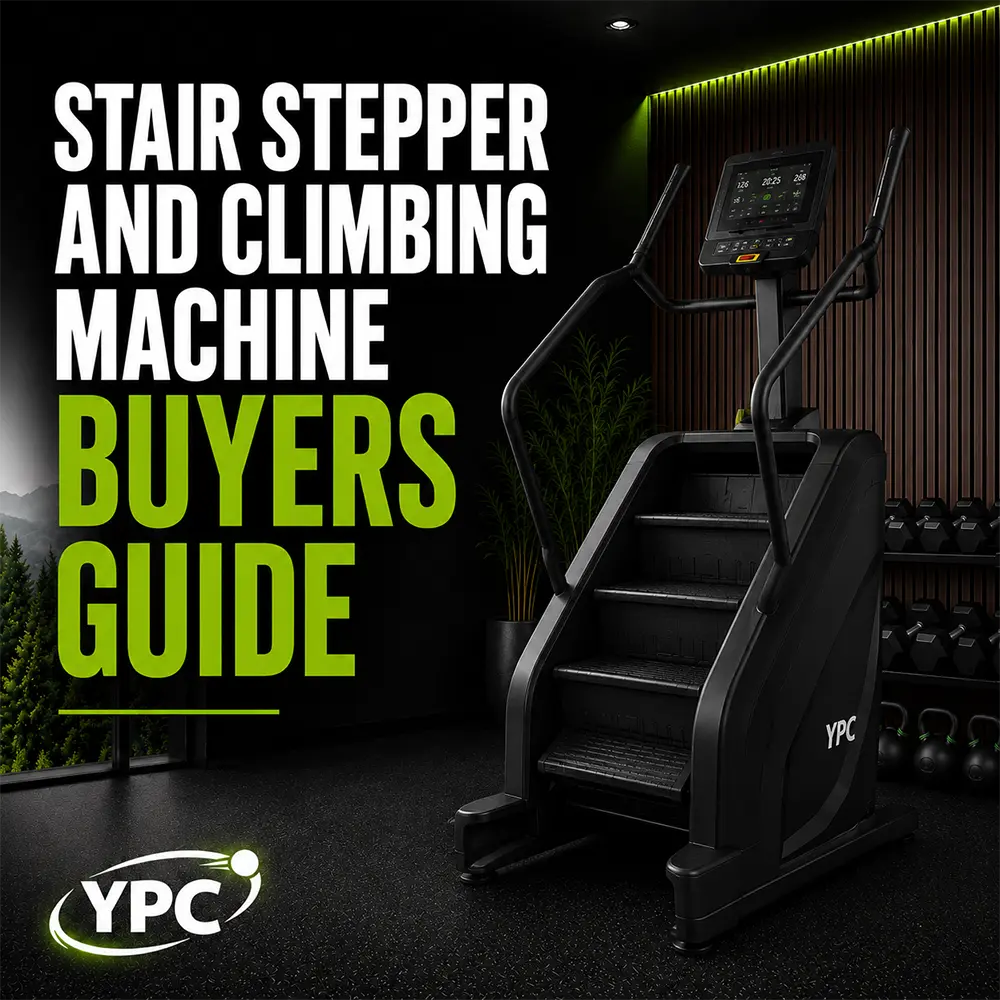
This guide explains how to choose a stair stepper or climbing machine for home use. These machines vary in size, movement style, resistance systems, and stability, which affects how well they suit different users and spaces. The purpose of this guide is to help you understand those differences so you can decide which type best fits your needs.
Quick Product Comparison Framework
| Feature area | What varies between machines |
|---|---|
| Machine type | Compact stepper, upright climber, hybrid designs |
| Movement style | Short stepping motion or full climbing action |
| Frame height | Low profile to tall upright frames |
| Resistance system | Mechanical, magnetic, or other systems |
| Stability | Lightweight to heavier framed units |
| Noise level | Varies by resistance and construction |
| User weight limits | Depends on frame and design |
| Console features | Basic displays to more advanced interfaces |
| Storage | Fixed frame or compact footprint designs |
Specifications vary — see individual product pages for details.
Key Decision Criteria Explained
Available space and ceiling height
Some machines require minimal floor space but more vertical clearance. Others remain lower but use more floor area.
Stability and frame design
Heavier frames and wider bases can feel more stable during use, especially at higher intensities.
Joint impact considerations
Movement patterns differ between compact steppers and climbers. Some users prefer shorter step ranges, while others prefer longer climbing motions.
Resistance type
Resistance systems influence smoothness, noise, and how intensity is adjusted. Specifications vary — see individual product pages for details.
Noise sensitivity
Noise output varies by resistance type and moving components. This can matter in shared homes or apartments.
Product Type Differentiation and Variants
Compact stair steppers
These use a shorter stepping motion and typically have a smaller footprint.
Upright climbing machines
These feature taller frames and allow a more extended climbing-style movement.
Hybrid stepper–climber designs
These combine elements of stepping and elliptical-style motion within a single frame.
Specifications vary — see individual product pages for details.
Suitability by Reader Type or Need
- Beginners may prefer simpler machines with predictable movement and stable bases.
- Shared households benefit from adjustable resistance and suitable weight limits.
- People returning to fitness may prioritise smooth motion and joint comfort.
- Regular exercisers may prefer machines that allow a wider intensity range.
- Small spaces suit compact or low-profile designs.
- Low-noise environments may suit machines with quieter resistance systems.
Suitability depends on space, comfort preferences, and how the machine will be used.
Common Mistakes and Misunderstandings
- Assuming all steppers and climbers require the same ceiling height.
- Choosing compact size without considering stability.
- Overlooking noise levels in shared living spaces.
- Focusing on display features rather than movement comfort.
- Expecting one machine type to suit all fitness levels equally.
Safety and Suitability Caveats
Stair steppers and climbing machines are designed for indoor use on stable surfaces. Suitability depends on available space, frame height, stability, and user weight limits. Always ensure the machine fits the intended environment and aligns with manufacturer guidance. Specifications vary — see individual product pages for details.
Maintenance Expectations and Lifespan Considerations
These machines are built for repeated stepping or climbing motion. Longevity depends on build quality, usage frequency, and environment. Moving components and resistance systems experience wear over time. General care expectations vary by design. Specifications vary — see individual product pages for details.
How to Compare Models Efficiently
Start by confirming floor space and ceiling clearance. Decide whether a compact stepper or upright climber better fits your movement preference. Compare resistance systems based on smoothness and noise expectations. Check stability, user weight limits, and adjustability for shared use. Finally, consider whether simple controls or additional features better match how the machine will be used.
Summary Buyer Decision Checklist
- Measure floor space and ceiling height
- Choose preferred movement style
- Assess frame stability
- Consider joint comfort needs
- Check noise sensitivity
- Review user weight limits
- Decide on simplicity versus features
- Consider storage or footprint requirements
Frequently Asked Questions
Are stair steppers suitable for beginners?
Many beginners use stair steppers at home. Suitability depends on stability, step height, and comfort.
Do climbing machines require high ceilings?
Some upright climbers need more vertical clearance. Dimensions should always be checked before choosing.
Are these machines noisy during use?
Noise levels vary by resistance type and construction. Some designs operate more quietly than others.
Can these machines be shared between users?
Many models support shared use through adjustable resistance and suitable weight limits. Specifications vary — see individual product pages for details.
Are compact steppers less stable than larger machines?
Stability varies by design and frame construction. Compact size does not always mean reduced stability.
For products in this category, visit:
https://www.ypc.co.uk/product-category/diet-fitness-and-exercise-equipment/exercise-equipment/cardio-machines/stair-steppers-and-climbing-machines/