

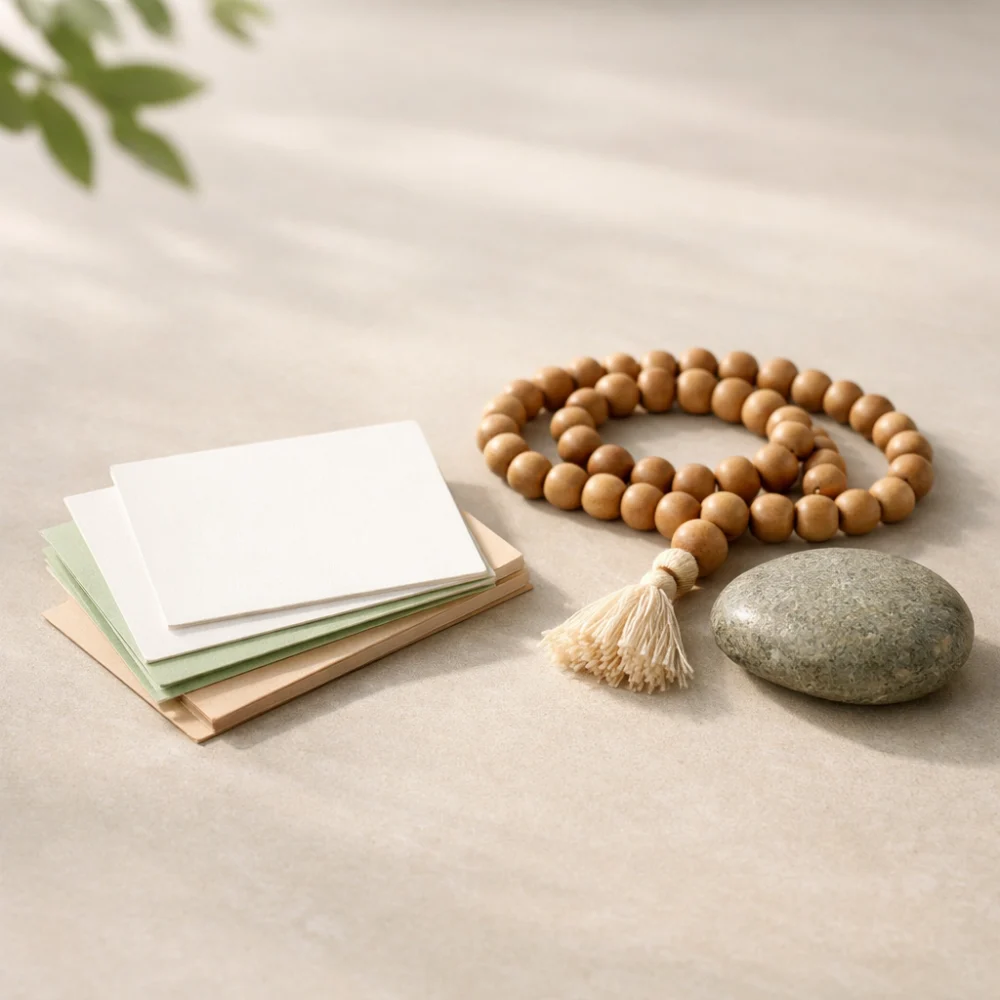
A meditation or mindfulness gift can be a prompt to pause, a practical aid for a quiet routine or a decorative reminder to take a mindful moment. The right choice depends less on a broad promise of relaxation and more on whether its format feels comfortable and relevant to the person receiving it.
This guide compares common gift formats and the details worth checking before you choose. Treat symbolic items as personal or decorative gifts rather than as products with guaranteed effects, and check the product information for the exact contents and intended use.
What makes a good meditation or mindfulness gift?
Start with what the recipient is likely to enjoy using: a simple prompt, a tactile object, a visual reminder or a breathing-focused aid. A useful gift is one that suits their preferences and feels easy to include in their own routine; the main trade-off is that a more specialised format may be less suitable if you are unsure what they like.
Consider how much guidance they would welcome, whether they prefer a practical or decorative gift, and whether any materials, scents or electronic features would be a poor fit. Then check the individual product page for what is included and any care or suitability information.
Compare the main buying factors
| Feature | What it means | Why it matters | What to check |
|---|---|---|---|
| Format | A prompt, wearable item, decorative object or breathing-focused aid | The recipient is more likely to value a format that matches their interests | What the item is designed to do and whether it is practical, symbolic or mainly decorative |
| Level of guidance | How much the gift directs or structures a mindful moment | Some people prefer a clear prompt; others want something open-ended | Whether instructions, prompts or other guidance are included |
| Contents | The items supplied together, if it is a set | A gift set may be useful as presented, or include items the recipient will not use | The full contents list and whether any parts are required separately |
| Personal meaning | Any spiritual, cultural or symbolic associations | A meaningful item for one person may not suit another’s beliefs or tastes | How the product describes its symbolism and whether that fits the recipient |
| Care and suitability | How the item is handled, stored or used, where relevant | Care needs or small components may affect whether it is a convenient gift | Materials, care notes and any stated age or use guidance |
Choosing the right details
Match the format to the recipient
Prompt cards may suit someone who likes having a question or short reflection to consider. Beads or bracelets can be more personal and tactile, while a decorative object may work better as a visual reminder than as a guided activity. For any format, check that its appearance and intended use feel appropriate for the recipient.
Decide how much structure is welcome
A guided aid can make the purpose of a gift clear, but it may feel prescriptive to someone who prefers to make their own routine. A less guided object gives more freedom but may need a personal note explaining why you chose it. Look for a clear description of what the gift invites the recipient to do rather than assuming its purpose from its name.
Check contents and practical details
If a product is presented as a set, confirm exactly what is included and whether any part depends on an additional item, device or consumable. For wearable or handheld gifts, consider whether the recipient is likely to enjoy the feel and style. Specifications vary by model, so always check the individual product page before buying.
Consider symbolism without assuming benefits
Crystals, chakra motifs and prayer beads can carry personal, spiritual or cultural meaning. They may be valued as symbolic or decorative gifts, but do not assume that a product will provide a health benefit or have the same significance for everyone. Check how the item is described and choose it only if the associations suit the person receiving it.
Common gift formats
- Prompt cards: A straightforward choice for someone who enjoys reflection prompts or short activities. Check whether the product explains how the prompts are used; a card set may not suit someone who prefers an unstructured approach.
- Beads and bracelets: Tactile or wearable options that can have personal or spiritual significance. Style, materials and symbolism matter, so they are more personal choices than a neutral decorative gift.
- Decorative reminders: Objects such as crystal-inspired ornaments or lamps can suit someone who appreciates a visual focal point. They may be less useful to a recipient looking for active guidance, and any electrical or care details should be checked where relevant.
- Breathing-focused aids: These may offer a more structured focus for a mindful pause. Check what guidance is provided and whether the recipient would welcome a device or tool rather than a simple, non-electronic prompt.
- Sensory or audio accessories: Items designed around sound or reducing visual distractions may appeal to someone who values that kind of experience. Check the stated features, contents and any device compatibility information rather than assuming they will suit the recipient’s setup.
Choose for the recipient’s needs
For someone new to mindfulness gifts, a clear, easy-to-understand format can be less of a guess than an item with specialised symbolism. If you know the recipient already uses prompts or meditation aids, a related format may feel more personal, but avoid assuming that a particular style or tradition is part of their practice.
For someone who prefers understated décor, consider appearance and where the gift might be kept. For a recipient who likes practical tools, focus on how the item is intended to be used and what it requires. If you are unsure about their beliefs, sensitivities or preferences, choose a less symbolic gift and check product details for materials, scent or electronic features that could affect suitability.
Mistakes to avoid
- Choosing by a broad wellness claim: Treat claims about healing or guaranteed calm cautiously. Choose based on the item’s actual format and the recipient’s preferences.
- Assuming symbolic meanings are universal: Meanings can vary between people and traditions. Check the product description and consider whether the symbolism is welcome.
- Buying a set without checking its contents: A bundle may include components the recipient does not need. Read the full contents list before deciding.
- Overlooking how much guidance it provides: A structured aid may not suit someone who prefers to make their own practice. Match the level of direction to what you know about them.
- Assuming a device will work with the recipient’s setup: For electronic or audio products, check the stated requirements and compatibility information on the product page.
Safety and suitability
Check product-specific age, material, care and use guidance where it is provided, particularly for gifts with small components or electrical parts. Consider known sensitivities and personal beliefs before choosing scented, wearable or spiritually symbolic items. Do not rely on a mindfulness gift to diagnose or treat a health concern.
Care, storage and ownership
Care needs depend on the item: a card set, wearable gift and electrical object may each have different handling or storage guidance. Check the product information before gifting, and keep any care notes with the item. If the gift includes replaceable or separately supplied components, confirm what is included so the recipient knows what they may need later.
A simple buying process
- Think about what the recipient enjoys: prompts, tactile objects, décor or a more guided aid.
- Choose a format that fits that preference and their comfort with spiritual or symbolic themes.
- Compare how much guidance each option offers, along with its contents and practical requirements.
- Check the individual product information for materials, care, suitability and any stated compatibility.
- Choose the option whose trade-offs you understand, rather than relying on broad claims about outcomes.
Buyer checklist
- Does the format suit the recipient’s interests and preferred level of guidance?
- Are any spiritual or cultural associations appropriate for them?
- Have you checked the full contents of any set?
- Are materials, scent, size or electronic features suitable for the recipient?
- Have you read any relevant care, age, use or compatibility information?
- Are you choosing for the item itself rather than for an unverified promise of health benefits?
Frequently asked questions
What is a suitable mindfulness gift for someone new to meditation?
Look for a format with a clear purpose that does not assume prior experience or a particular belief. A simple prompt or an understated reminder may be easier to choose than an item whose meaning is highly personal. Check the product description to see what guidance, if any, is included.
Are crystal or chakra gifts suitable for everyone?
No. Some recipients may appreciate their appearance or symbolism, while others may not share the associations. Choose them as personal or decorative gifts, not on the assumption that they provide health benefits.
How can I choose if I do not know the recipient’s meditation practice?
Focus on what you do know about their style: whether they like practical objects, reflection prompts or décor. A less specialised, clearly described format can reduce the chance of choosing something that conflicts with their beliefs or routine.
What should I check when buying a mindfulness gift set?
Read the contents list and confirm whether any components are separate, consumable or dependent on another item. Also check care and suitability notes so you know what the recipient will receive and any practical considerations.
Do mindfulness gifts guarantee relaxation or other benefits?
No gift can guarantee how someone will feel or what they will gain from using it. Consider the item’s design, stated purpose and fit with the recipient, and treat broad wellness claims with care.


