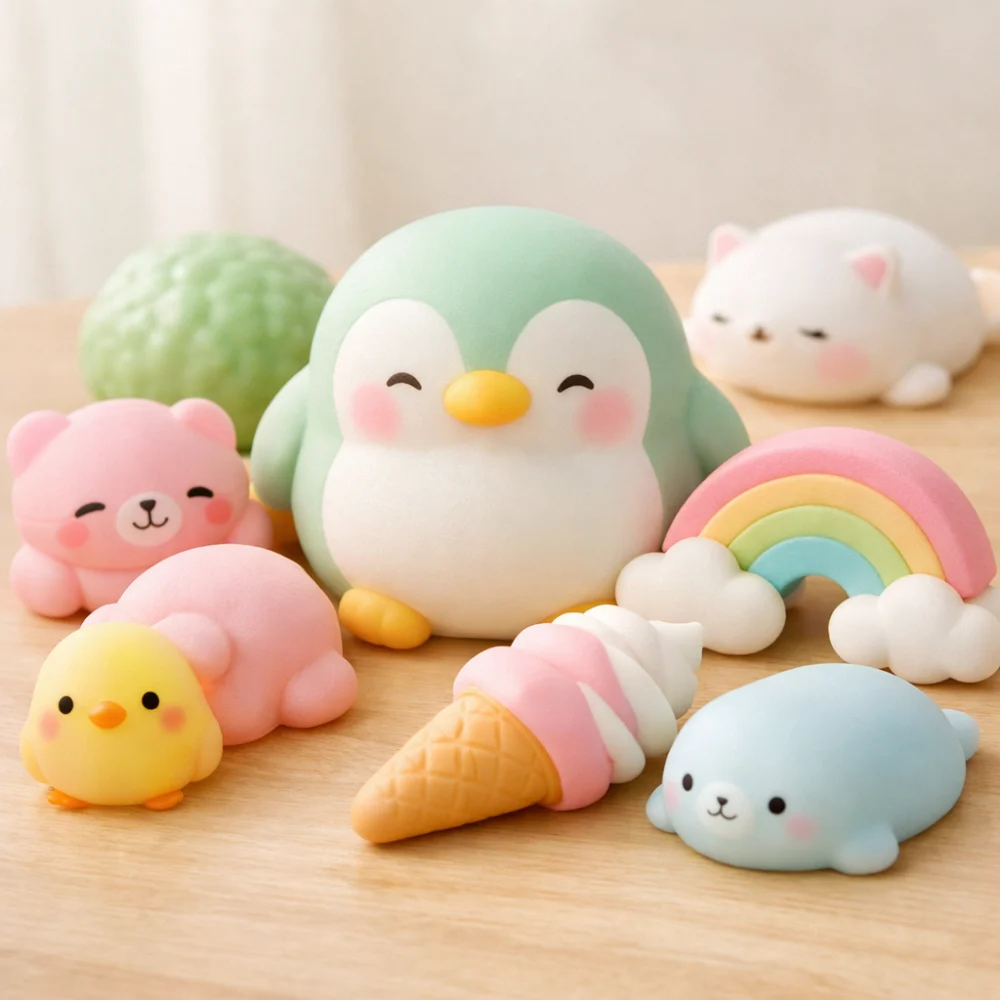
Squishies are soft toys designed to be squeezed, but their feel, construction and style can differ. Some are intended as simple tactile toys, while others are character-shaped collectables or part of a kit.
When choosing one, think about who it is for and how they are likely to use it. A satisfying texture or playful design may matter more than collectability, while construction and care information can help avoid an unsuitable choice.
Which squishy should you choose?
Start with the intended user and the kind of squeezing or play they want. Compare the texture and construction described for each item, then consider its size and shape in relation to where it will be used or stored. For a gift, a familiar theme can help, but check age guidance and product details rather than relying on appearance alone. The main trade-off is often between a simple squeeze toy and a more detailed or kit-based option with different care or use considerations.
What to compare when buying squishies
| Feature | What it means | Why it matters | What to check |
|---|---|---|---|
| Feel and texture | The surface and resistance when squeezed can vary. | The feel is central to whether the toy suits the intended play or sensory preference. | Look for a clear description or images that show the surface; do not assume similar-looking toys feel alike. |
| Construction | Squishies may use different fillings or outer constructions. | Construction can affect how the toy feels and what care it needs. | Check the product description for materials, filling and any care guidance. |
| Shape and size | Designs range from simple shapes to novelty or character forms. | Shape affects how easy it is to hold, squeeze and put away. | Check stated dimensions where provided, and consider the intended user’s grip and storage space. |
| Single toy or kit | Some options are individual toys; others may be kits or refill products. | A kit or refill has different contents and expectations from a ready-to-use toy. | Read the contents and compatibility details carefully, especially when buying a refill. |
| Age and care guidance | Product-specific information may set out suitability and care. | It helps buyers assess whether the item fits the recipient and household. | Check the individual product information and packaging guidance. |
Key buying considerations
Texture and squeeze feel
Texture is a personal preference: a smooth surface, raised details or a filled feel may appeal to different users. Product names such as “slow rising” or “stress ball” are descriptions, not a guarantee of a particular sensation or result. Check the item description and images, and avoid assuming that two toys with similar shapes will feel the same.
Construction and durability expectations
Different constructions can have different care needs and may respond differently to repeated handling. Check what the product is made from and whether the seller provides specific care advice. Specifications vary by model, so always check the individual product page before buying.
Shape, size and handling
A small novelty shape may be easy to carry, while a larger or more elaborate design may be more suited to play at home. Use any stated measurements to judge scale rather than relying on a product image alone. Consider whether the shape is comfortable for the intended user to hold and squeeze.
Contents and compatibility
When choosing a maker kit or refill, check exactly what is included and whether a refill is intended for a particular kit. Do not assume a refill is suitable for every maker. If the product information does not make the relationship clear, choose an option whose contents and intended use are stated plainly.
Types and variations
- Simple squeeze toys: A straightforward option for someone who mainly wants a tactile toy. The feel and construction still vary, so check the individual description.
- Textured or filled designs: These can offer a different surface or squeeze sensation. They may not suit someone who prefers a smooth, uniform feel.
- Novelty and character shapes: These may appeal as gifts or collectables. A detailed design can be more important to the recipient than the squeezing feel, so consider both.
- Maker kits and refills: These suit someone interested in making or customising squishies, where the kit’s contents and refill compatibility are clear. They involve more than choosing a single ready-made toy.
Choosing for different needs
For a first squishy, a simple design with clearly described construction and care information makes it easier to judge what to expect. For a collector, the theme or appearance may take priority, but check whether the item is sold individually or as part of a set. For someone seeking a particular tactile feel, prioritise the texture and construction details rather than a broad label such as “sensory”.
For a creative gift, a maker kit may be more engaging than a finished toy, but only if the recipient is interested in that kind of activity and the contents suit them. For a child, use the stated age and suitability guidance as part of the decision, and consider whether the shape and size are appropriate for that individual.
Common buying mistakes
- Choosing by appearance alone: A cute design does not tell you how a squishy feels. Compare texture and construction details as well.
- Assuming every squishy is slow rising: Names and styles can vary. Check whether the product description actually explains its feel.
- Confusing a refill with a complete toy: Check the listed contents and any compatibility information before choosing.
- Expecting all designs to be washable: Care needs depend on the product. Look for specific cleaning guidance rather than assuming it can be washed.
- Ignoring scale: Images can make a toy difficult to judge. Check stated dimensions when size matters.
Safety and suitability
Check the product’s age guidance, warnings and intended use, particularly when buying for a child. Construction and small details vary, so consider whether the particular item is suitable for its recipient and intended setting. Do not use a squishy if it is visibly damaged, and follow any care or use information supplied with that item.
Care and storage
Follow the care information provided for the specific squishy; cleaning methods are not necessarily the same across different constructions. Store it in a clean place where it is less likely to be crushed, punctured or exposed to substances that could affect its surface. For kits and refills, keep the included parts and product information together so their intended use remains clear.
A simple buying process
- Decide whether the priority is squeezing, collecting, gifting or making a squishy.
- Narrow the choice by the intended user’s preferred shape and feel.
- Compare construction, dimensions and any stated contents or refill compatibility.
- Consider the trade-off between a simple toy and a more elaborate design or kit.
- Check age guidance, care details and the full product information before choosing.
Buyer checklist
- Does the style suit the intended user and purpose?
- Are the feel and construction described clearly enough for your needs?
- Have you checked the size where it matters?
- Is it a complete toy, a kit or a refill, and are the contents clear?
- Have you reviewed the product-specific age, suitability and care guidance?
Squishies FAQs
Are all squishies the same texture?
No. Surface texture, filling and resistance can differ between designs. Check the description and images for the particular item rather than relying on the category name.
What does “slow rising” mean?
It is a product description used for some squishies to indicate how they respond after being squeezed. The term alone does not tell you exactly how a particular item will feel, so check any additional details provided.
Can squishies be washed?
Care depends on the item’s construction. Follow the product-specific care information, and do not assume that a toy can be submerged or cleaned in the same way as another.
How do I choose a squishy as a gift?
Start with the recipient’s interests and whether they would prefer a finished toy, a collectable design or a maker kit. Check suitability guidance and make sure a kit or refill includes what you expect.
Are refills compatible with every squishy maker?
Not necessarily. Check the refill’s stated intended use and compatibility information against the maker kit you have in mind; do not infer compatibility from appearance alone.