

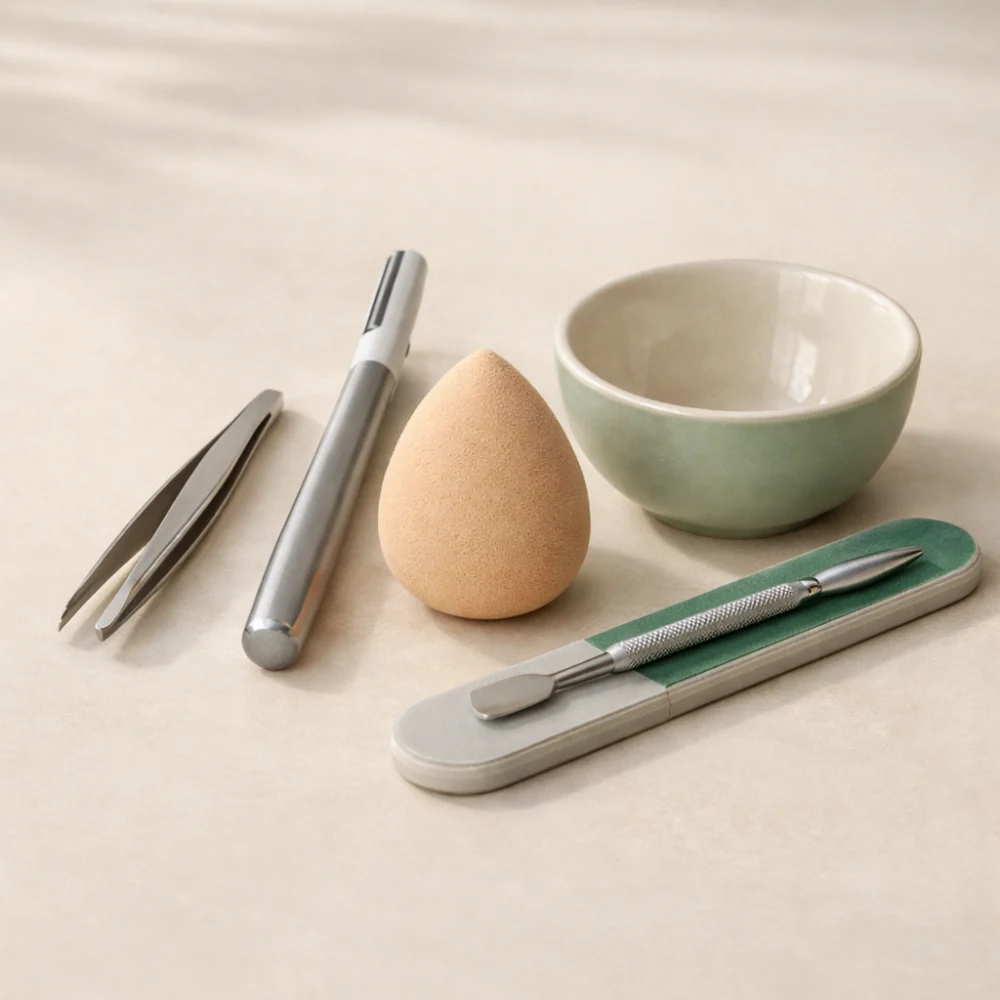
Beauty tools cover a range of reusable or replaceable items used for grooming, applying products, mixing masks and caring for nails. The right choice depends less on the number of pieces in a set than on what the recipient will use and how the tools fit their routine.
This guide focuses on choosing between types of tools and checking their contents, care needs and intended use. For a gift, consider whether the recipient already uses that kind of tool and whether the included items make sense together.
Which beauty tool should you choose?
Start with a specific task, such as eyebrow grooming, makeup application or nail care. Choose a tool designed for that task, then check its handling, care instructions and exactly what is included. A compact single-purpose item may be simpler to select, while a set can offer variety but may contain pieces the recipient will not use.
Compare the main buying factors
| Feature | What it means | Why it matters | What to check |
|---|---|---|---|
| Intended task | The grooming, application or care activity the tool is designed for. | A clear purpose helps avoid choosing an attractive item that does not fit the routine. | Read the stated use and any limits on intended use. |
| Handling and control | The shape and design that affect how the tool is held and guided. | Comfort and control matter for tasks that require careful placement. | Look for product images and descriptions that show the grip and working end. |
| Set contents | The individual tools or accessories supplied together. | A larger set is only useful if its contents suit the recipient. | Check the item list and whether a case or other accessory is included. |
| Care requirements | Any cleaning, storage or replacement considerations stated for the item. | These affect how convenient it is to keep the tool in use. | Check the product’s care guidance and whether any parts are replaceable or consumable. |
| Materials and contact | Details about the materials and the areas of use identified by the product information. | This can help buyers assess whether the tool is suitable for its intended contact and use. | Review the stated materials and intended area of use; do not infer these from appearance alone. |
What to consider before choosing
Match the tool to a real task
Begin with the job the tool needs to do. Tweezers and facial grooming tools serve different purposes from makeup sponges, mask-mixing accessories or nail-care tools. A specific task makes it easier to compare relevant details instead of choosing by a broad beauty label alone.
Consider control and comfort
For precise grooming or application, the working end and the way the tool is held can matter more than a large accessory count. Check the product description and images for the shape and intended handling. If buying for someone else, avoid assuming that a particular grip or style will suit them.
Check every item in a set
Sets can be convenient when their contents support one routine, but extra pieces may add little value if they are unlikely to be used. Read the full contents list rather than relying on the set name or photographs. Specifications vary by model, so always check the individual product page before buying.
Think about care and storage
Beauty tools can have different care requirements depending on their purpose and materials. Check the product information for cleaning guidance, storage details and any replaceable or consumable parts. A case may help keep a set together, but confirm that one is actually included.
Common types of beauty tools
- Grooming tools: Items such as tweezers and facial grooming tools suit buyers looking for a particular personal-care task. Check the stated use and design; different tools are not interchangeable simply because they are used on the face.
- Application and mixing accessories: Sponges, brushes, bowls and similar accessories may suit someone who applies products or prepares masks. Check which pieces are included and what care information is provided.
- Massage-style tools: Rollers and other facial massage tools may appeal to someone who wants an accessory for their routine. Check the intended use and handling details, and do not assume a tool provides a particular result.
- Nail-care tools and sets: These suit buyers looking for tools for nail grooming. Compare the specific contents and storage arrangements, and check that the set matches the intended use.
Choose for the recipient or routine
- For a first purchase: A clearly described tool for one task can be easier to assess than a broad set. Check how it is intended to be used and cared for.
- For someone with an established routine: Focus on the type of tool they already use or have asked for. A different design or extra pieces may not be an upgrade if it does not fit their preferences.
- For a gift: Favour a relevant purpose and useful contents over the number of pieces. If you are unsure about personal-care preferences, choose a less specialised option only when its intended use is clear.
- For travel or storage: Consider how the item can be kept together and whether its form suits the recipient’s storage needs. Check the product information rather than assuming a case is included.
Common buying mistakes
- Choosing by piece count alone: More items do not necessarily mean a better fit. Check whether each listed piece has a clear use for the recipient.
- Assuming similar-looking tools do the same job: Tools can have different intended uses. Read the product description before deciding that one can replace another.
- Relying on a product title for all details: A short title may not explain contents, materials or care. Check the fuller individual product information.
- Overlooking care needs: Cleaning and storage can affect convenience. Review the care guidance before choosing, particularly when buying a set with several types of tool.
- Buying a specialised tool as a surprise without checking suitability: Personal preferences and intended use vary. When in doubt, avoid assuming a particular tool is appropriate for everyone.
Safety and suitability
Choose a tool only for the use stated in its product information, and consider whether it is suitable for the intended person and area of use. Pay particular attention to grooming and nail-care items that have a working edge or point. If the product information does not make its intended use clear, do not infer suitability from its appearance.
Care, storage and replacements
Care needs depend on the tool. Follow the individual product’s cleaning and storage guidance, and check whether any parts are intended to be replaced or replenished. Keep sets organised in a suitable storage place so that their pieces are easier to find; do not assume every item includes a case.
A practical buying process
- Identify the task the tool needs to support.
- Narrow the choice to a suitable type, such as grooming, application, mixing or nail care.
- Compare the design, intended use and handling information that matters for that task.
- For a set, read the complete contents list and consider whether the pieces will be useful.
- Check care, storage and any replacement details on the individual product page before deciding.
Buyer checklist
- Does the tool have a clear intended use that matches the need?
- Are the design and handling details suitable for the intended task?
- For a set, have you checked every included item?
- Are the stated materials and area of use appropriate for the intended use?
- Have you checked cleaning, storage and replacement information?
- If it is a gift, is the type likely to suit the recipient’s routine?
Frequently asked questions
What counts as a beauty tool?
It is a broad term for items used for tasks such as grooming, applying or mixing beauty products, massage-style routines and nail care. The intended use varies, so check the description of each item rather than relying on the category label alone.
Is a beauty tool set better value than one item?
That depends on whether the included pieces are useful to the buyer. Compare the contents and care needs, not just the number of items in the set.
How can I choose a beauty tool as a gift?
Start with a task or type of tool the recipient already uses or has requested. If that is not known, avoid assuming that a specialised grooming or nail-care item will suit them.
Can similar beauty tools be used for the same purpose?
Not necessarily. Similar appearance does not establish the same intended use, so check each product’s description and suitability information.
What should I check about cleaning and storage?
Look for the care guidance for the specific tool, as requirements may differ by type and material. Also confirm whether storage accessories are included rather than assuming they are part of a set.


