

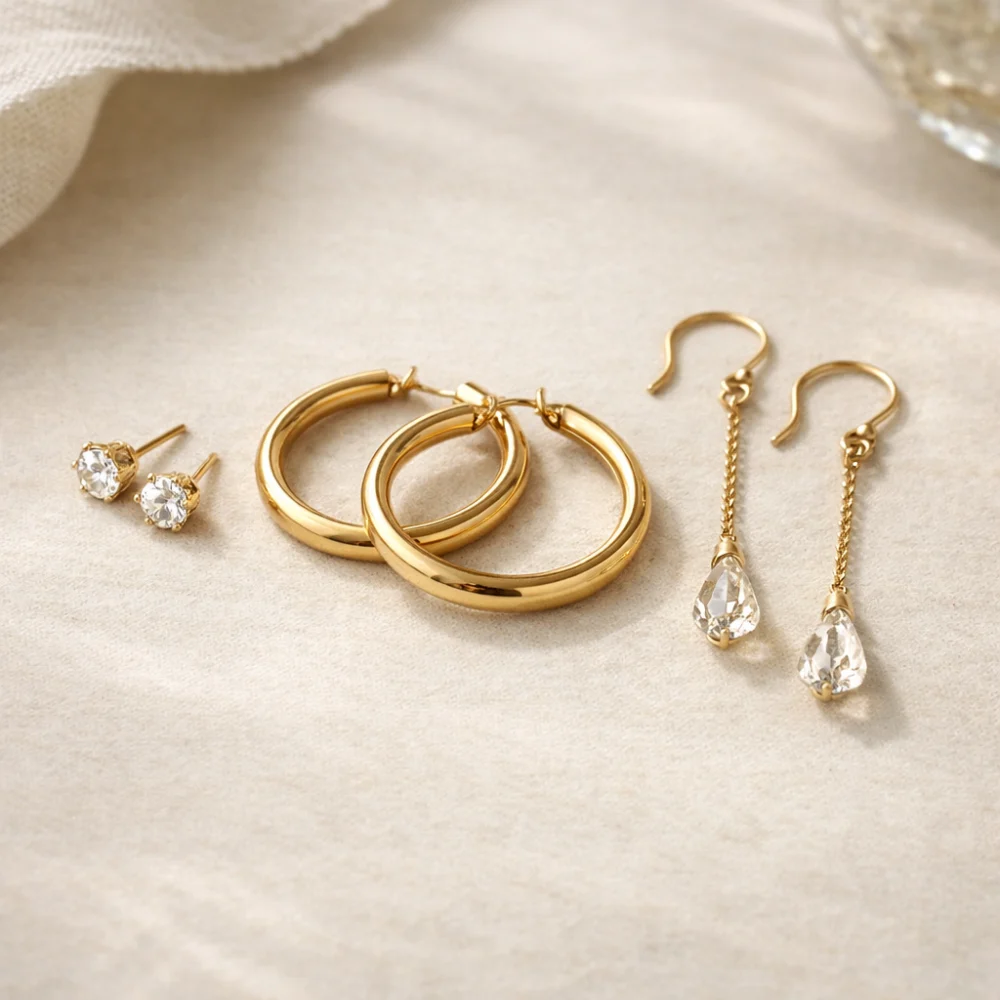
Choosing earrings is about more than appearance: style, fastening, weight and the information provided about materials can all affect whether a pair suits its intended wearer. This guide covers common earring types and the details worth checking before you decide.
If you are buying a gift, consider the recipient’s usual style and whether their ears are pierced. For personal use, think about when and how often you expect to wear the earrings, then weigh visual impact against comfort and care.
Which earrings are a good fit for your needs?
Start with the wearer’s preferred style and the occasions the earrings are for. Studs are a discreet choice, while hoops or drop styles can be more visually prominent. Check the fastening, dimensions, materials and any care guidance on the individual product page; do not assume these details from a photograph alone.
Specifications vary by model, so always check the individual product page before buying.
Compare the details that matter
| Feature | What it means | Why it matters | What to check |
|---|---|---|---|
| Style and shape | The overall design, such as a stud, hoop or drop earring. | It influences how noticeable the earrings look and how they pair with different outfits. | Look at the product images and description; check the stated dimensions if proportions matter. |
| Fastening | The way the earring attaches or closes. | It affects how the earrings are put on and whether the style suits the wearer. | Confirm the fastening type and whether it is intended for pierced ears. Check explicitly for a clip-on design if needed. |
| Materials and finish | The materials used and any surface finish or plating described. | These details may matter to personal preference, appearance and sensitivity concerns. | Read the full materials description rather than relying on a colour or finish name. |
| Size and weight | The stated dimensions and, where provided, weight. | Scale affects how the earrings look; weight can influence comfort over a period of wear. | Compare measurements with a familiar item or the wearer’s preferred earrings, and check whether weight is stated. |
| Pair or set contents | The number and arrangement of earrings included. | Some designs are sold as a pair, while sets may contain several styles or sizes. | Check the product description for what is included and whether the pictured pieces are all part of the purchase. |
Choosing by style, fastening and materials
Match the style to the occasion
Studs sit close to the ear and can suit a simple, understated look. Hoops range in visual presence according to their shape and stated size, while drop earrings hang below the earlobe and may be more noticeable. For a versatile gift, a familiar, restrained style may be easier to choose than a highly distinctive design, but personal taste should guide the decision.
Check fastening and fit
Fastenings differ between designs, so check how each pair is secured rather than assuming all earrings use the same mechanism. Confirm that the design suits the wearer’s piercing, if applicable. Where measurements are supplied, use them to judge how the earrings may sit; product images alone can make scale difficult to assess.
Read the materials description carefully
Descriptions may name a base material, a finish or a plated surface; these terms are not interchangeable. If the wearer has known sensitivities, look for clear material information and avoid assuming a pair will be suitable based only on its colour or appearance. When the description does not answer a concern, seek clarification before choosing.
Types and variants
Studs offer a compact shape; hoops form a loop or curved outline; huggie styles are designed as small hoops close to the earlobe; and drop earrings extend below it. Multi-pair sets can provide more than one look, but check the contents and sizes rather than assuming every pair will suit the same occasion. A clip-on fastening may be an option for someone without pierced ears, but confirm that the specific product is described that way.
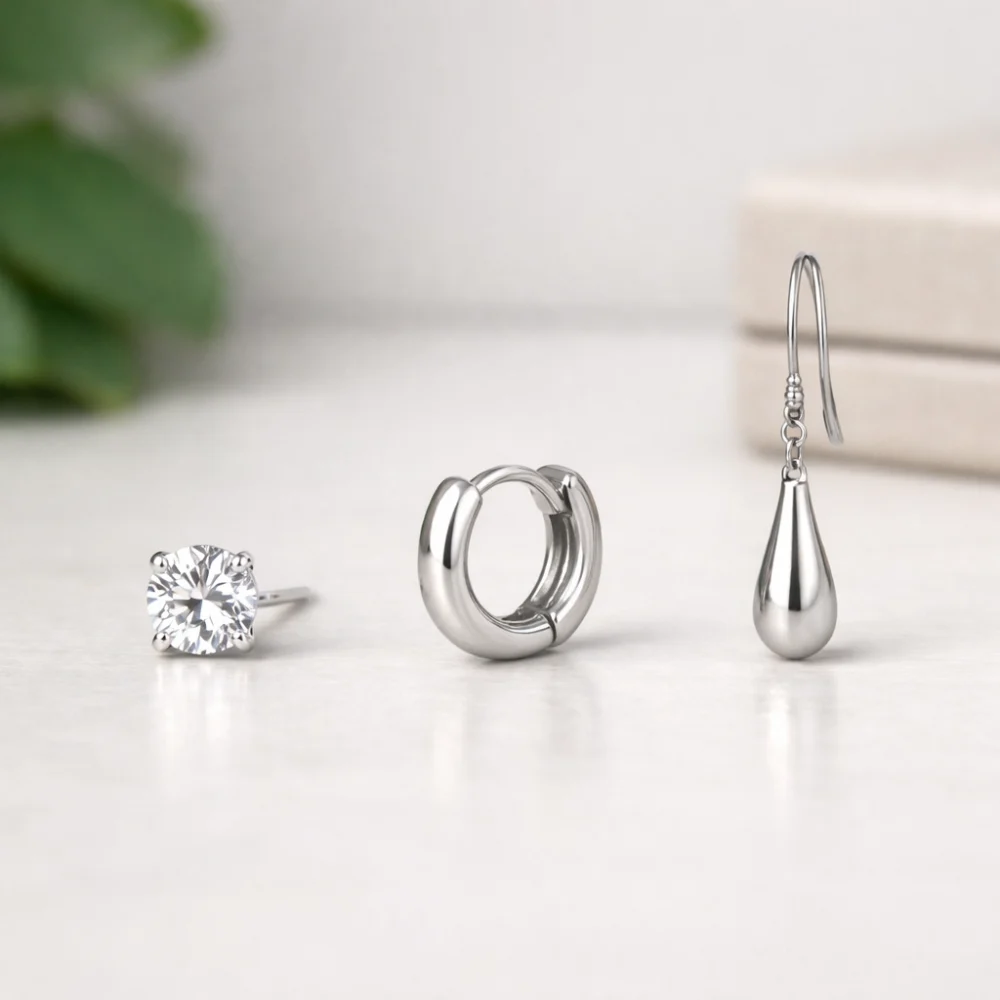
Suitability for different needs
- For frequent wear: Consider a comfortable scale and a fastening the wearer finds practical. Check material details and any care guidance, especially if the earrings will be worn often.
- For occasions or a bolder look: Larger hoops or drop designs may offer more visual presence. Check dimensions and stated weight to understand the trade-off in scale and wearability.
- For a gift: Think about the recipient’s usual jewellery style, piercing needs and material sensitivities. Check whether the product is a single pair or a multi-pair set.
- For ears without piercings: Verify that the individual product explicitly has a clip-on fastening; do not infer this from the listing image.
Common buying mistakes
- Choosing by appearance alone: A photograph may not show scale or fastening clearly. Check dimensions, fastening details and the written description.
- Assuming a finish tells you the full material: A gold- or silver-coloured appearance does not by itself identify what the earring is made from. Read the materials information.
- Overlooking weight: A bold design may be appealing but feel different from a small, light style. Compare stated weight where available and consider the intended duration of wear.
- Assuming a set contains everything pictured: Images can show styling examples. Confirm the stated number and contents of the purchase.
Safety and suitability
Earrings are worn close to the skin, so take known material sensitivities into account and check the product description carefully. Suitability can vary between wearers; if you are uncertain about a material, fastening or fit, seek appropriate advice before buying. Do not assume that a particular material or finish will suit everyone.
Care and storage
Follow the care information supplied for the specific pair, since suitable care can depend on its materials and finish. Keep earrings stored so that pairs and small fastenings are less likely to become separated or scratched. If the product comes with its own care or storage guidance, use that rather than assuming the same approach suits every design.
A straightforward buying process
- Decide whether the earrings are for everyday wear, an occasion or a gift.
- Narrow the choice by style and confirm whether the wearer needs pierced or clip-on earrings.
- Compare fastening, dimensions, weight and materials information.
- Consider the trade-off between the look you want and practical comfort or care.
- Check the individual product page for what is included and any relevant care details before deciding.
Buyer checklist
- Does the style suit the wearer and intended occasion?
- Is the fastening suitable for the wearer’s needs?
- Are the materials and finish clearly described?
- Have you checked the dimensions and weight where provided?
- Is the listing clear about whether it contains a pair or a set?
- Have you read any product-specific care guidance?
Frequently asked questions
What should I check first when buying earrings as a gift?
Start with whether the recipient’s ears are pierced and the styles they usually wear. Then check the fastening, materials description, dimensions and what is included.
Are all earrings suitable for sensitive ears?
No single description can establish that a pair will suit every wearer. Check the stated materials and finish, and take any known sensitivity into account before choosing.
How can I judge earring size online?
Use stated measurements where available and compare them with an item of a familiar size. Product photographs can be difficult to judge without a clear scale reference.
What is the difference between studs, hoops and drop earrings?
Studs sit close to the earlobe, hoops form a loop or curved outline, and drop earrings extend below the earlobe. Their appearance and feel depend on the specific design and dimensions.
How do I know whether earrings are clip-on?
Check the fastening details in the individual product description. Do not assume a pair is clip-on unless that feature is stated.
What care do earrings need?
Care depends on the materials and finish, so follow any guidance supplied for the specific pair. Store them carefully to help keep pairs together and avoid unnecessary scratching.


