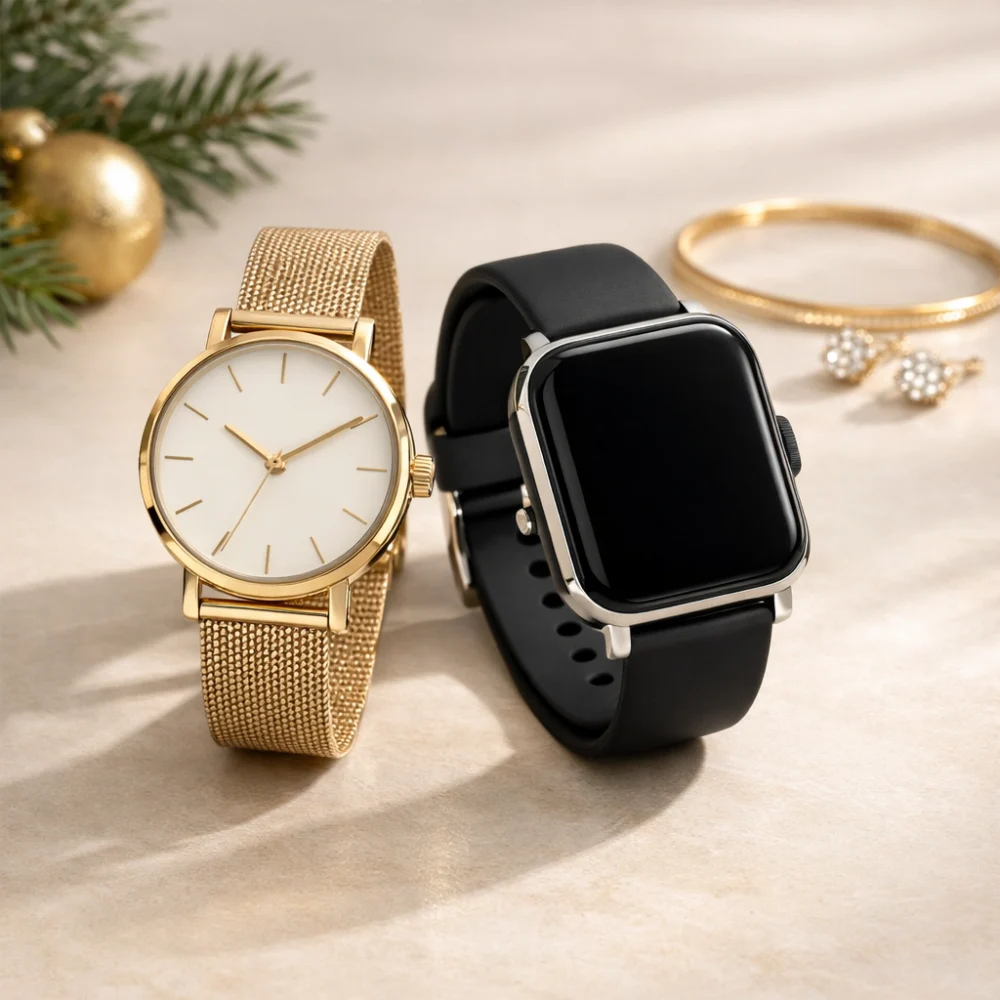
A women’s watch can be a simple timepiece, an accessory chosen to complement everyday clothing, or a connected device with functions beyond telling the time. The right choice depends on how it will be worn and which features the wearer will actually use.
For a gift, consider the recipient’s usual style and how comfortable they are with connected technology, as well as practical details such as fit and fastening. For your own watch, start with the most important daily use, then compare the relevant details on each individual product page.
What should you look for in a women’s watch?
Start with the display and functions: choose a conventional analogue or digital watch if straightforward timekeeping is the priority, or consider a smartwatch if its connected features are useful to the wearer. Then check case proportions, readability, strap comfort, fastening and power requirements. Prioritise those factors over decorative details that matter less in everyday use.
There is no single best style for every wrist or routine. A dressier design may suit occasional wear, while a simpler display may be easier to read at a glance; added smart functions can also mean more setup and charging.
Compare the main buying factors
| Feature | What it means | Why it matters | What to check |
|---|---|---|---|
| Display and readability | How the time and other information are shown, including dial layout, hands or a digital screen. | A clear display is easier to read quickly; decorative detail or a small display may be less convenient for some wearers. | Look at the product images and description for display type, dial layout and any stated readability features. |
| Case proportions | The size and shape of the watch case in relation to the wrist. | Proportions affect both appearance and how comfortable the watch feels during the day. | Check stated case measurements where provided, and compare them with a watch the wearer already finds comfortable. |
| Strap and fastening | The strap’s stated material and the way it closes or adjusts. | Comfort, appearance and ease of putting on or removing a watch depend partly on the strap and fastening. | Check the strap description, fastening type and any stated adjustment information. |
| Functions | Features beyond the basic display, from date information to connected functions on a smartwatch. | Useful additions can make a watch more suitable for a particular routine, but extra features may add setup or charging needs. | Identify which functions are explicitly listed and whether any phone or app requirements are stated. |
| Power | The way the watch receives power, as described for that product. | Different power arrangements involve different ongoing ownership needs. | Check whether the listing specifies a battery, charging or another power arrangement, and whether any charging accessories are included. |
| Water-related information | Any stated water resistance or limits on exposure. | These details help buyers judge whether the watch is suitable for their intended routine. | Look for a clearly stated rating and its conditions; do not assume a watch is suitable for water exposure if the listing is unclear. |
Choosing the details that matter most
Display, style and legibility
Choose a display that suits how the wearer checks the time. An analogue dial has hands and a dial layout; a digital display presents information on a screen, and smartwatches may include additional screens or functions. For quick reading, look for a layout the wearer can recognise easily. A highly decorative dial can look distinctive, but visual detail may be less important than clear time markers for someone who values legibility.
Case size and wrist comfort
A watch that looks balanced on one person may feel too large or small on another. Use stated case measurements as a guide, not a guarantee of fit, and consider the watch’s shape as well as its width. If the watch is a gift, discreetly comparing measurements with a timepiece the recipient already wears can be more useful than guessing from product photographs.
Specifications vary by model, so always check the individual product page before buying.
Strap material and fastening
The strap affects the feel and overall look of a watch. Leather-style, metal and other strap materials can have different appearances and care needs, so check the description rather than relying on an image alone. Also consider whether the wearer prefers a fastening they can adjust themselves and whether the listing explains how the strap fits or can be adjusted.
Movement, power and connected features
If the listing identifies the movement or power source, consider its practical implications. A battery-powered watch and a rechargeable smartwatch, for example, call for different routines. For a smartwatch, check the functions that are actually included and any stated phone, operating-system or app requirements; do not assume a feature will work with every device.
More functions are not automatically better. If the wearer mainly wants a timepiece, a straightforward watch may involve less setup. If connected functions matter, confirm that the wearer is comfortable using them and keeping the device charged.
Water resistance and stated limits
Water-related claims can be easy to misread. Check for a specific rating and the manufacturer’s stated conditions rather than treating terms such as “water resistant” as permission for every kind of water exposure. If the product information does not make the limits clear, do not assume the watch suits swimming, bathing or other wet activities.
Common watch types
- Analogue watches: Show time with hands and a dial. They may suit someone who prefers a familiar, focused display; dial detail and readability vary.
- Digital watches: Show information on a screen and may appeal to someone who prefers a digital readout. Check what the particular display shows and whether it has the functions the wearer wants.
- Smartwatches: May offer connected functions as well as timekeeping. They can suit someone who will use those features, but phone compatibility, setup and charging are important considerations.
- Dress or everyday styles: These are useful ways to think about appearance and intended wear, rather than guarantees of particular materials or functions. Check the specific design and construction details on the product page.
Matching a watch to the intended use
| Need | Prioritise | Trade-off to consider |
|---|---|---|
| A gift for someone whose style you know | Familiar colours, a suitable display style and proportions similar to watches they already wear. | A striking design may be less versatile for daily outfits; check fit and fastening rather than judging appearance alone. |
| A watch for everyday timekeeping | Comfort, a readable display and a fastening that suits the wearer. | Decorative or additional functions may be less valuable if the watch is mainly used to check the time. |
| Someone who prefers an easy-to-read display | Clear markers, a layout that is easy to distinguish and stated readability features. | Images can make a dial look clearer than it is in person, so review the product details and close-up images where available. |
| A wearer interested in connected features | The functions they will use, stated phone requirements and the power or charging arrangement. | More functionality can mean more setup, device-dependence and regular charging. |
| Occasional or dressier wear | A style and case shape that suit the intended outfits and occasions. | A more occasion-specific design may be worn less often than a versatile everyday style. |
Mistakes to avoid
- Choosing by appearance alone: A watch may look appealing but still have an unsuitable fit, fastening or display. Check the practical details alongside the design.
- Assuming a listed function is universal: Smart features may depend on a compatible phone or app. Confirm the stated requirements before choosing a connected watch.
- Guessing the fit from a product image: Perspective can distort apparent size. Use stated measurements where available and compare with a watch the wearer knows.
- Treating vague water wording as a guarantee: Water-related suitability depends on the specific stated rating and conditions. Check those details for the intended use.
- Overlooking the ongoing routine: Consider whether the wearer is happy with the specified power arrangement, charging needs or other care requirements.
Safety and suitability
Choose a watch for its stated intended use and follow the product information for any limits or care conditions. In particular, do not infer water suitability, device compatibility or other capabilities from appearance or broad wording alone. If the intended wearer has a specific sensitivity to materials, check whether the product information identifies the materials before choosing.
Care, maintenance and storage
Care needs vary with the watch and its materials. Follow the product’s care instructions, and check any stated advice about moisture, cleaning and storage. For powered watches, consider the listed battery or charging requirements; for connected models, also consider whether regular charging fits the wearer’s routine. Do not assume that every strap or case should be cleaned or stored in the same way.
A practical buying process
- Decide whether the priority is straightforward timekeeping, a particular style or connected functions.
- Choose a display type and appearance that suit the wearer and intended occasions.
- Narrow the options using fit, case proportions, strap and fastening preferences.
- Compare only the additional functions that will be useful, including any phone requirements and power needs.
- Check the individual product information for measurements, materials, water-related limits and included items before deciding.
Women’s watches buyer checklist
- Does the display suit the wearer’s preferences and need for readability?
- Are the stated case measurements and shape likely to suit the wearer’s wrist?
- Are the strap material, fastening and adjustment information clear?
- Are the functions relevant, and are any phone or app requirements understood?
- Is the stated battery or charging arrangement suitable for the wearer’s routine?
- Are water-related limits and care instructions clear for the intended use?
Frequently asked questions
How do I choose a watch as a gift?
Use the recipient’s existing style and daily habits as clues. If possible, compare the new watch’s stated case measurements and display style with one they already wear, and check whether they would welcome connected features or prefer a simple timepiece.
Are analogue or digital watches better?
Neither is best for everyone. Analogue watches suit people who prefer hands and a dial, while digital displays suit those who prefer information shown on a screen; the clearest choice is the one the wearer finds easiest to use.
What should I check before choosing a smartwatch?
Check the specific functions, phone or app requirements and power arrangement listed for that model. Consider whether the wearer wants those connected features and is comfortable with any setup and charging they involve.
How can I tell whether a watch will fit?
Look for case measurements and any strap or adjustment information in the product details. Comparing those measurements with a watch that fits the wearer comfortably can help, but stated dimensions cannot guarantee how a watch will feel.
Can I wear any watch in water?
No general assumption is safe: water suitability depends on the specific watch and its stated rating and conditions. Check the product information for the intended activity, and avoid relying on vague wording alone.
What should I check about a watch strap?
Review the stated strap material, fastening and adjustment details. These help you judge whether it is likely to suit the wearer’s comfort and preferences, and whether its care requirements fit their routine.