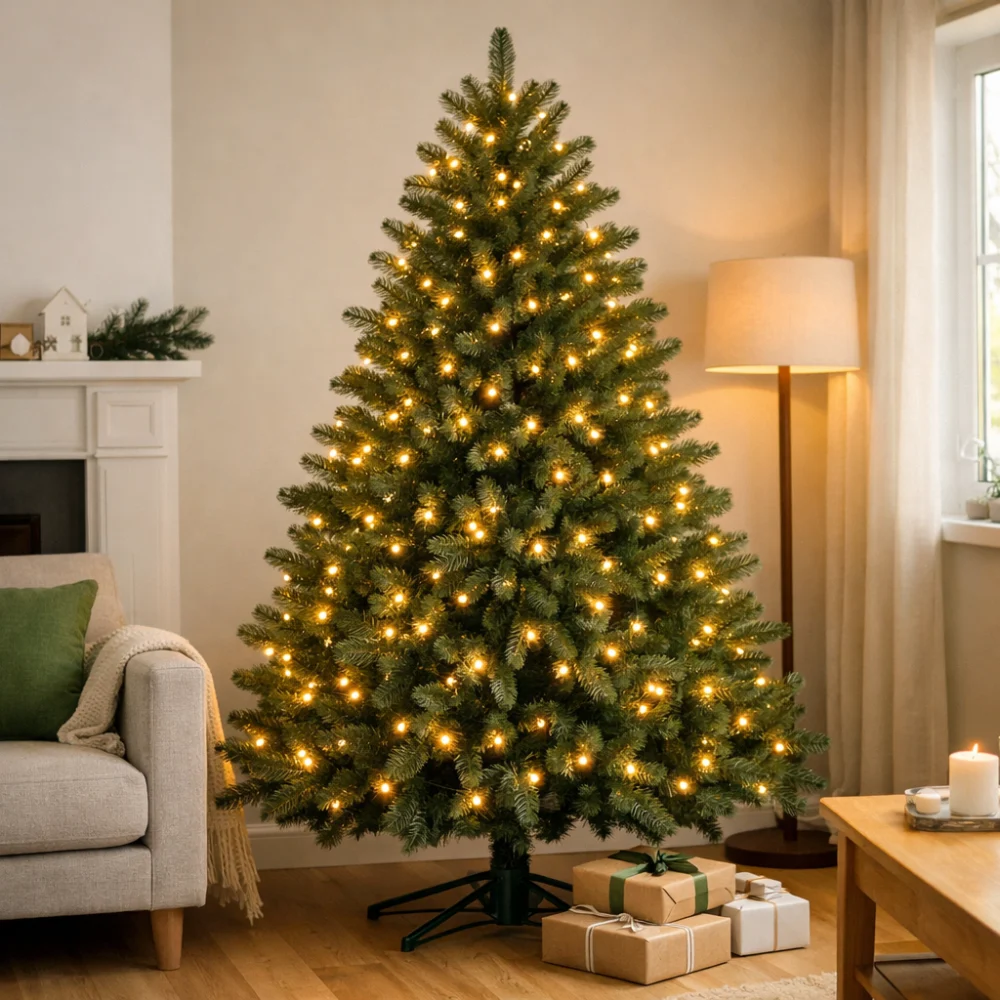
A pre-lit Christmas tree has lights fitted as part of the tree, which can simplify decorating compared with arranging a separate set of lights. The important differences are not just appearance: size, shape, lighting and how the tree is assembled can all affect whether it suits your room and routines.
This guide is for anyone choosing a pre-lit tree for a home or another indoor setting. Start with the space available, then consider the look and lighting you want, how much assembly and storage you can accommodate, and the details to confirm on the individual product page.
What should you prioritise when choosing a pre-lit Christmas tree?
Measure the height and floor space available before comparing styles. Choose a shape that fits the room and the way you use it, then check the lighting appearance and power arrangement. Consider assembly and off-season storage as well as the display itself. Specifications vary by model, so always check the individual product page before buying.
Compare the main buying factors
| Feature | What it means | Why it matters | What to check |
|---|---|---|---|
| Height and width | The tree’s overall dimensions and shape | It needs to fit the room without crowding furniture or restricting access | Listed height, widest point and any dimensions when assembled |
| Tree profile | How broad or narrow the tree looks | A slimmer outline can suit a tighter spot; a fuller outline needs more floor space | Product images and any stated width or profile description |
| Lighting | The fitted lights’ appearance and available settings | Colour and effects influence the look, while controls affect day-to-day use | Light colour, modes, controls and whether the lighting arrangement suits your preference |
| Power arrangement | How the fitted lights are powered | The power source and cable arrangement affect where the tree can be positioned | Power method, any included components and the manufacturer’s stated use setting |
| Assembly and support | How the tree is put together and held upright | Setup, stability and the space needed during assembly matter at home | Assembly information, included stand and any stated setup requirements |
| Storage | The space and conditions needed between seasons | A tree that is awkward to store may be inconvenient even if it suits the display area | Whether the tree separates or folds, and any packed dimensions provided |
How to choose the right tree
Measure the room and the route in
Check the available ceiling height, allowing for any tree topper you may want to use, and measure the floor area for the tree’s widest section. Also consider nearby furniture, doorways and the route from the storage area to the display spot. A tree can fit its final position but still be difficult to move there if access is tight.
Think about the space around the tree too. Leave room for people to move through the area and for any decorations you plan to place nearby.
Choose a shape for the space
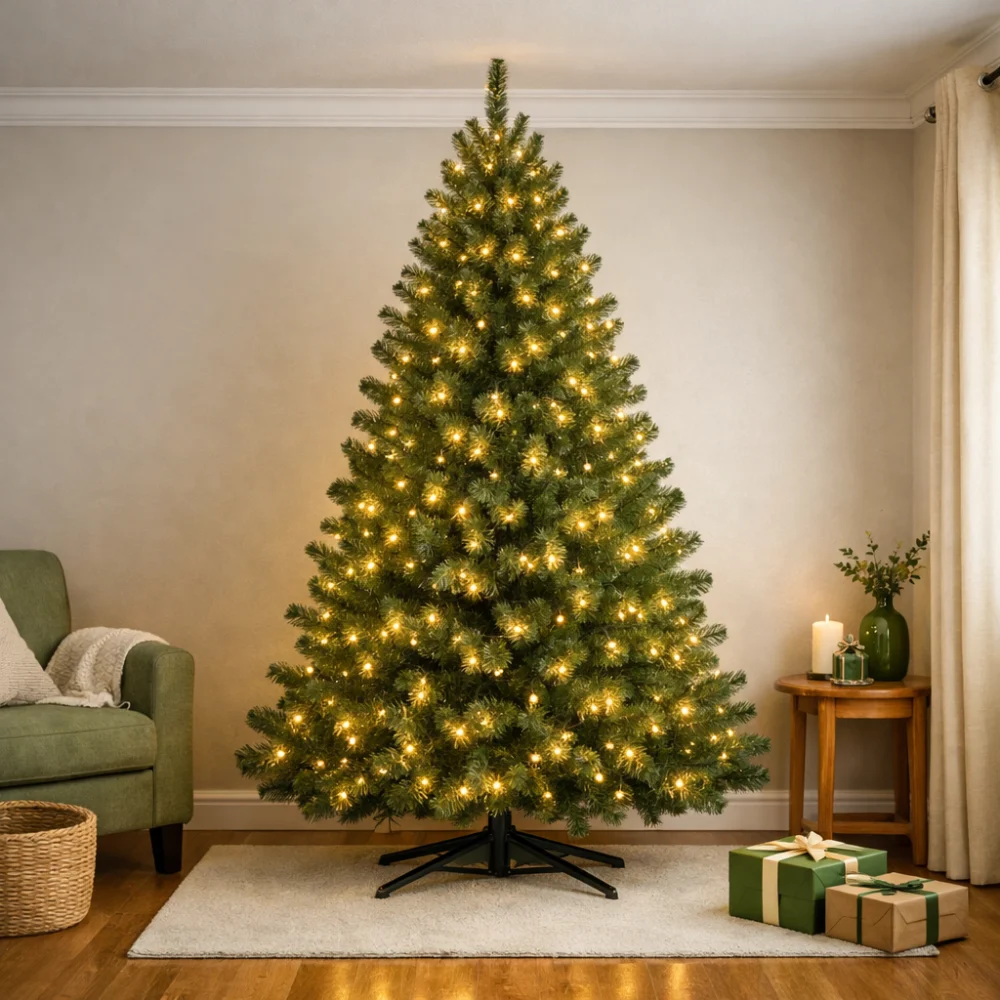
A fuller profile creates a broader display but takes up more floor area. A slim profile may work better beside furniture or in a narrow corner, though it will have a different visual presence. Use stated dimensions where available rather than relying on a product photograph, which may not show the tree’s scale clearly.
Decide what kind of lighting you want
Pre-fitted lights can reduce the task of arranging separate strings, but the result depends on the particular tree. Check the light colour and whether there are modes or controls if these matter to you. Do not assume that lights can be removed, replaced or operated independently; confirm the arrangement on the product page.
Consider assembly and the stand
Assembly methods can differ. Check what the product information says about joining sections, arranging branches and the stand, and consider whether you have enough room to assemble the tree. If you expect to put it up and take it down each year, ease of handling and the amount of storage space may be as important as its appearance.
Look at the foliage and finish
Branch density, colour and decorative finishes affect how the tree looks in your room. Some styles have a more natural, simple appearance, while others may include a snow effect or decorative details. Compare the supplied images and description with your preferred look, and check whether decorations are included rather than assuming they are.
Common types and formats
- Full-profile trees: A traditional broad shape may suit a room with enough floor space. Its wider footprint can be less convenient in a compact area.
- Slim trees: A narrower outline can fit more easily into a corner or beside furniture. It offers a different, less broad display than a full-profile tree.
- Compact or tabletop trees: These suit smaller display areas where a full-height tree is impractical. Check their dimensions and whether the scale suits the surface you have in mind.
- Hinged or pop-up formats: These may be designed to simplify assembly or packing away. Confirm the actual setup and storage details, as the format alone does not tell you how much room it will need.
Match the tree to your needs
For a small room or a display beside furniture, prioritise the tree’s width and footprint rather than height alone. If the tree is intended for a prominent open area, you may prefer a fuller shape, provided its dimensions leave enough space for movement. For a secondary display, a compact format may be easier to accommodate.
If you want a restrained look, check the light colour and whether the tree’s finish is plain or decorative. If you enjoy changing the display, confirm which lighting controls and decoration details are actually included. For a tree that will be packed away every year, give extra weight to assembly information and storage dimensions.
Buying mistakes to avoid
- Choosing by height alone: A tall tree can still be too broad for its location. Compare height and width, and allow for a topper if you plan to use one.
- Assuming every pre-lit tree looks the same: Light colour, controls and placement vary. Check the product details and images for the effect you want.
- Overlooking power and positioning: The power arrangement may affect where the tree can go. Check the stated power method and setting requirements before deciding on a location.
- Forgetting storage: A tree that suits the room may be difficult to keep between seasons. Consider where it will go when packed away and check any provided packed dimensions.
- Assuming decorations are included: Product images may show a styled display. Confirm which decorations or accessories are listed as part of the product.
Safety and suitability
Check that the tree and its lighting are intended for the setting where you plan to use them, and follow the manufacturer’s directions for the product. Review the power arrangement and any stated suitability information before choosing a position. Keep the tree clear of routes where it could obstruct movement, and do not assume that a tree is suitable for outdoor use unless the product information says so.
Care and storage between seasons
Before buying, think about where the tree will be stored and whether you can keep its parts and lighting protected between seasons. Check the manufacturer’s care and storage guidance, as materials and lighting arrangements differ. Keeping any supplied components together can make them easier to find when the tree is next needed.
A practical buying process
- Measure the display area, ceiling clearance and access route.
- Choose a suitable tree profile and approximate size for that space.
- Decide which lighting appearance and controls matter to you.
- Compare assembly, stand and storage information alongside appearance.
- Read the individual product details for power, included items and stated suitability before choosing.
Buyer checklist
- Have I checked both the tree’s height and widest point?
- Will it fit the display space and the route into that space?
- Do I understand the lighting colour, controls and power arrangement?
- Have I checked the assembly details and included stand?
- Do the finish and foliage match the look I want?
- Have I considered storage and confirmed which accessories are included?
Frequently asked questions
What does pre-lit mean?
It means the tree has lights fitted as part of its design. The lighting style, controls and power arrangement depend on the individual product.
How do I work out what size tree will fit?
Measure the ceiling height and the floor area available for the tree’s widest point. Allow for any topper and consider nearby furniture and access, not just the space directly beneath the tree.
Are pre-lit trees available in different shapes?
Pre-lit trees can come in different profiles and formats, including fuller, slimmer and compact styles. Check the dimensions and product images to understand the particular tree’s shape.
Can I change the lighting on a pre-lit tree?
That depends on the product. Check its lighting description and controls rather than assuming the lights can be removed, replaced or changed.
Can I use a pre-lit tree outdoors?
Do not assume so. Use it only in a setting that the product information identifies as suitable, and follow the manufacturer’s directions.
What should I check before storing a pre-lit tree?
Check the manufacturer’s storage guidance and consider the packed size and the space you have available. Keep any supplied parts together and protect the tree and lighting as directed.