

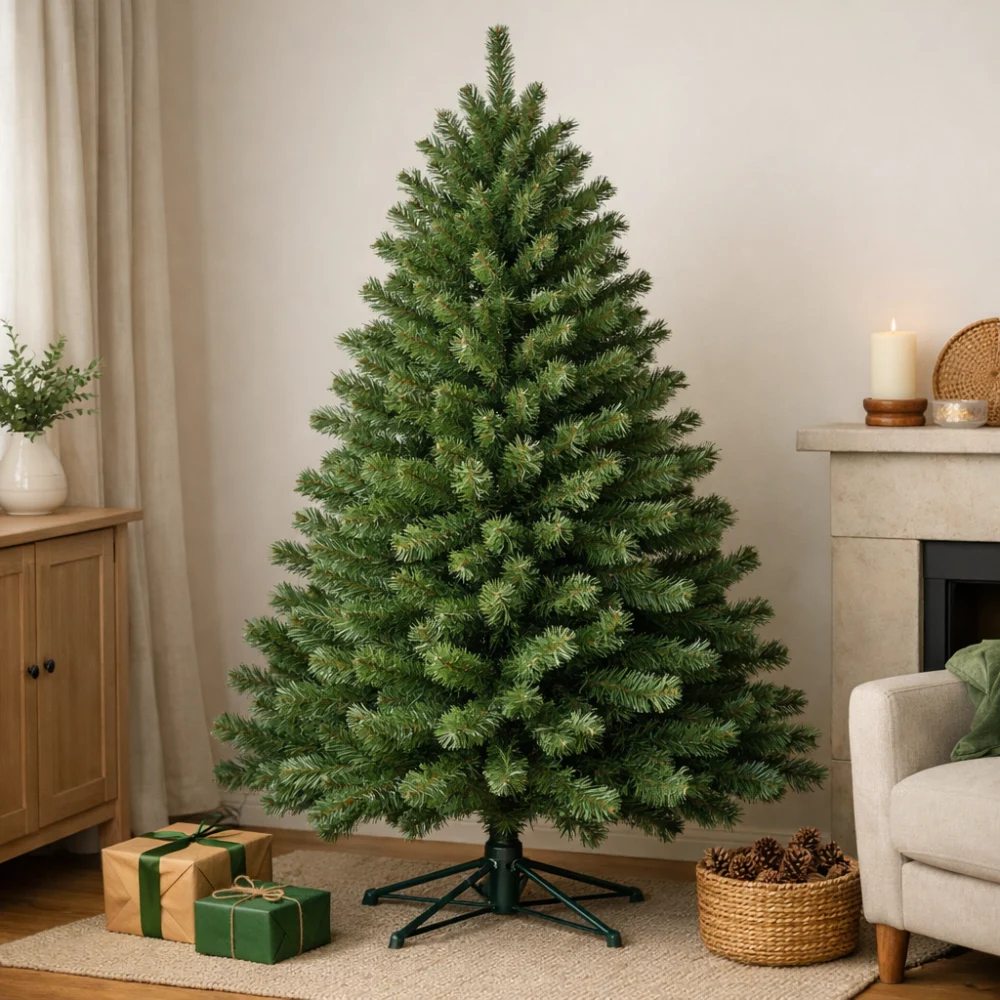
Choosing an artificial Christmas tree is mainly about finding a size and style that suit your room, then checking how the tree is assembled and stored. The right choice depends on the space available, the look you prefer and how much setup you are comfortable with.
This guide focuses on comparing trees rather than choosing decorations or separate lighting. Product details can differ considerably, so use the individual product information to confirm dimensions and what is included.
Which artificial Christmas tree should you choose?
Start by measuring the space where the tree will stand, including the height available for a topper and room around the branches. Compare the tree’s height and widest spread, not height alone. Then decide whether you prefer a traditional green appearance, a different colour or a snow-effect finish, and whether you want a tree with integrated lights or one to decorate yourself. The best fit balances appearance and convenience against the room and storage space you have.
What to compare when choosing a tree
| Feature | What it means | Why it matters | What to check |
|---|---|---|---|
| Height and spread | The tree’s stated height and width at its broadest point. | A tree can fit beneath the ceiling but still take up more floor space than expected. | Check dimensions and whether the stated height includes the stand. Allow for a topper and nearby furniture. |
| Shape and fullness | The overall outline and how dense or open the branches appear. | A fuller-looking tree may have a larger footprint; a narrower outline may suit a tighter space. | Look for product images and descriptions that show the shape, and compare the stated spread where provided. |
| Branch-tip detail | The branch construction and any stated tip count. | These details can help describe appearance, but a number alone does not show how the finished tree will look. | Consider the images and construction description together rather than choosing by tip count alone. |
| Finish and colour | For example, green, white or a snow-effect finish. | The finish affects the look of the room and how well the tree suits your existing decorations. | Check the product images and description; colour and finish can look different across screens. |
| Lighting | The tree may be unlit or have lights integrated into it. | Integrated lighting can reduce the need to add separate lights, while an unlit tree gives you more choice over decoration. | Confirm whether lights are included or built in, and check the lighting information for that particular product. |
| Stand and assembly | The support base and how the sections or branches are put together. | These affect setup, stability and how the tree can be packed away. | Check what the product includes and read the assembly and care information. |
Choosing the right size and style
Measure the whole space
Measure ceiling height and floor space before settling on a height. Include the stand, any topper and enough clearance for the branches; check whether the product dimensions refer to the assembled tree. If the tree will sit near a doorway, window or furniture, consider how its widest point affects movement and access.
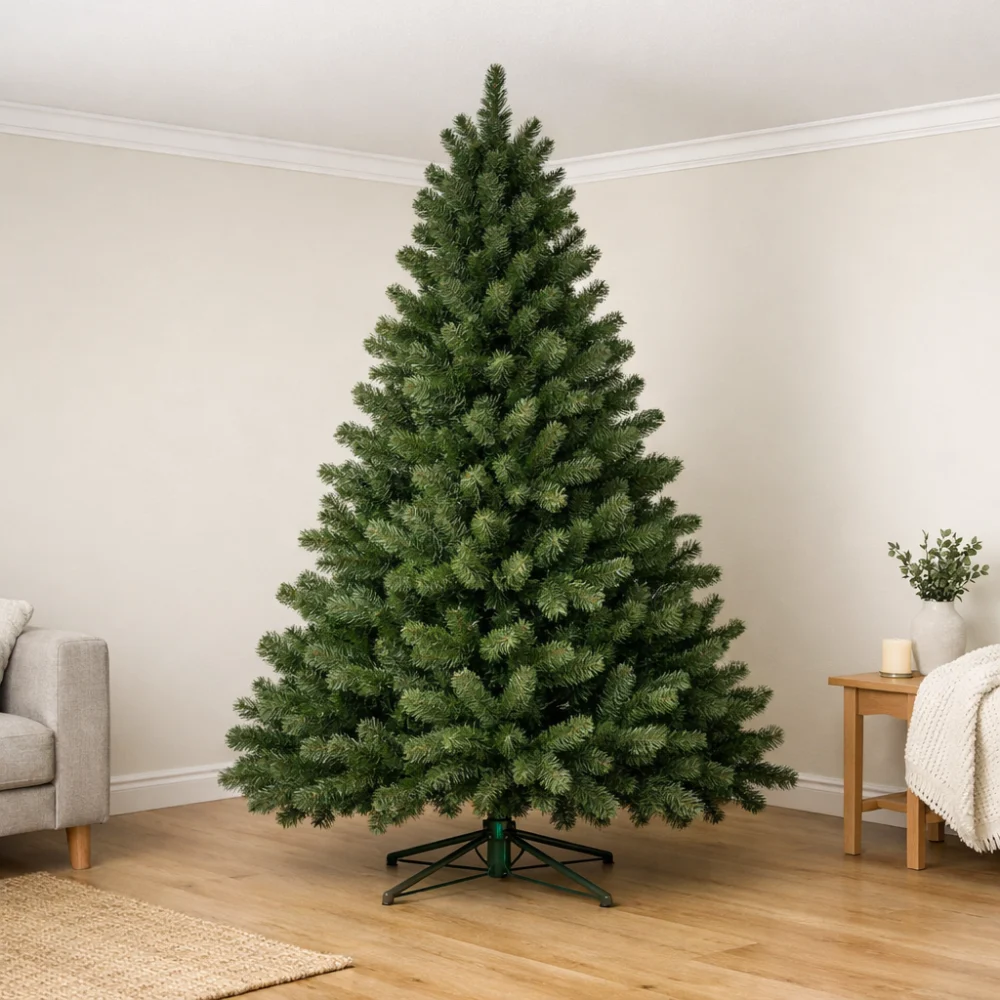
Room layout matters as much as the tree’s listed height. A tree in a corner may need less clearance on some sides, while a tree viewed from all around may need space for its full outline. Confirm the product’s stated dimensions rather than relying on a photo to estimate scale.
Consider appearance and branch detail
Artificial trees vary in shape, colour, finish and branch appearance. Product photographs can help you judge the overall look, while written details may clarify features such as a snow-effect finish or branch-tip count. Tip count is only one point of comparison; it does not, by itself, establish how full or realistic a tree will appear.
Decide whether you want integrated lights
An unlit tree lets you choose and arrange lighting separately. A tree with integrated lights may simplify decorating, but check the product information for what is included and how the lighting is described. Specifications vary by model, so always check the individual product page before buying.
Check the stand, assembly and packed size
Check whether a stand is included, how the tree is assembled and whether the product information gives a packed size or storage guidance. A tree that fits the room when assembled still needs a suitable place to be kept between seasons. Do not assume that different trees use the same assembly or storage arrangement.
Types and variants
- Unlit trees: These suit buyers who want to choose their own lighting or prefer a simpler undecorated starting point. You will need to plan for any separate lights you want to use.
- Trees with integrated lights: These may suit buyers seeking a tree with lighting included. Check the specific lighting details and what the product includes rather than assuming all lit trees are alike.
- Different finishes: Green, white and snow-effect appearances offer different decorative looks. A distinctive finish may be less flexible if you want the tree to work with a wide range of decorations.
- Different sizes and shapes: Trees may vary in height and outline. Choose by measured space and stated spread, not by a height label alone.
Matching a tree to your needs
For a small room or a space with limited floor area, prioritise the stated spread and shape as well as height. If the tree will be a focal point in a larger room, you may have more flexibility, but still measure the available ceiling and floor space.
If you enjoy choosing each decoration, an unlit tree gives you greater control over the lighting arrangement. If you would rather reduce separate decorating decisions, consider a tree with integrated lights and check its product details carefully. For buyers who need to pack a tree away between seasons, assembly and storage information may be as important as its appearance.
Common buying mistakes
- Choosing by height alone: Check the widest spread and leave room for a topper; a tree can be too broad even when its height is suitable.
- Assuming a photo shows the exact scale: Use the stated dimensions and compare them with your measurements.
- Treating tip count as a complete measure of appearance: Consider the shape, images and construction description together.
- Assuming lights or a stand are included: Confirm inclusions on the individual product page.
- Forgetting storage: Check assembly and packed-size information, if provided, before choosing a tree that will need to be stored away.
Safety and suitability
Choose a tree that suits the space and intended setting, and follow the product’s instructions and warnings. For a tree with integrated lights, check the supplied electrical and use information and consider whether its stated arrangements suit your home. Do not assume that a particular finish or construction has a safety rating unless the product information explicitly confirms it.
Care and storage considerations
Before choosing, consider where the tree will be stored and whether its sections or branches can be packed away in a way that suits that space. Check the product’s care and storage guidance, since handling and storage recommendations can differ. For integrated-light models, retain and refer to the product information for care of the lighting as well as the tree.
A simple buying process
- Measure the ceiling height and floor area where the tree will stand.
- Decide on the preferred height, spread, shape and finish.
- Choose whether you want an unlit tree or integrated lighting.
- Compare dimensions, branch details, stand and assembly information.
- Check inclusions, care and storage guidance on the individual product page.
Buyer checklist
- Have I measured the available height and floor space?
- Have I checked the tree’s stated spread as well as its height?
- Does the shape and finish suit my room and decorations?
- Have I confirmed whether lighting and a stand are included?
- Do I understand the assembly and storage requirements?
- Have I checked the individual product information for the details that matter to me?
Frequently asked questions
How do I choose the right height for an artificial Christmas tree?
Measure from the floor to the ceiling and allow space for the stand and any topper. Check how the product defines its stated height, then compare the tree’s width with the available floor area.
Is a higher tip count always better?
No. A tip count is one detail, not a complete measure of how full or realistic a tree will look. Compare it with the product images, shape and construction description.
Should I choose an unlit or pre-lit artificial tree?
An unlit tree lets you choose separate lights and how to arrange them. A tree with integrated lights may suit someone who prefers lighting included, but check the details for that specific product before deciding.
What should I check before buying a snow-effect tree?
Look at the product images and description to understand the finish and overall appearance. Also check the dimensions, assembly details and any care guidance, as these can vary between products.
How much space should I leave around the tree?
Use the stated widest spread as a starting point and consider how the tree will sit in the room. Leave space for the shape you want to display and for people to move around nearby.
What should I check about storage?
Look for information about assembly, disassembly and packed dimensions, if given. Compare that with the storage space you have, and follow the product’s own care guidance.


