

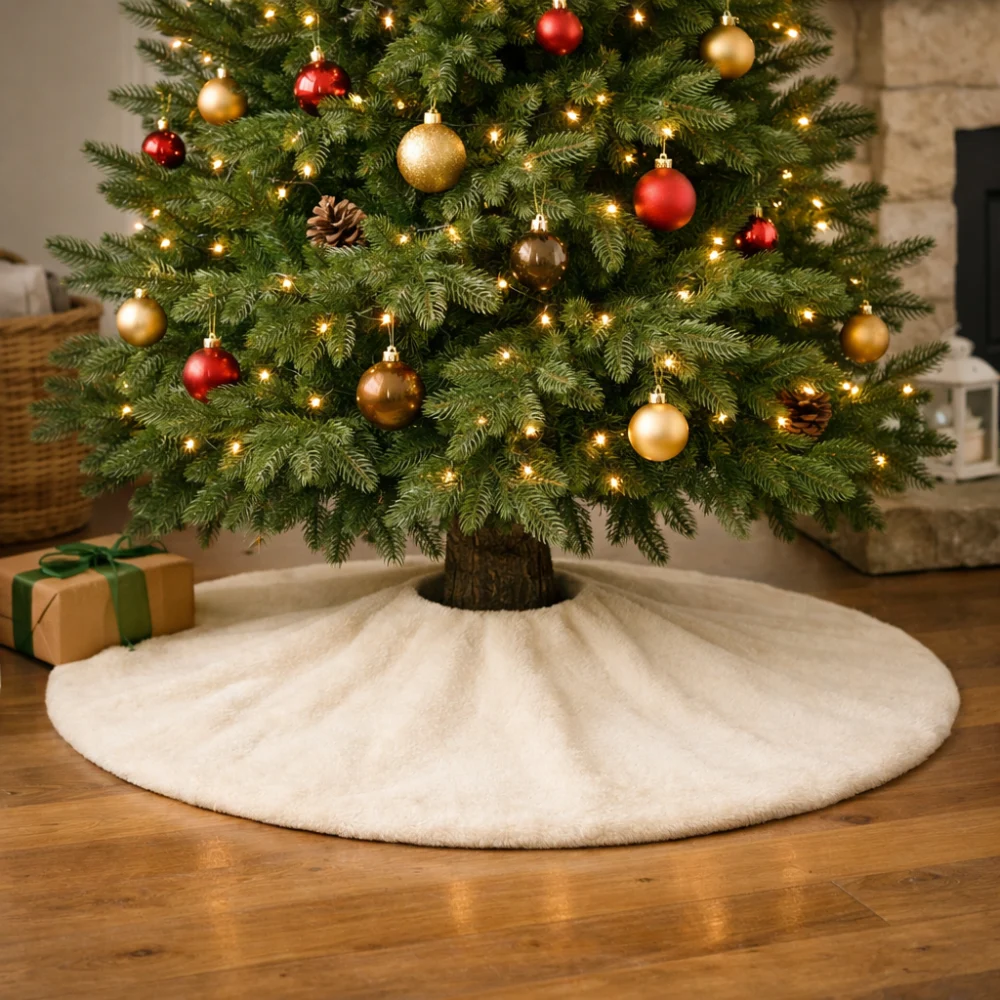
A Christmas tree skirt or decorative base cover conceals the area around a tree’s trunk and stand, while adding a finishing detail to the display. The right choice depends on the size and shape of your tree base, how much floor space you can use and the look you want.
These products can vary from soft fabric skirts to more structured collar or basket-style covers. A decorative cover should not be assumed to support or stabilise a tree: check what the individual product is designed to do, and assess any separate tree stand on its own.
What should I look for in a Christmas tree skirt or base?
Start by checking the diameter and shape of the area you want to cover, including the space needed for the tree stand. Choose a style with enough coverage to conceal the base without crowding nearby furniture or walkways. Then compare its material, construction and care requirements with the look and use you have in mind.
Compare the main buying factors
| Feature | What it means | Why it matters | What to check |
|---|---|---|---|
| Overall size | The space the skirt or cover occupies around the tree. | It needs to conceal the base while fitting the available floor area. | Product dimensions and the footprint of the tree stand and nearby furniture. |
| Opening and fit | How the cover sits around the trunk or tree base. | A suitable opening can make placement easier and help the cover sit as intended. | Opening size, shape and any stated fastening or assembly details. |
| Shape and structure | A soft skirt drapes around the base; a collar or basket-style cover has a more defined form. | Different structures create different looks and may suit different stand shapes. | Product images and dimensions; check that the form suits your setup. |
| Material and finish | The surface, texture and appearance of the cover. | These affect how it looks with your decorations and how it may need to be cared for. | Material description, finish and cleaning guidance. |
| Intended function | Whether the item is decorative or designed for another stated purpose. | A cover is not necessarily a tree-supporting base. | The product description and instructions; do not assume it replaces a stand. |
Choosing the right size and fit
Measure the footprint you want the cover to occupy, rather than choosing by tree height alone. A taller tree does not automatically need a wider skirt: the stand, trunk area and available floor space are more direct checks. Leave enough room for the cover to sit without obstructing a walkway or pressing against surrounding furniture.
For a skirt, look at both its overall spread and the opening around the trunk. For a structured collar or basket-style cover, check its stated diameter, height and shape against the tree base. Specifications vary by model, so always check the individual product page before buying.
Types and styles
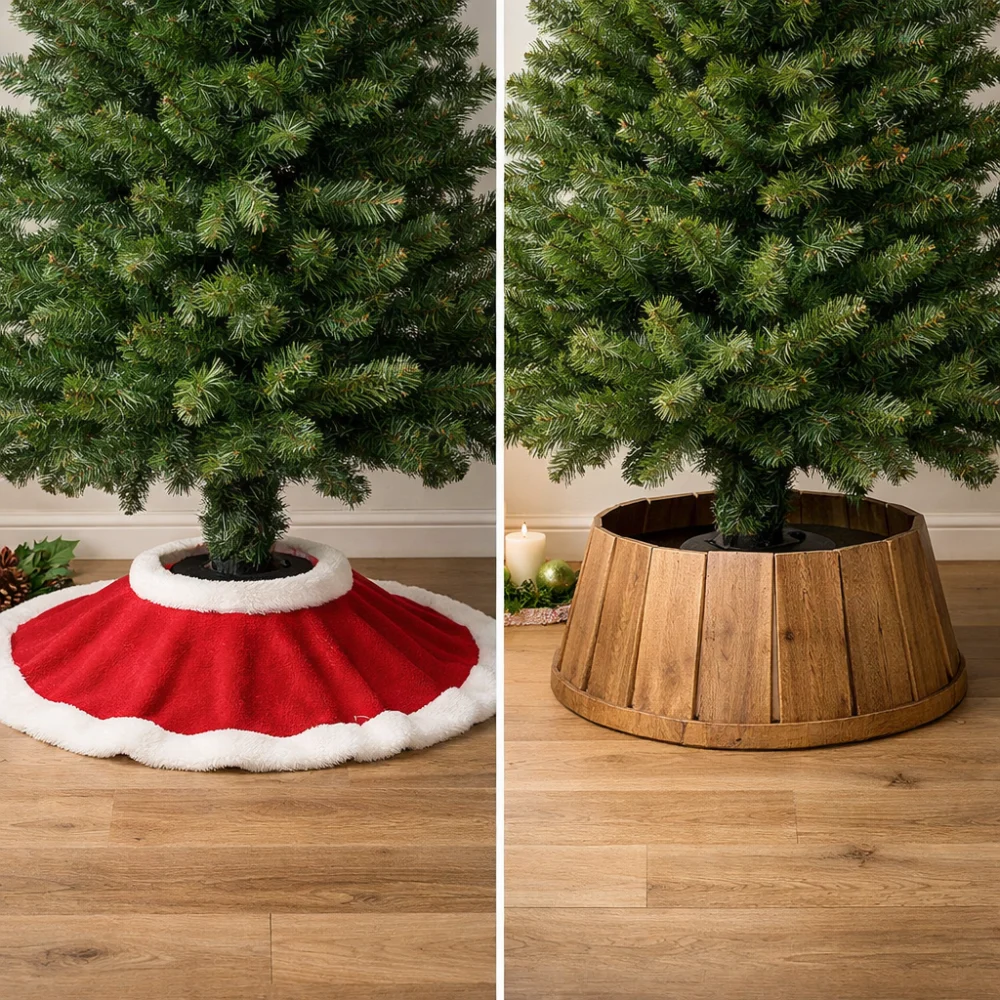
Soft skirts drape around the base and can offer a fabric or textured finish. They may suit buyers who prefer a softer outline, but the way they lie depends on their shape and construction.
Structured collars and basket-style covers create a more defined enclosure around the tree base. Check their dimensions and opening carefully, as their shape may be less forgiving if the stand does not fit within them.
Decorative or themed designs make the cover a more noticeable part of the display. Consider whether the colours and details work with the rest of your decorations, and check any additional features described for that particular product.
Match the cover to your setup
- For a compact room: prioritise the cover’s footprint and how it sits near furniture or walkways. A smaller-looking style may be more practical if floor space is limited.
- For a wide or unusual stand: compare the stand’s shape and dimensions with the cover’s opening and interior space. Do not rely on the tree’s height as a substitute for these measurements.
- For a softer decorative finish: consider a fabric skirt and check its material, shape and care information.
- For a defined, enclosed look: a structured collar or basket-style cover may be more suitable, provided its dimensions suit the base.
- For a coordinated display: compare the cover’s colour and finish with the tree decorations and the room, while keeping practical clearance in mind.
Common buying mistakes
- Choosing by appearance alone: an attractive cover may not fit the stand or available floor space. Check dimensions and opening details as well as photographs.
- Assuming a cover supports the tree: skirts and decorative collars are not automatically structural bases. Confirm the product’s stated purpose and use a suitable supporting stand where required.
- Ignoring the opening: overall diameter alone may not show whether a cover can fit around the trunk or base. Look for the opening dimensions or shape where provided.
- Overlooking care: a finish that suits your display may need particular cleaning or storage attention. Read the care information before choosing.
- Expecting every style to sit the same way: a soft skirt and a rigid cover have different shapes and limitations. Choose according to the look and fit you want, rather than treating them as interchangeable.
Safety and suitability
Choose a cover intended for the kind of tree setup you have, and keep the supporting function of the tree stand separate from the decorative cover unless the product information clearly states otherwise. Make sure the finished arrangement leaves the space around the tree usable. If a particular cover includes lighting or other added features, check its instructions and stated suitability before use.
Care and storage
Care needs depend on the material and construction. Check the product’s cleaning guidance before buying, particularly if you expect to pack it away after the season. Consider whether its shape and size will be practical to store with your other decorations, and follow any care or storage instructions supplied for that specific item.
A simple buying process
- Decide whether you need a soft skirt, a structured decorative cover or a product explicitly intended to serve another function.
- Measure the tree base and the floor area available around it.
- Compare the cover’s overall dimensions, opening and shape with your setup.
- Choose a material and finish that suit your display and care preferences.
- Check the individual product information for intended use, fit and any relevant care or feature instructions.
Buyer checklist
- Have I measured the tree base and the floor space around it?
- Do the cover’s overall size, opening and shape suit the stand?
- Is the product decorative, or does its description state another intended function?
- Does the material and finish suit the look I want?
- Have I checked care guidance and any instructions for additional features?
- Will the cover be practical to store when it is not in use?
FAQs
Does a tree skirt hold the tree upright?
Do not assume that it does. A tree skirt or decorative collar is generally selected as a cover, so check the product information for its stated purpose and keep tree support as a separate consideration unless the product explicitly says otherwise.
How do I choose the right diameter?
Consider both the area you want to cover and the available floor space. Compare the product’s stated dimensions with the stand footprint and nearby furniture, and check the opening size as well as the outer measurement.
What is the difference between a skirt and a collar?
A skirt is generally a softer covering that spreads around the base, while a collar or basket-style cover has a more defined shape. Their fit and appearance differ, so compare the stated dimensions and product images with your tree setup.
Can I use a decorative cover with any tree stand?
Compatibility should not be assumed. Check the cover’s opening, interior space and shape against the stand, and follow any suitability information provided for the individual product.
How should I clean and store a tree cover?
Follow the care guidance for the specific material and construction, as cleaning needs can differ. Before buying, consider whether the cover’s size and shape will be manageable to store between seasons.


