

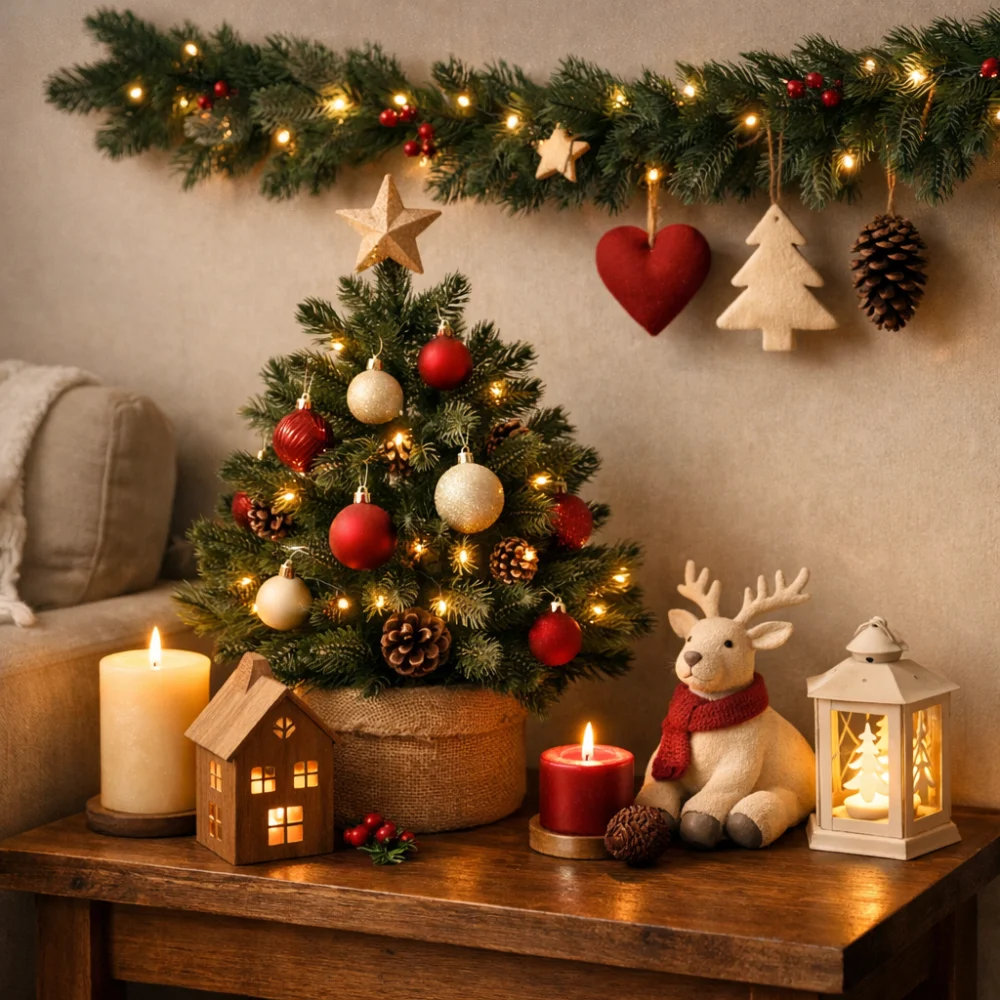
Christmas indoor decorations can range from small ornaments and figures to hanging decorations, garlands and decorative lights. The right choice depends less on how many items you buy and more on how they will fit the room, work with the decorations you already own and suit the way you use the space.
This guide focuses on choosing decorations for inside the home. Before deciding, consider where each item will go, how it will be displayed and whether its size, power source or fixing requirements suit that spot.
How do you choose Christmas indoor decorations?
Start with the place you want to decorate, then check the available space and how the item is meant to be displayed. Choose a small number of compatible colours or materials if you want a coordinated look, or compare shape and scale if you are adding to an existing collection. For illuminated decorations, check the stated power source and what is included. Balance visual impact with storage space and the practicalities of putting the decoration up and taking it down.
Compare the main buying factors
| Feature | What it means | Why it matters | What to check |
|---|---|---|---|
| Placement | The surface, wall, doorway or other indoor spot the decoration is intended for. | A decoration suited to one position may not work well somewhere else. | How it is displayed and whether the intended location is suitable. |
| Size and shape | The space the item occupies and the area it covers visually. | Scale affects whether it feels balanced in a small or busy room. | Listed measurements, where provided, and the space available at home. |
| Display or fixing method | Whether the item stands, hangs, attaches or drapes. | The method affects where it can be placed and what support it needs. | Any stated hanging, attachment or surface requirements. |
| Lighting and power | Whether a decoration is illuminated and, if so, how it is powered. | Power access can influence placement and ongoing convenience. | Power source, included components and any stated indoor-use information. |
| Style and finish | Its colour, material appearance, shape and overall visual effect. | These details help it coordinate with existing decorations or stand out as a focal point. | Product images and description; consider the colours and finishes already in the room. |
| Storage | How much room the item may need when it is not on display. | Bulky or delicate decorations can be less convenient to store. | Whether the shape can be stored easily and any care or storage guidance provided. |
What to consider before choosing
Start with the display location
Decide whether you are decorating a doorway, wall, mantel, shelf, table or another indoor area. This helps narrow the display style before you compare appearance. For example, a hanging item needs a suitable place to hang, while a freestanding decoration needs a stable surface with enough room around it. Check the individual description for how the item is intended to be displayed rather than assuming it will suit every surface.
Check scale and visual balance
Compare any stated measurements with the space you have, and think about the decoration’s shape as well as its height or length. A long item may need more clear space than a compact one; a prominent design may be best balanced by keeping nearby displays simpler. If measurements are not clear from the product information, do not rely on a photograph alone to judge scale.
Choose a look that works with what you own
Colour, finish and visual style can help new decorations sit naturally with existing pieces. You might coordinate a few colours for a calmer display, or deliberately choose contrasting shapes and finishes for a more varied effect. Product images can help you compare appearance, but screens and room lighting can affect how colours look.
Check lighting and power details
For an illuminated decoration, confirm the stated power source and check whether any required components are included. Consider whether the intended location has suitable access to that power source and whether the decoration’s light will be a focal point or part of a wider display. Specifications vary by model, so always check the individual product page before buying.
Consider fixing and display needs
Hanging and attaching decorations can require different support from placing one on a shelf or table. Check the product information for any stated fixing method or surface requirements, then consider whether these suit your home. Do not assume that an attachment supplied or shown will be appropriate for every wall, doorway or finish.
Types of indoor decoration
- Hanging and ceiling decorations: These can add interest above a room or around a display. They suit spaces with a suitable hanging point, but need enough clearance and an appropriate way to attach them.
- Door and wall decorations: These make use of vertical space and can draw attention to an entrance or wall. Check the dimensions and stated fixing method, especially where the surface or door finish matters.
- Garlands and draped decorations: These can frame or add texture to a display. Their length and shape affect where they fit, so compare measurements with the route or area you intend to decorate.
- Decorative lights: These add illumination as well as decoration. Their placement may depend on the listed power source, lead or other product-specific details.
- Freestanding figures and ornaments: These can work on a shelf, mantel or table. Check the footprint and height against the available surface, and consider whether the item will be disturbed in that position.
These types can overlap: for example, a garland may also be illuminated. Use the product description to understand the particular item rather than relying on its broad type alone.
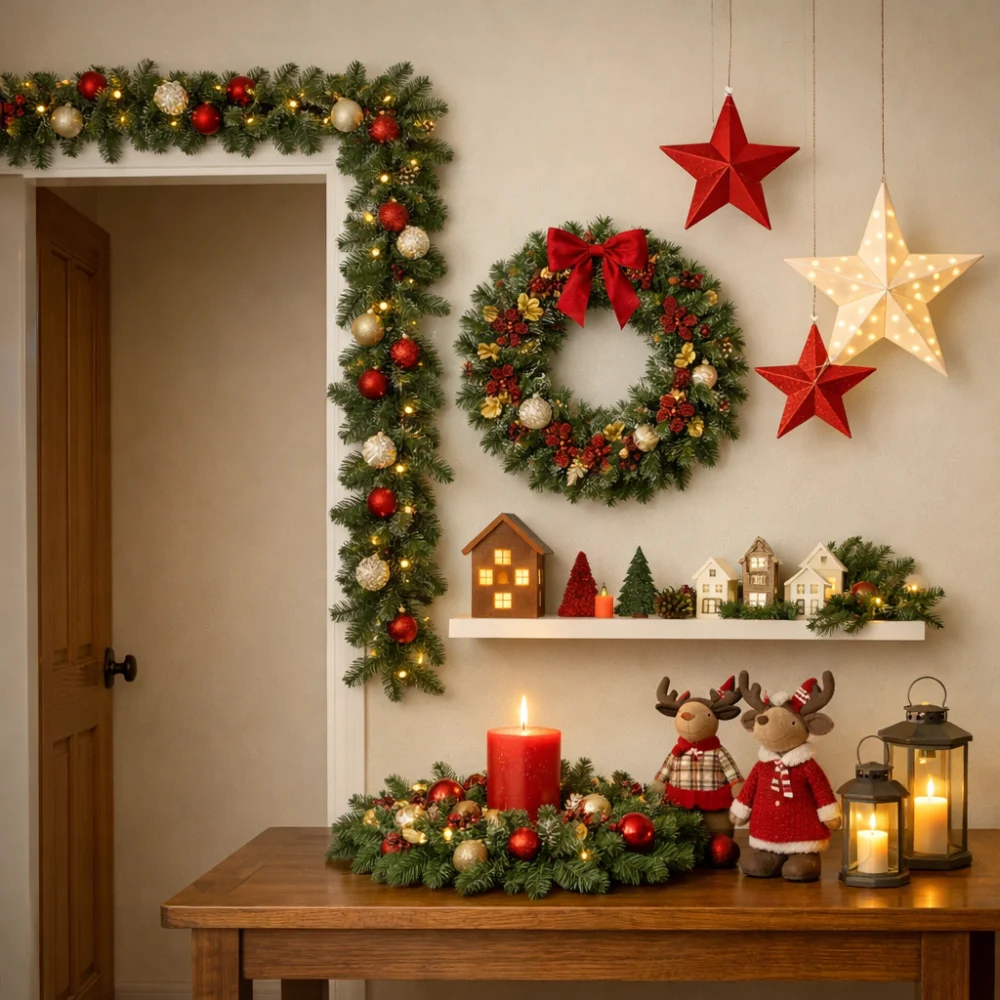
Choose for your space and decorating plans
| Your priority | Characteristics to consider | Trade-off to keep in mind |
|---|---|---|
| Decorating a small area | Compact shapes, clear measurements and items that use available vertical space. | A large or heavily detailed piece may dominate the area. |
| Creating a focal point | A distinctive shape, a noticeable display position or an illuminated feature. | A strong feature may leave less room for other decorations nearby. |
| Adding to existing decorations | Similar colours, finishes or visual themes. | A close match in appearance is not guaranteed by a product image; check the description and images carefully. |
| Keeping setup straightforward | A display method that suits the intended spot and clear product information. | A hanging or powered item may require more planning than a decoration placed on a surface. |
| Planning ahead for storage | Manageable size and any stated storage or care guidance. | A larger decoration can make a bigger visual statement but may take more room to put away. |
Common buying mistakes
- Choosing by appearance alone: A decoration can look appealing but still be the wrong size or display style for your space. Check dimensions and how it is intended to be used.
- Assuming it will attach anywhere: Display surfaces and fixing methods vary. Confirm the stated requirements and consider the surface where you plan to put it.
- Overlooking power details: An illuminated decoration may not suit every location. Check its listed power source and included components before deciding where it will go.
- Buying pieces without considering the overall display: Individual items may compete for attention when grouped together. Think about colour, scale and how much space each one occupies.
- Forgetting the off-season: A decoration that fits the room may be awkward to store. Consider its shape and any product-specific care or storage guidance.
Safety and suitability
Check that a decoration is described as suitable for indoor use and follow any product-specific safety information. For illuminated items, use the power source and components specified for that product; do not assume that details for one item apply to another. Keep the intended display location and the needs of people sharing the space in mind, particularly where hanging items, breakable decorations or accessible leads may be a concern.
Care and storage
Care needs depend on the decoration’s materials and construction, so follow any cleaning or storage guidance supplied for the individual item. Before putting decorations away, consider whether delicate shapes, lights or hanging elements need to be kept from tangling or being pressed out of shape. Choose storage that suits the item rather than assuming every decoration can be folded, packed tightly or stored in the same way.
A simple buying process
- Choose the indoor location or display you want to decorate.
- Decide whether you need a hanging, draped, illuminated or freestanding type.
- Measure the available area and compare it with any listed product dimensions.
- Compare the appearance, display method, power details and storage needs that matter for your choice.
- Read the individual product information for any stated suitability, fixing, care or included-component details before deciding.
Buyer checklist
- Do I know where the decoration will be displayed?
- Have I checked its dimensions against the available space?
- Does its display or fixing method suit the intended location?
- If it is illuminated, have I checked the listed power source and included components?
- Will its style work with the other decorations in the room?
- Have I considered care and storage when it is not on display?
Frequently asked questions
How can I make indoor Christmas decorations feel coordinated?
Choose a few visual cues to repeat, such as a colour, finish or shape, rather than requiring every item to match. If you prefer a varied display, use differences in size or shape deliberately and leave some visual space between focal pieces.
How do I know whether a decoration will fit?
Measure the intended display area and compare it with the product’s listed dimensions. Allow for the shape and display method too: an item that hangs or drapes may need more room than its central section suggests.
What should I check when buying illuminated decorations?
Check the product-specific power source, included components and any stated indoor-use information. Think about whether the intended location suits those requirements before choosing.
Can indoor decorations be used outdoors?
Do not assume that a decoration intended for indoor use is suitable outside. Check the individual product information for its stated use and suitability.
How should Christmas decorations be stored?
Follow any care or storage guidance provided for the item. Consider its size, shape and delicate or tangled parts when choosing a place to keep it between seasons.


