

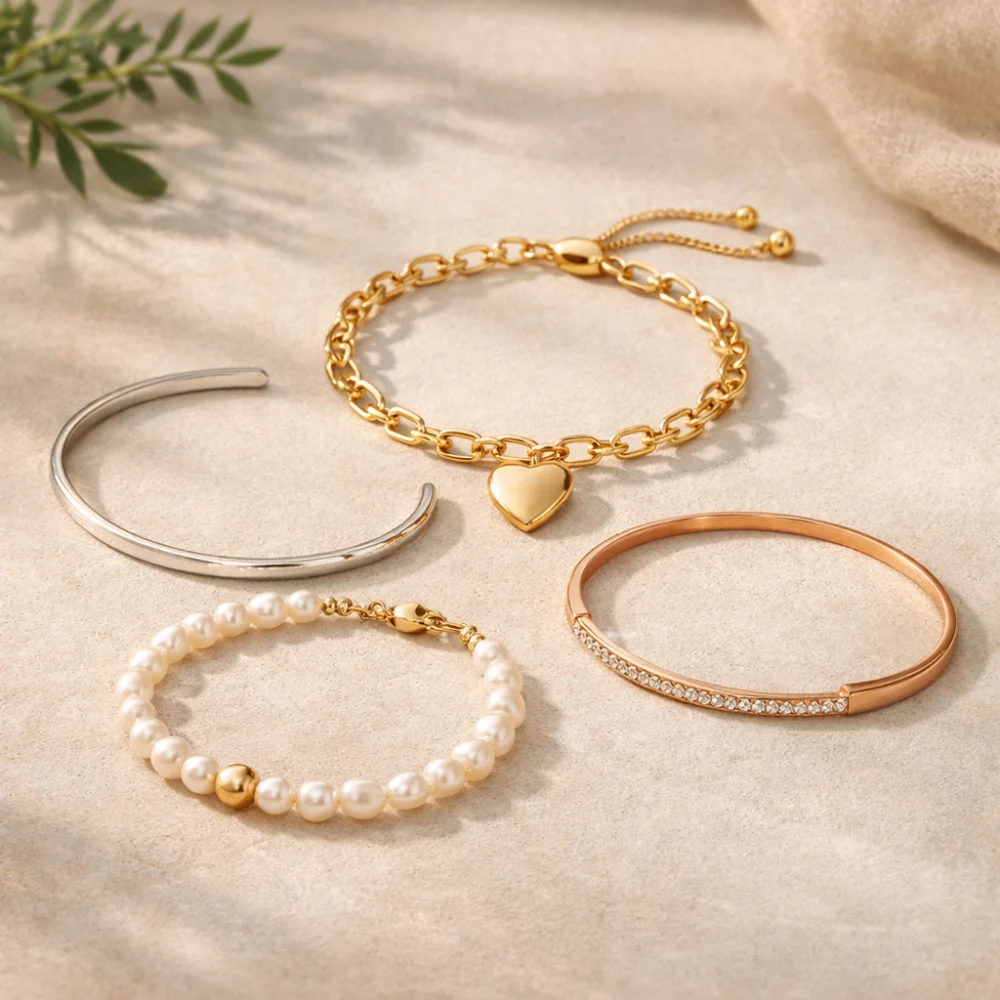
A bracelet can be a simple everyday accessory, a more decorative piece or a gift chosen for its design or personal meaning. The right choice depends on how it will be worn, the recipient’s style and how confidently you can judge the fit.
Use this guide to compare common bracelet features without assuming that every style or material will suit every wearer. For a gift, pay particular attention to sizing information, fastening and the product’s stated material details.
What should you look for in a women’s bracelet?
Start with the wearer’s usual style and whether the bracelet is intended for regular wear or a particular occasion. Then check its fit and fastening, followed by the materials and care information. A distinctive design may make a thoughtful gift, but a less adjustable style can be harder to choose without a reliable size.
Compare the main buying factors
| Feature | What it means | Why it matters | What to check |
|---|---|---|---|
| Fit and length | The stated size, fit range or adjustment options | A bracelet that is too tight or loose may be uncomfortable or less practical to wear | Measurements, sizing guidance and whether the design can be adjusted |
| Fastening | How the bracelet is put on and secured | Some fastenings may be easier to manage independently than others | The closure type and any available product images or description of how it fastens |
| Material details | The materials and any finish described for the bracelet | These affect appearance, care and whether the wearer has material preferences or sensitivities | The full material description rather than relying on colour or a broad style name |
| Style and structure | For example, a flexible chain, a rigid bangle or a beaded design | Different structures sit and move differently on the wrist | Whether the bracelet is flexible or rigid, and how the design is intended to be worn |
| Decorative details | Charms, stones, beads or other visible features | Details can make a bracelet more personal or eye-catching, but may not suit a preference for simpler jewellery | What is included and how the product description identifies its decorative elements |
Choosing the right details
Fit and adjustability
Fit is especially important when buying a gift. If possible, use a well-fitting bracelet as a guide and compare its measurements with the product information; do not assume that a labelled size will fit every wrist in the same way. An adjustable design may offer more flexibility, but check the stated adjustment range rather than assuming it is unlimited.
Fastening and ease of wear
Consider whether the wearer is comfortable handling a small clasp or would prefer a design that is simpler to put on and take off. Product images can help you understand the fastening, while the written description may identify its type. If ease of fastening is important, check that detail before choosing a style based on appearance alone.
Materials and finishes
Check the stated material and finish, particularly if the wearer has a known preference or sensitivity. A colour such as silver or gold describes an appearance and does not, by itself, confirm the underlying material. If the information is not clear enough for the recipient’s needs, avoid guessing from the product name or photographs.
Design, charms and stones
A simple chain or bangle can suit someone who prefers understated jewellery, while beads, charms or decorative stones create a more noticeable look. Think about whether the wearer is likely to pair the bracelet with other jewellery or wear it on its own. Check the description carefully for what is included, especially when a design is shown alongside other accessories.
Specifications and product information
Specifications vary by model, so always check the individual product page before buying. Look for clear information about dimensions, materials, fastening, included components and any care guidance relevant to that particular bracelet.
Common bracelet types
- Chain bracelets: Flexible links can create a light or more prominent look. Check the length and fastening, as these determine fit and ease of wear.
- Bangles: A bangle has a more structured shape. Check how it is put on and whether its stated dimensions suit the wearer.
- Beaded bracelets: Beads bring colour and texture. Check how the bracelet is constructed and what materials are stated.
- Charm or decorative bracelets: Charms and other details can add personal meaning or visual interest. Check which details are included and whether the wearer prefers a more embellished style.
Match the choice to the wearer
| Buying need | Characteristics to consider | Main check |
|---|---|---|
| Choosing a gift | A versatile design or an adjustable fit may be easier to select when sizing is uncertain | Confirm the size or adjustment information and the recipient’s style preferences |
| Everyday wear | A comfortable shape and fastening that suits the wearer’s routine | Review fit, closure and any care guidance for regular use |
| A more noticeable accessory | Beads, charms, stones or a bolder structure | Check the design details and whether the bracelet is comfortable for the intended use |
| Wearing alongside other jewellery | A style and shape that the wearer is happy to combine with existing pieces | Consider the overall look and any potential preference for simpler or more detailed designs |
Mistakes and misunderstandings to avoid
- Guessing the size from appearance: Photos do not establish the bracelet’s actual length or fit. Compare stated measurements with a suitable reference where possible.
- Assuming colour confirms material: A gold- or silver-coloured finish does not prove the bracelet is made from a particular metal. Read the material description.
- Choosing a gift without checking the fastening: A striking design may still be inconvenient if the closure is difficult for the recipient to manage. Consider both appearance and ease of wear.
- Assuming a set includes everything shown: Images may show styling combinations. Check the product description for the exact items included.
- Expecting every bracelet to need the same care: Materials and finishes differ, so follow the guidance supplied for the individual product.
Suitability and sensible checks
Jewellery preferences and material sensitivities vary. If the wearer has a known sensitivity, check the stated materials and seek clear product information rather than assuming that a particular finish will be suitable. For a child or anyone for whom small decorative components may be unsuitable, consider the intended wearer and the product’s own suitability information before buying.
Care, storage and ownership
Care needs depend on the bracelet’s materials and finish. Follow the product’s specific care guidance, and avoid applying a single cleaning method to different materials without checking first. When it is not being worn, storing jewellery separately can help reduce tangling and contact with other pieces; use any care or storage advice provided for that bracelet.
A simple buying process
- Decide whether the bracelet is for everyday wear, an occasion or a gift.
- Choose a style and structure that suit the wearer’s preferences.
- Compare fit, adjustment options and fastening.
- Check the stated materials, decorative details and care guidance.
- Review the individual product information and confirm what is included before deciding.
Buyer checklist
- Does the style suit the wearer and intended occasion?
- Are the length, fit and adjustment details clear?
- Is the fastening suitable for the wearer?
- Are the materials and finish stated clearly, especially if sensitivities are relevant?
- Have you checked which charms, stones or other components are included?
- Have you reviewed the product-specific care guidance?
Frequently asked questions
How can I choose the right bracelet size as a gift?
If possible, compare the product’s stated measurements with a bracelet the recipient already wears comfortably. Check whether the design is adjustable and read the stated sizing information; do not rely on a general size label alone.
What is the difference between a bracelet and a bangle?
A bracelet is a broad term for wrist jewellery, while a bangle is generally more structured or rigid. The distinction matters because the way it fits and is put on can differ, so check the product’s shape and dimensions.
Does a gold- or silver-coloured bracelet confirm its material?
No. Colour describes appearance, not necessarily the underlying material or finish. Check the product’s material details if composition matters to the wearer.
Are adjustable bracelets suitable for every wrist?
Not necessarily. Adjustment options and fit ranges differ, so check the stated measurements and adjustment information for the individual bracelet.
How should a bracelet be cleaned?
Use the care guidance supplied for that particular product, since materials and finishes can need different treatment. If no suitable guidance is provided, avoid assuming that a cleaning method is appropriate for every type of jewellery.


