

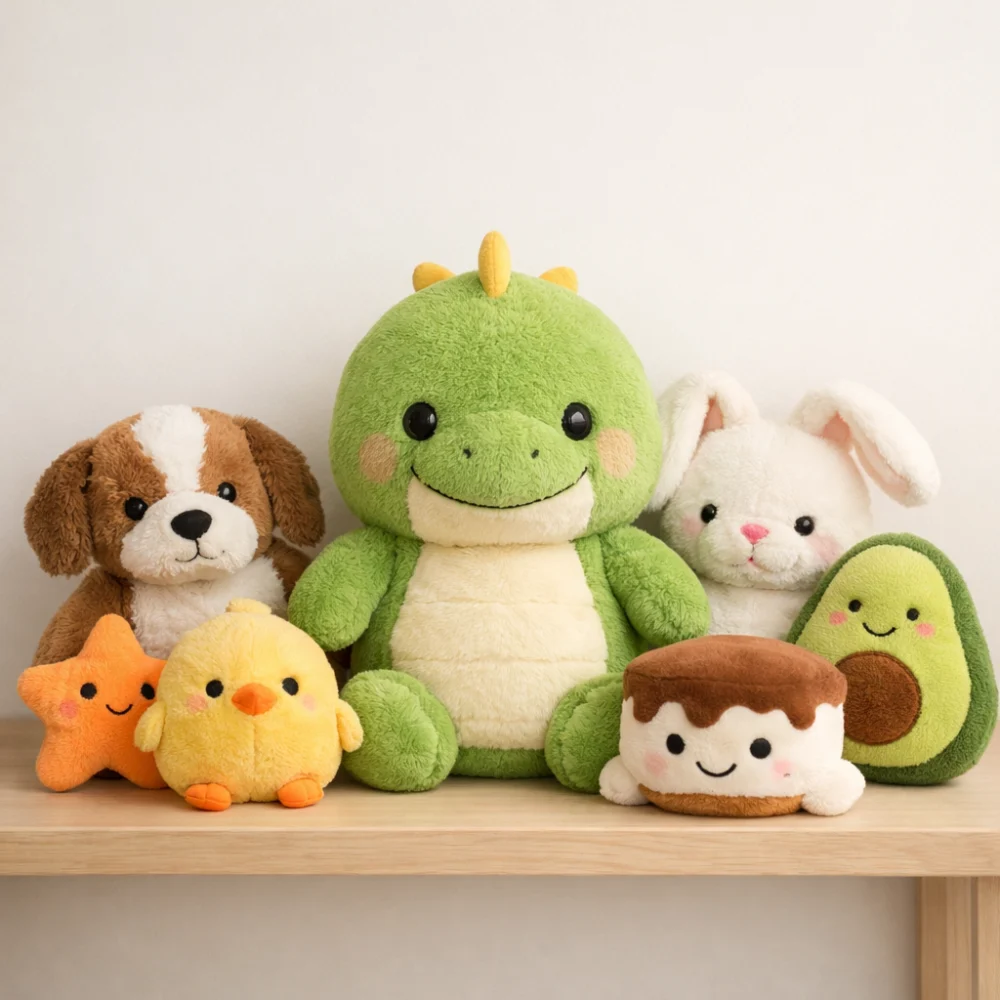
Plushies can be cuddly animal shapes, novelty designs or cushion-like soft toys. The right choice depends on who it is for, how it will be used and whether its size and care requirements suit the recipient.
For a gift, the design may be the first thing that catches your eye, but check the product details too. Size, intended use and any stated age or care guidance can make a design more or less suitable.
Which plushie should you choose?
Start with the intended use: a toy to cuddle, a decorative cushion or a small novelty gift may call for different shapes and sizes. Check the stated dimensions and how the item is presented rather than judging scale from a photograph alone. Consider whether the recipient is likely to prefer an animal, character-like or everyday-object design. Before buying, read the individual product information for suitability and care details.
Compare the main buying factors
| Feature | What it means | Why it matters | What to check |
|---|---|---|---|
| Intended use | A soft toy, decorative piece or cushion-like design may serve different purposes. | Helps you choose a shape and style that fits the recipient and setting. | Read how the product is described and whether it is intended as a toy or for display. |
| Dimensions | The stated height, width or other measurements describe the product’s size. | Size affects how easy it may be to hold, display or give as a small gift. | Check the measurements and compare them with an object of familiar size; photographs can make scale difficult to judge. |
| Shape and design | Plushies may depict animals, characters or novelty objects, among other designs. | A familiar or appealing design can matter more than extra features for a simple gift. | Look at the product images and description for the specific design being offered. |
| Construction details | Descriptions may identify materials, filling or attached decorative elements. | These details can affect feel, appearance and suitability for the intended use. | Rely on stated product information rather than assuming details from the image. |
| Care guidance | Cleaning and care recommendations can differ between products. | Useful if the plushie will be handled often or needs to fit a particular household routine. | Check the individual care instructions before choosing. |
What to consider before choosing
Size and setting
Think about where the plushie will be used or kept. A smaller design may be easier to carry or fit on a shelf, while a cushion-like shape may be chosen for a bed or sofa. These are practical considerations, not guarantees about a product’s feel or intended use, so check the stated dimensions and description.
Design and recipient
Choose a subject or shape that suits the recipient’s interests, especially when buying a gift. If you are unsure, a broadly recognisable animal or simple novelty shape may be easier to select than a design tied to a particular character or trend. Check the pictured design and listing details rather than assuming similarly named items are identical.
Materials and feel
Terms such as soft or plush describe a general impression, not a standardised feel. Where materials or filling are specified, use that information to compare products, but do not infer exact texture or construction from a photograph. Specifications vary by model, so always check the individual product page before buying.
Care and durability expectations
Care needs can depend on the materials and construction. If easy cleaning matters, look for explicit care guidance; do not assume that every plushie is machine washable. Avoid treating a product image or general category label as proof of how well an item will withstand frequent use.
Common plushie types and variations
- Animal-shaped plushies: A familiar choice for a cuddly toy or decorative gift. The particular animal, size and construction vary, so check the product details.
- Novelty-shaped plushies: Designs based on foods or everyday objects can suit someone who enjoys an unusual or playful gift. Their shape may be more decorative than practical for cuddling.
- Cushion-like plushies: These may be selected for display or a soft furnishing role as well as their novelty design. Confirm dimensions and stated use rather than assuming they function as a conventional cushion.
- Small or pendant-style designs: A compact format may suit a small gift or display, where the listing describes it that way. Check whether any attachment is included and what the product is intended for.
Choose for the recipient and use
- For a young child: Check the product’s stated age guidance and suitability information, including any notes about attached or small parts. Do not assume every soft toy is appropriate for every age.
- For a gift when preferences are uncertain: Prioritise a design with broad appeal and a size that seems practical for the recipient’s space. Check dimensions before relying on the product photo.
- For display: Consider the shape, colours and space available, and check whether the listing describes the item as suitable for display or as a cushion-like piece.
- For frequent handling: Look for care instructions and any stated construction details. A product’s appearance alone cannot establish how it will hold up to use.
Common buying mistakes
- Judging size from the image: Camera angle and framing can distort scale. Check the listed dimensions before deciding whether the plushie is the right size.
- Assuming every plushie is a child’s toy: Some designs may be intended mainly for display or as novelty cushions. Read the description and suitability guidance.
- Assuming similar designs are the same product: A familiar shape or similar name does not confirm matching dimensions, materials or included details. Compare the information for the exact item you are considering.
- Guessing care requirements: Soft appearance does not confirm a particular cleaning method. Follow the product’s stated care guidance.
Safety and suitability
Use the product’s stated age and suitability guidance when choosing for a child. Pay attention to any listing information about small or attached parts, particularly when the recipient may be too young for them. If the product information does not answer a suitability question that matters to you, do not assume that the item is appropriate.
Care and storage
Check care instructions before purchase, especially if the plushie is likely to be handled regularly. Store it in a clean, dry place suited to its intended use, and follow any product-specific guidance. Do not assume that a plushie can be washed or tumble-dried unless its information says so.
A simple buying process
- Decide whether the plushie is primarily for cuddling, display, a cushion-like use or a small gift.
- Choose a design that suits the recipient and the setting.
- Compare stated dimensions and any listed construction or material details.
- Check suitability information and care guidance for the intended use.
- Review the individual product details so your choice is based on the exact item, not assumptions from its image or name.
Buyer checklist
- Does the design suit the recipient and intended use?
- Have you checked the stated dimensions?
- Are materials or construction details important to your choice, and are they specified?
- Have you read any age or suitability guidance?
- Are the care instructions suitable for your needs?
- Does the product description match what you expect from the images?
Frequently asked questions
How do I know how big a plushie is?
Use the product’s stated dimensions rather than estimating from a photograph. If the listing gives more than one measurement, consider the shape as well as the height when judging how much space it may take up.
Are plushies suitable for every age?
No single answer applies to every product. Check the individual item’s age and suitability information, including any notes about small or attached parts.
Can plushies be washed?
Cleaning instructions vary. Check the product-specific care guidance and do not assume that washing by machine is suitable.
What is the difference between a plush toy and a plush cushion?
The terms can describe different intended uses, but a soft appearance alone does not establish how a product should be used. Read the description and check the dimensions to see whether the item is presented as a toy, a cushion-like design or primarily for display.
What should I prioritise when buying a plushie as a gift?
Start with the recipient’s interests, then check size, suitability and care details. If you are uncertain about a specific design, a clear product description and stated dimensions can help you make a more considered choice.


