

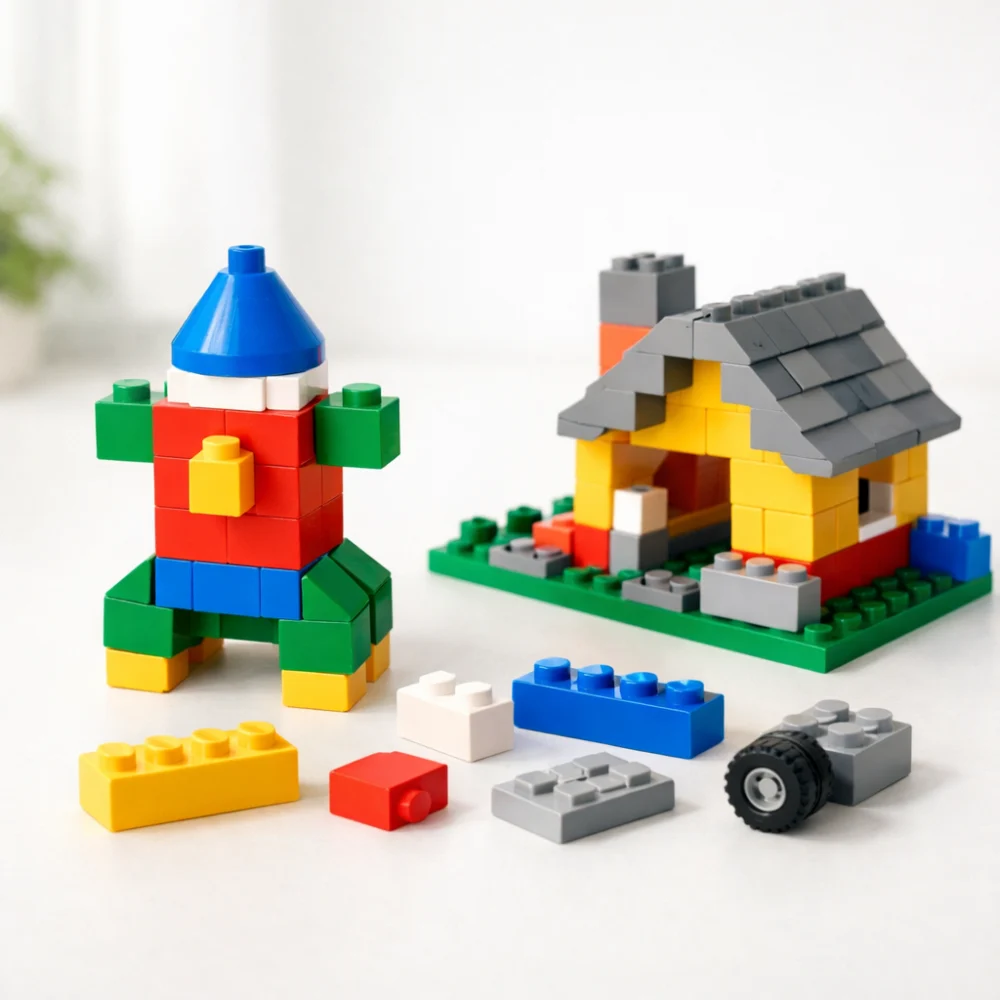
Lego sets range from open-ended building options to themed models designed around a particular subject or finished build. The right choice depends on who will build it, what they enjoy and whether they are likely to play with the result, display it or do both.
Use the details for each individual set to compare its intended age guidance, build information and contents. A familiar theme can make a thoughtful gift, but it is only one part of deciding whether a set suits the recipient.
Which Lego set should you choose?
Start with the recipient’s interests and the sort of building experience they want, rather than choosing by theme alone. Consider whether they prefer making their own creations, following a particular model, or building something intended to be displayed. Check the set’s age guidance and product details, then weigh its scope and finished form against the recipient’s patience, space and play habits. Specifications vary by model, so always check the individual product page before buying.
Compare Lego sets by the details that matter
| Feature | What it means | Why it matters | What to check |
|---|---|---|---|
| Theme or subject | The story, activity or subject the set is based around. | A relevant interest can make building and later play more engaging. | Check that the subject suits the recipient, rather than relying on a broad theme name. |
| Build style | Whether the emphasis is on open-ended construction, a guided model or alternative builds. | Different styles offer different balances of creative freedom and following instructions. | Look for the stated build options and what the set is intended to make. |
| Piece count and build scope | Information about the amount of building involved, where stated. | It can help set expectations, but does not by itself establish difficulty or build time. | Consider the count alongside the model, age guidance and description. |
| Age guidance | The age recommendation supplied for that set. | It helps buyers consider whether the build is intended for the recipient. | Check the guidance on the individual product information and packaging. |
| Finished model and play | Whether the completed build is presented as a play model, display piece or both. | A model that suits the recipient’s intended use is more likely to be enjoyed after building. | Check the product description and images for the completed build and included contents. |
| Storage and space | The room needed for building, keeping loose pieces and placing the finished model. | Space can affect how practical a larger or display-oriented build is at home. | Review any stated finished dimensions and think about where the set will be used. |
What to consider before choosing
Match the subject to the recipient
A theme is a useful starting point for a gift, especially when it connects with an established interest. Look beyond the title: consider whether the recipient will enjoy the specific subject and the finished model, not just the general theme. If you are unsure, a more open-ended creative set may offer a different kind of appeal from a model built around one subject.
Choose a build style that feels right
Some sets focus on making a particular model, while others may offer more freedom or more than one build option. A guided model can suit someone who enjoys following a design; open-ended building may better suit someone who likes experimenting. For sets described as offering alternative builds, check what is included and whether the different builds are presented as options rather than simultaneous finished models.
Read build and age information together
Piece count can give context, but it is not a reliable measure of how challenging or satisfying a build will be. Consider it alongside the stated age guidance, the type of model and the recipient’s previous interest in building. Do not assume that a set is suitable for a particular child based on theme or piece count alone.
Think about what happens after the build
Some recipients will want to play with their completed model; others may prefer to keep it on display or take it apart to build again. Check the product information for the intended finished model and any items included. If display is important, look for stated dimensions and consider whether there is a suitable place for it.
Common Lego set types
- Open-ended creative sets: These can suit builders who enjoy inventing their own creations. The trade-off is that they may offer less of a single, clearly defined finished model.
- Themed model sets: These centre on a particular subject or recognisable type of build, which can make them appealing to fans of that subject. Their focus may be less suited to someone who mainly wants unrestricted building.
- Sets with alternative builds: These offer different ways to use the included building elements, where the product information specifies that feature. Check which build options are described and what the set is designed to make.
- Display-oriented builds: These may suit someone who enjoys the finished model as well as the building process. Consider the stated dimensions and whether the recipient would rather play with a model than keep it on display.
Choosing for different needs
| If the priority is… | Consider… | Keep in mind… |
|---|---|---|
| A gift for someone with a clear interest | A set whose specific subject and finished model connect with that interest. | Check that the model itself appeals, not just the theme name. |
| Making up original creations | An open-ended creative building style. | It may not provide the same single-model building experience as a guided set. |
| A focused building project | A set that describes a particular model and gives useful build information. | Use age guidance and product details together; piece count alone does not tell you how difficult it is. |
| Keeping the finished build on display | A model that suits the recipient’s tastes and available space. | Check any stated finished dimensions and how the completed model is presented. |
| Building in more than one way | A set whose product information describes alternative builds. | Confirm which options are included and how they are intended to be built. |
Common buying mistakes to avoid
- Choosing by theme alone: A familiar subject does not guarantee that the particular model will appeal. Check the finished build and the recipient’s specific interests.
- Treating piece count as a difficulty rating: A larger count does not automatically mean a harder or better set. Consider the age guidance and build description as well.
- Assuming every set is mainly for play: Some models may be more suited to display, while others may invite play or rebuilding. Check the product information for its intended build.
- Overlooking what is included: Product images and titles may highlight a main model or theme. Read the listed contents to understand what the individual set includes.
- Guessing about combining sets: If the recipient plans to use a set with pieces they already own, check the individual product information and do not assume every combination or build will work as expected.
Safety and suitability
Use the age guidance and other suitability information supplied for the individual set, particularly when buying for a child. Consider the recipient’s ability and interest in building, and check the product details for any relevant cautions. If the intended recipient will share the set with younger children, consider whether small building pieces are appropriate for that household.
Ownership, care and storage
Loose building pieces are easier to keep track of when there is a suitable place to store them, while a completed model may need space of its own. Think about whether the recipient is likely to keep sets assembled, rebuild them or mix pieces during creative play. For care or storage guidance specific to a set, follow the information supplied with that product.
A simple buying process
- Decide whether the set is intended mainly for creative building, a particular model, play or display.
- Identify the recipient’s interests and the type of building experience they are likely to enjoy.
- Narrow the options by build style, stated age guidance and the information given about the finished model.
- Compare the product details, including any stated piece count, build options, contents and dimensions.
- Check the individual product information for suitability and any details that matter to the intended use.
Buyer checklist
- Does the set’s specific subject suit the recipient?
- Will they enjoy a guided model, open-ended building or alternative builds?
- Have you checked the set’s age guidance and suitability information?
- Do the stated build details and contents match your expectations?
- Is there room to build, store loose pieces or display the finished model?
- Have you checked the individual product information before deciding?
Frequently asked questions
Is a higher piece count a sign that a Lego set is more difficult?
Not necessarily. Piece count describes the number of pieces where that information is provided, but it does not by itself establish how challenging a build will be. Consider the age guidance and the set’s model and build description too.
Are Lego sets suitable for every child?
Suitability depends on the individual set and the child. Check the age guidance and any other information provided for that product, and consider whether the build matches the child’s interests and abilities.
What is the difference between a creative set and a model-focused set?
A creative set generally puts more emphasis on making original constructions, while a model-focused set centres on a particular finished build. Check the product description to understand which experience the individual set is designed to offer.
What should I check if a set offers alternative builds?
Read the product details to see which build options are described and what the set is intended to make. Do not assume that all alternative models can be built at the same time from one set.
Should I choose a set for play or display?
Choose according to how the recipient is likely to enjoy the completed model. If display matters, check any stated dimensions and think about available space; if play matters more, look for a product description that suits that use.
Can a new set be combined with building pieces already at home?
Do not assume that every set or combination will suit the intended build. Check the individual product information, and consider whether the recipient wants to keep the new set as a distinct model or use pieces more freely.


