

Food Waste Caddies
Food Waste Caddies for Cleaner Kitchen Waste Sorting
Food waste caddies provide a convenient place to collect suitable peelings, leftovers and food scraps before they are transferred to an outdoor bin, compost container or local collection point. Choosing the right capacity, lid and liner system can make everyday food-waste sorting easier while helping keep kitchen worktops and cupboards tidy.
Browse countertop food caddies, under-sink containers, ventilated caddies, lidded bins and designs with removable inner buckets or carrying handles. Compare products by their dimensions, litre capacity, liner compatibility, lid style, cleaning requirements and suitability for your local collection scheme.
Explore Food Waste Caddies at YPC to find practical options for kitchens, utility rooms, flats and family homes.
- Food Waste Caddies
Gardening Delights 23L Food Waste Caddy with Locking Lid and Carry Handle
£15.00 *View On Amazon* - Food Waste Caddies
Alriedy 20 PCS Activated Carbon Filter Compost Caddy Odour Filters
£9.69 *View On Amazon* - Food Waste Caddies
PANSUN Selected Compostable Food Waste Bags, 100 Count, 6L Small Bin Bags
£11.99 *View On Amazon* - Food Waste Caddies
Easy Eco Green Kitchen Compost Caddy 5L with Carry Handle
£11.99 *View On Amazon* - Food Waste Caddies
Kerbside Compost Caddy with Locking Lid, Silver Grey, 23 Litre
£21.49 *View On Amazon* - Food Waste Caddies
Large Blue Compost Caddy 23 Litre Plastic Kerbside Bin with Composting Guide
£20.99 *View On Amazon* - Food Waste Caddies
Typhoon Otto Black Compost Caddy 2.5 Litre
Original price was: £17.00.£10.96Current price is: £10.96. *View On Amazon* - Food Waste Caddies
RAYTID Compostable Food Waste Bags 6L, 150 Pack, EN13432
Original price was: £9.99.£8.99Current price is: £8.99. *View On Amazon* - Food Waste Caddies
Small Biodegradable Bin Bags 6L Compostable Caddy Liners
Original price was: £8.99.£6.39Current price is: £6.39. *View On Amazon* - Food Waste Caddies
Hmkesoteric Food Bin Caddy 2.6 Gallon Hanging Kitchen Bin with Lid
Original price was: £16.99.£11.99Current price is: £11.99. *View On Amazon* - Food Waste Caddies
ZHEZHE 120PCS 6L/1.2 Gallon Trash Bags
Original price was: £6.99.£5.09Current price is: £5.09. *View On Amazon* - Food Waste Caddies
BEAST 10L Compostable Drawstring Bin Bags for Home Composting Caddies, 96 Bags
£18.93 *View On Amazon* - Food Waste Caddies
Gardening Naturally Kitchen Caddy Kerbside Green Recycling Bin with Long Handle, 23 Litre
£19.91 *View On Amazon* - Food Waste Caddies
MICHIHOMIE Hanging Kitchen Bin with Lid, 10L Foldable Food Waste Bin
£14.99 *View On Amazon* - Food Waste Caddies
TATAY Ecohome Food Waste Caddy, 6L
Original price was: £12.29.£11.13Current price is: £11.13. *View On Amazon* - Food Waste Caddies
KITBEST 10L Biodegradable Bin Liners, 120 Count Food Waste Bags
£7.99 *View On Amazon*




How to Choose a Food Waste Caddy
Food waste caddies collect suitable kitchen scraps separately from general rubbish and dry recycling. They can provide a convenient temporary storage point for waste produced while preparing meals, clearing plates and tidying the kitchen.
The right caddy depends on how much food waste your household produces, where the container will be positioned and how frequently it can be emptied.
Before buying, check your local council’s current food-waste guidance. Accepted materials, liner requirements and collection arrangements vary between areas and may change over time.
Measure the intended location carefully. Compare the full external width, depth and height, including the lid, handle and any space required to remove an inner bucket.
Types of Food Waste Caddies
Countertop Food Waste Caddies
Countertop caddies are compact containers designed to remain close to the food-preparation area.
They can make it easier to dispose of fruit and vegetable peelings, tea bags and other accepted scraps while cooking. Their smaller capacity encourages frequent emptying, which can help prevent waste remaining indoors for too long.
Choose a stable design that will not slide or tip during use. Position it away from direct heat, uncovered food and the edges of worktops.
Under-Sink Food Waste Caddies
Under-sink caddies keep food waste out of sight and free visible worktop space.
They may be freestanding, attached to a cupboard door or fitted inside a pull-out system. Measure around pipes, waste traps, hinges and cleaning products before ordering.
The caddy should remain easy to remove and clean. Check the cupboard regularly for leaks, spills and trapped odours.
Freestanding Food Waste Caddies
Freestanding caddies can be placed on the floor, inside a utility room or beside a larger kitchen bin.
They may offer more capacity than countertop designs and can suit households that generate larger amounts of food scraps.
Make sure the lid remains accessible and the container does not obstruct cupboard doors, appliances or walkways.
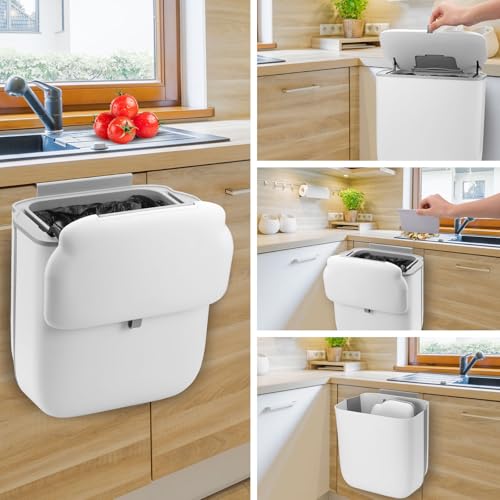
Cupboard-Mounted Food Caddies
Cupboard-mounted caddies attach to a compatible door or internal frame.
They can open with the cupboard and keep waste storage hidden between uses. Installation requirements vary, so check the cupboard material, door thickness and available internal clearance.
The caddy should not collide with shelves, pipes or stored products when the door closes.
Ventilated Food Waste Caddies
Ventilated caddies include openings designed to allow moisture to escape when used with a compatible breathable liner.
This may help food waste dry rather than remain wet inside the container, depending on the caddy, liner and household conditions.
Ventilated designs can still attract insects or release odours if they are not emptied and cleaned regularly. Use only the liner type recommended by the product and local collection scheme.
Sealed Food Waste Caddies
Sealed or close-fitting caddies use a lid intended to contain waste and reduce access by insects or pets.
They may be suitable where food scraps are likely to contain moisture or create noticeable smells. A tight lid can also trap condensation, so the caddy still needs frequent emptying and cleaning.
Check whether the lid has a replaceable seal or filter where these features are included.
Food Caddies with Inner Buckets
A removable inner bucket can make the caddy easier to empty, carry and wash.
Check whether the bucket includes a handle and whether it can be lifted out without removing the full lid assembly.
Residue can collect between the inner and outer sections, so both parts should be inspected and cleaned regularly.
Food Caddies with Handles
A carrying handle can make it easier to transfer food waste to an outdoor container or communal collection point.
Check that the handle remains secure when the caddy is full. Food waste can be heavier than expected because it often contains moisture.
Avoid filling the container beyond the stated capacity or carrying it by a loose lid.
Filtered Food Waste Caddies
Some caddies include replaceable carbon or odour-control filters inside the lid.
These may help reduce certain smells, depending on the product and conditions. They do not replace frequent emptying or cleaning.
Check how often the filter needs replacing, whether compatible replacements are readily available and whether the lid remains washable.
Compost Caddies
Compost caddies collect suitable scraps before they are transferred to a garden compost bin.
The materials accepted by a home compost system may differ from those permitted by a council food-waste collection. Cooked food, meat, dairy products and certain compostable packaging may be unsuitable for some home composting methods.
Follow the guidance for the compost system being used.
Important Buying Considerations
Capacity
Food waste caddy capacity is normally shown in litres.
Smaller caddies suit worktops, flats and households that empty food scraps daily. Larger containers may suit families or homes with a separate utility area.
A large caddy requires less frequent emptying but allows more food waste to remain indoors. The contents can also become heavy and difficult to carry.
Choose a capacity that reflects how often you can realistically empty and clean the container.
External Dimensions
Measure the intended space rather than choosing by litre capacity alone.
Check the:
- Width
- Depth
- Closed height
- Height with the lid open
- Handle clearance
- Inner-bucket clearance
- Space around cupboard hinges
- Distance from nearby appliances
- Worktop area required
- Room needed to lift the caddy
A countertop caddy should leave enough space for safe food preparation.
Lid Style
Food caddy lids may lift, flip, clip, hinge or detach completely.
A hinged lid remains attached and is less likely to be misplaced. A removable lid can provide a wider opening and make cleaning easier.
Check that the lid can be opened with one hand where this matters and that it closes without trapping the liner.
Opening Size
A wide opening makes it easier to scrape waste from plates and chopping boards.
A narrower opening may keep the contents more contained but can be less convenient for larger peelings and leftovers.
The opening should be easy to clean and free from narrow grooves where food residue could become trapped.
Liner Compatibility
Some caddies use compostable liners, paper liners, newspaper or no liner at all.
The correct choice depends on the product instructions and local collection rules. A bag described as biodegradable or compostable is not automatically accepted by every council.
Check the recommended liner dimensions and certification requirements where these are specified locally.
Materials
Food waste caddies are commonly made from plastic, stainless steel, coated metal or mixed materials.
Plastic is lightweight and generally easy to wash. Metal provides a rigid structure but may show water marks or develop corrosion if the finish is damaged.
Choose a material that can tolerate regular cleaning and contact with damp waste.
Ease of Cleaning
Food residue can collect around lids, handles, seams and liner-retaining sections.
Smooth interiors and removable components are generally easier to maintain. Complex filters and hinges may require more detailed cleaning.
Check whether the product can be washed, placed in a dishwasher or wiped only. Follow the individual care instructions.
Stability
A stable base reduces the chance of the caddy tipping when food is scraped into it.
Lightweight countertop caddies can move on smooth worktops, while tall floor-standing designs may tip if they are overloaded.
Place the caddy on a level surface and avoid leaning utensils or chopping boards against it.
Carrying Weight
Food waste can become heavy, particularly when it contains cooked food, fruit, liquids or wet peelings.
Choose a handle and container size that can be carried comfortably. Empty the caddy before it becomes difficult to lift safely.
A smaller container carried regularly may be more manageable than a large caddy filled to capacity.
Countertop or Under-Sink Food Caddy
A countertop caddy is convenient while preparing food and encourages quick disposal of peelings and scraps. It occupies worktop space and remains visible in the kitchen.
An under-sink caddy keeps waste out of sight and frees the work surface. It can be less convenient to access and may allow leaks or odours to go unnoticed.
The better option depends on your kitchen layout and how often the container will be used.
Ventilated or Sealed Food Caddy
A ventilated caddy can allow moisture to escape when used with an appropriate breathable liner. This may help reduce wetness and make the contents lighter.
A sealed caddy provides stronger containment and may reduce access by insects and pets. Moisture and condensation can remain trapped inside.
Both designs require regular emptying and cleaning. Choose according to the recommended liner system and household environment.
Lined or Unlined Food Caddy
A liner can make emptying easier and reduce direct contact between waste and the caddy.
An unlined container avoids replacement bags but needs more thorough washing after each emptying. Food residue may stick to the base and sides.
Follow local collection guidance before choosing a liner. Some schemes supply approved bags or request that food waste is wrapped in newspaper.
What Can Go in a Food Waste Caddy?
Accepted food waste varies by collection service.
Depending on local guidance, suitable materials may include:
- Fruit and vegetable peelings
- Cooked and uncooked leftovers
- Bread and cakes
- Rice and pasta
- Tea bags
- Coffee grounds
- Eggshells
- Meat and fish scraps
- Bones
- Dairy products
- Out-of-date food removed from packaging
- Small amounts of kitchen paper contaminated with food
Check your council’s current list before adding an unfamiliar item.
What Should Not Go in a Food Waste Caddy?
Items that may be excluded include:
- Plastic packaging
- Ordinary plastic bags
- Glass
- Metal tins
- Foil
- Food wrappers
- Liquids
- Cooking oil
- Garden waste
- Pet waste
- Nappies
- Cleaning cloths
- Medicines
- Batteries
- Electrical items
- Non-approved compostable packaging
Do not assume an item belongs in food waste simply because it is described as natural or biodegradable.
Removing Food from Packaging
Food waste usually needs to be removed from its packaging before it enters the caddy.
Take expired food out of plastic trays, wrappers, jars, tins and cartons. Place the packaging into the appropriate rubbish or recycling stream.
Take care around broken glass, sharp tin edges and swollen or damaged containers.
Liquids and Food Waste Caddies
Do not pour large amounts of liquid into a food waste caddy unless the local scheme explicitly permits it.
Liquids can cause liners to leak, increase the carrying weight and create spills during collection.
Drain excess sauces or liquids using an appropriate method before adding solid food waste. Cooking oils and fats require separate handling.
Cooking Oil and Fat
Cooking oil, melted fat and grease should not normally be poured into a food caddy, sink, drain or toilet.
Allow suitable fats to cool and follow local disposal guidance. Some areas provide cooking-oil recycling at household waste centres.
Wipe greasy pans and plates before washing where practical to reduce fat entering the drainage system.
Tea Bags and Coffee Grounds
Many food-waste schemes accept tea bags and coffee grounds.
Some tea bags contain plastic or other materials that may not be suitable for home composting. Local collection facilities may process them differently.
Check the packaging and local scheme guidance when composting at home.
Meat, Fish and Bones
Council food-waste collections may accept meat, fish and small bones, including cooked leftovers.
Home composting systems often have different requirements and may exclude these items because of pests, odours and processing limitations.
Keep meat and fish waste contained and empty the caddy promptly, especially during warm weather.
Dairy Products
Some council schemes accept cheese, yoghurt and other dairy waste after packaging has been removed.
Dairy can create strong smells when left indoors. Add only small quantities and empty the caddy regularly.
Home composting guidance may differ.
Food-Soiled Paper
Some collection schemes accept small amounts of kitchen roll, paper napkins or newspaper contaminated with food.
Others exclude these materials or limit the quantity. Check local guidance before using paper to wrap food scraps.
Do not add paper containing cleaning chemicals, paint, oil or other hazardous substances.
Compostable Packaging
Compostable cups, plates, bags and food packaging are not automatically suitable for household food-waste collections.
Some require industrial composting conditions, while others may not be accepted by local facilities.
Look for the required certification and confirm acceptance with the collection service before adding the item.
Food Waste Caddy Liners
Liners can help contain scraps and make the caddy easier to empty.
Possible liner options include:
- Council-supplied liners
- Certified compostable bags
- Paper liners
- Newspaper
- No liner
- Manufacturer-specific bags
Use only an option accepted by the local scheme. Ordinary carrier bags and standard bin liners may be prohibited.
Choosing the Right Liner Size
The liner should fit the caddy without excessive stretching or large amounts of overhang.
A liner that is too small may tear or slip into the container. An oversized bag can interfere with the lid and waste material.
Check the caddy capacity and recommended liner dimensions before ordering replacements.
Fitting a Food Caddy Liner
Open the liner fully and press it gently into the base.
Fold the top around the rim or secure it using the retaining section where supplied. Keep the bag clear of hinges and lid catches.
Do not overfill the liner beyond the point where it can be closed or lifted safely.
Preventing Liner Leaks
Allow very wet food to drain where appropriate before placing it in the caddy.
Avoid adding sharp bones or packaging that could puncture the liner. Replace bags that are damaged, incorrectly fitted or beginning to break down.
Compostable liners can weaken when exposed to heat, moisture and food residue for extended periods.
Emptying a Food Waste Caddy
Empty the caddy regularly and before waste reaches the lid.
Tie, fold or close the liner according to the collection instructions. Carry the caddy using its handle where provided and keep it upright.
Check for leaks before moving through the home. Clean any spills immediately.
How Often Should a Food Caddy Be Emptied?
The appropriate frequency depends on household size, waste type, room temperature and local collection arrangements.
Daily or frequent emptying may be appropriate where the caddy contains meat, fish, dairy or moist cooked food.
Do not wait for the caddy to become completely full if smells, insects or leaking liners begin to develop.
Preventing Food Waste Odours
Regular emptying and cleaning provide the most effective odour control.
Helpful steps include:
- Keeping the lid closed
- Using an approved liner
- Draining excess liquid
- Emptying the caddy frequently
- Cleaning spills promptly
- Keeping the caddy away from heat
- Washing the inner bucket
- Replacing filters as directed
- Storing meat and fish waste for the shortest practical period
- Maintaining kitchen ventilation
Deodorisers may help with smells but do not replace proper waste removal.
Using Caddy Filters
Filtered lids may use replaceable carbon inserts or another odour-control material.
Fit the filter in the correct position and replace it at the stated interval. A saturated or damp filter may become ineffective.
Do not wash disposable filters unless the manufacturer specifically permits it.
Preventing Fruit Flies and Insects
Food scraps can attract fruit flies and other insects, particularly during warmer weather.
Reduce the risk by:
- Emptying the caddy regularly
- Cleaning the rim and lid
- Keeping fruit waste contained
- Removing spills from worktops
- Rinsing the container after emptying
- Keeping the lid closed
- Avoiding overfilled liners
- Cleaning nearby drains and surfaces
- Storing the caddy away from direct heat
Persistent insects may indicate another food source elsewhere in the kitchen.
Preventing Rodents and Pets Accessing Food Waste
Keep the caddy closed and place it where pets cannot knock it over or open the lid.
Do not leave filled liners beside doors or outdoor bins. Transfer waste promptly to the correct secure container.
Food scraps that are harmless to people may still be unsafe for dogs, cats and other animals.
Food Caddies in Warm Weather
Food waste can break down more quickly during hot weather.
Empty the caddy more frequently and keep it away from sunlight, ovens, radiators and warm appliance surfaces.
Clean the container promptly if smells or moisture develop.
Food Caddies in Small Kitchens
Compact countertop, wall-mounted and under-sink caddies can work well where floor and worktop space is limited.
Choose a smaller capacity that can be emptied frequently rather than a large container that obstructs food preparation.
Make sure the caddy does not block cupboards, sockets or appliance controls.
Food Caddies for Family Homes
Larger households may benefit from a medium-capacity caddy with a strong handle and removable inner bucket.
The caddy should still be manageable when full and easy for household members to use correctly.
Clear labels can help children and adults understand which items belong inside.
Food Caddies for Flats
Flats may use communal food-waste bins located outside or elsewhere within the building.
Choose a caddy that can be carried safely through shared areas without leaking. Keep corridors, stairs and fire exits clear.
Check building-management rules and local collection arrangements.
Food Caddies for Utility Rooms
A utility-room caddy can keep waste away from the main food-preparation area.
The room should remain ventilated and the container must still be emptied regularly.
Keep food waste away from clean laundry, pet food and household chemicals.
Food Caddies for Garden Composting
A small kitchen caddy can collect vegetable peelings, coffee grounds and other materials suitable for your compost system.
Home composting generally requires a balanced mixture of green and brown materials. Not every cooked food or animal product is appropriate.
Follow reliable guidance for the particular compost bin and household conditions.
Food Waste Caddies and Recycling
Food waste should normally remain separate from dry recycling.
Food residue can contaminate paper, cardboard and packaging, making materials harder to recycle.
Use clearly labelled containers and clean spills where waste streams are stored close together.
Positioning a Food Waste Caddy
Place the caddy somewhere convenient but away from direct heat and uncovered food.
Avoid positioning it:
- Beside a hob
- On top of a hot appliance
- Beneath a leaking pipe
- Near a pet feeding area
- Where children can easily open it
- Across a walkway
- Beside electrical sockets where leaks could occur
- In direct sunlight
- On an unstable shelf
- Where the lid cannot open fully
Leave enough room to clean beneath and around the container.
Countertop Hygiene
Do not allow the caddy base to become contaminated with food residue.
Move and wipe beneath it regularly. Avoid placing the caddy on chopping boards or surfaces used directly for food preparation without cleaning the area afterwards.
Wash hands after handling the caddy or liner.
Food Caddies Around Children
Food waste can contain bones, spoiled food, liners and packaging that may be unsafe for children.
Position the caddy out of reach where necessary and supervise younger children who help with sorting.
Keep spare liners and filters away from babies and toddlers because bags and small parts can present hazards.
Food Caddies Around Pets
Dogs, cats and other pets may attempt to open caddies or eat the contents.
Choose a secure lid or place the container inside a cupboard where appropriate. Do not rely on height alone if a pet can climb or knock the caddy down.
Clean spills immediately and keep replacement liners securely stored.
Cleaning a Food Waste Caddy
Empty the container and remove the liner, filter and inner bucket where applicable.
Wash or wipe every permitted component using a suitable method. Pay particular attention to:
- The lid
- Rim
- Handle
- Hinge
- Liner-retaining groove
- Base
- Inner bucket
- Seal
- Filter housing
Rinse where required and allow the caddy to dry completely before fitting a fresh liner.
Cleaning a Plastic Food Caddy
Plastic caddies can often be washed with warm water and a suitable household cleaner.
Avoid very hot water, abrasive scourers and strong chemicals unless the manufacturer confirms that they are safe for the material.
Dry the caddy thoroughly, including hollow handles and lid grooves.
Cleaning a Metal Food Caddy
Use a soft cloth and a cleaning method suitable for the metal finish.
Avoid abrasive tools that could scratch protective coatings. Dry the surface promptly to reduce water marks and corrosion.
Check hinges, lid edges and the base for rust.
Dishwasher-Safe Caddies
Some removable food caddy components may be dishwasher safe.
Check the maximum temperature and whether the lid, filter housing, seals and handles must be removed first.
Do not place electronic, wooden, filtered or non-approved components in a dishwasher.
Preventing Persistent Smells
If odours remain after emptying:
- Wash every removable component.
- Check beneath the inner bucket.
- Clean the lid seal and hinge.
- Replace a saturated filter.
- Allow the caddy to dry fully.
- Inspect for cracks or trapped food.
- Review how frequently it is emptied.
A caddy that remains permanently odorous or cannot be cleaned effectively may need replacing.
Preventing Mould
Do not leave wet liners or food residue inside the caddy for extended periods.
Allow the container to dry after washing. Check under-sink cupboards and enclosed storage for condensation or leaks.
Mould that repeatedly develops may indicate poor ventilation, trapped moisture or damage to the caddy.
Preventing Stains
Certain foods can mark light-coloured plastic and liners.
Clean residue promptly and avoid leaving strongly coloured food pressed against the container for long periods.
Staining does not always affect safe use, but a caddy that becomes rough, damaged or difficult to clean should be replaced.
Preventing Floor and Cupboard Damage
Leaks can stain wood, board, laminate and other surfaces.
Check beneath the caddy regularly and use a suitable washable tray where appropriate.
Do not allow wet liners or food waste to remain against cupboard panels.
Maintaining Hinges, Handles and Lids
Inspect the caddy regularly for:
- Loose hinges
- Cracked handles
- Failed catches
- Damaged seals
- Warped lids
- Sharp edges
- Split inner buckets
- Loose filter covers
- Sticking mechanisms
- Areas that trap waste
Repair only where compatible replacement parts and instructions are available.
Maintaining Ventilation Openings
Keep ventilation holes clear of food, liners and residue.
Blocked openings can prevent the caddy working as intended. Use a suitable brush or cleaning method and dry the container fully.
Do not enlarge holes or alter the caddy.
Food Waste Caddy Safety
Do not place hot oil, ash, burning materials, chemicals, medicines, batteries or sharp packaging into a food caddy.
Avoid pushing waste down with bare hands because bones and other hard items may be hidden beneath the surface.
Wash hands thoroughly after handling food waste.
Outdoor Food Waste Containers
Indoor caddies are normally emptied into a larger outdoor container supplied or approved by the local scheme.
Keep outdoor lids closed and clean any spillages around the container. Store it away from doors and windows where local arrangements allow.
Do not leave loose food-waste bags beside the bin where animals can access them.
Collection-Day Preparation
Follow local instructions for:
- Approved liners
- Container placement
- Lid closure
- Collection times
- Maximum quantities
- Communal bins
- Missed collections
- Cleaning supplied caddies
- Replacement containers
Do not place an indoor countertop caddy outside for collection unless the scheme specifically requires it.
When to Replace a Food Waste Caddy
Replace the caddy if it becomes:
- Cracked
- Permanently odorous
- Difficult to clean
- Unable to close
- Damaged around the handle
- Split around the base
- Unstable
- Sharp around the edges
- Warped
- Unable to hold a liner securely
A damaged caddy can leak, attract pests and become unhygienic.
Useful Food Waste Caddy Accessories
Useful additions may include:
- Approved caddy liners
- Replacement filters
- Spare inner buckets
- Liner-retaining rings
- Cleaning brushes
- Recycling labels
- Cupboard mounting brackets
- Washable drip trays
- Replacement lids
- Carrying handles
Check dimensions and product compatibility before ordering liners, filters or replacement components.
Why Buy Food Waste Caddies from YPC?
At YPC, we understand active lifestyles and the need for practical products that work in real use. Our Food Waste Caddies category makes it easier to compare countertop, under-sink, ventilated, filtered and cupboard-mounted designs for different household kitchens.
Browse the available options and compare capacity, dimensions, liner compatibility, lid style and cleaning requirements to find a food caddy suited to your household and local collection routine.
Frequently Asked Questions
What size food waste caddy should I choose?
Choose a capacity based on your household size and how frequently the caddy can be emptied. Smaller countertop caddies suit regular emptying, while larger households may need more capacity.
Do food waste caddies need special liners?
This depends on the caddy and local collection scheme. Some councils require certified compostable liners, while others provide bags or accept newspaper. Check current local guidance.
Can cooked food go into a food waste caddy?
Many council collections accept cooked food, meat, fish and dairy, but home composting rules can be different. Confirm what your local scheme permits.
How can I stop a food waste caddy smelling?
Empty it frequently, drain excess liquid, clean the lid and inner bucket and replace filters where fitted. Keep the caddy away from direct heat.
Can biodegradable bags be used in food waste caddies?
Not automatically. Biodegradable and compostable products are not the same, and not every bag is accepted by local collection services. Use only an approved liner.
 Getting ready for Summer? View our Home and Garden Products

Heading outdoors this winter? Take a look at our Outdoor Clothing.