

Clothes Airers
Clothes Airers for Practical Indoor and Outdoor Drying
Clothes airers provide reusable drying space for clothing, towels, bedding and other suitable laundry without relying entirely on a tumble dryer. Choosing the right size and design can help you make better use of available floor, wall, radiator or outdoor space.
Browse folding clothes airers, tower airers, heated airers, radiator dryers, over-bath designs and compact drying racks. Compare products by their total drying space, dimensions, maximum stated load, folded size, materials and suitability for indoor or outdoor use.
Explore Clothes Airers at YPC to find practical options for flats, family homes, utility rooms, gardens and everyday laundry routines.
- Clothes Airers
Taylor & Brown 3 Tier Foldable Clothes Airer, Extendable Laundry Drying Rack, Black
Original price was: £17.99.£14.99Current price is: £14.99. *View On Amazon* - Clothes Airers
Chuboir Clothes Airer with 3 Rotatable Arms, Foldable Standing Laundry Rack, 56.7 inch, Silver Blue
Original price was: £21.90.£17.90Current price is: £17.90. *View On Amazon* - Clothes Airers
BLACK+DECKER Extendable Over Bath Airer, Aqua, 10 Bars, 5.6m Drying Space
Original price was: £23.99.£21.99Current price is: £21.99. *View On Amazon* - Clothes Airers
SONGMICS Foldable Clothes Airer, 20 m Drying Space, Grey LLR720G01
£32.99 *View On Amazon* - Clothes Airers
Youyijia Wooden Clothes Airer, Collapsible Folding Laundry Drying Rack
£35.99 *View On Amazon* - Clothes Airers
Minky SureGrip 3 Tier Clothes Airer, 21m, 21kg, Hanger Corners
£34.99 *View On Amazon* - Clothes Airers
Dripex Bamboo Clothes Airer, Foldable Drying Rack, Freestanding Towel Hanger
£25.99 *View On Amazon* - Clothes Airers
SYKIARIOL Compact Clothes Airer 3-Tier Foldable Drying Rack, Grey
£29.99 *View On Amazon* - Clothes Airers
Vileda Universal Ultimate Clothes Airer, 18m Drying Space, Portable
£35.99 *View On Amazon* - Clothes Airers
Rainberg 3 Tier Clothes Airer Foldable Drying Rack with Non-Slip Feet
£14.99 *View On Amazon* - Clothes Airers
ZENO Foldable Extendable Clothes Airer, Aluminium, 105cm x 73cm
£16.95 *View On Amazon* - Clothes Airers
Vivo Technologies 16m 4 Arm Freestanding Portable Rotary Airer
Original price was: £29.99.£27.99Current price is: £27.99. *View On Amazon* - Clothes Airers
AIBULO 3 Tier Foldable Clothes Airer, 24 Rail Drying Rack, 15 kg
Original price was: £24.99.£15.99Current price is: £15.99. *View On Amazon* - Clothes Airers
Joseph Joseph AirFrame 3-Tier Clothes Airer, 16 m Capacity, Foldable Drying Rack
£105.00 *View On Amazon*








How to Choose a Clothes Airer
Clothes airers hold wet laundry apart so that air can circulate around the fabric and moisture can evaporate. They can be useful for everyday clothing, delicate garments and items that cannot be tumble dried.
The right airer depends on the amount of laundry you usually wash, the space available and whether you need a permanent, folding or heated design.
Measure both the open and folded dimensions before ordering. A compact airer may store neatly but still require considerable floor space when fully opened.
Types of Clothes Airers
Folding Clothes Airers
Folding clothes airers are freestanding racks that open to provide several rails for hanging laundry. They are commonly used in bedrooms, utility rooms, kitchens and other ventilated indoor spaces.
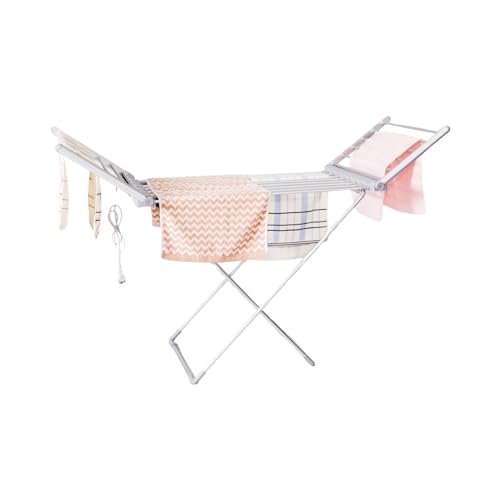
Traditional winged designs may include a central section and two adjustable side panels. The wings can provide space for longer garments or items placed on hangers where the product allows it.
Check the locking mechanism and make sure the airer stands securely before adding laundry.
Tower Clothes Airers
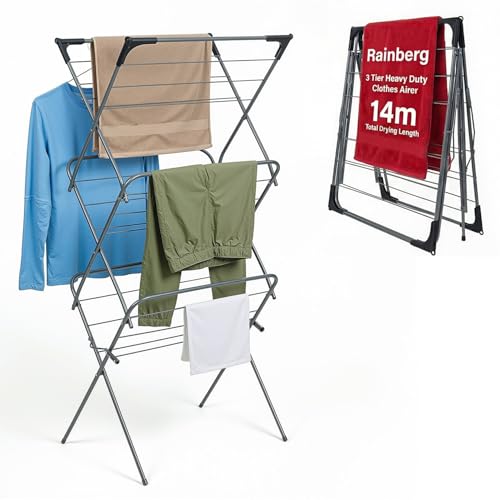
Tower airers use vertical space and provide several drying levels within a relatively compact footprint. They can suit flats, small utility rooms and households with limited open floor space.
Multiple tiers may provide generous drying capacity, although long dresses, trousers and bedding can be more difficult to position.
Some tower airers allow individual shelves to fold down for larger garments. Check the height and make sure the unit remains stable when laundry is distributed unevenly.
Heated Clothes Airers
Heated clothes airers use low-level electrical heat to help laundry dry. They can be useful during cold or damp weather when outdoor drying is not practical.
Drying time depends on the fabric, room temperature, ventilation, spacing between items and the airer’s design. A compatible cover may help retain warmth where the manufacturer recommends one.
Compare the power rating, cable length, controls, drying capacity and folded dimensions. Heated airers should always be used according to the supplied electrical and safety instructions.
Radiator Airers
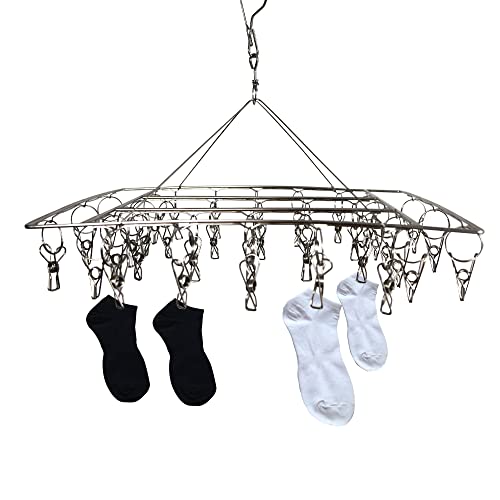
Radiator airers hang over compatible radiators to provide compact drying space for smaller garments, underwear, socks and tea towels.
Check the hook width and design before buying, as radiator shapes and depths vary. The airer should not obstruct controls, vents or the safe operation of the heating system.
Only use a radiator airer where the radiator and airer manufacturers permit it.
Over-Bath Airers
Over-bath airers sit across or above a compatible bath, allowing water from wet laundry to drain into the bath rather than onto the floor.
They can be useful where floor space is limited, but the dimensions must match the bath. Check the width, support points and maximum stated load carefully.
Make sure the airer is stable and remove it before using the bath.
Wall-Mounted Clothes Airers
Wall-mounted airers can provide drying space without permanently occupying the floor. Options may include folding racks, retractable lines and concertina designs.
Check the wall material, fitting requirements and load capacity. Suitable fixings may differ for masonry, plasterboard, timber and tiled walls.
Permanent installation may not be suitable for every rented property, so permission may be required before drilling.
Ceiling-Mounted Airers
Ceiling-mounted drying racks use overhead space and may be raised or lowered using a pulley system. They can suit utility rooms, kitchens and homes with suitable ceiling height and structure.
Installation must be secure because wet laundry can be heavy. Check the fixing requirements and seek professional installation where necessary.
Allow enough clearance from doors, lights, cookers, heaters and walkways.
Outdoor Clothes Airers
Some freestanding racks are suitable for garden, balcony or patio use when weather conditions allow.
Check whether the product is intended for outdoor use and whether its materials resist moisture and corrosion. Lightweight airers can become unstable in wind and should not be left outside unattended.
Bring the airer indoors or store it in a dry place when not in use unless it is designed for permanent outdoor exposure.
Important Buying Considerations
Total Drying Space
Drying space may be listed in metres and refers to the combined length of the available rails. A higher figure can hold more items, but the arrangement of the rails also matters.
Closely spaced bars may suit smaller garments but can restrict airflow around bulky towels and jumpers.
Consider the type of laundry you wash rather than comparing total rail length alone.
Maximum Load
Wet laundry is much heavier than dry clothing. Check the airer’s maximum stated load and distribute items evenly across the frame.
Avoid placing all heavy towels, jeans or bedding on one wing or upper tier. Uneven loading can make the airer unstable or damage hinges and joints.
Open Dimensions
Measure the available floor or wall space while allowing room to walk around the airer safely.
Make sure opened wings do not block doors, cupboards, radiators or household walkways. Also consider whether the airer can be moved once it is loaded.
Folded Dimensions
Folding airers can vary considerably in stored size. Check the folded height, width and depth if the product needs to fit behind a door, inside a cupboard or beside an appliance.
A slim folded design may be easier to store, but stability and drying capacity should still meet your needs.
Rail Spacing
Wider gaps between rails allow more air to circulate and can suit thicker clothing. Closely spaced rails provide more hanging positions but may encourage garments to touch.
Laundry usually dries more effectively when items are not layered or crowded together.
Materials and Construction
Clothes airers may be made from steel, aluminium, plastic or mixed materials. Powder-coated or corrosion-resistant finishes can help where the product is used in damp conditions.
Inspect joints, feet, hinges and locking mechanisms before use. Stop using an airer if the frame becomes bent, cracked or unstable.
Portability
Lightweight airers are easier to move and store, but they can be less stable outdoors or under uneven loads.
Wheels may help move tower or heated airers across level floors. Check whether the wheels lock and whether the product should be moved while loaded.
Folding Airer or Tower Airer
A folding winged airer provides flexible space for different garment lengths and is usually simple to open and store. It can require a wide area of floor space when fully extended.
A tower airer uses height rather than width and may offer more drying space within a smaller footprint. It can be harder to use for bedding, long garments and bulky items.
Choose according to the layout of your home and the type of laundry you dry most often.
Heated or Unheated Clothes Airer
An unheated airer requires no electricity and can be positioned wherever there is enough airflow and space. Drying may take longer during cold or humid weather.
A heated airer can help speed up drying but costs money to run and needs access to a suitable power socket. It also requires greater attention to electrical safety and manufacturer instructions.
Neither option removes moisture from the room, so good ventilation remains important.
Choosing an Airer for a Small Home
For flats and smaller rooms, consider tower airers, radiator racks, over-bath models and wall-mounted designs.
A folding airer can still be practical if there is a clear area where it can be opened temporarily and stored away afterwards.
Measure carefully and make sure the product will not block exits, heaters or essential walkways.
Clothes Airers for Family Laundry
Larger households may need greater drying capacity, stronger frames and enough space for towels, uniforms, bedding and everyday clothing.
A high-capacity tower or wide folding airer may reduce the number of drying sessions required. Several smaller airers can offer more flexibility but need additional storage.
Compare the airer capacity with the size of your washing-machine loads.
Drying Towels
Towels absorb a large amount of water and become heavy after washing. Spread them across wide rails where possible and avoid folding them into several layers.
Place heavy towels on lower or central sections to help maintain stability.
Leave enough space between towels for air to circulate and make sure they are completely dry before storage.
Drying Bedding
Sheets and duvet covers require considerable space and can restrict airflow when folded over several bars.
Use the widest available rails or an outdoor line where suitable. Avoid allowing bedding to trail on the floor or cover a heated airer in a way that is not permitted.
Large items may need to be repositioned during drying so that damp folded sections are exposed to the air.
Drying Delicate Garments
Check each garment’s care label before hanging it. Wool, knitted items and some delicate fabrics may stretch or lose their shape when hung while wet.
A flat drying surface may be more suitable for knitwear and other items that should dry horizontally.
Do not place delicate fabrics directly onto heated rails unless both the garment and airer instructions permit it.
Improving Indoor Drying
Good airflow helps moisture leave the fabric and reduces drying time.
Where practical:
- Space garments apart
- Open a window
- Use suitable room ventilation
- Operate an extractor fan
- Reposition thicker items
- Avoid overloading the airer
- Use a dehumidifier where appropriate
- Keep the room safely heated
Do not place an unapproved airer immediately beside an open fire, portable heater or other high-temperature heat source.
Preventing Condensation and Mould
Wet laundry releases moisture into the room. Without ventilation, this can increase condensation on windows, walls and other cold surfaces.
Use an extractor fan, open windows where practical or run a suitable dehumidifier according to its instructions.
Avoid drying large loads repeatedly in an unventilated bedroom or small closed room.
If mould or persistent condensation develops, the underlying ventilation, heating or damp problem may need further attention.
Using Heated Clothes Airers Safely
Place the heated airer on a dry, level surface and connect it directly to a suitable socket where instructed.
Keep the cable away from water, doors, walkways and hot surfaces. Do not use damaged plugs, cables or controls.
Only use a cover specifically designed and approved for the airer. Ordinary blankets, sheets or improvised covers can restrict ventilation and create a safety risk.
Switch the airer off and unplug it before cleaning or storing it.
Can Clothes Airers Be Used Near Radiators?
Avoid placing a freestanding airer so close that laundry touches or obstructs a radiator unless the product and heating manufacturer permit it.
Covering radiators with clothing can restrict heat circulation and may be unsafe with certain heating systems.
Use a purpose-designed radiator airer only where it fits securely and does not interfere with valves, controls or vents.
Loading a Clothes Airer Correctly
Open and lock the airer fully before adding laundry. Place heavier items on the lower or central rails and distribute weight evenly.
Avoid hanging several heavy garments from one side. Do not exceed the maximum stated load.
Keep clothing within the frame so it does not create a trip hazard or become trapped in doors.
Preventing Creases
Shake garments after removing them from the washing machine and smooth seams before placing them on the airer.
Hang shirts, tops and trousers carefully and allow enough room between items. Clothes hangers may help with certain garments where the airer is designed to support them.
Remove laundry promptly once dry and fold or hang it for storage.
Keeping Laundry Away from Floors
Choose an airer with enough height for longer garments and bedding. Items touching the floor can collect dust, hair and moisture.
Fold long items carefully or place them across higher rails without creating heavy overlapping layers.
Clean the floor before positioning the airer, particularly when wet fabric could hang close to it.
Clothes Airers Around Children and Pets
Position the airer where children and pets cannot pull, climb on or knock it over.
Keep folding joints, heated rails, cables and detachable parts out of reach. Do not allow children to play beneath or inside tower airers.
Pets may chew fabric, cables or plastic fittings, so supervise access where necessary.
Store the airer securely when it is not in use.
Cleaning and Maintaining Clothes Airers
Wipe rails regularly to remove dust, detergent residue and marks that could transfer onto clean laundry.
Use a cleaning method suitable for the material and dry the frame thoroughly afterwards.
Inspect the airer for:
- Rust or corrosion
- Loose screws
- Cracked plastic
- Bent rails
- Damaged feet
- Worn hinges
- Faulty locking mechanisms
- Damaged electrical cables
Stop using the airer if it no longer stands securely or if any electrical component is damaged.
Storing a Clothes Airer
Make sure the airer is clean and dry before folding it. Collapse it using the intended release points and keep fingers clear of hinges.
Store it upright only where it cannot fall. Wall clips, hooks or a secure cupboard space may help keep folded airers safely contained.
Do not place heavy items against thin rails or flexible frames, as this can cause bending.
Indoor or Outdoor Drying
Outdoor drying offers good airflow and does not release moisture into the home, but it depends on weather, available space and local conditions.
Indoor airers can be used throughout the year and may suit delicate items, flats and homes without gardens. They require suitable ventilation and available room space.
Many households combine both methods, using outdoor drying in suitable weather and an indoor airer at other times.
Air Drying or Tumble Drying
Air drying uses no tumble-dryer energy and may be gentler on some fabrics. It takes longer and requires space and ventilation.
Tumble drying is faster but costs more to run and is unsuitable for garments whose care labels prohibit it.
A clothes airer can provide a practical alternative for delicate fabrics, smaller loads or items that need to finish drying naturally.
Useful Clothes Airer Accessories
Useful accessories may include:
- Clothes pegs
- Garment hangers
- Peg bags
- Heated-airer covers
- Laundry baskets
- Dehumidifiers
- Radiator hooks
- Replacement feet
- Wall storage clips
Check compatibility before buying covers, attachments or replacement parts.
Only use electrical accessories approved for the specific heated airer model.
Why Buy Clothes Airers from YPC?
At YPC, we understand active lifestyles and the need for practical products that work in real use. Our Clothes Airers category makes it easier to compare folding, tower, heated, radiator and space-saving drying solutions.
Browse the available options and compare drying space, dimensions, load capacity, materials and storage size to find an airer suited to your household and laundry routine.
Frequently Asked Questions
What size clothes airer should I choose?
Compare the drying space with your usual laundry load and measure the area where the airer will stand. Check both its open and folded dimensions.
Are heated clothes airers cheaper than tumble dryers?
Running costs depend on the appliance power, drying time and energy tariff. Compare the listed wattage and estimated usage rather than assuming one option is always cheaper.
Which clothes airer is suitable for a small flat?
Tower, radiator, over-bath and wall-mounted airers can use limited space efficiently. Measure carefully and allow enough ventilation around wet laundry.
Can clothes airers cause condensation?
Wet laundry releases moisture into the room. Without suitable ventilation or moisture control, indoor drying can increase condensation and encourage mould.
Can I dry wool clothing on a clothes airer?
Check the garment care label. Many wool and knitted items should be dried flat rather than hung because wet fibres can stretch and lose their shape.
 Getting ready for Summer? View our Home and Garden Products

Heading outdoors this winter? Take a look at our Outdoor Clothing.
