Window Cleaning Tools
Window Cleaning Tools for Clear Glass and Easier Reach
Window cleaning tools help remove dust, fingerprints, water marks and everyday dirt from windows, mirrors and other suitable glass surfaces. Choosing the right squeegee, cloth, washer or extendable tool can make cleaning quicker while helping to reduce streaks and reach awkward areas safely.
Browse window squeegees, microfibre cloths, washing sleeves, buckets, scrapers, telescopic poles and complete window cleaning kits. Compare products by their working width, handle length, head design, replacement parts and suitability for indoor or outdoor use.
Explore Window Cleaning Tools at YPC to find practical equipment for household windows, mirrors, shower screens and other compatible smooth surfaces.
- Window Cleaning Tools
fKiZanthene 3 in 1 Window Cleaning Squeegee with Spray Bottle
£6.79 *View On Amazon* - Window Cleaning Tools
POLYTE Pivoting Windshield Glass Cleaning Tool with Extendable Aluminium Handle and 3 Microfibre Covers
£10.89 *View On Amazon* - Window Cleaning Tools
UNGER Window Squeegee 25cm Soft Rubber, Stainless Steel Channel
Original price was: £22.75.£21.96Current price is: £21.96. *View On Amazon* - Window Cleaning Tools
3-Piece Crevice Cleaning Brush Set
Original price was: £3.99.£3.49Current price is: £3.49. *View On Amazon* - Window Cleaning Tools
GOYOXOKY 7.8Ft/2.4M Window Squeegee Cleaner Kit with 6-Pole Long Handle
£11.99 *View On Amazon* - Window Cleaning Tools
2 Pcs Venetian Blind Cleaner Tool Set
Original price was: £6.99.£6.49Current price is: £6.49. *View On Amazon* - Window Cleaning Tools
CLEANHOME 2-in-1 Window Cleaning Equipment with Extendable Pole
£11.89 *View On Amazon* - Window Cleaning Tools
156 cm Window Cleaning Kit with Extension Pole, Squeegee and Microfibre Scrubber
£9.99 *View On Amazon* - Window Cleaning Tools
4PCS Groove Cleaning Brush Set for Window Tracks
Original price was: £8.88.£7.99Current price is: £7.99. *View On Amazon* - Window Cleaning Tools
5 Pcs Car Windscreen Cleaner Tool with Extendable Telescopic Handle
£11.59 *View On Amazon* - Window Cleaning Tools
Baffect Home Double-Sided Magnetic Window Cleaner for 18-30 mm Glass
£32.97 *View On Amazon* - Window Cleaning Tools
3M Telescopic Window Cleaning Kit with 35cm Squeegee and 38cm Scrubber
Original price was: £16.99.£15.99Current price is: £15.99. *View On Amazon* - Window Cleaning Tools
3M Window Cleaning Kit with 400ml Window Cleaner and 2-in-1 Squeegee
Original price was: £19.99.£13.99Current price is: £13.99. *View On Amazon* - Window Cleaning Tools
Orifesio 4.3M Long Reach Window Cleaning Kit with 10 Extension Poles
£12.99 *View On Amazon* - Window Cleaning Tools
20 ft+ Reach 2-in-1 Rotatable Window Cleaning Tool Kit with 3-14 ft Extension Pole and 3 Pads
£29.30 *View On Amazon* - Window Cleaning Tools
MR.SIGA Professional 14 inch Window Squeegee and Microfibre Window Scrubber
Original price was: £19.99.£16.99Current price is: £16.99. *View On Amazon* - Window Cleaning Tools
SELMORA Car Windscreen Cleaner Tool with Extendable Handle and 4 Reusable Microfibre Pads
£8.99 *View On Amazon* - Window Cleaning Tools
dancemoon JustHang Shower Squeegee with Built-in Hook, 25 cm, Grey
£21.99 *View On Amazon*





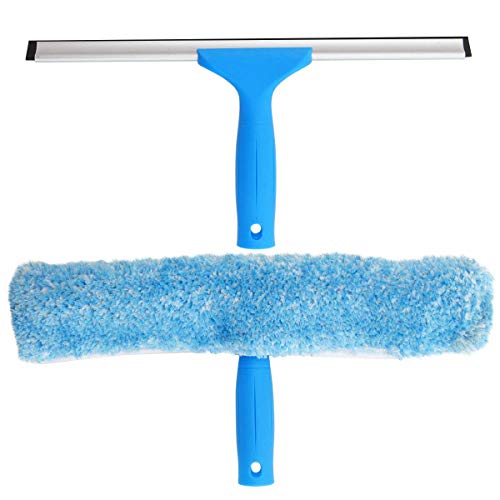


How to Choose Window Cleaning Tools
Window cleaning tools are designed to loosen dirt, apply cleaning solution and remove moisture from suitable glass surfaces. The right equipment depends on the size and location of the window, the type of dirt involved and whether you are cleaning indoors or outside.
A compact squeegee may suit mirrors and smaller panes, while a wider washer and telescopic pole can be more practical for larger windows. For high or awkward areas, choose equipment that allows you to work safely from floor level wherever possible.
Always check that the tool is suitable for the glass, frame and surrounding materials before use.
Types of Window Cleaning Tools
Window Squeegees
Window squeegees use a flexible rubber blade to remove water and cleaning solution from smooth glass. They can help create a clearer finish while reducing the amount of moisture left behind.
Compare the blade width with the size of the window. A wider squeegee can cover large panes quickly, while a narrower design may be easier to control on small windows, mirrors and shower screens.
Check that the rubber edge is smooth, straight and replaceable where required. A worn, damaged or hardened blade can leave lines and streaks.
Window Washers and Applicators
Window washers usually have a fabric or microfibre sleeve fitted over a T-shaped handle. They are used to spread cleaning solution and loosen dirt before the glass is cleared with a squeegee.
A wider washer can cover large panes efficiently, while a compact head provides more control around frames and narrow sections.
Check whether the sleeve can be removed and washed. Replacement sleeves should match the width and fitting of the existing handle.
Microfibre Window Cloths
Microfibre cloths can help clean, dry and polish windows, mirrors and other compatible glass surfaces. Different weaves may be intended for washing, drying or final buffing.
Use clean cloths free from grit, grease and fabric conditioner residue. A dirty cloth can smear the glass or scratch delicate coatings.
Some households use one damp cloth for cleaning and a separate dry cloth for finishing.
Window Cleaning Buckets
Window cleaning buckets may be wider than standard household buckets so that larger squeegees and applicators can fit inside them.
Compare the bucket dimensions, capacity, handle design and pouring features. Larger buckets hold more water but can become heavy and difficult to carry when full.
Some buckets include wringers, lids or compartments for tools. These features can be convenient but may increase the overall size and storage requirements.
Window Scrapers
Window scrapers use a blade to remove paint spots, stickers, dried residue or stubborn marks from certain types of glass.
They should only be used where the glass manufacturer and tool instructions permit them. Incorrect use can scratch the glass, damage coatings or cut surrounding seals.
Keep the blade flat against the suitable glass at the recommended angle. Never use a damaged, rusty or chipped blade.
Scrapers should not be used on tinted film, patterned glass, mirrors or coated surfaces unless explicitly approved.
Extendable Window Cleaning Poles
Telescopic poles can help reach high windows, conservatories, roof glass and other awkward areas from ground level. They may accept squeegees, washer heads, brushes or other compatible attachments.
Compare the collapsed and fully extended lengths. A longer pole provides greater reach but can become heavier and more difficult to control when fully extended.
Check that each locking section closes securely and that the attachment fitting matches the chosen cleaning head.
Window Cleaning Kits
Complete kits may include a squeegee, washer, cloth, scraper, bucket or telescopic handle. They can be useful for setting up a basic household window cleaning system.
Check exactly what is included and whether replacement blades, sleeves and attachments are available. A kit may be convenient, but individual tools can offer greater choice when you already own some equipment.
Magnetic Window Cleaners
Magnetic window cleaners are designed to clean both sides of certain glass panes at the same time. Their suitability depends on the thickness and construction of the glass.
Choose only a model listed for the exact glass thickness. Magnets that are too weak may separate, while overly powerful magnets can be difficult or unsafe to handle.
Follow the safety-cord instructions and keep fingers clear when bringing the two sections together.
They may not be suitable for every double-glazed window, frame or restricted opening.
Important Buying Considerations
Window Size
Larger tools can clean broad panes quickly but may be difficult to manoeuvre around small sections, decorative bars and narrow frames.
Measure the usable glass area and consider whether several head sizes would be useful for different windows around the home.
Indoor or Outdoor Use
Indoor tools should offer good control and limit dripping around furniture, curtains and flooring. Outdoor cleaning equipment may need longer handles, wider heads and more durable materials.
Check whether metal components, fabric sleeves and pole fittings are designed to tolerate repeated outdoor use and moisture.
Working Height
Consider whether the window can be reached comfortably from floor level. Telescopic tools can provide extra reach, but they must remain stable and controllable.
Do not lean from windows, climb onto furniture or use unstable ladders. Professional window cleaning may be safer for areas that cannot be reached with suitable ground-based equipment.
Tool Compatibility
Squeegee blades, washer sleeves, pole heads and replacement parts are not always interchangeable.
Check the brand, width, fitting type and model number before buying accessories. A product described as universal may still have size or connection limitations.
Storage Requirements
Buckets, poles and wide squeegees can require more storage room than ordinary cleaning tools. Telescopic handles, hanging loops and detachable heads can make them easier to store.
Allow reusable cloths and washer sleeves to dry fully before putting them into a cupboard or closed container.
Squeegee or Microfibre Cloth
A squeegee removes water quickly from larger smooth panes and can help reduce streaks when used correctly. It is particularly practical for windows, shower screens and other broad areas.
A microfibre cloth provides more control around corners, edges, frames and smaller glass surfaces. It can also be used for final drying and polishing.
Many cleaning routines use both. The cloth loosens or finishes residue, while the squeegee removes most of the liquid from the main pane.
Short Handles or Telescopic Poles
Short-handled tools offer greater control and are suitable for accessible indoor windows, mirrors and doors.
Telescopic poles provide additional reach for tall windows and conservatories but may become heavier and less precise when extended.
Choose the shortest tool that allows the area to be reached safely and comfortably.
Cleaning Interior Windows
Remove curtains, ornaments and nearby items where practical. Protect windowsills, furniture and flooring from drips.
Dust the frame and glass before applying liquid, as loose grit can cause smearing or scratching.
Apply a suitable window cleaning solution with a cloth or washer. Remove the water using a squeegee, wiping the blade between passes.
Finish the edges and corners with a clean, dry cloth.
Cleaning Exterior Windows
Outdoor windows may collect dust, pollen, mud, road residue and bird mess. Rinse or loosen heavy dirt before dragging a cloth or blade across the glass.
A washer, bucket and squeegee can be practical for accessible panes. Extendable tools may help with higher areas where they can be controlled safely from the ground.
Avoid cleaning in freezing conditions, strong winds or weather that makes equipment difficult to handle.
Take care near roads, paths, electrical cables and neighbouring property.
Using a Window Squeegee
Wet the glass evenly before using the squeegee. A dry blade dragged across dirty glass can catch grit and cause marks.
Hold the blade at a consistent angle and work in overlapping strokes. Wipe the rubber edge with a clean cloth between passes.
Avoid pressing so hard that the blade bends unevenly. If lines remain in the same position, inspect the rubber for damage or trapped debris.
Choosing and Caring for Squeegee Blades
A flexible, undamaged rubber blade should make even contact with the glass. Over time, the edge can become worn, nicked or stiff.
Replace the blade when it begins leaving repeated lines or no longer sits flat. Some squeegees use replaceable rubber strips, while others require a complete replacement head.
Store squeegees away from direct heat and avoid resting heavy objects on the rubber edge.
Using Window Scrapers Safely
Remove loose dirt and wet the compatible glass before using a scraper where instructed. Lubrication can help reduce friction and allow the blade to move more smoothly.
Keep the blade at the correct angle and work away from frames, seals and decorative finishes.
Never use a scraper on dry, dirty or coated glass without confirmation that it is suitable. Replace the blade if it becomes damaged.
Fit the safety cover after use and store the scraper securely away from children and pets.
Cleaning Window Frames and Sills
Window frames may be made from uPVC, painted wood, aluminium or another material. Use tools and cleaners suitable for the specific finish.
A soft cloth or small brush can help remove dirt from corners, tracks and seals. Avoid using sharp tools that could damage drainage channels or rubber components.
Do not allow excess water to collect around wooden frames or damaged paintwork.
Cleaning Tinted and Coated Glass
Tinted film, privacy treatments, solar coatings and self-cleaning glass can require specialist care. Abrasive tools, scrapers and certain chemicals may damage these surfaces.
Check the window or coating manufacturer’s instructions before choosing equipment. A soft cloth and approved cleaner may be required instead of a standard scraper or rough washer sleeve.
Test unfamiliar tools on a discreet area where appropriate.
Cleaning Mirrors and Shower Screens
A compact squeegee can help remove moisture from shower screens and bathroom mirrors. Use light pressure and take care around mirror edges and decorative coatings.
Prevent liquid from running behind mirrors, into frames or around electrical fittings.
Shower screen squeegees can also be used after bathing to remove water and reduce mineral deposits, depending on the surface.
Conservatory and Roof Glass Cleaning
Conservatory roofs and overhead glazing can be difficult to access. Use a suitable telescopic tool from a safe position rather than climbing onto the structure.
Check whether the panels are glass, polycarbonate or another material. Polycarbonate and specialist coatings may require softer tools and different cleaning products.
Do not place weight on conservatory roof panels unless the structure is specifically designed and professionally approved for access.
Avoiding Streaks and Smears
Use a suitable amount of cleaning solution. Too much product can leave residue, while dirty water can transfer grease back onto the glass.
Wash the glass in manageable sections and avoid allowing cleaner to dry before it is removed.
Use clean cloths and wipe the squeegee blade regularly. Fabric conditioner residue on microfibre cloths can also cause smearing.
Cleaning away from strong direct sunlight may help prevent the solution from drying too quickly.
Window Cleaning Safety
Use the correct equipment for the height and location of the window. Keep the working area clear of children, pets and trip hazards.
Do not use metal poles near overhead electrical cables. Take extra care around outdoor sockets, lights and powered equipment.
Wear gloves where required by the cleaning product instructions. Avoid leaning through windows or applying excessive pressure to damaged glass.
Stop cleaning if a pane is cracked, loose or unstable and seek suitable professional advice.
Cleaning and Maintaining Window Tools
Rinse squeegees, washers, cloths and buckets after use to remove dirt and cleaning-product residue.
Wash reusable sleeves and cloths according to their care labels. Allow every component to dry thoroughly before storage.
Inspect poles, locking mechanisms, handles, rubber blades and attachment points regularly. Replace damaged parts that no longer feel secure or function correctly.
Store blades with protective covers where supplied.
Useful Window Cleaning Accessories
Useful accessories may include replacement squeegee rubber, washer sleeves, microfibre cloths, buckets, extension poles, scraper blades and storage clips.
A tool caddy can keep smaller items organised and reduce repeated trips between windows.
Choose accessories that match the dimensions and fitting system of your existing equipment.
Why Buy Window Cleaning Tools from YPC?
At YPC, we understand active lifestyles and the need for practical products that work in real use. Our Window Cleaning Tools category makes it easier to compare squeegees, washers, cloths, buckets, scrapers and extendable equipment.
Browse the available options and compare working width, reach, material and replacement-part compatibility to find tools suited to your windows and cleaning routine.
Frequently Asked Questions
What tools do I need to clean household windows?
A basic set may include a window washer or cloth, a suitable cleaning solution, a squeegee and a dry microfibre cloth for edges and finishing.
What size window squeegee should I choose?
A wide squeegee suits large panes, while a narrower model offers more control on small windows, mirrors and divided glass sections.
Can I use a window scraper on any glass?
No. Scrapers can damage tinted, coated, patterned or delicate glass. Only use one where the tool and window guidance confirm suitability.
Are telescopic window cleaning poles safe to use?
They can help clean from ground level, but the pole must be secure, controllable and kept away from electrical cables. Do not overreach or use damaged equipment.
Why does my squeegee leave lines on the glass?
The rubber blade may be dirty, damaged, worn or uneven. Clean the edge, check for nicks and replace the rubber where necessary.
 Getting ready for Summer? View our Home and Garden Products

Heading outdoors this winter? Take a look at our Outdoor Clothing.