Gazebos are a useful choice when you want temporary cover outdoors, whether for a garden gathering, a market stall, a shaded seating area, or a weather shelter for events. This guide explains how to compare gazebo types, what matters most when choosing one, and which details are worth checking before you buy.
It is written to help you narrow down the right style for your space and use case without confusing it with other camping shelter categories. Specifications vary by model, so always check the individual product page before buying.
Quick Answer
The right gazebo depends mainly on where you will use it, how often you will put it up, and how much cover you need. Start with size, then check the frame or support style, sidewall options, and how portable it needs to be. If you want fast, occasional cover, a simpler pop up style may suit you; if you want something more permanent for a garden or event space, a sturdier frame style may be a better fit. Specifications vary by model, so always check the individual product page before buying.
Quick Product Comparison Framework
| Feature | What It Means | Why It Matters | What To Check |
|---|---|---|---|
| Size | The footprint and usable covered area | It affects how many people, tables, or items fit underneath | Measure your space and compare it with the listed dimensions |
| Frame or support style | How the gazebo is held up and structured | It influences stability, setup effort, and how robust it feels | Check whether the product is described as pop up, instant, or framed |
| Cover material | The roof and wall material used | It affects shelter level, look, and general durability expectations | Read the product page for material details and intended use |
| Sidewalls | Whether the gazebo includes full or partial sides | It changes how enclosed and private the space feels | Check how many sidewalls are included and whether they are removable |
| Portability | How easy it is to move and store | Important if you will only use it occasionally or take it to events | Look for pack-down size, weight information, and any carry bag mention |
| Setup style | How quickly and simply it goes up | Some buyers want convenience, others want a more fixed structure | Check whether it is advertised as instant, pop up, or more permanent |
| Weather cover level | The amount of overhead and side shelter provided | Helps you judge suitability for shade, light rain shelter, or more enclosed use | Check the product description carefully for the intended level of cover |
| Accessories | Extra items such as walls, bags, or weight-related items | These can improve convenience or practicality | See exactly what is included rather than assuming everything is bundled |
Key Decision Criteria Explained
Size and space
Size is one of the first decisions to get right. A gazebo that is too small can feel cramped, while one that is too large may dominate a garden or exceed the space you have available. Think about what will sit underneath it, such as a table, seating, serving area, or display stand, and leave enough room around the edges.
Frame style and structure
Gazebos vary in how they are supported and how they feel in use. Some buyers want quick assembly and easy storage, while others care more about a more substantial structure for repeated use. The trade off is often between convenience and a more robust setup, so check how the product is described and what that suggests for your use.
Sidewalls and enclosure
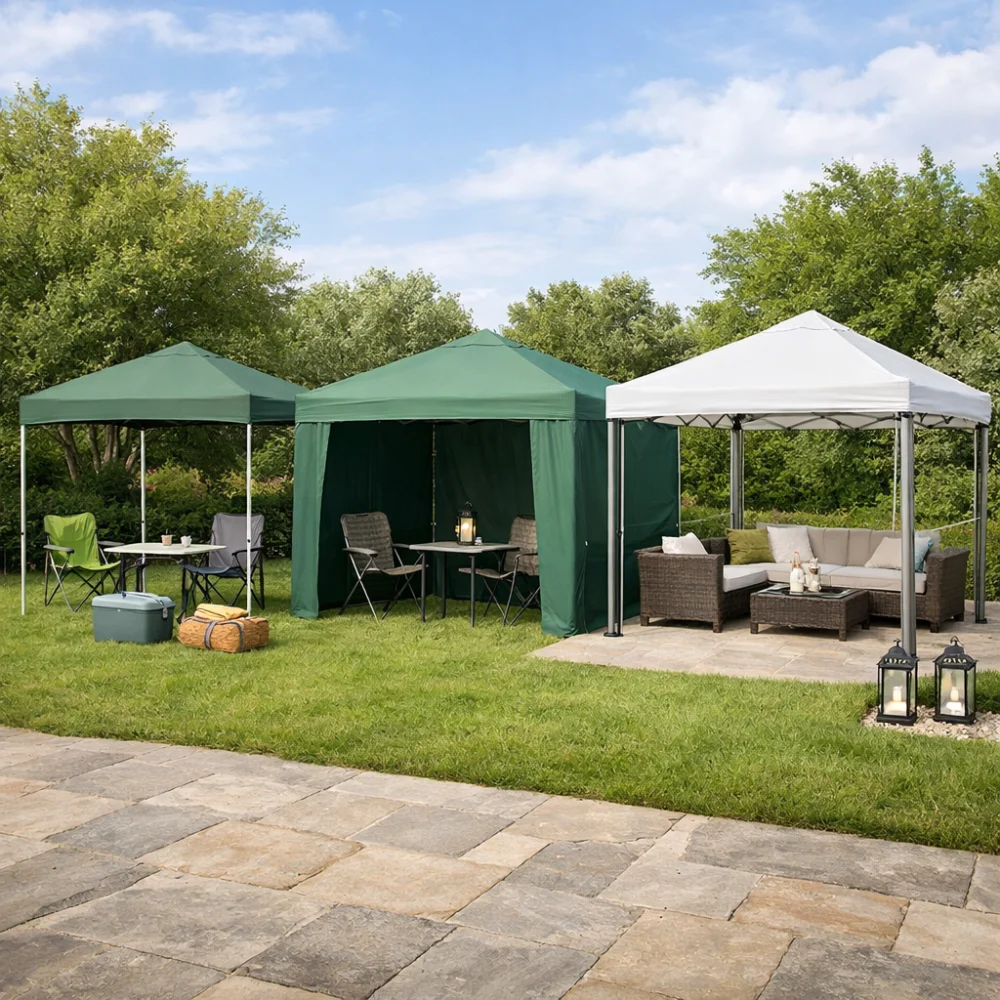
Sidewalls can make a gazebo feel more sheltered and private. They may help with wind exposure, shade, or creating a more defined space, but they also reduce openness. If you want a sociable garden shelter, you may prefer a lighter setup; if you want more enclosure, look for a model with included walls.
Portability and storage
If you only use a gazebo occasionally, portability matters. A product that packs down more neatly and is easier to carry may suit event use or seasonal garden use better than something intended to stay in one place. Check whether any carry or storage solution is mentioned, and make sure it matches how often you plan to move it.
Intended use
Think about whether you are buying for home use, a temporary event setup, a stall, or a more regular outdoor shelter. The right gazebo for a garden party may not be the same as one chosen for repeated commercial use. Focus on the use case first, then compare size, structure, and included extras.
Product Type Differentiation and Variants
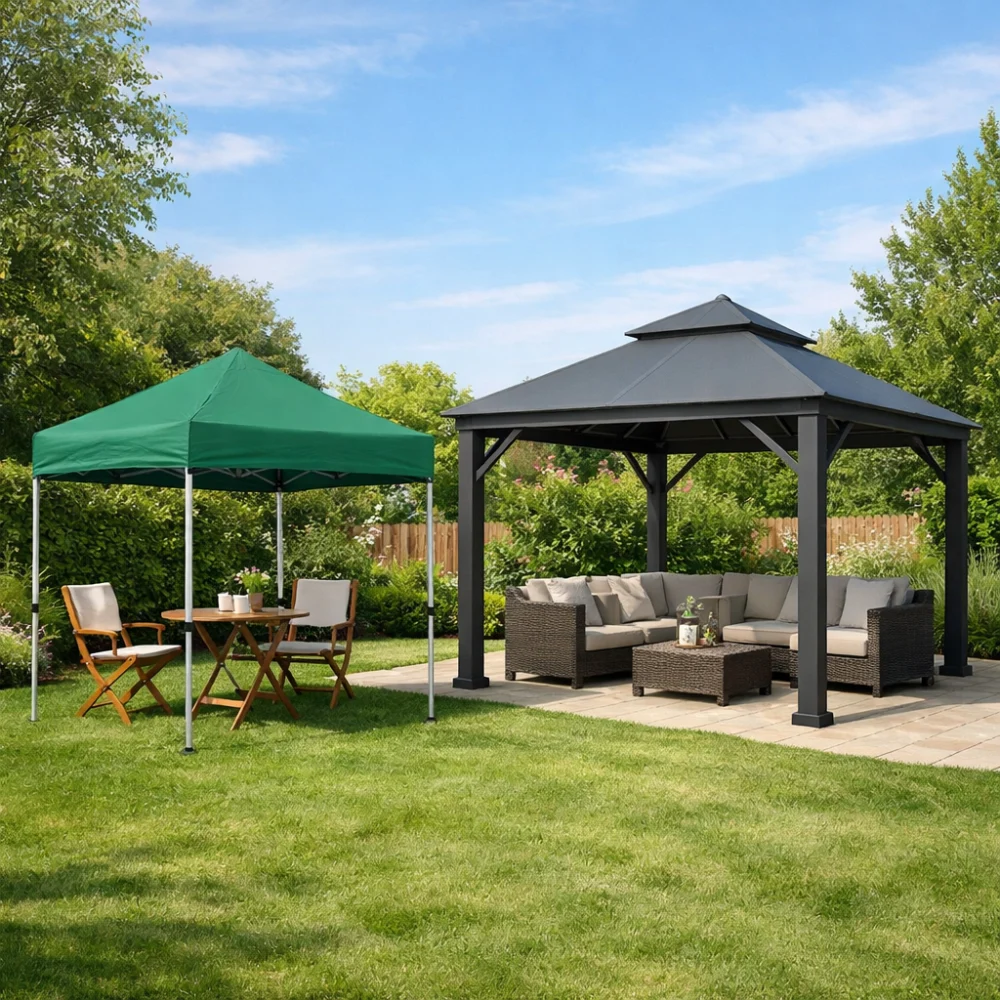
Gazebos are usually chosen by structure and intended use rather than by a single universal design. The main variants buyers tend to compare are quick-setup pop up styles and more fixed framed gazebos. Each serves a different purpose, so the right choice depends on whether convenience or a more permanent-feeling shelter matters more to you.
Pop up gazebos are often chosen by buyers who want quicker setup and easier storage. They may suit casual outdoor events, markets, or occasional garden use. Framed gazebos may suit buyers who want a more settled outdoor feature or a stronger-feeling structure for repeated use.
Specifications vary by model, so always check the individual product page before buying.
Suitability By Buyer Type Or Need
| Buyer type or need | What usually matters most | What to look for |
|---|---|---|
| First-time buyer | Simple setup and clear size information | Easy-to-understand product details and a layout that suits your space |
| Garden user | Appearance, shade, and how it fits the area | Dimensions, sidewalls, and how much cover you want |
| Event or party buyer | Portability and quick assembly | Pop up style, storage convenience, and included extras |
| Market stall user | Practical cover and usable space | Enough room for display or serving space and a structure suited to repeated use |
| Buyer wanting more enclosure | Shelter and privacy | Models with sidewalls or more enclosed options |
| Buyer with limited storage | Pack-down convenience | Compact storage needs and easy movement when not in use |
Common Mistakes And Misunderstandings
Assuming the listed size is all usable space. The footprint matters, but so does how the structure and sidewalls affect the area underneath. Check the product page carefully so you know how much practical room you will really have.
Choosing on looks alone. A gazebo may suit your garden visually but still be awkward for your intended use. Always compare the design with how you actually plan to use it.
Forgetting to check what is included. Some listings include sidewalls or a carry solution, while others may not. Read the item details rather than assuming a full set.
Overlooking setup and storage. A gazebo that seems fine at purchase may be inconvenient if it is difficult to store or move. If you only need it occasionally, convenience is worth serious attention.
Blurring gazebo and tent use cases. Gazebos are for temporary outdoor cover and space use, while other tent categories serve different shelter needs. If you are comparing against camping tents, keep the purpose in mind so you do not choose the wrong type.
Safety And Suitability Caveats
Buy a gazebo for the use it is intended for and check the product page information before relying on it for your situation. Consider whether the size, opening style, and enclosure level are suitable for the people and space involved. If children will be around it, think about whether the layout and supervision level make sense for your setting.
As with any outdoor shelter, conditions and use matter. A gazebo is not the same as a permanent structure, so treat it as a temporary solution unless the product page clearly states otherwise. Avoid making assumptions about weather use or suitability from the name alone.
Maintenance, Storage And Lifespan Considerations
General care can help a gazebo stay usable for longer. Keep it clean and dry where possible, and store it in a way that helps protect the cover, frame, and any accessories. If the product includes removable sidewalls or separate parts, keeping everything together makes reuse easier.
Rough handling, repeated packing away, and exposure to the elements can shorten lifespan. Some models may also involve accessories or parts that need careful storage. If the product page mentions batteries or powered features, check those details separately, but many gazebos are purely manual products.
How To Compare Models Efficiently
- Decide where you will use the gazebo and what it needs to cover.
- Check the dimensions against the space you actually have.
- Compare setup style, especially if you want quick assembly or easier storage.
- Look at sidewall options and think about how enclosed you want it to feel.
- Check what is included so you know whether you are getting a basic canopy or a more complete package.
- Read the individual product page before buying, especially where specifications vary by model.
Summary Buyer Decision Checklist
- Have I measured the space where the gazebo will go?
- Does the size suit the people, furniture, or items underneath it?
- Do I want a quick setup style or a more fixed-feeling structure?
- Do I need sidewalls or a more open design?
- Is portability important for storage or transport?
- Have I checked exactly what is included with the product?
- Have I read the individual product page before buying?
Frequently Asked Questions
What should I look for first when buying a gazebo?
Start with size and intended use. Once you know whether it is for a garden, event, stall, or occasional shelter, it becomes much easier to compare the rest of the features.
Are pop up gazebos easier to use?
They are often chosen for convenience and quicker setup, but the right choice depends on your needs. If you want a more permanent-looking or more settled structure, a different style may suit you better.
Do I need sidewalls on a gazebo?
Not always. Sidewalls are useful if you want more enclosure, shade, or privacy, but some buyers prefer an open design for social or decorative use.
How do I know what size gazebo to buy?
Measure the area where it will go and think about what will sit beneath it. It is usually better to allow a little extra room than to choose a size that feels tight in use.
What is the difference between a gazebo and a camping tent?
A gazebo is typically chosen for temporary outdoor cover or space use, while tents are generally for sheltering people in different camping or sleeping situations. They serve different purposes, so it is worth comparing them carefully before buying.
What should I check before buying for an event?
Focus on setup convenience, portability, size, and whether the product includes the parts you need. If you will use it repeatedly, it is also worth checking how easy it is to store and move.
Are accessories worth considering?
They can be, if they match your use case. Sidewalls, storage solutions, and other included extras may improve practicality, but only if they are genuinely useful for how you plan to use the gazebo.
For products in this category, visit: the matching YPC category page.