Quick Answer
A camping tarp is a versatile piece of kit that can be used as extra shelter, a rain cover, a groundsheet or a simple windbreak depending on the setup. The right choice depends less on the product name and more on how you plan to use it, how much coverage you want, and whether you need it to work with an existing tent, hammock or open camp space. Specifications vary by model, so always check the individual product page before buying.
If you want something simple, focus on size, shape, attachment points and whether it is sold on its own or as part of a kit. If you already have a tent or hammock, check that the tarp is sized appropriately for your intended use. If you are buying for mixed weather, read the product description carefully rather than assuming all tarps provide the same level of coverage.
Quick Product Comparison Framework
| Feature | What It Means | Why It Matters | What To Check |
|---|---|---|---|
| Size | The overall coverage area of the tarp | Determines how much shelter or ground cover you get | Check the dimensions and think about the space you need to cover |
| Shape | The general layout, such as square, rectangular or purpose-shaped | Affects pitching options and how neatly it fits your setup | Match the shape to tents, hammocks or open shelter plans |
| Material | The fabric or sheet type used | Influences weight, packability and general durability | Read the product page for the stated material and construction details |
| Attachment points | Where lines, pegs or poles connect | Affects how easy it is to pitch and secure | Check whether attachment points are included and how many there are |
| Water resistance claims | How the product is described for rain protection | Important if you want weather cover rather than simple shade | Look carefully at the product wording and any stated suitability |
| Weight and packed size | How much room it takes in your kit | Matters for walking, backpacking and general carry convenience | Compare this with how and where you plan to use it |
| Bundle contents | Whether poles, guy lines, pegs or a carry bag are included | A kit may be more convenient than buying parts separately | Check exactly what is included before assuming it is a complete shelter set |
Key Decision Criteria Explained
1. Decide what job the tarp needs to do
Some buyers want a tarp mainly for weather cover, others want ground protection, and some want a flexible extra layer for camping. That first decision matters because it affects the size, shape and the type of setup you should look for. A tarp chosen for one use may be awkward for another.
Check whether the product is described as a shelter tarp, rain fly, groundsheet, awning cover or multipurpose sheet. Those terms can overlap, but they are not always interchangeable in practical use.
2. Choose the right size for your setup
Size is one of the most important checks because a tarp that is too small may leave little room for proper cover, while one that is too large may be harder to manage. Buyers often focus on the product name and overlook the dimensions.
Think about whether you need cover for one person, shared space, kit storage or a specific tent or hammock arrangement. Specifications vary by model, so always check the individual product page before buying.
3. Match the shape to the way you camp
Rectangular tarps tend to suit buyers who want flexibility, while more purpose-shaped options may suit specific shelter styles. Shape affects how many pitching options you have and how neatly the tarp sits in the space you want to cover.
If you are pairing a tarp with an existing tent, awning or hammock, make sure the shape works with that setup rather than simply choosing the largest option available.
4. Check what the attachment system includes
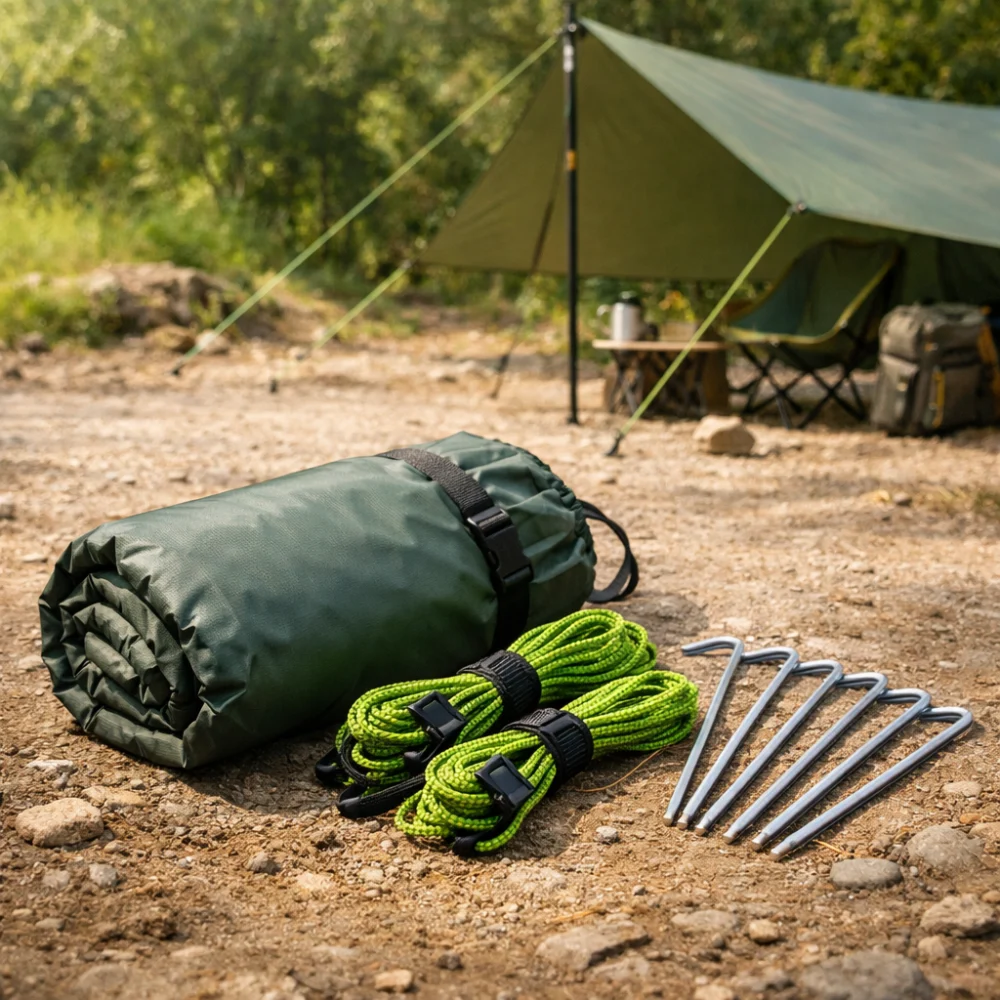
Some tarps are sold as a simple sheet, while others include guy lines, pegs, poles or a carry bag. This changes both convenience and value. A complete-looking listing may still leave out items you were expecting.
Look for attachment points, reinforced corners and whether pitching accessories are included. If you need a ready-to-use setup, this detail matters more than a basic product headline.
5. Consider weight and packability
If the tarp will travel in a rucksack or be carried between campsites, weight and packed size become more important. If it will live in a vehicle or be used occasionally in one place, convenience may matter more than compactness.
Choose based on how often you will carry it and how much space you have. A bulkier item can still be a sensible purchase if portability is not your main concern.
6. Think about weather and use conditions realistically
Not every tarp is meant for the same level of weather exposure or the same style of outdoor use. Some are better suited to simple cover or light shelter, while others are chosen for more versatile camping arrangements.
Read the product wording carefully and avoid assuming that all tarps will work equally well in all conditions. Use the listing details to judge whether it suits your intended setup.
Product Type Differentiation and Variants
Camping tarps are often grouped by use rather than by a single product form. A basic multipurpose tarp may suit buyers who want flexibility for general camping, storage or ground cover. A shelter-style tarp may suit someone who wants a more deliberate overhead cover for a camp setup. A tarp sold as part of a kit may suit buyers who prefer convenience and fewer separate purchases.
Some products are aimed at pairing with tents, some at hammocks, and some at broader outdoor use. The key difference is not just size, but how the tarp is intended to be pitched and what accessories are expected with it. Specifications vary by model, so always check the individual product page before buying.
It is also worth remembering that a tarp is not the same as a tent, gazebo or purpose-built shelter. If you need enclosed space, privacy or a more fixed structure, those sibling categories may be a better fit.
Suitability By Buyer Type Or Need
| Buyer type or need | What tends to matter most | What to look for |
|---|---|---|
| First-time buyer | Simplicity and clear product contents | A straightforward listing with dimensions, included accessories and a use case that is easy to understand |
| Buyer using a tent | Extra cover or flexible shelter space | A tarp shape and size that complements the tent rather than crowding it |
| Hammock user | Coverage and fit with an overhead shelter setup | A tarp described for hammock or shelter use, with attention to dimensions and attachment points |
| Backpacker | Weight and pack size | Compact packing, manageable carry weight and a setup that suits limited kit space |
| Family camper | Practical coverage and ease of use | Enough space for the intended area and a kit that does not rely on lots of extra purchases |
| Buyer wanting a groundsheet | Floor protection and fit | A size that matches the area it will cover and a product description that supports that use |
Common Mistakes And Misunderstandings
Assuming bigger is always better. A larger tarp can offer more cover, but it may also be harder to pitch and carry. Choose the size that matches your actual use.
Not checking what is included. Some listings may be for the tarp only, while others include lines, pegs or poles. Always confirm the contents before buying.
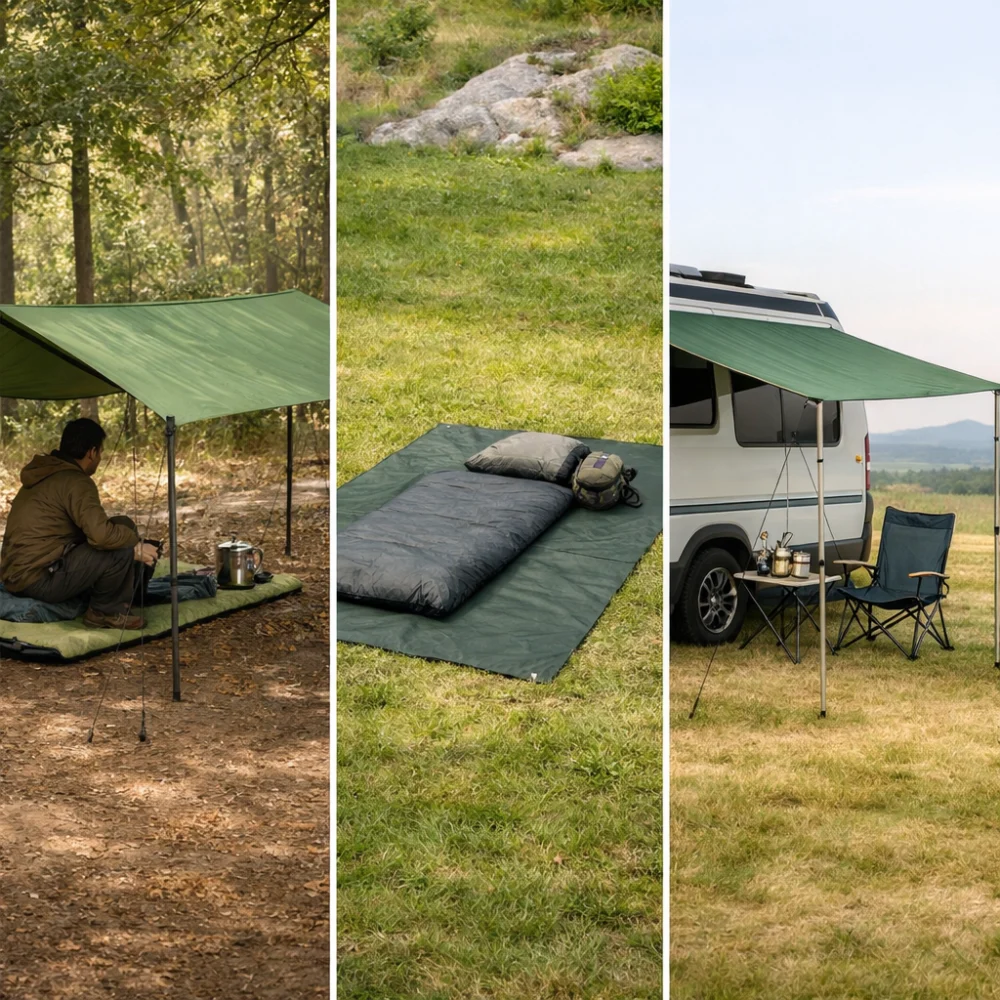
Choosing the wrong shape for the setup. A tarp that looks suitable in theory may be awkward in practice if it does not work with your tent, hammock or shelter plan.
Ignoring attachment points. A tarp can only be as useful as the way it is secured. Look for reinforced corners or clearly described fixing points if you need an easy pitch.
Overlooking portability. A tarp that seems good on paper may be inconvenient if it is too bulky for your type of camping. Think about whether it will be carried or left in place.
Confusing a tarp with a different shelter type. Camping tarps, tents, gazebos and other shelter products solve different problems. Keep the category boundary clear so you buy the right kind of outdoor cover.
Safety And Suitability Caveats
Use a camping tarp only as intended by the product description. Consider the likely users, the setting and the space available before you buy. If children will be involved, think about handling suitability and supervision where appropriate.
For outdoor use, it is sensible to check the product page carefully rather than assuming one tarp will suit every weather or campsite situation. Keep in mind that a tarp is a flexible cover, not a guarantee of protection in every condition.
Also consider whether your chosen setup leaves enough safe space around it for the intended activity. That is especially important when the tarp is being used as part of a shared campsite area.
Maintenance, Storage And Lifespan Considerations
General care is usually straightforward, but a tarp will last longer if it is stored clean and dry when possible. Folding or packing it neatly can help keep it easier to use next time.
Foam darts and toy care are not relevant here, but rough handling, repeated strain on fixing points and heavy use can shorten the working life of a tarp. If the product includes accessories, keeping them together makes the setup easier to manage.
Some products may involve poles, lines or other components, while others are just the tarp itself. Specifications vary by model, so always check the individual product page before buying.
How To Compare Models Efficiently
- Start with the job you want the tarp to do: shelter, ground cover, awning style cover or general outdoor use.
- Check the dimensions and shape against the space you actually need to cover.
- Look at the attachment points and decide whether you need a simple sheet or a more complete kit.
- Compare weight and packed size if you will carry it often.
- Read the product page for exactly what is included and whether the listing suits your setup.
- Only then compare extra features, because convenience details matter less if the core size or shape is wrong.
Summary Buyer Decision Checklist
- Have I decided what the tarp will be used for?
- Do the size and shape fit my camp setup?
- Do I know whether poles, pegs or lines are included?
- Is the tarp easy enough to carry for my kind of camping?
- Does the product description support the use I have in mind?
- Have I checked the individual product page for model-specific details?
Frequently Asked Questions
What is a camping tarp used for?
A camping tarp is used as flexible outdoor cover. Buyers choose it for shelter, ground protection, extra shade or as part of a larger camp setup. The exact use depends on the style and size of the product.
Is a bigger tarp always better?
Not necessarily. A bigger tarp may offer more coverage, but it can be harder to carry, pitch and manage. The better choice is the one that suits your actual space and intended use.
Do camping tarps come with poles and pegs?
Sometimes they do, and sometimes they do not. This varies by model, so always check the product page before buying. Do not assume a listing includes everything needed for setup.
How do I choose the right size tarp?
Think about what you want to cover and how much space you need around it. A tarp for a backpacking setup may be much smaller than one used for family camping or vehicle-side cover. The dimensions on the product page are the key detail.
Can a camping tarp be used with a tent?
Yes, some buyers use tarps alongside tents for extra cover or a small sheltered area. The important part is making sure the shape and size fit the tent setup properly. Check the listing for any intended use guidance.
What should I check if I want a tarp for a hammock?
Look for a tarp that is described in a way that suits hammock use, then check the dimensions and attachment points carefully. The main aim is to make sure it gives the kind of overhead coverage you need.
Are lightweight tarps always the best choice?
Lightweight options are helpful if you carry your kit often, but they are not automatically the best for every buyer. If portability is less important than convenience or coverage, another style may suit you better.
What is the most common mistake people make when buying a tarp?
One common mistake is focusing on the headline description and not checking the practical details such as dimensions, included accessories and intended use. Those details usually decide whether the tarp is actually a good fit.
Internal Category Navigation
For products in this category, visit: Camping Tarps