

Quick Answer
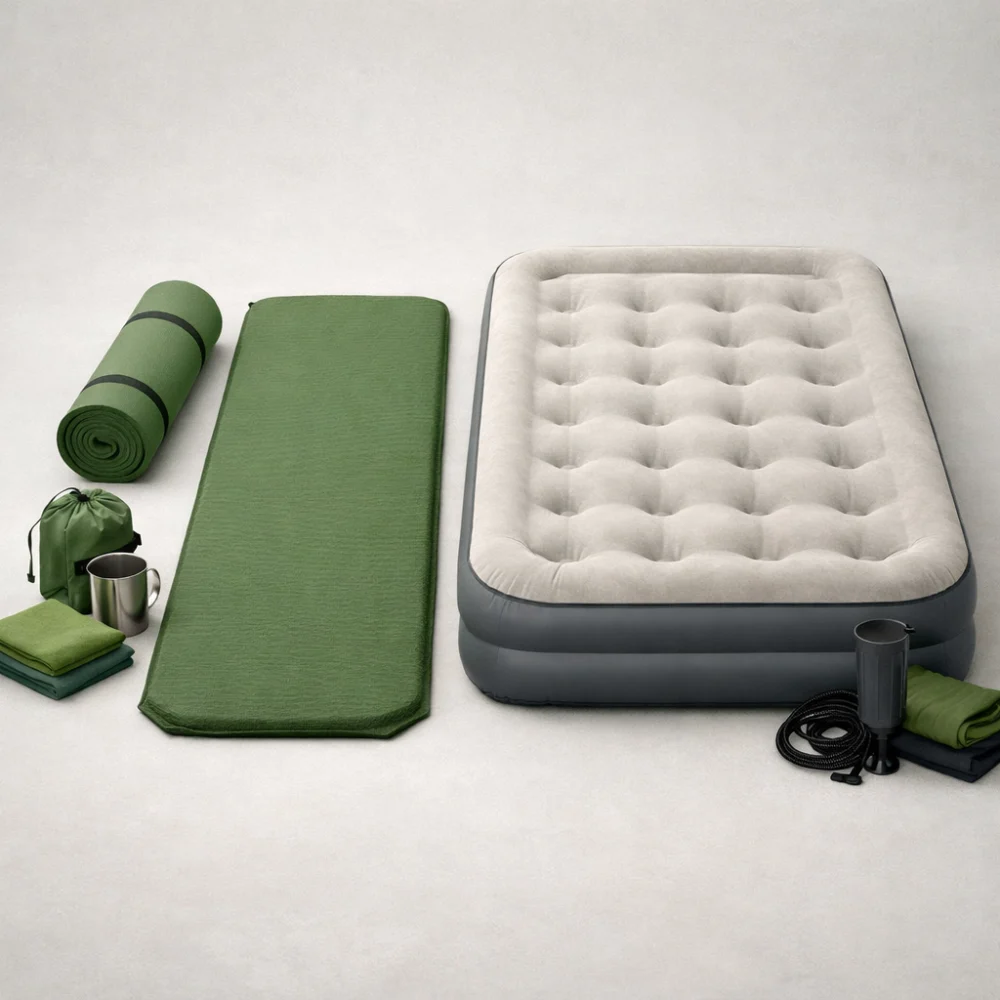
Choose a sleeping mat or air bed based on how you will use it, how much comfort you need, and how easy it must be to carry, inflate and store. Sleeping mats are usually better for packing small and moving around more easily, while air beds are often chosen for more bed-like comfort or guest use. If comfort, portability and setup time all matter, compare thickness, inflation method, packed size and shape before you buy. Specifications vary by model, so always check the individual product page before buying.
Compare Sleeping Mats and Air Beds



As an Amazon Associate we earn from qualifying purchases.
Quick Product Comparison Framework
| Feature | What It Means | Why It Matters | What To Check |
|---|---|---|---|
| Type | Sleeping mat or air bed | Sets the main balance between portability and comfort | Think about camping, travel, occasional guests or regular use |
| Thickness and cushioning | How much padding or height the product offers | Affects comfort and how insulated or bed-like it feels | Check the product description and shape details |
| Inflation method | How the product is filled with air | Changes setup effort and convenience | Look for self-inflating, built-in pump or manual inflation details |
| Packed size | How much space it takes when stored or carried | Important for backpacking, car camping and storage | Compare folded or packed dimensions where listed |
| Weight | How heavy the item is to carry | Matters more when walking to a campsite or moving kit often | Check the listed weight on the product page |
| Shape and size | Single, double or other sleeping layout | Needs to suit the sleeper and available space | Match the size to the user and tent, room or vehicle space |
| Surface feel | Outer finish or sleeping surface texture | Can affect comfort and how stable bedding feels | Read the description for surface and finish notes |
| Use setting | Camping, backpacking, festivals, travel or guests | Different uses favour different levels of portability and comfort | Choose the style that fits your main use, not every possible use |
Key Decision Criteria Explained
Sleeping mat or air bed
Sleeping mats are usually chosen when portability and compact packing matter most. They are often easier to carry for camping and travel, especially if space is limited. Air beds are more often chosen when the buyer wants a more mattress-like feel for guests, vehicle-based camping or longer stays. The trade-off is usually comfort versus portability.
Thickness and comfort
Thickness affects how cushioned the product feels and how far you are lifted from the ground. Thicker options can feel more supportive, but they may also be bulkier to pack and carry. Thinner options are often easier to transport, but may feel less forgiving on uneven ground. Check the product page for any thickness or profile information that matters to you.
Inflation and setup
Some products are self-inflating, some use a built-in pump, and others need separate inflation. This matters because setup convenience can be just as important as comfort. A faster or simpler setup can be useful if you move camp often, arrive late, or want less effort at the end of the day. Always check the individual product page before buying.
Packed size and portability
Packed size is one of the most important checks for campers and travellers. A product that feels comfortable at home may still be awkward if it takes up too much room in a rucksack, boot or storage cupboard. If you will carry it any distance, consider whether easy transport matters more than extra cushioning.
Single, double or wider formats
Size affects comfort, but it also affects where the product will fit. Single options are often simpler for solo use and smaller spaces. Wider or double options may suit couples or guest use, but they take more room and can be less convenient to move around. Specifications vary by model, so always check the individual product page before buying.
Use setting
The best choice depends on whether the product is mainly for camping, occasional visitors, festivals or car-based trips. A lightweight sleeping mat may make sense for walking into camp, while a more substantial air bed may suit a guest room or base camp setup. Try to match the product to the main use rather than buying for every possible situation.
Product Type Differentiation and Variants
There are a few main styles in this category, and each suits a different buyer need.
Sleeping mats
These are generally the more compact option. They suit buyers who want easier carrying, smaller packed size and a simpler camping setup. The main limitation is that they may feel less bed-like than an air bed, depending on the model.
Self-inflating mats
These are often chosen by buyers who want a balance between comfort and convenience. They can be practical for camping and travel, especially if you want less manual inflation effort. The trade-off is that they may pack larger than very minimal mats. Specifications vary by model, so always check the individual product page before buying.
Inflatable sleeping pads
These are often aimed at portability and pack size. They may appeal to backpackers and anyone trying to keep kit compact. The buyer should check how inflation works, how much floor space it needs and whether the shape suits the intended use. Specifications vary by model, so always check the individual product page before buying.
Air beds
Air beds are usually more suitable for guest sleeping or camping where a more traditional mattress feel is preferred. They can be a better choice when comfort is the priority and storage space is available. The limitation is that they are often less compact than mats and pads.
Specifications vary by model, so always check the individual product page before buying.
Suitability By Buyer Type Or Need
| Buyer type or need | What to prioritise | Likely better fit |
|---|---|---|
| First-time buyer | Simple setup and clear size information | A straightforward mat or air bed with easy-to-understand product details |
| Backpacker or walker | Packed size and weight | Compact sleeping mat or lightweight inflatable pad |
| Car camper | Comfort and ease of use | Thicker mat or air bed if space allows |
| Occasional guest use | Bed-like feel and storage practicality | Air bed |
| Festival goer | Portability and quick setup | Compact mat or pad |
| Couple or shared sleep space | Width and overall sleeping area | Wider or double-format option where space allows |
| Buyer with limited storage | Compact packed size | Foldable or inflatable mat with a smaller stored footprint |
Common Mistakes And Misunderstandings
Assuming the most comfortable option is always the most practical. A thicker or more bed-like product can be appealing, but it may also be harder to store and carry. Match comfort to how and where the item will be used.
Not checking packed size. Some buyers focus on sleeping dimensions and overlook how much room the item takes when folded or stored. That can be a problem for camping kit, car storage or home cupboards.
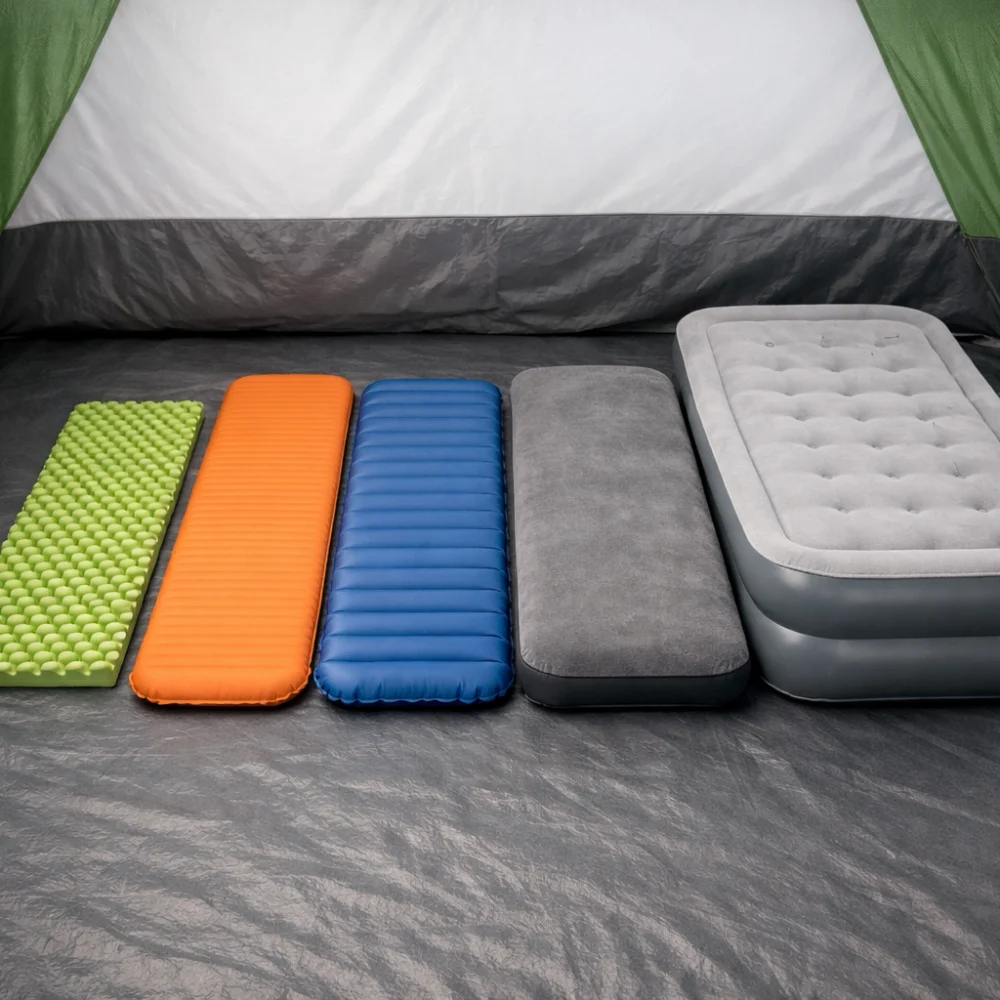
Choosing by type name alone. Not all sleeping mats or air beds are alike. A product description may mention self-inflating, built-in pump or another feature that changes how convenient it feels in practice.
Ignoring the intended use. A product that works well for guests may not be the best fit for backpacking, and a compact camping mat may not feel ideal for occasional home use. Buy for the main use case first.
Forgetting to compare the whole sleep setup. Comfort is affected by more than the item itself. The sleeping surface, available space and how easy it is to manage your gear all matter too.
Safety And Suitability Caveats
Choose a product that suits the person using it and the space available. For children or less experienced users, it is sensible to consider handling, size and ease of use rather than focusing only on comfort. Use the product only as intended and check the individual product page for any model-specific information. If you are buying for a shared or family setting, make sure the sleeping space is appropriate for everyone involved.
Maintenance, Storage And Lifespan Considerations
General care can help a sleeping mat or air bed stay usable for longer. Keep it clean and dry before storing it where possible, and store it in a way that helps protect it from unnecessary wear. Foam, padding and outer surfaces can age differently depending on the design, and moving parts may vary by model. Foam or inflatable surfaces can also lose condition over time through regular use, folding and handling.
If the product includes accessories or a pump, storing everything together can make the next use easier. Batteries may be relevant for some models if stated on the product page. Rough handling, repeated overinflation or poor storage can shorten the useful life of the item.
How To Compare Models Efficiently
- Decide where and how you will use it most often.
- Choose between a sleeping mat and an air bed based on portability versus comfort.
- Check thickness, shape and sleeping size.
- Compare inflation method and how much effort setup may involve.
- Look at packed size and weight if carrying or storage matters.
- Check the product page for any model-specific details before buying.
Summary Buyer Decision Checklist
- Have I chosen the right type for my main use?
- Does the size suit the sleeper and the available space?
- Is the packed size practical for carrying or storing?
- Does the inflation method suit how much effort I want to spend?
- Am I prioritising comfort, portability or a balance of both?
- Have I checked the individual product page for model-specific details?
Frequently Asked Questions
What is the difference between a sleeping mat and an air bed?
A sleeping mat is usually chosen for easier carrying and a smaller packed size. An air bed is more often selected when the buyer wants a more mattress-like feel or a guest bed option. The better choice depends on whether portability or comfort matters more.
Are sleeping mats or air beds better for camping?
That depends on the style of camping. If you need to carry your kit, a mat is often the more practical choice. If you are car camping or have more storage space, an air bed may feel more comfortable.
What should I look at first when comparing products?
Start with use case, size, packed size and inflation method. Those four factors usually tell you more than the product name alone. After that, look for any details that affect comfort or storage.
How do I know what size to buy?
Think about who will use it and where it will be placed. A single format may suit solo use and tighter spaces, while wider options may suit shared sleeping arrangements if there is enough room. Always check the individual product page before buying.
Do I need a built-in pump?
Not necessarily. A built-in pump can make setup more convenient, but it may also affect size and weight. If you will use the product often or want quicker setup, it may be worth considering.
Are self-inflating mats always easier to use?
They are often convenient, but ease of use depends on the specific model and what you expect from it. Some buyers prefer them because they reduce effort, while others choose a different style for packing size or comfort reasons.
What is the biggest mistake buyers make?
One of the most common mistakes is choosing a product for comfort alone without checking portability and packed size. Another is assuming that all products in the category work the same way. A quick comparison of use, size and inflation method usually avoids most disappointment.
Should I buy extra accessories at the same time?
Only if you know you will need them. Some buyers like to keep spare items together for easier use, but the right choice depends on the product and the way you plan to use it. Check the product page for any included or recommended extras.
For products in this category, visit Sleeping Mats and Airbeds
Ready to choose?
See all 326 Sleeping Mats and Air Beds →As an Amazon Associate we earn from qualifying purchases.


