

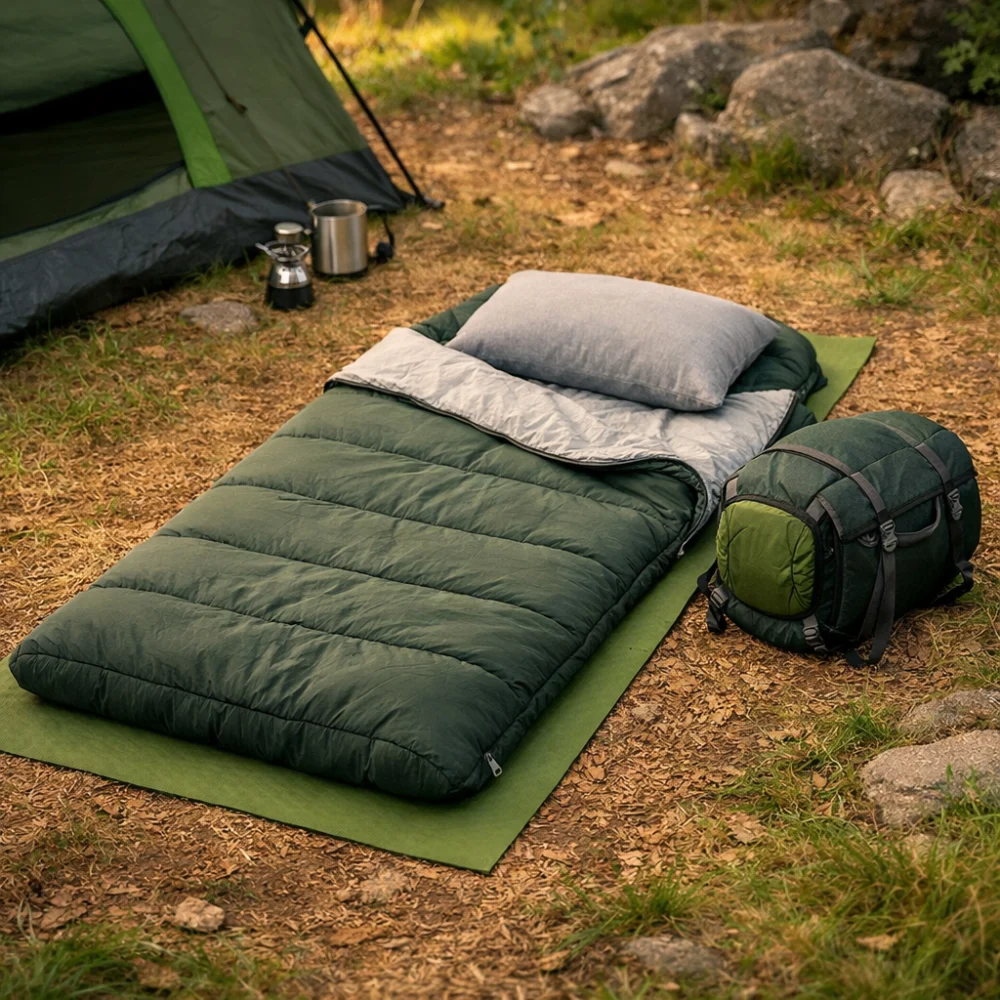
If you are choosing a sleeping bag, the main job is to match it to the conditions and the way you plan to use it. A bag that feels comfortable for a summer campsite may be too warm, too bulky or not warm enough in other situations.
This guide explains the buying decisions that matter most: warmth, shape, size, weight, packability and ease of use. It also helps you compare different styles without getting distracted by details that matter less.
Specifications vary by model, so always check the individual product page before buying.
Compare Sleeping Bags


As an Amazon Associate we earn from qualifying purchases.
Quick answer
The right sleeping bag depends on where you will use it, how warm you need it to be and how much space you have to carry or store it. Look first at the intended season or temperature guidance, then check the shape, size and pack size. If you are unsure, choose the option that suits the coldest likely conditions you expect to meet, while still being comfortable to carry and use.
Quick product comparison framework
| Feature | What it means | Why it matters | What to check |
|---|---|---|---|
| Season or warmth level | The level of conditions the bag is intended for | Helps you avoid feeling too cold or too hot | Look for the season guidance or temperature information on the product page |
| Shape | How the bag is cut and how much room it gives you | Affects comfort, warmth and freedom of movement | Check whether it is mummy style, envelope style or another cut |
| Size and fit | How long or wide the bag is | A bag that is too small can feel restrictive; one that is too large may feel less efficient to heat | Check the stated dimensions and any height guidance |
| Weight | How heavy the bag is to carry | Important for walking trips, travel and packing ease | Check the product weight if carrying it matters to you |
| Packed size | How much space it takes when stored in a bag or sack | Useful when luggage space is limited | Compare packed dimensions where listed |
| Opening and fastening style | How the bag opens and closes | Affects ease of getting in and out, and comfort during use | Check the zip placement, opening style and whether it suits your preference |
| Lining and comfort feel | The inside feel and overall comfort of the bag | Can matter more than buyers expect on longer trips | Look for the materials and any comfort description on the product page |
| Intended use | Whether the bag is aimed at camping, festivals, indoor sleepovers or travel | The best choice depends on how and where you will actually use it | Match the bag to your real use rather than the broadest label |
Key decision criteria explained
Warmth and season suitability
Warmth is usually the first thing buyers should check. Some sleeping bags are aimed at warmer weather or occasional use, while others are intended for cooler conditions. The trade off is often between warmth and bulk: warmer bags can be less compact and less convenient to carry.
Check the season guidance or temperature information on the product page. If the product page is not clear, treat the sleeping bag as suitable only for the conditions stated by the seller.
Shape and roominess
The shape affects both comfort and heat retention. A more fitted shape may feel snug and efficient, while a roomier shape may feel easier to move around in. Buyers often assume more space is always better, but extra room can also mean less efficient warmth.
Think about whether the sleeping bag is mainly for relaxed camping, lightweight travel, family trips or more compact packing.
Size and fit
Fit matters more than many people expect. If a bag is too short, too narrow or awkward around the shoulders, it can be uncomfortable even if the warmth rating looks suitable. If it is much larger than needed, it may feel less cosy.
Check the stated dimensions carefully and compare them with the person who will use it most often.
Weight and packed size
Weight and packed size matter most when the sleeping bag has to be carried any distance or stored in limited space. For car camping, a slightly bulkier bag may be acceptable. For backpacking or travel, compact packing usually matters more.
Do not assume a lighter bag is always better. Choose the balance that suits your trip type.
Ease of use
Ease of use includes how simple it is to get in and out of the bag, how the zip feels, and whether the design matches the user. This is especially important if the bag is for a child, a first-time camper or someone who wants something straightforward.
Check the product page for the opening style and any notes that suggest the bag is easier or more suitable for particular uses.
Product type differentiation and variants
Sleeping bags are commonly chosen by shape and intended use. Specifications vary by model, so always check the individual product page before buying.
Mummy sleeping bags
Mummy style bags are shaped to follow the body more closely. They may suit buyers who want a more compact feel and a closer fit. The main limitation is that some people find them less roomy.
Envelope sleeping bags
Envelope style bags are generally more spacious and can feel less restrictive. They may suit casual campers, families and people who prioritise comfort over compact packing. The trade off is usually a larger packed size.
Lightweight or compact sleeping bags
These are aimed at buyers who want easier carrying and smaller storage. They may suit hiking, travel or trips where space matters. The main limitation is that a compact bag may not be the right choice if you need extra room or a warmer feel.
Warmer or colder-weather sleeping bags
These are intended for buyers who need more warmth for cooler nights. They may suit more varied camping conditions. The trade off is often more bulk and less packability.
Suitability by buyer type or need
| Buyer type or need | What to prioritise | Why it suits them |
|---|---|---|
| First-time buyer | Clear season guidance, simple shape, straightforward sizing | Makes the choice easier and reduces the chance of buying the wrong type |
| Family or casual camper | Comfort, ease of use and a fit that feels relaxed | Practical for occasional use and less fussy to live with |
| Walker or backpacker | Weight, packed size and portability | Helps keep the load manageable |
| Buyer for cooler conditions | Warmer-season guidance and suitable insulation level | Reduces the risk of choosing a bag that feels too light |
| Buyer for travel or sleepovers | Easy handling, moderate warmth and compact storage | Convenient for mixed indoor and occasional outdoor use |
| Buyer wanting more room | Roomier shape and comfortable dimensions | Helps avoid feeling cramped |
| Buyer wanting simple packing | Compact packed size and manageable weight | Makes storage and transport easier |
Common mistakes and misunderstandings
Choosing by price alone. A low price can be fine, but it should still match the way you plan to use the sleeping bag.
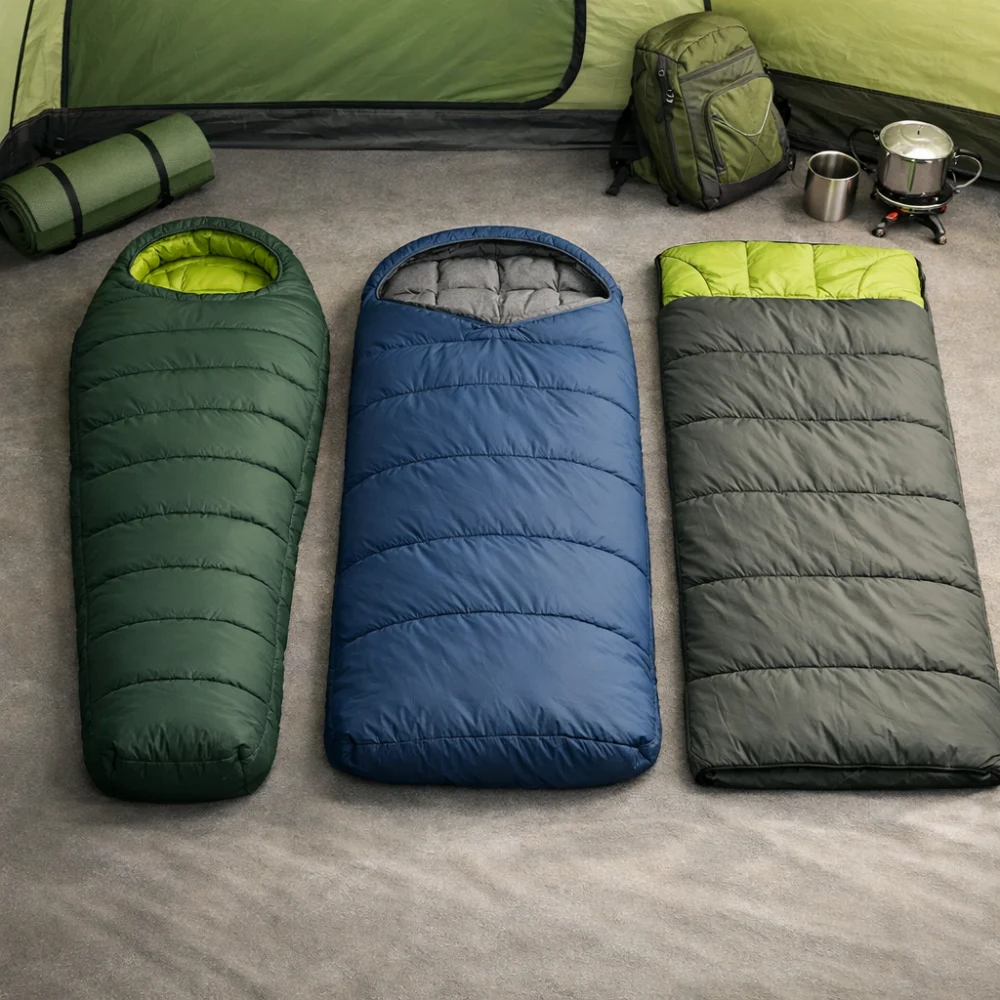
Assuming all sleeping bags are interchangeable. Different shapes, sizes and warmth levels suit different buyers, so the product type matters.
Ignoring fit. A bag that looks suitable on paper can still feel wrong if it is too short, too narrow or too bulky.
Overlooking packed size. This matters a lot if you need to carry the bag or store it in limited space.
Focusing only on warmth. Warmth is important, but comfort, size and portability also affect whether the bag feels right to use.
Confusing intended use. A bag suited to occasional camping may not be the best fit for travel, walking trips or colder conditions.
Safety and suitability caveats
Use sleeping bags only as intended and check the product page information before buying. Consider who will use the bag, the available sleeping space and whether the design feels suitable for that person.
If the bag is for a child or a younger user, think carefully about comfort, handling and supervision where appropriate. As with any camping item, the right choice depends on the situation rather than on a single feature.
Maintenance, storage and lifespan considerations
General care can help a sleeping bag stay usable for longer. Keeping it dry, storing it neatly and avoiding rough handling all help reduce wear.
Foam? No, sleeping bags do not use foam, but the same idea applies to general materials: repeated heavy use can shorten lifespan. Zips, linings and stitching may age differently depending on the model. If the product page mentions a storage sack or care notes, treat those as useful guidance.
Some sleeping bags may have features that relate to batteries or accessories, but only if that is stated on the product page. Specifications vary by model, so always check the individual product page before buying.
How to compare models efficiently
- Decide where and how the sleeping bag will be used most often.
- Check the warmth or season guidance first.
- Compare shape, size and fit against the intended user.
- Look at weight and packed size if portability matters.
- Check the opening style and whether it seems easy to use.
- Review the product page for any model-specific details before buying.
Summary buyer decision checklist
- Is the sleeping bag suited to the conditions you expect?
- Does the shape suit how roomy or close-fitting you want it to feel?
- Is the size right for the person who will use it?
- Does the weight and packed size suit your trip or storage space?
- Is it easy enough to use for the intended buyer?
- Have you checked the individual product page for model-specific details?
Frequently asked questions
What type of sleeping bag is best for a beginner?
A beginner usually benefits from something simple, comfortable and easy to understand. Clear season guidance, a straightforward shape and sensible sizing are often more useful than a long list of features.
Are bigger sleeping bags always better?
Not necessarily. A roomier bag can feel more comfortable, but it may also be bulkier and less efficient to carry or store. The best choice is the one that suits the person and the trip.
How do I know which sleeping bag size to choose?
Check the stated dimensions and compare them with the person who will use it. A proper fit matters for comfort, warmth and ease of use.
Are sleeping bags better for camping or indoor use?
They can be used in both settings, but the right type depends on the situation. Some bags are better for occasional indoor use, while others are designed more with camping conditions in mind.
What should I check before buying a sleeping bag online?
Check warmth guidance, shape, size, weight, packed size and intended use. It is also wise to read the individual product page carefully because specifications vary by model.
How important is packed size?
Very important if you need to carry the bag or store it in a small space. If the bag will mostly stay in the car or at home, packed size may matter a little less.
Can one sleeping bag work for every trip?
Sometimes, but not always. A bag that works well for a mild summer trip may not be the best choice for colder conditions or for lighter travel.
What if I am buying a sleeping bag as a gift?
Choose something with broad, easy-to-understand suitability rather than a highly specific design. Comfort, size and general use tend to matter more than niche features for a gift.
For products in this category, visit the matching Sleeping Bags.
More Sleeping Bags
See all 392 Sleeping Bags →


As an Amazon Associate we earn from qualifying purchases.


