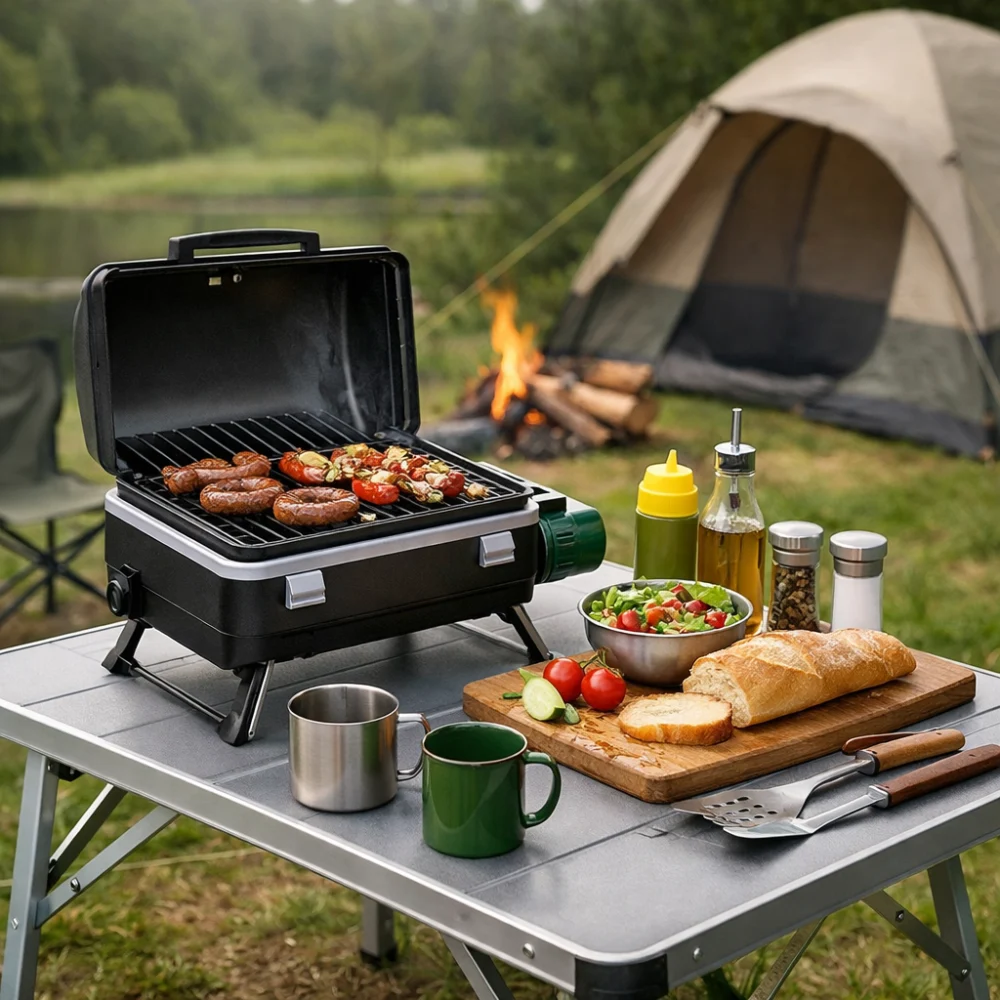
Camping BBQs are for outdoor cooking when you want more than a pan and less faff than a full camp kitchen. The main choice is usually between fuel type, size, portability and how much cooking flexibility you need.
That makes it worth thinking about where you will use it, how you will carry it and how many people you want to feed. A compact grill can be easier to pack, while a larger model may give you more usable cooking space and better control over the cooking area.
If you are comparing options for a campsite, picnic, beach day or garden trip, the right answer is rarely just “the biggest” or “the smallest”. It is the one that fits your space, your fuel preference and the way you like to cook outdoors.
What should you look for in a camping BBQ?
The best starting point is to match the BBQ to your trip style. A lightweight portable grill suits easy carrying and short outings, while a more substantial tabletop or wheeled design may suit car camping or longer stays where packing space is less of a concern.
The biggest trade-off is usually convenience versus cooking area and control. Smaller BBQs are easier to move and store, but they may need more careful portioning or more frequent batches. Larger options can be easier to cook on, but they take up more room and may be less convenient to transport.
| Feature | What It Means | Why It Matters | What To Check |
|---|---|---|---|
| Fuel type | How the BBQ is heated | Shapes setup, cooking style and convenience | Make sure the fuel matches how and where you plan to use it |
| Portability | How easy it is to carry, pack and move | Affects travel, storage and campsite handling | Look at folded size, carry features and overall bulk |
| Cooking space | The usable grill area | Determines how much food you can cook at once | Check whether the size suits solo, couple or family cooking |
| Heat control | How well you can adjust the cooking temperature | Helps with different foods and more even results | See whether the model offers simple on/off control or finer adjustment |
| Cooking style | Whether it is mainly for grilling, roasting or more flexible cooking | Influences how versatile it feels on trips | Check whether lids, grills or extras are included |
| Cleanup | How easy it is to empty and clean after use | Affects convenience at the end of a trip | Look for removable parts and simple surfaces where relevant |
Key decision criteria explained
Fuel type
Camping BBQs may be designed for different fuels, and that choice affects both convenience and cooking style. Your best option depends on whether you want quick setup, a more traditional grilling feel or a compact solution for occasional use. Specifications vary by model, so always check the individual product page before buying.
It is also worth thinking about where you will use the BBQ. Some buyers prefer a fuel choice that is simple to manage on short trips, while others want a setup that suits longer stays or more deliberate outdoor cooking.
Size and portability
Size is about more than cooking space. It also affects packing, lifting and storage in the car or caravan. A slim, folding or compact design may be easier for day trips, while a heavier unit can be more comfortable if it mostly lives in one place.
If you travel light, check the packed size and whether the BBQ has any carry handle, fold-flat or nesting features. If you are buying for a family or group, make sure the cooking area is large enough to avoid constant batching.
Cooking surface and layout
The shape and layout of the cooking area can matter as much as the headline size. A simple grill may suit burgers, skewers and quick cooking, while a design with more enclosed or adaptable cooking space may feel more versatile.
Consider how you normally cook outdoors. If you like to keep food warm while another item cooks, or you need room for a variety of ingredients, the layout should work for that rather than just looking impressive on the product page.
Control and convenience
Some camping BBQs are intentionally simple, while others offer more control and extra features. More control can help with different foods, but it can also add weight, cleaning and setup time. Simpler designs are often easier for casual use.
Think about whether you want a quick grill for relaxed meals or a more flexible outdoor cooker. The right level of convenience depends on how often you will use it and how much time you want to spend managing it.
Product types and variants
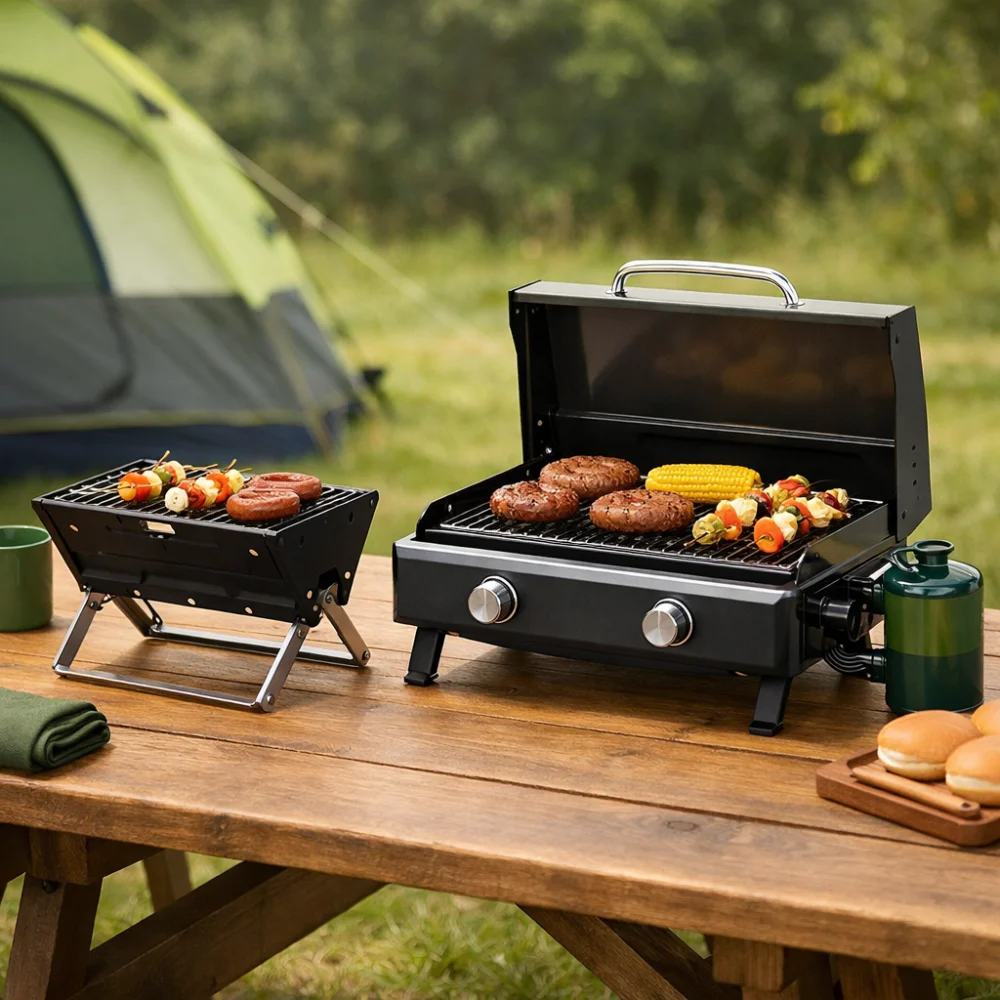
Within camping BBQs, the most useful distinctions are usually between compact portable grills, tabletop designs and larger transportable units. Compact grills suit buyers who prioritise easy carrying and minimal storage. Tabletop styles can work well on a stable surface and may feel more practical for campsite cooking. Larger transportable designs may suit people who want more cooking room and are happy to carry extra bulk.
The main limitation of smaller designs is that they may be less forgiving for group cooking. The main limitation of larger designs is that they are less easy to pack and move. The best fit depends on whether your priority is mobility, capacity or a balance of both.
Which camping BBQ suits different buyers?
| Buyer need | What usually matters most | Useful direction |
|---|---|---|
| Solo or couple use | Compact size, quick setup, easy storage | Look for something small enough to carry comfortably without wasting cooking space |
| Family or group meals | More cooking area and practical layout | Check whether the grill area is likely to handle several portions without constant waiting |
| Car camping or base camp use | Stable design and more flexibility | A slightly larger BBQ may be worthwhile if packing size is less important |
| Day trips and picnics | Lightweight handling and simple cleanup | Prioritise portability and a design that is easy to load and carry |
| Occasional casual use | Simplicity and value for purpose | Choose a straightforward model rather than paying for features you will not use |
Common mistakes and misunderstandings
Choosing on size alone: a larger BBQ is not automatically better if it is awkward to transport or store. A more compact model can be the smarter choice if you mainly cook for a small group.
Overlooking the cooking style: some buyers focus on appearance but forget to check whether the layout suits the food they actually cook. Think about whether you want straightforward grilling or something with more flexibility.
Ignoring the practicalities of cleaning: a BBQ that is pleasant to use but awkward to clean can become less appealing very quickly. Check whether the design looks easy to empty and wipe down after use.
Forgetting the carrying and packing step: a BBQ that seems manageable at home can feel bulky once it is loaded with other camping gear. Consider weight, folded size and how it will fit with the rest of your kit.
Safety and suitability caveats
A camping BBQ should suit the place and style of cooking you have in mind. Check the product information carefully for any limits on use, space, fuel type or setup requirements. If you plan to cook away from home, make sure the BBQ is appropriate for the trip conditions and for the space you actually have available.
It is also sensible to think about stability, ventilation and the surfaces you will use it on. If you are unsure about a model’s suitability, the individual product page is the safest place to confirm the details.
Maintenance, storage and lifespan considerations
How easy a camping BBQ is to look after can affect how long you enjoy using it. Simple surfaces, removable parts and a design that stores neatly can make repeat use much less troublesome.
Think about where it will live between trips. A BBQ that folds away compactly or stores cleanly may be a better buy if space is limited. If the model needs regular cleaning or careful storage, factor that into the decision before you buy.
How to compare options efficiently
- Decide how you will use it most often: day trips, campsite meals, family cooking or occasional weekends away.
- Choose the type that matches that use: compact, tabletop or larger transportable.
- Compare the factors that matter most: fuel type, size, cooking space, control and cleanup.
- Check the practical trade-offs: portability versus capacity, simplicity versus flexibility, and storage versus convenience.
- Read the individual product page carefully before buying to confirm the details that matter to you.
Summary buyer decision checklist
- Have you matched the BBQ size to the number of people you usually cook for?
- Will the fuel type suit your planned use and setup?
- Is it easy enough to carry, pack and store with your other gear?
- Does the cooking area fit the food and batch size you expect?
- Will the design be easy enough to clean after a trip?
- Have you checked the product page for any model-specific details?
Frequently asked questions
What is the main advantage of a camping BBQ over a regular home barbecue?
A camping BBQ is usually chosen for portability and convenience outdoors rather than for permanent garden use. It is designed to fit more naturally into a trip setup, where packing size and easy handling matter. The trade-off is that some models are simpler than full-size home barbecues.
Are compact camping BBQs only suitable for one person?
Not necessarily. Many compact designs work well for couples or small groups, especially if you are happy to cook in batches. The key question is whether the cooking area matches how many portions you want to prepare at once.
Should I choose portability or cooking space?
That depends on your trips. If you move gear often or have limited boot space, portability matters more. If you usually cook for several people in one place, a bit more cooking space may be the better compromise.
Do all camping BBQs work in the same way?
No, they can differ in fuel type, layout and how much control they offer. Some are intentionally basic, while others are more flexible. The important thing is to check the product page rather than assuming all camping BBQs behave the same.
What should I check before buying for a campsite?
Look at the BBQ’s size, fuel type, stability and how easy it is to pack with your other kit. It is also worth checking whether the design suits the amount of food you usually cook. A practical fit matters more than a long feature list.
Is a more expensive camping BBQ always a better choice?
Not always. Higher-priced options may offer more features or a larger cooking area, but you may not need those extras. It is better to pay for the qualities you will actually use than to buy more BBQ than your trips require.
How can I tell if a camping BBQ will be easy to clean?
Look for a design with surfaces and parts that seem straightforward to access after cooking. Simpler constructions are often easier to deal with after a trip, especially if space and washing-up facilities are limited.