

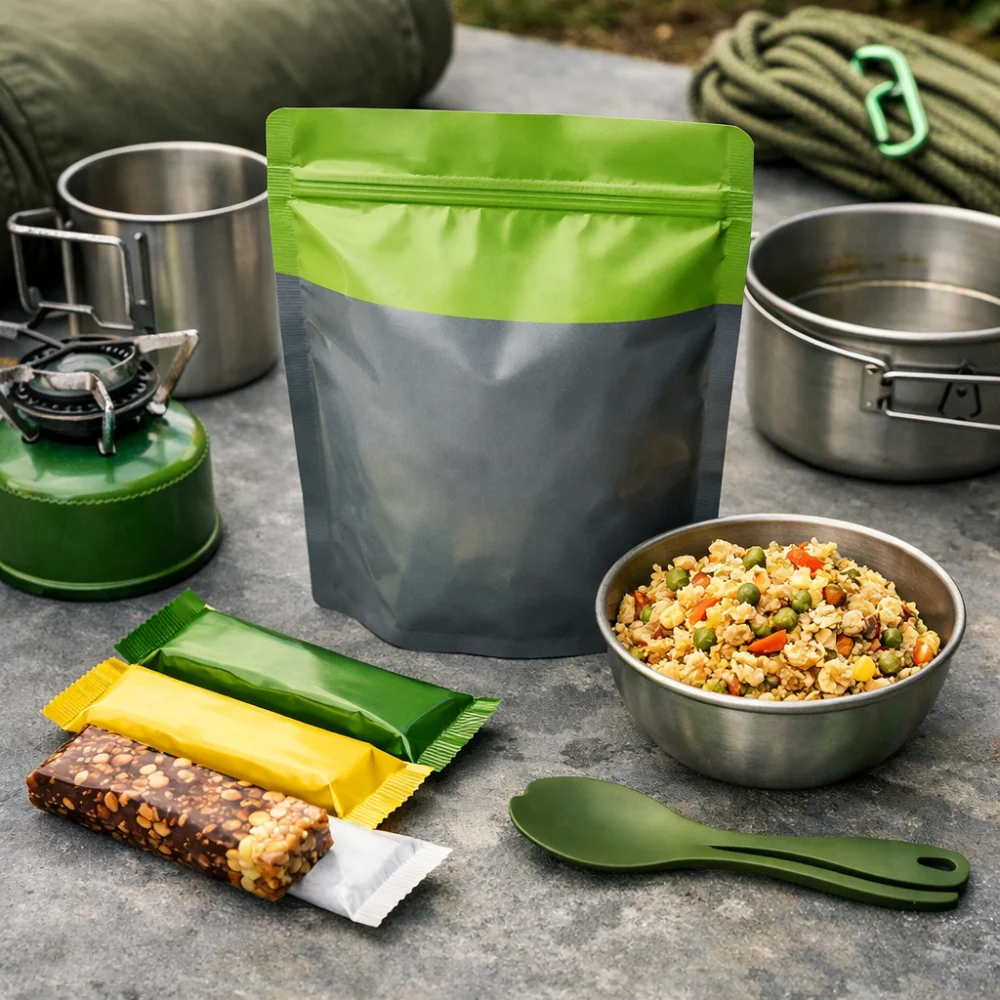
Camping food is about making meals work away from a normal kitchen. The right choice depends on how you travel, how much cooking you want to do and how important pack size, prep time and variety are on your trip.
Some buyers want quick, low-mess meals for one or two nights. Others are looking for lightweight food for longer walks, family camping or emergency supplies. This guide helps you compare the main choices without assuming one type suits every trip.
If you are shopping for camping food, it helps to start with the setting: car camping, backpacking, festival use or a longer expedition all create different needs. From there, the main decision is usually between convenience, weight, storage space and how much actual cooking or rehydration you are willing to do.
Compare Camping Food


As an Amazon Associate we earn from qualifying purchases.
What should you look for when buying camping food?
Start with the level of convenience you need. Ready-to-eat items are simple and fast, while dehydrated or freeze-dried meals can be lighter and more compact but need water and a little more preparation. The best starting point is to match the food to your cooking kit, carrying method and appetite rather than choosing by meal name alone.
Specifications vary by model, so always check the individual product page before buying.
| Feature | What it means | Why it matters | What to check |
|---|---|---|---|
| Preparation | Whether the food is ready to eat, needs heating or needs rehydrating | Affects how much kit, fuel and time you need | Look for the stated preparation method and whether water is required |
| Weight and pack size | How much room and carrying effort the food takes up | Important for backpacking, multi-day trips and small storage spaces | Check pack format, portion size and how many servings you need |
| Meal type | Main meals, snacks, breakfasts or desserts | Helps you plan full-trip food rather than buying single items randomly | Confirm whether it is a full meal or a supporting snack |
| Shelf stability | How suitable it is for storage before use | Useful for keeping supplies ready between trips | Check storage guidance and any date information on the product page |
| Dietary fit | Whether it suits vegetarian, vegan or other dietary needs | Stops unsuitable items from being bought for a group or a specific person | Read ingredients and allergen details carefully |
| Portion size | How much one pack is intended to provide | Some meals are designed for one person, while others suit sharing | Look for serving guidance and compare it with your expected appetite |
Key buying factors explained
Preparation and fuel use
This is one of the biggest differences between products. Some camping food is designed to be eaten straight away, while other items are made to be heated or rehydrated. If you are packing light, a food that needs less equipment may be easier to manage; if you are car camping, extra prep may be less of an issue.
Portability
Pack weight and bulk matter most when you are carrying everything yourself. Lightweight meal options are often useful for walking trips, but they can involve more planning and sometimes less variety. For short car-based breaks, heavier packs may be less of a concern.
Meal style
Camping food includes main meals, breakfast items, snacks, desserts and emergency supplies. Think about the whole day, not just one dinner. A trip can be easier if you mix a few convenience meals with snacks that do not need much preparation.
Dietary needs and ingredients
If you are feeding a group, ingredients matter as much as the meal type. Vegetarian, vegan and allergen-aware options can help with planning, but the details vary by product. Check the ingredient list and allergen information on the individual page rather than assuming a similar-sounding product will suit the same needs.
Common camping food types
Different camping food formats suit different trips. The main choices are usually about convenience, storage and how much preparation is involved.
- Ready-to-eat items suit buyers who want speed and minimal kit.
- Dehydrated or freeze-dried meals suit people who want compact storage and do not mind adding water or heat.
- Snack foods and bars suit short breaks, topping up energy between meals or keeping something handy in a rucksack.
- Long-life meal pouches and tins can suit car camping, group trips or emergency stores where weight is less important.
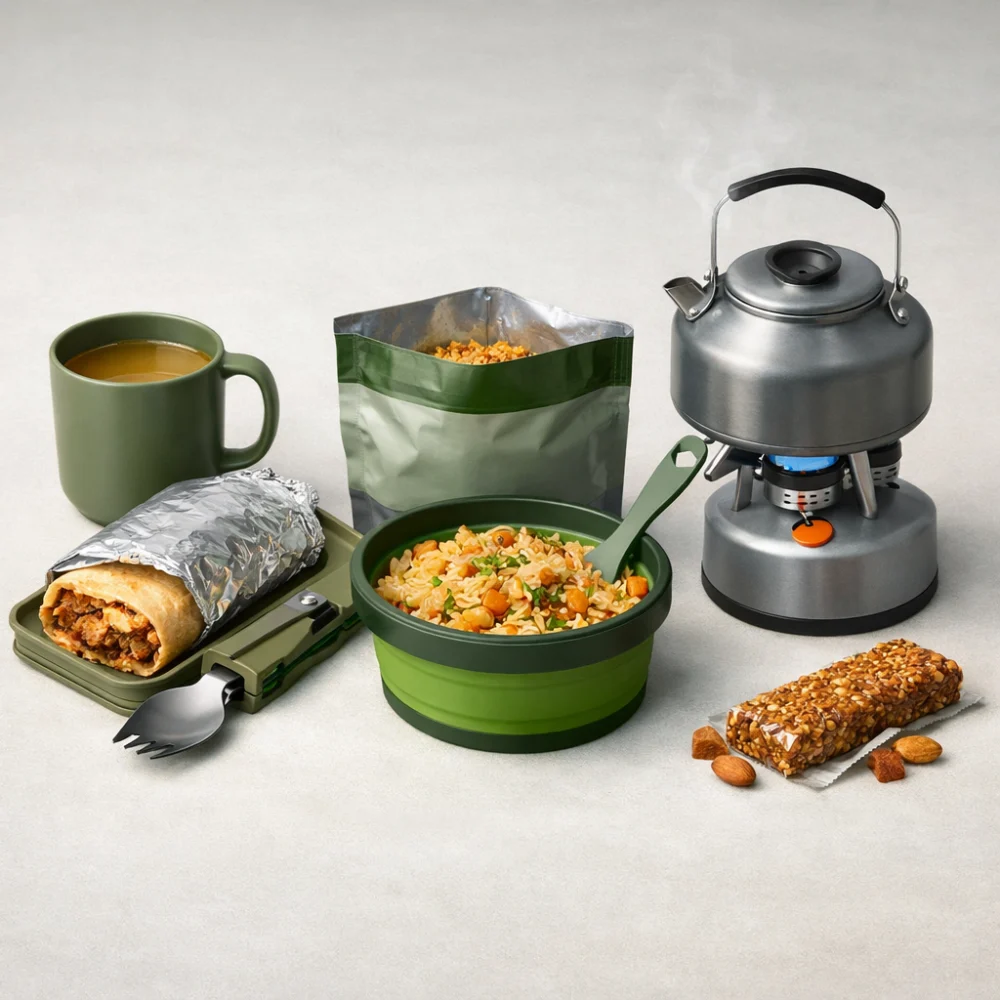
The right type often depends more on the trip than on the meal itself. A lighter meal is not automatically better if you are only cooking beside a vehicle, and a more substantial pack may be unnecessary if you are walking all day.
Which camping food suits different buyers?
| Buyer need | What to prioritise | Why it helps |
|---|---|---|
| Backpacking or hiking | Light weight, small pack size and simple preparation | Reduces carrying effort and makes meal planning easier |
| Family camping | Portion size, variety and familiar flavours | Makes it easier to feed different appetites and preferences |
| Short weekend trips | Convenience and low-mess cooking | Saves time and keeps packing simple |
| Longer expeditions | Shelf stability, variety and reliable meal planning | Helps you avoid running short of suitable food |
| Emergency or backup supplies | Storage life, packaging and easy preparation | Makes the food practical to keep ready for later use |
Common mistakes to avoid
- Buying for the meal name alone can lead to a product that does not suit your cooking setup. Check how much preparation is actually needed.
- Ignoring portion size can leave you short on food or with unnecessary leftovers. Compare the stated serving guidance with who will eat it.
- Overlooking dietary details can make a product unsuitable for one person in the group. Ingredient lists are worth reading carefully.
- Choosing without thinking about storage can be awkward if you have limited space at home or in the car. Packaging shape and shelf stability both matter.
Safety and suitability considerations
Camping food is usually a straightforward purchase, but it still pays to check suitability rather than relying on a similar product name. If you need a food to be vegetarian, vegan or allergen-aware, confirm the details on the product page and do not assume every variation is the same. For meals that need heating or rehydrating, make sure your cooking kit and water supply match the preparation method.
How to compare options efficiently
- Decide where and how you will use the food: backpacking, car camping, group trips or backup storage.
- Choose the right format first, such as ready-to-eat, snack food or a meal that needs heating.
- Compare portion size, preparation needs, pack size and storage suitability.
- Check ingredients and dietary information carefully if the food is for more than one person.
- Choose the option that best balances convenience, carrying ease and the amount of food you actually need.
Summary buyer decision checklist
- Will this food suit my trip type and cooking setup?
- Is the preparation method realistic for the kit I am bringing?
- Does the portion size fit one person or a group?
- Is the pack size and weight suitable for carrying or storage?
- Have I checked ingredients, allergens and dietary needs?
- Does it give me the right balance of convenience and variety?
Frequently asked questions
What is the easiest type of camping food to use?
Ready-to-eat items are usually the simplest because they need little or no preparation. They are useful for short trips, quick lunches and situations where you do not want to carry much cooking kit. The trade-off is that they may be less compact than more specialised lightweight meals.
Is freeze-dried food only for long expeditions?
No. It can also work well for weekend camping, backpacking and any trip where pack size matters. The main reason to choose it is usually convenience of carrying, not just trip length.
How do I know if a camping meal is enough for one person?
Check the serving information on the product page and compare it with the intended use. Some meals are designed as a full single portion, while others are better as a lighter meal or part of a larger food plan. Appetite, activity level and whether the meal is breakfast, lunch or dinner all make a difference.
What should I look for if I am buying for a family?
Look for variety, simple preparation and portions that are easy to share or repeat. Family trips often work best when you mix reliable favourites with a few easy extras. It also helps to check ingredients carefully if anyone has dietary restrictions.
Can camping food be stored between trips?
Often yes, but storage suitability depends on the individual product. Check the packaging and product page for guidance on shelf stability and storage conditions. Keep the food somewhere dry and tidy so it stays in good condition for the next trip.
Do I need special equipment for camping food?
Not always. Some products are ready to eat, while others need hot water, a stove or another cooking method. The key is to match the food to the equipment you already plan to take.
More Camping Food
See all 296 Camping Food →


As an Amazon Associate we earn from qualifying purchases.


