

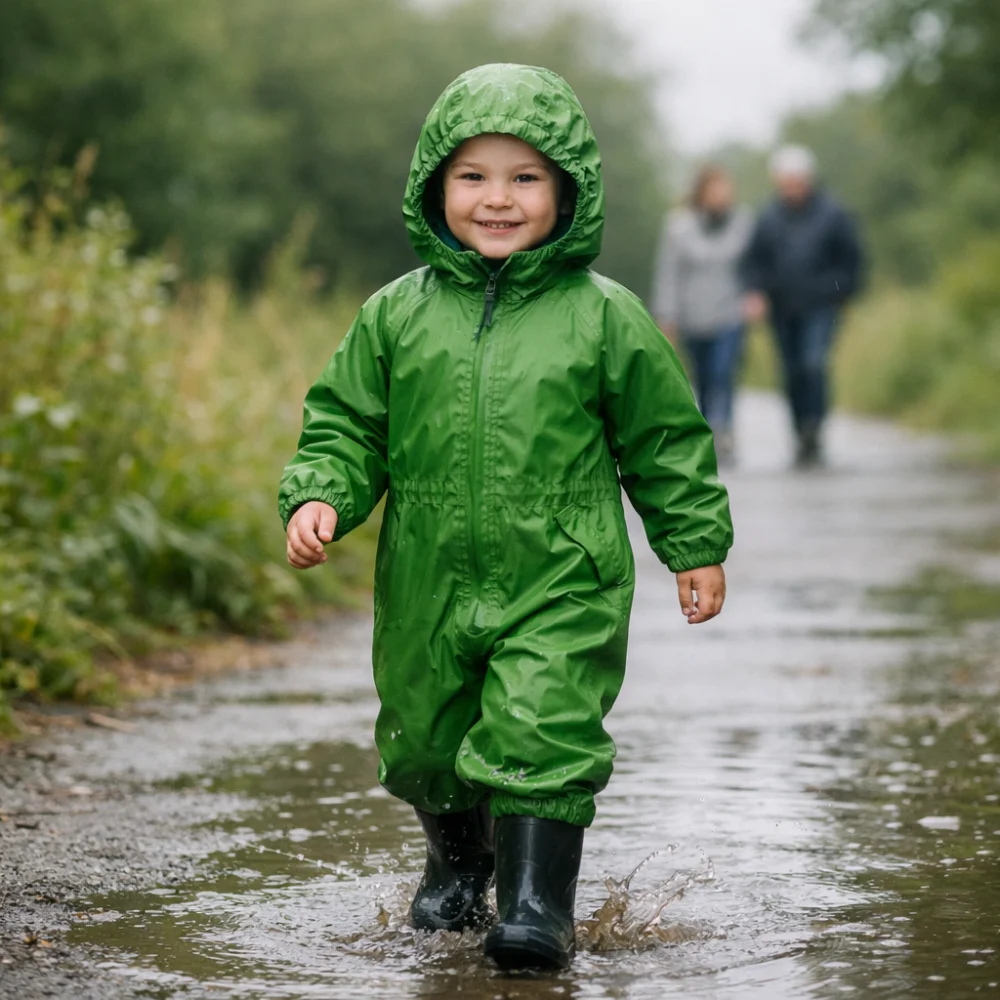
Kids’ waterproof suits are a practical choice when you want all-in-one rain protection for walking, muddy play and changeable weather. They usually appeal to parents and carers who want fewer gaps between jacket and trousers, especially for active children who kneel, climb and splash about.
The main buying decision is not just whether a suit is waterproof, but how much coverage, comfort and ease of movement you need. A suit that is simple to put on and easy to move in can be more useful than one that looks more technical but feels awkward in daily use.
Because children’s needs vary a lot, it helps to think about where the suit will be worn, how long it will be worn for and how much layering may be needed underneath. Specifications vary by model, so always check the individual product page before buying.
What should you look for in a kids’ waterproof suit?
Start with the conditions your child is likely to face. A waterproof suit is most useful when full-body coverage matters, especially for wet school runs, family walks, park visits and outdoor play in damp weather. The best choice is usually the one that balances weather protection with enough comfort for your child to keep wearing it.
The main trade-off is between maximum coverage and everyday convenience. More coverage can mean less chance of gaps, but it can also mean more fabric, more bulk and a little more time getting dressed. If the suit is for occasional downpours, simplicity may matter more than extra features.
| Feature | What it means | Why it matters | What to check |
|---|---|---|---|
| Coverage | How much of the body the suit protects | Helps reduce gaps where rain and mud can get in | Look at how the jacket and trousers join, plus sleeve, leg and hood coverage |
| Fit and mobility | How easily a child can move while wearing it | Important for climbing, crouching and general play | Check whether the fit allows layers underneath without feeling restrictive |
| Breathability | How well moisture can escape during activity | Helps comfort when walking hard or playing actively | Check product details for breathability information where provided |
| Fastening and dressing ease | How simple it is to put on and remove | Useful for younger children and quick changes | Look for closure style, leg openings and whether the design seems manageable for the child |
| Durability | How well the suit stands up to regular wear | Matters for knees, elbows, hems and repeated use | Check fabric notes, reinforcements and care guidance on the product page |
| Packability | How easy it is to carry when not worn | Useful for travel, school bags and changeable forecasts | Consider whether the suit can be stored neatly without becoming awkward to carry |
Key decision criteria
Waterproof coverage
A suit is useful because it reduces exposed areas between separate jacket and trouser pieces. That can be especially helpful for children who bend, sit on wet ground or play in puddles. What matters most is whether the design gives practical coverage where your child actually gets wet, not just whether it sounds fully weatherproof.
Comfort and movement
Children are far more likely to wear a suit willingly if it lets them move naturally. Check for a shape that looks suitable for walking, sitting and climbing without pulling tight at the shoulders, crotch or knees. If your child usually wears layers underneath, allow room for that without choosing a suit so roomy that it feels cumbersome.
Breathability and temperature
Waterproof kit can become uncomfortable if it traps too much heat during active play. Breathability matters more when a child is walking briskly, running around or wearing the suit for longer periods. For cooler, slower outings, breathability may be less of a priority than ease of cleaning and reliable wet-weather coverage.
Ease of use
Think about who will be using the suit and how often. A younger child may need a design that is straightforward to get on quickly, while an older child may care more about freedom of movement and less fuss. Fastenings, openings and overall simplicity can make a bigger difference in everyday use than extra details.
Durability and care
Children’s outdoor clothing tends to face mud, grass, wet benches and repeated washing. A suit that is easy to clean and simple to dry may be more practical than one that needs more careful handling. If a product page mentions specific care requirements, compare them with how often you expect to use it.
Types and variants within this category
Within kids’ waterproof suits, the main differences are usually about coverage, structure and how robust the suit feels in use. Some suits are more focused on easy everyday rain protection, while others are aimed at heavier outdoor use or more active play. The right choice depends on whether you want a simple weather layer or something that will be worn hard and often.
In general, a lighter-feeling suit may suit travelling, short outings and keeping in a bag, while a more structured suit may suit regular outdoor use where durability and coverage matter more. The trade-off is often between convenience and toughness.
Which suit suits which buyer?
| Buyer need | What to prioritise | Why it helps |
|---|---|---|
| School runs and daily wet weather | Ease of dressing, reliable coverage, simple care | Makes the suit more likely to be used regularly |
| Outdoor play and muddy weekends | Coverage, durability and freedom of movement | Helps the suit cope with active use and messy conditions |
| Travel and backup rainwear | Packability and straightforward storage | Useful when space is limited and the suit may be carried more than worn |
| Layering in colder weather | Room for layers without a restrictive fit | Helps the child stay comfortable over longer outings |
Common mistakes to avoid
- Choosing for waterproofing alone: a suit that keeps out rain but feels awkward may not get worn often.
- Ignoring movement: children need room to crouch, climb and sit without the suit feeling tight.
- Overlooking layering: if the suit is for colder weather, there should usually be room for clothing underneath.
- Assuming one suit suits every outing: a lightweight option and a more robust one can serve different needs.
- Forgetting care and drying: easier maintenance often matters more than extra features for busy families.
Safety and suitability caveats
Check that the suit is suitable for your child’s age, size and usual activity level. A good fit should support movement without slipping, twisting or leaving large gaps, but you should still check the individual product details carefully. For very active use, think about visibility, comfort and whether the suit feels manageable in the conditions it will actually face.
Specifications vary by model, so always check the individual product page before buying.
Maintenance, storage and lifespan considerations
Kids’ waterproof suits are often bought for repeated wet-weather use, so easy maintenance can be a real advantage. Look for care guidance that fits into normal family routines, and think about whether the suit can be dried and stored without taking up too much space. If the suit will live in a school bag, car boot or hallway cupboard, packability can matter as much as weather protection.
How long a suit lasts depends on how often it is worn, how roughly it is used and how it is cared for. Regular washing, drying and storage all affect how practical it remains over time.
How to compare options efficiently
- Decide where the suit will be used most often: walks, school runs, playtime or travel.
- Choose the type of coverage and convenience that fits that use.
- Compare fit, movement and layering space before looking at extra features.
- Check care instructions and how easy the suit is to store.
- Read the individual product page carefully for the details that matter to your child.
Summary buyer decision checklist
- Will the suit be used mainly for walking, play or backup rainwear?
- Does the fit allow comfortable movement and layering?
- Is the level of coverage right for the weather and activity?
- Will the suit be easy enough to put on, take off and store?
- Do the care instructions suit how often it will be used?
- Have you checked the individual product page for model-specific details?
Frequently asked questions
Are kids’ waterproof suits better than separate waterproof jacket and trousers?
They can be, if you want simpler full-body coverage and fewer gaps. Separate pieces may be easier to mix and match, but a suit can be more straightforward for muddy or wet conditions. The better choice depends on how often you want full coverage versus flexibility.
Should I size up for a waterproof suit?
Not automatically. Some parents prefer a little extra room for layers, but too much space can make the suit bulky or awkward. It is better to compare the product’s fit guidance and think about how your child will use it.
Do all waterproof suits breathe well enough for active play?
No single design suits every level of activity. If your child will be moving a lot, breathability becomes more important because it can affect comfort. Check the product information where breathability is mentioned, and balance that with the level of waterproof coverage you need.
Can a waterproof suit be used all year round?
It depends on the suit and on what your child wears underneath. Some suits are useful across multiple seasons with layering, while others are better for milder wet weather or short outings. Think about temperature, activity level and how often the suit will be worn.
What matters most for younger children?
Ease of use and comfort usually matter a lot. A suit that is straightforward to put on and easy to move in is often more practical than one with extra details. It is also worth checking that the fit works for sitting, crouching and quick changes.
How do I know if a suit will be easy to maintain?
Check the care instructions and look for signs that the suit is intended for regular family use. Easy cleaning, straightforward drying and simple storage are often more useful than features that sound technical but do not affect day-to-day practicality.


