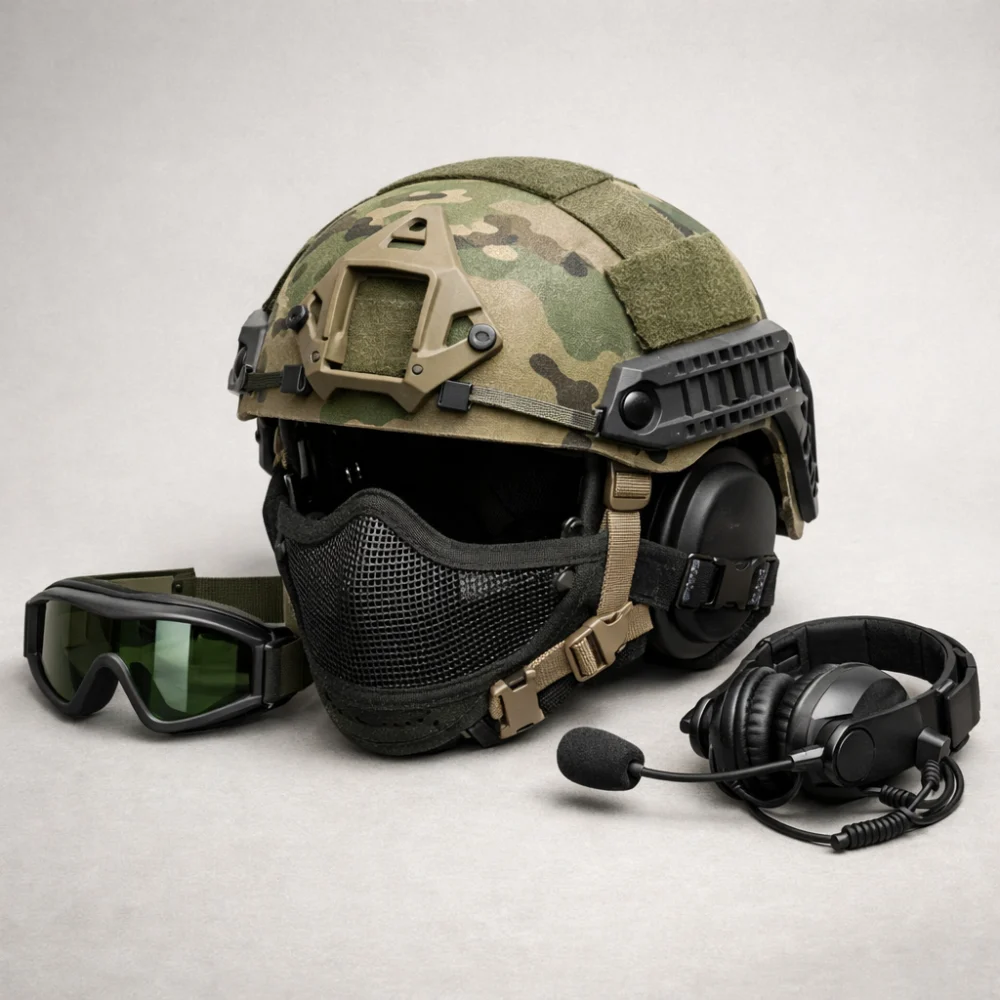
Airsoft helmets and accessories are often chosen for a mix of coverage, comfort and practical mounting options. Some players want a more complete helmet setup, while others only need a cover, rail add-ons or a mount for a particular use.
The right choice depends on how you play, what else you already wear and how much extra bulk you are happy to carry. It also depends on whether you want a simple helmet shell, a setup with accessories, or a way to organise mounted items more neatly.
This guide helps you compare the main decision points without assuming every helmet or accessory serves the same purpose. Specifications vary by model, so always check the individual product page before buying.
What should you look for first?
Start with fit, intended use and compatibility. A helmet that feels stable on your head and works with the rest of your kit is usually more useful than one with extra features you will not use. After that, compare how much adjustability, accessory mounting and coverage each option offers, because those features affect comfort and convenience more than appearance alone.
| Feature | What It Means | Why It Matters | What To Check |
|---|---|---|---|
| Fit and adjustment | How the helmet sits and stays in place | A secure fit is important for comfort and stable use | Head sizing guidance, adjusters, padding and retention method |
| Accessory mounting | Rails, shrouds or points for add-ons | Useful if you plan to fit extras or keep items organised | Which mounts are included and whether they suit your intended accessories |
| Coverage and profile | How much of the head is covered and how bulky the setup feels | Changes protection feel, weight and movement freedom | Shape, helmet style and how much space it leaves around your kit |
| Compatibility | How well the helmet works with goggles, face protection or other gear | Prevents a setup that clashes or feels awkward together | Clearance around eye protection, straps and any other worn items |
| Weight and comfort | How heavy the setup feels during longer games | Extra weight can become noticeable over time | Included accessories, padding and whether the setup is likely to suit longer wear |
Key decision criteria explained
Fit and stability
Fit is one of the most important factors because a helmet that moves around is distracting and uncomfortable. Look for clear sizing guidance and adjustable support where possible. If you wear other headgear or eye protection, check how the helmet is meant to sit alongside them rather than relying on appearance alone.
Mounting options
Some buyers want a plain helmet, while others want rails or mounting points for accessories. The trade-off is that more mounting options can mean more complexity and sometimes more bulk. If you only need a simple helmet, avoid paying for features you are unlikely to use.
Coverage and shape
Airsoft helmets vary in how much coverage they provide and how streamlined they feel. A more enclosed style may suit players who want a substantial helmet look, while a lighter-profile option may feel less intrusive. The key question is whether the shape works with your movement, eyewear and usual loadout.
Accessory coordination
Accessories are only useful if they match the helmet and the way you play. Covers, rails, mounts and storage items can improve organisation, but they also add parts that need to fit properly together. Check whether the product is a helmet itself or an accessory for an existing helmet, because that affects what you need to buy.
Types and variants you are likely to compare
Within this category, the main choice is usually between a helmet on its own and supporting accessories for an existing helmet. That distinction matters because the buying question changes from “which helmet suits me?” to “which add-on actually fits my setup?”
- Helmet shells suit buyers who want a ready-to-wear base. They are usually the starting point for building a head setup, but they still need checking for fit and compatibility.
- Helmet covers suit buyers who want to change the look or help protect the outer surface from scuffs. Their main limitation is that they depend on the helmet shape and size.
- Rails, mounts and adapters suit buyers who want to add accessories in a more structured way. Their limitation is compatibility: the mount has to suit the helmet and the item being attached.
- Storage and carrying accessories suit buyers who want to keep helmet kit together and protected between games. These are practical rather than performance-led purchases.
Which option suits different buyers?
| Buyer need | What to prioritise | Why |
|---|---|---|
| First-time buyer | Clear fit guidance, simple setup and easy compatibility | It reduces the chance of buying something awkward to wear |
| Player adding accessories | Mounting points and known compatibility with the rest of the kit | Accessories are only worthwhile if they fit securely |
| Comfort-focused buyer | Adjustability, padding and manageable weight | These affect how the helmet feels over a full session |
| Buyer replacing worn kit | Similar shape and size to the gear already in use | It helps avoid a new fit problem when changing equipment |
| Buyer wanting a tidier loadout | Organised mounting and a setup that stays stable | Less clutter usually means easier handling in use |
Common mistakes and misunderstandings
- Choosing on appearance alone. A good-looking helmet is not automatically the easiest to wear or the easiest to match with other kit.
- Assuming all accessories fit all helmets. Mounting points and shapes vary, so compatibility should be checked rather than assumed.
- Ignoring how the helmet works with goggles or face protection. A setup can seem fine individually but feel awkward when worn together.
- Buying extra features you do not need. More mounts or add-ons can be useful, but only if you will actually use them.
- Overlooking comfort for longer sessions. Small differences in weight and adjustment can matter more over time than they do in a quick look.
Safety and suitability caveats
Airsoft helmets and accessories should be chosen for the specific kind of use you have in mind, and that includes checking how they work with other protective or face-worn items. Do not assume that a helmet accessory is suitable just because it fits the general style of helmet you own. If a product page is unclear about fit or intended use, treat that as a reason to check carefully before buying.
Maintenance, storage and lifespan considerations
These products usually benefit from simple care and sensible storage rather than complicated maintenance. Keep straps, padding, covers and mounts clean and dry, and store the setup so it is not crushed or snagged by other kit. If a helmet uses removable parts or accessories, check how easy they are to reattach and whether anything is likely to wear faster than the rest of the setup.
How to compare options efficiently
- Decide whether you need a helmet, an accessory for an existing helmet, or a way to improve a current setup.
- Check fit information first, because comfort and stability affect nearly every other decision.
- Compare the features that matter to your use, such as mounting points, coverage and overall bulk.
- Look for any compatibility notes with goggles, face protection or other items you already use.
- Choose the simplest option that meets your needs rather than adding features you are unlikely to use.
Summary buyer decision checklist
- Have I decided whether I need a helmet or an accessory?
- Does the fit guidance suit my head size and comfort needs?
- Will it work with my other airsoft kit?
- Do I need mounting points or a simpler setup?
- Is the weight and shape likely to suit longer wear?
- Have I checked the individual product page for model-specific details?
Frequently asked questions
Do I need a helmet for airsoft?
That depends on your priorities and the rest of your setup. Some buyers want the extra coverage and accessory options a helmet can provide, while others prefer a lighter or simpler head setup. The main question is whether it fits comfortably with your other gear and the way you play.
What is the difference between a helmet and a helmet accessory?
A helmet is the main head item, while an accessory is something designed to work with it, such as a cover, mount or rail add-on. That difference matters because accessories depend on the helmet they are attached to. Always check whether you are buying the base item or a supporting part.
How important is compatibility with goggles or face protection?
Very important, because head and face items often need to work together comfortably. A setup that looks fine separately may press, gap or sit awkwardly when worn at the same time. Check the product page for any relevant fit notes and compare them with your existing kit.
Are more mounting options always better?
Not necessarily. Mounts and rails are useful only if you plan to use them, and they can add bulk or complexity. If you want a clean, simple setup, a less feature-heavy option may be the better fit.
Should I choose based on style or function first?
Function first is usually the safer approach. Style still matters, but fit, comfort and compatibility have a bigger effect on whether you will actually like using the item. Once those basics are right, style can help narrow the final choice.
What should I check on the product page before buying?
Check the fit guidance, what is included, whether it is a helmet or an accessory, and any notes about compatibility. If the listing mentions mounts, rails or add-ons, make sure you understand what is part of the package and what is not. Specifications vary by model, so always check the individual product page before buying.