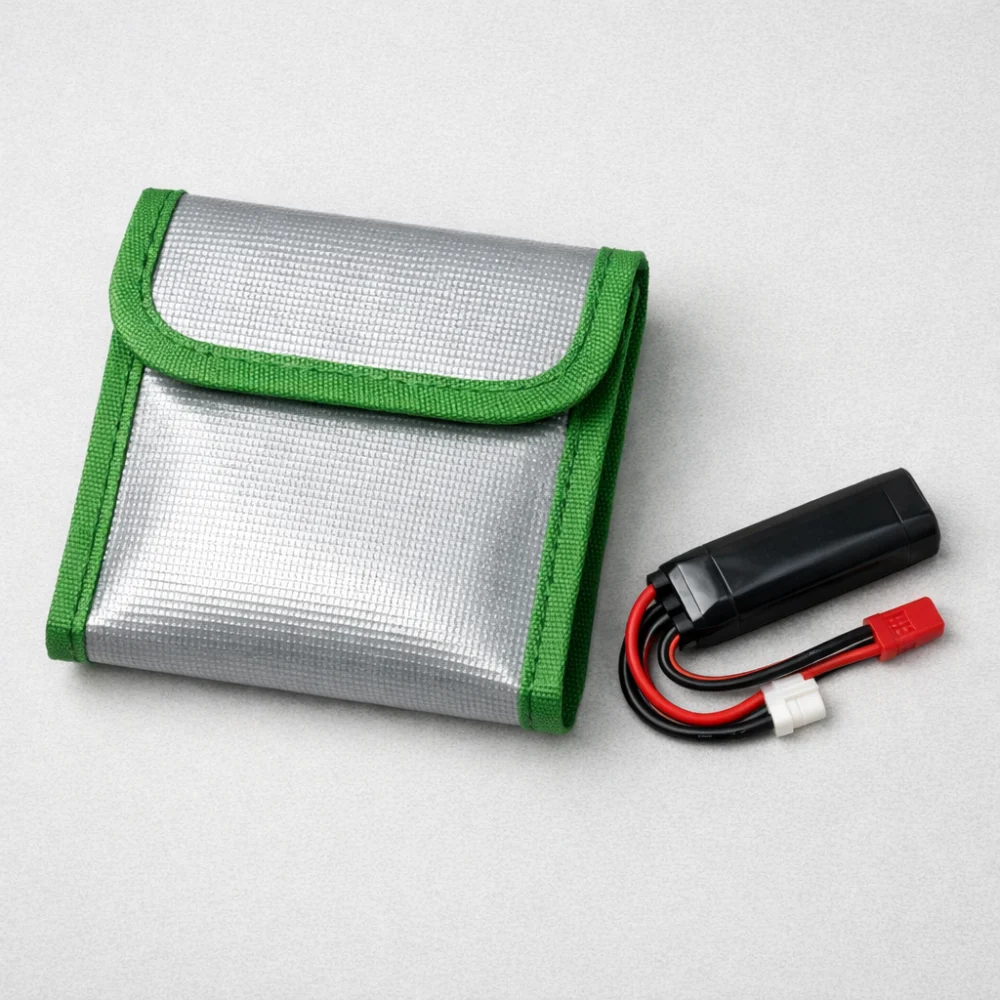
Airsoft LiPo battery charging and storage bags are a simple accessory, but the buying decision still matters. Buyers usually want a bag that is easy to use, large enough for the batteries they keep, and suitable for both charging and storage routines.
Because these bags are used around lithium batteries, shoppers often look for reassurance as well as convenience. The main task is to choose a bag that fits your batteries comfortably and suits how you actually store or charge them.
For most buyers, the best starting point is to match the bag to the size and number of batteries you handle most often, then check whether you want one bag for occasional charging, everyday storage or both.
What should you look for in an airsoft LiPo battery bag?
Start with fit, intended use and practical handling. A bag that is too small is awkward to use, while one that is much larger than needed may be less tidy for storage. After that, compare the closure style, carrying format and any construction details that affect how comfortably you will use it day to day. Specifications vary by model, so always check the individual product page before buying.
| Feature | What It Means | Why It Matters | What To Check |
|---|---|---|---|
| Internal size | The usable space inside the bag | It determines whether your battery or batteries fit without being cramped | Compare the bag’s dimensions with the batteries you plan to keep in it |
| Intended use | Whether the bag is mainly for charging, storage or both | Helps you avoid choosing a bag that is inconvenient for your routine | Read the product description carefully for the intended purpose |
| Closure type | How the bag seals shut | Affects ease of use and how securely the contents are enclosed | Check how the flap, zip or fastening is described on the product page |
| Portability | How easy the bag is to carry or move | Useful if you take batteries to skirmishes or move them between storage and charging areas | Look for handles or a shape that suits your kit bag |
| Capacity | How many batteries or accessories the bag can hold | Important if you keep multiple batteries together | Check whether the bag is designed for one battery or several small items |
Key decision criteria explained
Fit and usable space
Fit is the first thing to get right because LiPo batteries are often stored in a compact space. A bag should allow the battery to sit comfortably without forcing the closure to strain. If you use different battery shapes or sizes, choose a bag with a little practical margin rather than one that is only just large enough.
Charging or storage use
Some buyers mainly want a storage bag for keeping batteries together between sessions, while others want one they can also use during charging. That choice affects how often the bag will be opened, moved or handled. Think about your routine first, then choose the style that fits it rather than assuming every bag is equally convenient for every use.
Construction and handling
Construction details matter because they influence everyday usability. A bag that is easy to open, close and carry is more likely to be used consistently. If you keep your batteries in a kit box, drawer or rucksack, check that the bag shape suits the space you have available.
Capacity and organisation
Some buyers need a single-battery solution, while others prefer a bag that can hold more than one item. More capacity can be useful, but only if it still keeps the contents organised and easy to access. Avoid buying oversized storage space you do not need unless you know you will use it.
Types and variants you may see
Within this category, the main differences are usually practical rather than technical. Bags may be aimed at charging, storage or combined use, and some are more compact while others are designed to hold more than one battery or a few small accessories.
- Compact bags suit a single battery or a minimal kit.
- Larger bags may suit buyers who keep several batteries together.
- Charging-focused bags are for people who want a dedicated charging setup.
- Storage-focused bags suit tidier long-term organisation.
The main limitation is that a bag designed for one use may be less convenient for another, so it is worth matching the style to your routine rather than buying purely on appearance.
How different buyers can narrow the choice
| Buyer need | What tends to matter most | Buying focus |
|---|---|---|
| First-time buyer | Simple fit and easy handling | Choose a straightforward bag that matches the batteries you already own |
| Regular skirmish player | Convenience and portability | Look for a bag that is easy to pack and move with the rest of your kit |
| Buyer storing batteries at home | Organisation and size | Focus on how neatly the bag fits your storage space |
| Buyer with multiple batteries | Capacity and separation | Check whether the bag can hold the number of batteries you plan to keep together |
Common mistakes and misunderstandings
- Buying by appearance alone: a neat-looking bag may still be the wrong size or style for your batteries.
- Assuming one bag suits every battery: different battery shapes and quantities may call for different sizes.
- Ignoring intended use: a storage-first bag may not be as convenient if you want regular charging access.
- Overestimating capacity: extra space is not automatically better if it makes the bag bulky or awkward.
Safety and suitability caveats
LiPo bags are a useful storage and charging accessory, but they are not a reason to ignore basic battery care or the product instructions. Check the individual listing for the intended use, size guidance and any care notes before buying. If you are unsure about a battery’s compatibility with your setup, choose conservatively and check the product page rather than guessing.
Maintenance, storage and lifespan considerations
These bags are usually chosen for convenience and organisation, so the main maintenance question is how easy they are to keep clean and store. If you move batteries frequently, check that the bag is practical to open, close and pack away without becoming cumbersome. It is also worth thinking about where you will keep the bag when not in use, especially if you want a tidy home storage routine.
How to compare options efficiently
- Decide whether you need a charging bag, a storage bag or one bag for both.
- Check the size of the batteries you already own or plan to keep inside.
- Compare capacity, closure style and ease of handling.
- Think about how often you will carry the bag and where it will be stored.
- Read the individual product page carefully before making your final choice.
Summary buyer decision checklist
- Does the bag fit the batteries you plan to store or charge?
- Is it intended for the way you want to use it?
- Is the capacity practical for one battery or several?
- Will the closure and shape suit your routine?
- Have you checked the individual product page for size and use details?
Frequently asked questions
Do I need a separate bag for charging and storage?
Not always. Some buyers prefer one bag for both jobs, while others like a dedicated bag for each use because it keeps their routine clearer. The right choice depends on how often you charge batteries and how much organisation you want.
How do I know whether a bag is the right size?
Compare the bag’s dimensions with the batteries you actually own or plan to buy. If you are between sizes, a little extra room is usually more practical than a bag that is too tight. Check the individual product page for the most reliable size information.
Can one bag hold more than one battery?
Some bags are suited to more than one battery, while others are better for a single item. The deciding factor is usually the internal space and how you want to organise the contents. Do not assume every bag in this category is designed for the same capacity.
What is the main difference between a storage bag and a charging bag?
A storage bag is mainly for keeping batteries together when they are not in use, while a charging bag is chosen with charging in mind. Some products are suitable for both, but the product description should make that clear. If the listing is not specific, check before you buy.
Is a larger bag always better?
No. A larger bag can be useful if you keep several batteries together, but it may be less convenient if you only need to store one battery. The most practical bag is usually the one that matches your routine rather than the one with the most space.
What should I check before ordering?
Check the intended use, internal size, capacity and how the bag closes. It is also sensible to confirm that the product page gives enough detail for the battery format you use. That simple comparison avoids most disappointing purchases.