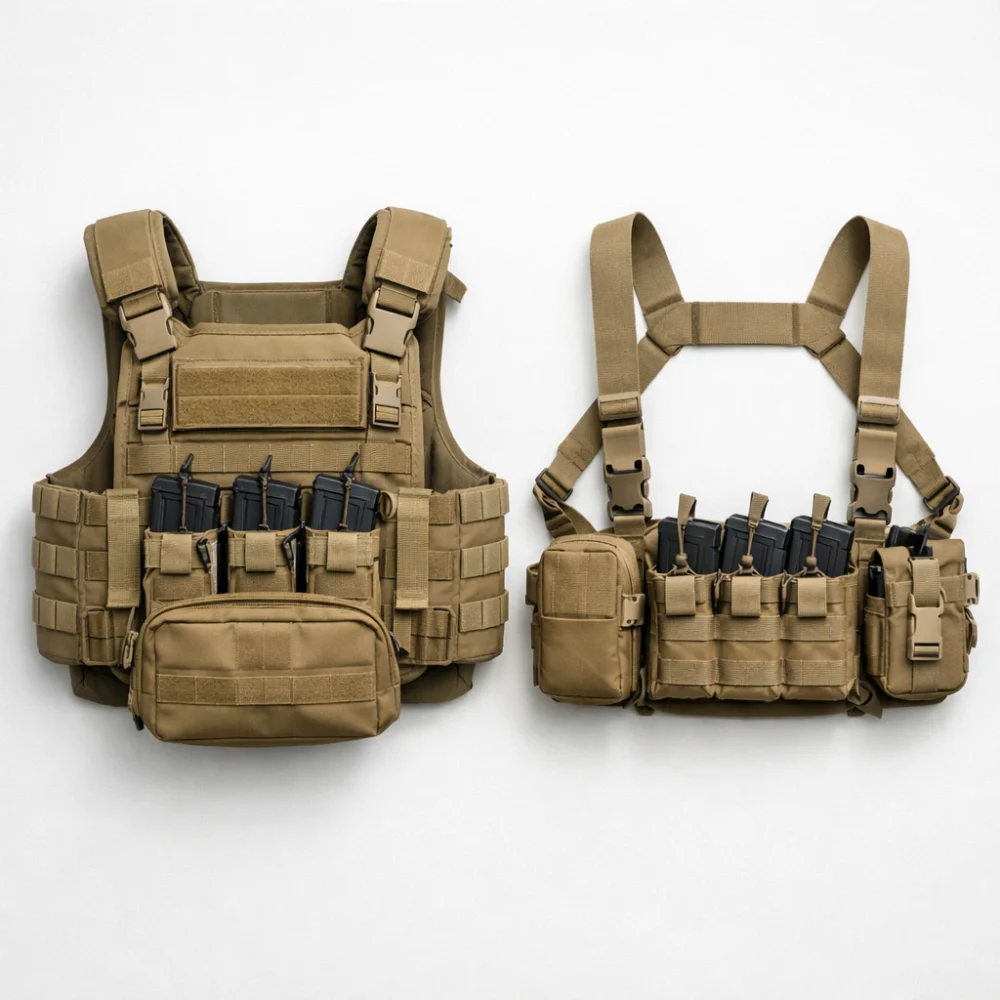
Airsoft tactical vests and rigs are worn to carry magazines, tools and other game-day essentials in a way that suits how you play. The right choice depends on how much kit you want to carry, how quickly you need to reach it and how comfortable you want the setup to feel over a long session.
Because this category includes a wide range of vest and rig styles, it helps to think first about function rather than appearance. A bulkier carrier may suit players who want more load-bearing space, while a lighter chest rig may be easier to move in and simpler to set up.
This guide focuses on the buying questions that matter most: fit, storage layout, adjustability, comfort and how well the design matches your other airsoft gear.
What should you look for first?
Start with how you want to carry equipment. If you only need a few magazine pouches and a simple, lightweight setup, a compact rig may be enough. If you want more mounting space or a more structured feel, a vest-style carrier may be more suitable. The main trade-off is usually between mobility and carrying capacity, so the best starting point is the role the kit needs to play in your loadout.
Specifications vary by model, so always check the individual product page before buying.
| Feature | What it means | Why it matters | What to check |
|---|---|---|---|
| Carry style | Whether the product is a chest rig, vest or carrier-style setup | Changes how much kit you can carry and how much bulk you wear | Layout, coverage and whether the design suits your usual game role |
| Adjustability | How easily the fit can be changed | Affects comfort, stability and how well the rig sits over layers | Straps, fastening method and whether the size range suits you |
| Pouch layout | Where magazines and accessories sit on the rig | Determines speed of access and how balanced the load feels | Number, position and type of pouches |
| Weight distribution | How the load is spread across the torso and shoulders | Helps avoid a setup that feels awkward or front-heavy | Harness design, strap width and overall structure |
| Mounting options | Whether the rig supports extra pouches or accessories | Useful if you want to change the setup later | Compatibility with the attachment system used on the product |
| Breathability | How open or compact the design feels when worn | Can affect comfort during longer sessions | Panel coverage, padding and how much material sits against the body |
Key decision criteria explained
Carry style
The first choice is usually between a lighter rig and a more enclosed vest or carrier. Rigs tend to feel simpler and less bulky, which can suit players who value freedom of movement. Vest-style products may feel more structured and can offer a broader platform for attachments, but they may also feel warmer or more involved to wear.
Fit and adjustability
A good fit matters because a rig that shifts around can become annoying quickly. Look for clear adjustment options and think about whether you will wear it over a T-shirt, a mid-layer or a jacket. A setup that fits neatly in one clothing combination may not feel the same in another.
Pouch layout and access
Different players organise their gear differently. Some want front-access magazine pouches that are easy to reach, while others prefer a more modular layout that can be changed over time. The most useful layout is the one that matches your reload habits and the items you actually carry, rather than the one with the most storage on paper.
Modularity and future changes
Many buyers want a setup that can grow with them. If that matters to you, check whether the design allows extra pouches or accessories to be added later. That can make a rig more flexible, but it may also add weight and complexity, so it is worth deciding whether you really need the extra capacity.
Comfort over a session
Comfort is not just about padding. Strap placement, load balance and how much of the torso the product covers all affect how it feels after a period of use. A compact rig may stay out of the way better, while a larger vest may spread the load more evenly. Which is preferable depends on your build and how much kit you intend to carry.
Common types and variants
Within this category, buyers usually compare a few broad styles:
- Chest rigs: Typically simpler and lighter, with the main load carried at the front of the torso. They may suit players who want quick access and less bulk.
- Vest-style carriers: Often feel more substantial and can provide a broader platform for pouches. They may suit buyers who want a more structured setup.
- Modular rigs: Designed to be changed or expanded with extra accessories. They suit buyers who want flexibility, but they can become more complex than a fixed-layout option.
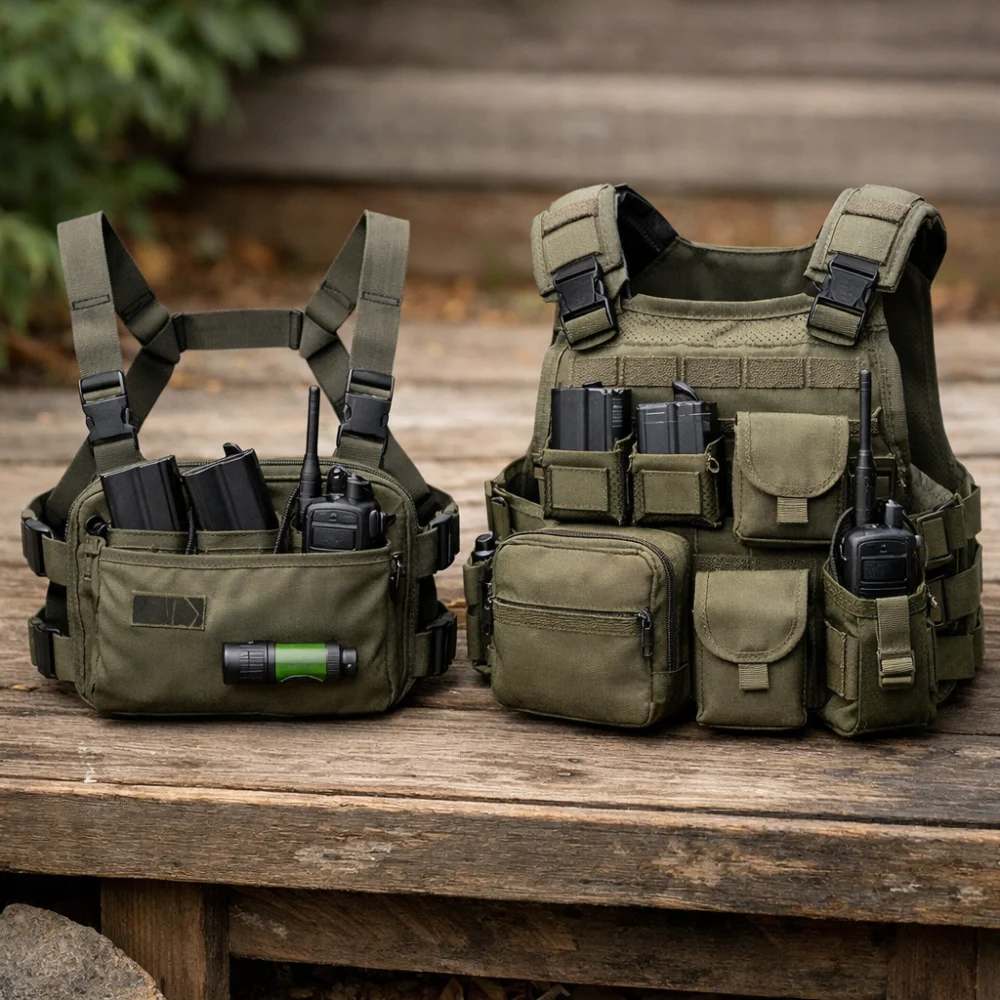
These are broad buying categories rather than strict standards, so the details depend on the individual product.
Which type suits which buyer?
| Buyer need | What to prioritise | Why |
|---|---|---|
| Light, minimal loadout | Compact rig, simple pouch layout | Helps keep movement easy and the setup uncluttered |
| More carrying capacity | Vest-style design, broader mounting area | May offer more room for pouches and accessories |
| Fast access to magazines | Front-facing pouch arrangement, stable fit | Can make reach and reloads feel more straightforward |
| Changing loadouts over time | Modular attachment options | Makes it easier to adapt the setup as your needs change |
| Comfort for longer sessions | Good adjustment, balanced weight distribution | Helps reduce slipping, digging and unnecessary bulk |
Common mistakes to avoid
- Choosing on appearance alone: A more tactical look does not necessarily mean a more practical fit for your needs.
- Ignoring how you carry kit: The wrong pouch layout can make a setup awkward even if it has plenty of storage.
- Forgetting clothing layers: A rig that fits well over a thin layer may feel different over colder-weather clothing.
- Buying more capacity than you will use: Extra bulk can get in the way if you only need a few essentials.
- Assuming every model uses the same attachment approach: Check the product page carefully so the layout matches the rest of your gear.
Safety and suitability caveats
Airsoft tactical vests and rigs are support gear, not protective equipment unless the product page clearly states otherwise. They should be chosen for comfort, practicality and suitability for your loadout, not as a substitute for proper eye protection or other required kit. If you are buying for a younger player or as a gift, check that the fit, adjustment range and intended use make sense for the wearer.
Maintenance, storage and lifespan considerations
Most buyers will want a product that is easy to keep tidy and store between games. Think about whether the material and layout look straightforward to clean, and whether the rig can be packed away without losing its shape or snagging on other kit. If the design uses multiple straps, pouches or fastenings, that can be helpful for flexibility but may take a little more care when organising and storing.
How to compare options efficiently
- Decide whether you need a light rig, a more structured vest or a modular setup.
- List the items you actually want to carry, then check the pouch layout against that list.
- Compare adjustability and fit so the product suits your clothing layers.
- Look at how the weight is distributed across the torso and shoulders.
- Check the individual product page for any model-specific details before you decide.
Summary buyer decision checklist
- Does the carry style suit how much kit you want to take?
- Will the fit work over the clothing you usually wear?
- Does the pouch layout match your reload and carry habits?
- Is the setup comfortable enough for the length of session you expect?
- Do you need modular expansion, or would a simpler design be better?
- Have you checked the individual product page for model-specific details?
Frequently asked questions
What is the difference between a vest and a rig?
A rig is often lighter and more minimal, while a vest-style product may feel more structured and offer a broader carrying surface. The better option depends on whether you value freedom of movement or a more substantial setup. It is worth checking how each design distributes weight and how much storage you actually need.
Do I need a modular design?
Not necessarily. Modular designs are useful if you expect your loadout to change, but they are not always the simplest or lightest choice. If your needs are fairly stable, a more straightforward setup may be easier to live with.
How important is adjustability?
Very important for most buyers, because fit affects comfort and stability. A product that adjusts well is more likely to sit properly over different layers and during movement. Look at the adjustment method and think about who will wear it.
Should I choose the largest pouch layout available?
Not automatically. More pouches can mean more flexibility, but they can also add bulk and make the rig feel crowded. It is usually better to choose a layout that matches your actual carry needs rather than buying extra space you will not use.
Are these products mainly for magazines?
Magazines are a common reason to buy them, but many buyers also want space for small accessories or essentials. The right product depends on what you want to reach quickly during a game. Check the product page for the layout rather than assuming every item is organised the same way.
What should I check if I am buying for a gift?
Focus on adjustability, simplicity and whether the design looks likely to suit the wearer’s build and style of play. A flexible, easy-to-fit option is usually safer than a highly specific setup. Specifications vary by model, so always check the individual product page before buying.