

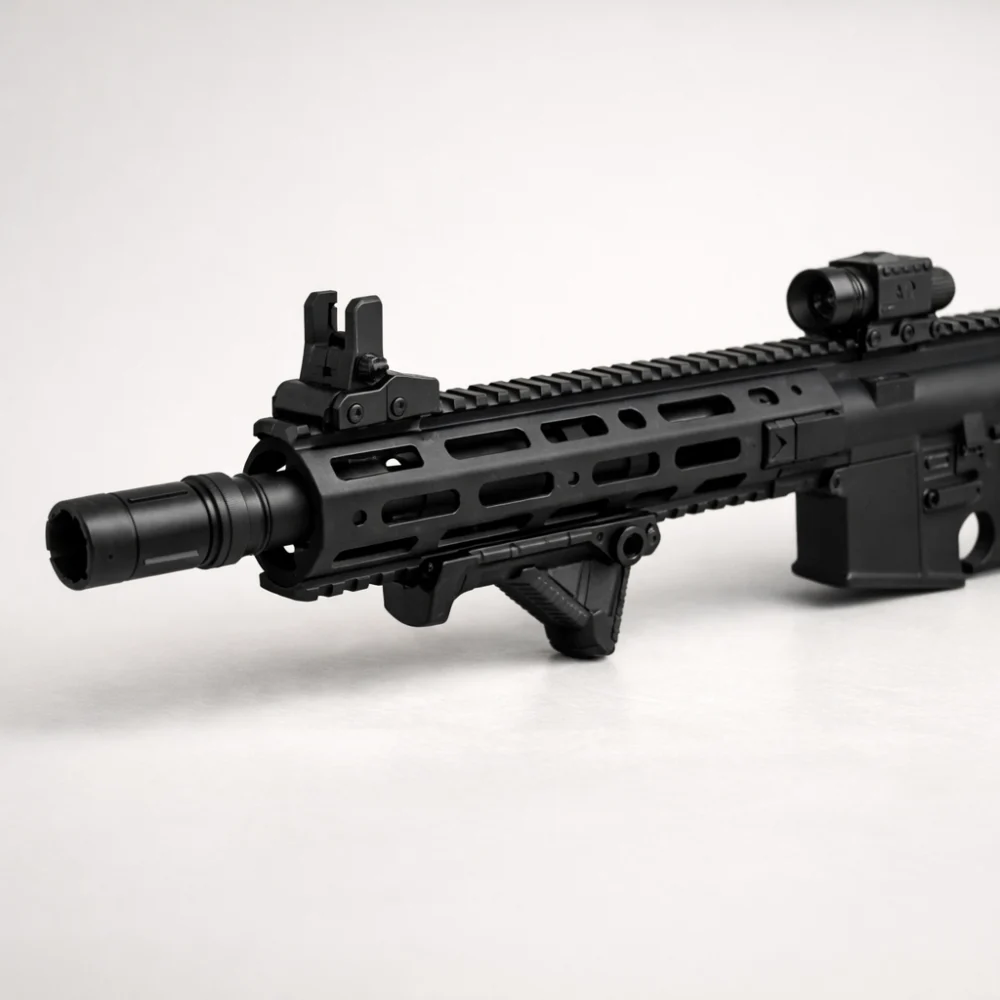

Airsoft handguards are one of the main external parts that shape how a replica feels in use. They can affect the look, the grip area, and whether you have room for accessories or internal components that need to sit within the front end.
If you are replacing a worn part, building a rifle from components or changing the way a platform handles, the main job is to match the handguard to the replica and to your intended use. That usually means thinking about fit, length, mounting style and the amount of space you need rather than chasing the most elaborate design.
Because handguards vary widely across platforms, it is worth checking the product page carefully before buying. Specifications vary by model, so always check the individual product page before buying.
Compare Airsoft Handguards


As an Amazon Associate we earn from qualifying purchases.
What should I look for in an airsoft handguard?
Start with compatibility, then think about length, mounting style and how you want the front end to feel in the hand. A handguard that fits your platform but feels awkward to hold, or one that suits your grip but leaves too little room for the build, is usually the wrong choice. The best starting point is to match the handguard to the rifle family and then narrow down by the features you actually need.
| Feature | What it means | Why it matters | What to check |
|---|---|---|---|
| Platform compatibility | The handguard is shaped for a particular rifle family or front-end layout | A handguard that does not match the platform will not be a practical fit | Confirm the stated rifle type and any compatibility notes on the product page |
| Length | How much of the barrel area the handguard covers | Affects handling, appearance and the available space for accessories or internal parts | Compare the stated length with the build you are planning |
| Mounting style | The rail or attachment pattern used to fit accessories | Determines what can be attached and how flexible the front end will be | Check whether it uses a rail system or another mounting format |
| Material and construction | The material and build method used for the handguard | Influences weight, feel and the overall finish | Look for the material description and any notes about the design |
| Accessory space | How much usable room there is for grips, covers or mounted items | Important if you want a cleaner front end or plan to add accessories | Check the available surface area and whether the design is open or enclosed |
Key decision criteria explained
Fit to the platform
Compatibility is the first filter because handguards are not universal. Many are made for a specific rifle family or a narrow range of builds, and the same-looking handguard may still fit differently depending on the front-end layout. Check the individual product page for the intended platform before comparing anything else.
Length and proportions
Length changes both the appearance and the handling of the replica. A shorter handguard can feel compact and leave more of the front end exposed, while a longer one may offer more room and a more extended grip area. The right choice depends on the build you are matching and how much space you want around the front end.
Mounting and accessory layout
Some buyers want a simple handguard with minimal attachment points, while others want a rail-based front end that can take covers, grips or other accessories. More attachment options can be useful, but they may also add bulk. Choose the layout that matches what you will actually mount, not just the most feature-heavy option.
Material and feel
Handguards can be made in different materials and finishes, which affects how they feel in use and how they look on the replica. A lighter-feeling part may suit a compact build, while a more substantial front end may suit a different preference. The right balance is mostly about comfort, handling and the overall style of the build.
Common handguard types and variants
Within this category, shoppers usually compare handguards by the front-end system they suit and by the way they present accessory mounting space.
- Rail-style handguards are designed to support mounted accessories and suit buyers who want flexibility at the front end.
- Slim or low-profile designs may suit builders who want a cleaner, less bulky feel in the hand.
- More enclosed handguards can suit buyers who prefer a traditional look or want to keep the front end visually tidy.
Each style has trade-offs. More accessory space can mean more weight or bulk, while a simpler design may feel neater but offer fewer attachment points.
Which handguard suits which buyer?
| Buyer need | What to prioritise | Why |
|---|---|---|
| Replacement for an existing build | Exact compatibility and similar proportions | Helps avoid fit issues and keeps the replica handling familiar |
| Accessory-focused build | Mounting style and usable surface area | Gives enough room for the items you actually plan to fit |
| Compact, tidy front end | Shorter length and a cleaner profile | Supports a simpler feel without unnecessary bulk |
| Style-led build | Overall shape, finish and front-end look | The visual match may matter as much as the practical fit |
Common mistakes and misunderstandings
- Assuming all handguards fit the same replica family. Small differences in platform or front-end design can matter, so check the stated compatibility carefully.
- Choosing length before checking the build. The wrong length can create awkward proportions or leave too little room for the setup you want.
- Overestimating how many accessories are needed. Extra mounting space is useful only if you plan to use it.
- Ignoring the handling effect. A front end that looks right on paper may still feel too bulky or too bare in use.
Safety and suitability caveats
Airsoft handguards are buying choices rather than one-size-fits-all parts, so the safest approach is to match the product to the exact platform and intended use. Check that the handguard is suitable for your replica, and avoid assuming that a similar-looking part will fit in the same way. If you are unsure about compatibility, use the individual product page details as your main reference.
Maintenance, storage and lifespan considerations
Handguards usually need little day-to-day care beyond basic cleaning and sensible storage. The main things to think about are the material finish, how often the part will be handled, and whether accessories or fittings might add wear over time. If the handguard sits in a build that is regularly changed or reconfigured, it is sensible to check fittings from time to time.
How to compare airsoft handguards efficiently
- Identify the exact replica or build type the handguard needs to suit.
- Decide whether you want a simple front end or one with more accessory mounting space.
- Compare length, profile and mounting style against your intended setup.
- Check the product page for compatibility notes and any model-specific details.
- Choose the option that balances fit, handling and appearance for your build.
Summary buyer decision checklist
- Does the handguard match your replica platform?
- Is the length right for the build you want?
- Does the mounting style suit the accessories you plan to use?
- Will the shape and profile feel comfortable in the hand?
- Have you checked the individual product page for model-specific details?
Frequently asked questions
Are airsoft handguards universal?
No. Some are made for a specific platform or front-end arrangement, and that is the first thing to check. A near-match can still be the wrong fit, so always confirm the stated compatibility on the product page.
Does a longer handguard always mean a better choice?
Not necessarily. Longer handguards can offer more room and a different feel, but they may also change the balance and handling of the replica. Choose the length that fits the build rather than assuming longer is better.
What is the main difference between a simple handguard and a rail-style one?
A rail-style handguard is usually chosen when you want more mounting options for accessories. A simpler handguard may feel cleaner and less bulky. The right option depends on whether you want flexibility or a more minimal front end.
Should I choose a handguard based on looks or function first?
For most buyers, fit and intended use should come first. After that, you can compare the finish, profile and overall style. A good-looking handguard is still a poor buy if it does not suit the replica or the build.
Do I need to think about accessories before buying?
Yes, if you plan to add anything to the front end. It is easier to choose the right handguard when you already know whether you want a grip, covers or other mounted items. If you do not plan to add accessories, a simpler design may be enough.
What should I double-check before ordering?
Check the platform compatibility, the length, the mounting style and any model-specific notes on the product page. Those details usually tell you more than the product name alone. Specifications vary by model, so always check the individual product page before buying.
Check the accessory interface separately
There are two different fit questions: whether the handguard suits the replica, and whether your chosen accessories suit the handguard’s mounting interface. Systems such as Picatinny-style rail, M-LOK and KeyMod are distinct; do not assume an accessory or cover made for one will attach directly to another. Check the stated interface and any adapter requirements, as well as the handguard’s compatibility with your replica.
More Airsoft Handguards
See all 362 Airsoft Handguards →


As an Amazon Associate we earn from qualifying purchases.


