

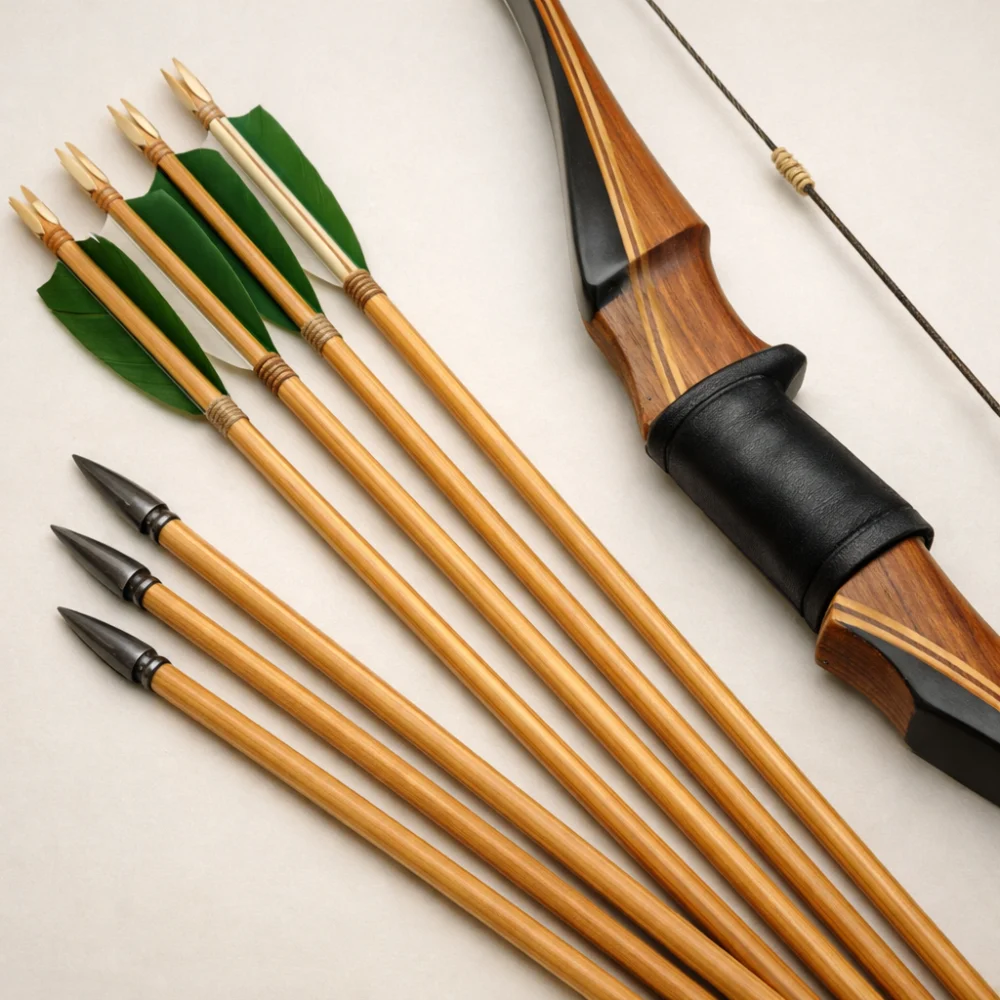

Wooden arrows are a traditional choice for archers who want a classic look, a natural feel and a setup suited to bows such as longbows and recurves. They are often bought for target practice, recreational shooting and traditional-style archery, but the right choice depends on the bow, the draw and the kind of shooting you plan to do.
Because wooden arrows vary a lot from one product to another, the details on the individual product page matter more than the category label alone. Small differences in length, fletching, point type and shaft build can make a noticeable difference to how an arrow matches a bow and how it performs in use.
This guide focuses on the buying decisions that are easiest to get wrong: choosing a suitable length, understanding the main arrow components and deciding whether you need a simple practice arrow or a more specialised traditional setup.
Compare Archery Wooden Arrows


As an Amazon Associate we earn from qualifying purchases.
What should you look for first in wooden arrows?
Start by matching the arrow to the bow and the style of archery you actually do. The most useful first checks are length, shaft consistency, point type and whether the arrow is intended for target work or a more traditional outdoor setup. If you are unsure, choose based on the bow’s requirements and the seller’s stated arrow use, rather than appearance alone.
Wooden arrows are often selected for traditional bows because they suit that style well, but they are not one-size-fits-all. The main trade-off is between authenticity, handling and consistency: a more traditional arrow may feel right for the bow, while a more uniform setup may be easier to tune and repeat.
| Feature | What it means | Why it matters | What to check |
|---|---|---|---|
| Arrow length | The overall length of the arrow shaft or finished arrow | It affects fit, safety margin and how the arrow sits at full draw | Check the stated length and whether it refers to shaft length or finished arrow length |
| Shaft consistency | How similar the arrows are to one another within a set | More consistent arrows are usually easier to group and compare | Look for clear product details about matched or hand-finished sets |
| Fletching | The feathers or vanes that stabilise the arrow in flight | It influences drag, stability and traditional appearance | Check feather size, feather type and how the fletching is arranged |
| Point type | The tip fitted to the arrow | Different tips suit different targets and uses | Confirm whether the arrow is described with a target point, blunt point or another style |
| Intended use | Whether the arrow is made for target practice, traditional shooting or another purpose | Using the wrong type can affect handling and suitability | Read the product description carefully for the intended bow and use |
Key decision criteria explained
Length and fit
Length is one of the most important checks because it affects how comfortably the arrow works with your draw length and bow setup. A shaft that is too short may not be suitable, while one that is much longer than needed may feel less tidy to shoot. Specifications vary by model, so always check the individual product page before buying.
Shaft material and build
Within this category, the focus is on wooden shafts, but wooden arrows still vary in how they are made and finished. Some buyers want a simple traditional look, while others prefer a more uniform finish. The trade-off is often between character and consistency: a handmade or more natural-looking arrow may appeal visually, while a more uniform set may feel easier to keep matched.
Fletching style
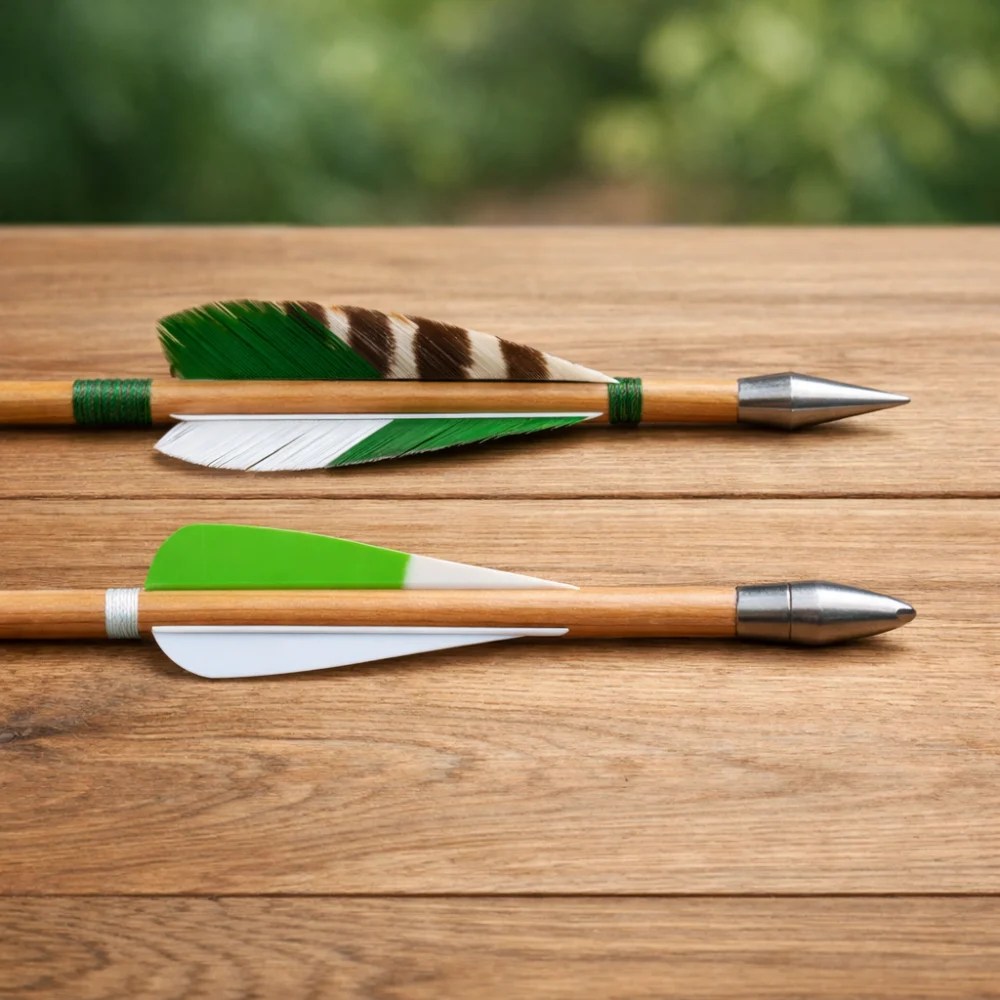
Feather fletching is common on traditional wooden arrows because it suits the look and feel many buyers expect in this category. The main choice is not just appearance but how much drag and stabilisation you want. Larger feathers may feel more traditional and stable, while a simpler fletching setup may be more compact.
Tip or point type
The point affects how the arrow interacts with the target and what it is intended for. A target-friendly point is generally a different choice from a blunt or specialised tip. Check the product page to see whether the arrow is supplied with a fitted point and whether that matches your intended use.
Types and variants you may see
Wooden arrows in this category are usually grouped by their intended style of use rather than by complex technical families. The main variants are traditional target arrows, more hunting-style or field-style arrows, and flu-flu style arrows for shorter-distance or slower-flight shooting.
- Traditional target arrows: suited to everyday practice and classic archery setups, with a straightforward, familiar finish.
- Field or hunting-style arrows: designed with a more specific point type or traditional look, but they are not automatically suitable for every bow or every use.
- Flu-flu arrows: made to slow down more quickly, which can suit certain traditional or outdoor shooting contexts.
The right variant depends on the bow, the target, and how closely you want the arrow to match traditional archery styling.
Which wooden arrow suits which buyer?
| Buyer need | What to prioritise | Why |
|---|---|---|
| Beginner buying a first set | Clear sizing information, a straightforward point type and a simple, consistent design | It is easier to learn with arrows that are easy to identify and compare |
| Traditional archery enthusiast | Feather fletching, classic styling and a setup that suits the bow | Look and handling often matter as much as basic function |
| Target practice buyer | Consistency across the set and a point type suited to the target used | Repeatable shooting is easier when arrows are matched closely |
| Gift buyer | Visible traditional appeal and enough product detail to avoid a poor fit | A good-looking arrow still needs to suit the intended bow |
| Replacement buyer | Matching length, point type and fletching style to the existing set | Mixing unlike arrows can change how the set behaves |
Common mistakes to avoid
- Choosing by appearance only: traditional style matters, but fit and intended use matter more.
- Ignoring the stated length: the wrong length can make an arrow unsuitable for your draw or bow setup.
- Assuming all wooden arrows behave the same: finish, balance and consistency can vary widely.
- Overlooking the point type: a fitted point may be appropriate for one use and less suitable for another.
- Mixing unmatched arrows in one set: if you want predictable results, compare the whole set rather than just the look of one arrow.
Safety and suitability notes
Archery equipment should always be chosen with the bow and the intended shooting context in mind. Make sure the arrow is suitable for the bow type and for the way you plan to use it, and read the product information carefully before buying. If you are unsure about a specific setup, ask for the exact details shown on the product page rather than relying on category titles alone.
Maintenance, storage and lifespan considerations
Wooden arrows benefit from sensible care because the shaft is a natural material. Check them regularly for wear, warping or damage, and store them somewhere dry and protected from bending. Feathers, tips and shaft finish can all affect how long a set stays in good condition, so a simpler design may be easier to maintain if you shoot regularly.
How to compare wooden arrow options efficiently
- Decide what the arrows are for: target practice, traditional shooting or a more specific arrow style.
- Check the length and make sure it suits your bow and draw.
- Compare shaft consistency, fletching and point type.
- Weigh appearance against repeatability and practicality.
- Read the individual product page carefully before you buy.
Summary buyer decision checklist
- Does the arrow length suit your bow and draw?
- Is the arrow intended for your type of shooting?
- Do the fletching and point type match your needs?
- Is the set consistent enough for the way you want to shoot?
- Have you checked the individual product page for the exact details?
Frequently asked questions
Are wooden arrows only for traditional bows?
They are most closely associated with longbows, traditional recurves and similar setups, but the key point is whether the specific arrow is suitable for the bow you are using. The product description should make that clear. Do not assume that a wooden arrow is automatically right for every archery setup.
Why does arrow length matter so much?
Length affects fit, handling and whether the arrow suits your draw. An arrow that is too short may be unsuitable, while one that is much longer than needed may be less efficient or less tidy to use. Check the stated measurement carefully because different sellers may describe it in different ways.
What is the advantage of feather fletching?
Feather fletching is commonly used on traditional wooden arrows because it suits the style and can help with stabilisation. It also matches the look many buyers want in this category. The trade-off is that feather fletching is a deliberate design choice, not just decoration.
Do I need matched arrows?
If you want more consistent results, matched arrows can be helpful because they are easier to compare and group. That matters more for regular practice than for occasional decorative or casual use. Look for product wording that suggests the set has been built with consistency in mind.
Can I use the same arrows for all kinds of practice?
Not always. A target arrow, a more traditional field-style arrow and a flu-flu arrow can serve different purposes. It is better to choose the arrow type that matches your main use than to assume one set will suit every situation.
What should I check on the product page before ordering?
Check length, intended use, point type and the overall description of the set. Those details will tell you far more than the category name alone. If the product is for a specific bow style, that should be stated clearly.
Check arrow spine as well as length
Length alone does not establish whether an arrow is a suitable match. Spine describes the shaft’s stiffness, and the appropriate choice depends on factors including the bow’s draw weight, arrow length and point mass. Check the product’s stated spine against guidance for your bow and setup; a description such as “for traditional bows” is not a substitute for that check. If you are unsure how to interpret the information, seek advice from a knowledgeable archery retailer or instructor before choosing.
More Archery Wooden Arrows
See all 117 Archery Wooden Arrows →


As an Amazon Associate we earn from qualifying purchases.


