

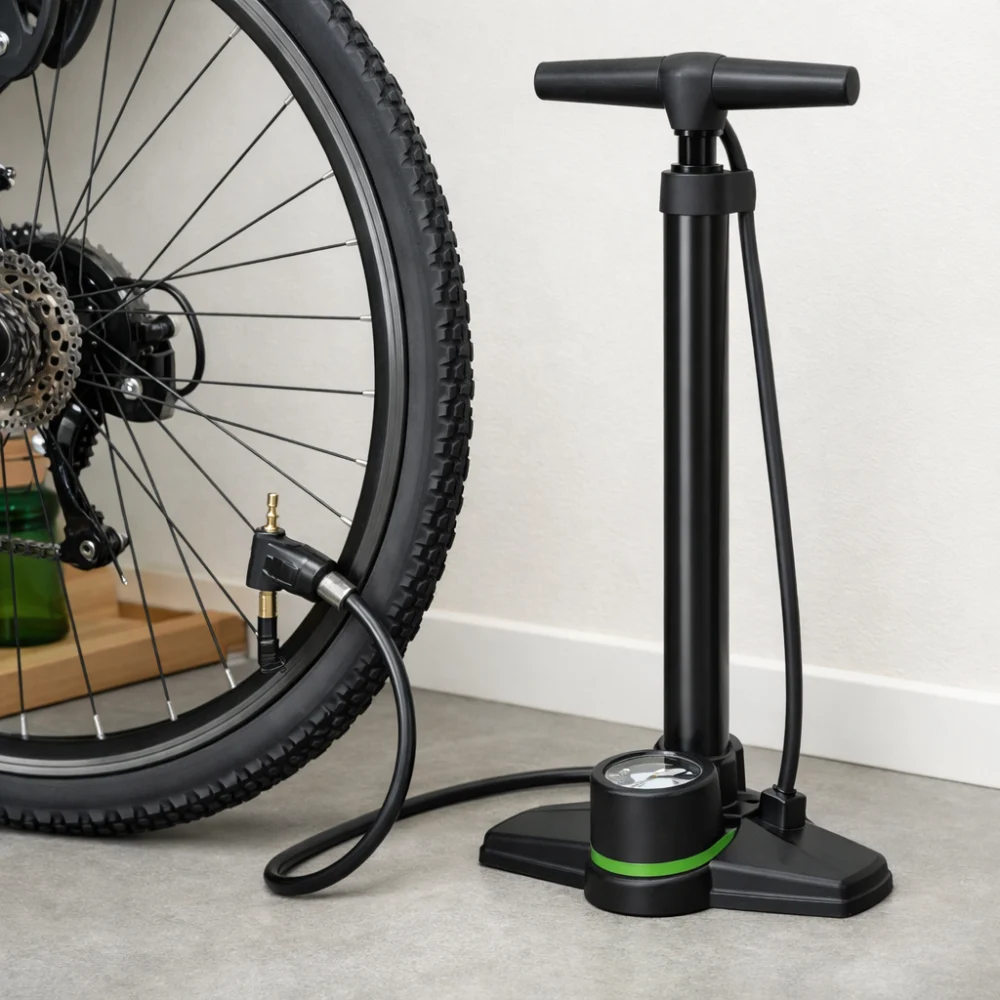

A cycling pump is one of those accessories that matters most when you need it. The right choice depends on how you ride, where you keep the pump and whether you want something for home use, roadside repairs or both.
This guide helps you compare the main options without getting lost in small differences that do not affect everyday use. It focuses on practicality: valve fit, portability, pumping effort and how often you expect to use it.
If you are replacing an old pump or buying your first one, it is worth matching the pump to your tyres and your routine rather than choosing by appearance alone. Specifications vary by model, so always check the individual product page before buying.
Compare Cycling Pumps


As an Amazon Associate we earn from qualifying purchases.
What should you look for in a cycling pump?
The best starting point is to decide where the pump will live and what it needs to inflate. A floor pump is usually easier for regular home use, while a mini pump is chosen more often for carrying on the bike. Beyond that, the main trade-off is between portability and pumping speed: smaller pumps are easier to carry, but larger pumps are usually more comfortable to use.
| Feature | What it means | Why it matters | What to check |
|---|---|---|---|
| Pump type | Home, frame-mounted, mini or electric styles | Determines convenience, size and how you will use it | Whether it suits storage at home, carrying on rides or quick inflation |
| Valve compatibility | Fit with the valve on your inner tube or tyre system | A mismatch can make the pump awkward or unusable | Which valve types the product supports and whether an adapter is included |
| Portability | How easy it is to carry or store | Affects weight, space and everyday convenience | Size, mount options and whether it fits your bag, pocket or frame |
| Ease of pumping | How much effort it takes to reach usable pressure | Important for frequent inflation and roadside repairs | Handle design, hose length, barrel size and whether a gauge is included |
| Pressure gauge | A built-in indicator of pressure | Helps with more consistent inflation | Whether the gauge is present and how easy it is to read |
| Use with other items | Some pumps can also inflate balls or similar items | Useful for households with mixed inflation needs | Any supplied adapter or needle, if you need that extra function |
Valve compatibility comes first
Before comparing anything else, check the valve type your bike uses. A pump that fits your valve makes inflation straightforward; one that does not will be frustrating even if everything else looks suitable. Some pumps support more than one valve type, which can be useful if you maintain several bikes or share equipment.
When a product page mentions adapters or dual-valve support, read that carefully and look for the exact valve types named. If you are unsure, compare the wording on the pump listing with your current valve rather than assuming all bike pumps are universal.
Choose the pump type around your routine
Floor pumps
Floor pumps are usually the easiest option for home use because they are steadier and generally less tiring to operate. They suit riders who check pressure regularly or want a pump kept in the garage, shed or home workshop. Their main limitation is size, so they are not the most convenient choice to carry on the bike.
Mini pumps
Mini pumps are chosen for portability. They are practical for carrying on rides and for emergency inflation, but they usually take more effort than a larger pump. If you want one, check that it is small enough to transport comfortably and still workable for the pressure you expect to need.
Frame pumps
Frame pumps are designed to travel with the bike while staying separate from pockets or bags. They can be a sensible compromise for riders who want a carried pump without a lot of bulk. The trade-off is that fit can depend on the frame and the space available.
Electric pumps
Electric pumps suit buyers who want less manual effort and a more convenient inflation process. They can be appealing for home use or for people who prefer a compact powered option, but they still need to match your valve type and practical needs. Check the power source and any size or carry limitations before relying on one for rides.
Which pump suits which buyer?
| Buyer need | More suitable characteristics | Reason |
|---|---|---|
| Regular home maintenance | Stable design, easier pumping, gauge | Makes routine inflation quicker and more comfortable |
| Commuting or touring | Portable size, secure carry option, dual-valve support | Useful when the pump needs to travel with the bike |
| Occasional emergency use | Compact form, simple valve fit, low fuss | Prioritises being available when punctures or slow leaks happen |
| Multi-bike household | Broader valve compatibility, easy handling | Helps the same pump work across more than one bike |
| People who want less physical effort | Larger barrel, good grip, or powered assistance | Reduces the strain of repeated inflation |
Common mistakes when buying a pump
- Choosing by size alone. A very compact pump can be easy to carry but awkward to use. Balance portability against how often you expect to inflate tyres.
- Assuming every pump fits every valve. Check the valve wording on the product page rather than relying on the product title.
- Ignoring where the pump will be stored. A home pump may be excellent on the floor but inconvenient on the road, while a mini pump may be the opposite.
- Overlooking the gauge. Some riders like the reassurance of a gauge, while others do not need one. It is worth deciding whether you will actually use it.
- Expecting one pump to do everything equally well. A pump can be versatile without being ideal for every task, so identify the main job first.
Safety and suitability notes
Check that the pump is suitable for your bike and the pressure range you normally need. A pump that is uncomfortable to use or awkward to attach may still work, but it is less likely to suit regular riding. If you plan to carry it, also think about whether its size and shape are practical for your usual setup.
For any model, the exact features and included accessories can vary, so it is sensible to confirm the product details before buying.
Maintenance, storage and lifespan considerations
Most pumps are easier to keep useful when they are stored clean and dry. If a pump includes a hose, adapter, gauge or moving parts, those details can affect long-term convenience as much as the headline design. A pump that is simple to store and quick to access is often the one you will actually use when needed.
For buyers comparing options, it is also worth thinking about wear from carrying, knocking about in a vehicle or being kept in a garage. A more robust-feeling pump may suit regular use, while a lighter option may be better if it is only for emergencies.
How to compare cycling pumps efficiently
- Start with your main use: home inflation, carried emergency use or a mix of both.
- Check valve compatibility first, since that decides whether the pump is even suitable.
- Compare portability, ease of use and whether a gauge or hose would help in practice.
- Think about the trade-off between compact size and pumping comfort.
- Read the individual product details before buying so you know exactly what is included.
Summary buyer decision checklist
- Does the pump fit your valve type?
- Will it be used at home, on the bike or both?
- Is the size practical for where you will store or carry it?
- Would a gauge make the pump more useful for you?
- Do you need a simple pump or one with extra adapters or functions?
- Have you checked the individual product page for the exact included features?
Frequently asked questions
Do I need a different pump for road and mountain bikes?
Not always, but the best choice may differ depending on how you use the bike. Road riders often value a pump that makes pressure checks easy, while mountain bike owners may care more about quick inflation and convenience. The key point is to match the pump to the valve and the way you ride, rather than the bike style alone.
Is a mini pump enough for regular use?
A mini pump can be enough if you mainly want an emergency option or a compact carry solution. It is usually less comfortable for repeated use than a floor pump, so many riders keep a larger pump at home as well. For day-to-day inflation, a floor pump is often more convenient.
Why does valve compatibility matter so much?
Because the pump has to connect properly to your valve before it can do anything useful. If the fit is wrong, inflation becomes difficult or impossible. Always check the product wording carefully and compare it with the valve on your bike.
Are pumps with gauges worth considering?
They can be helpful if you want a clearer idea of inflation pressure or if you regularly maintain multiple bikes. Some riders are happy without one, especially for occasional top-ups. The real question is whether you will use the gauge enough for it to justify the extra feature.
What is the main advantage of a floor pump?
A floor pump is usually easier to use because it is steadier and lets you put more of your effort into inflation rather than balance. That makes it a sensible choice for a home setup. Its main drawback is that it is not designed to travel easily.
Can one pump work for other inflatables as well?
Some can, if they include the right adapter or needle. That can be useful for households that want one accessory for more than one job. Check the product page carefully, because this extra function is not universal.
CO₂ inflators: a compact alternative for rides
A CO₂ inflator uses a cartridge to inflate a tyre, offering a compact option to carry alongside or instead of a manual pump. It may suit riders who prioritise a small roadside backup, but cartridges are consumables, unlike a reusable hand or floor pump. Consider whether you want to carry replacements and whether a cartridge-based option fits your riding routine.
Check the inflator’s valve compatibility and the cartridge type and connection it requires; these details are not universal. A CO₂ inflator is less suited to regular home inflation if you would rather not depend on cartridges, so a reusable pump may be a more practical everyday choice.
More Cycling Pumps
See all 222 Cycling Pumps →


As an Amazon Associate we earn from qualifying purchases.


