

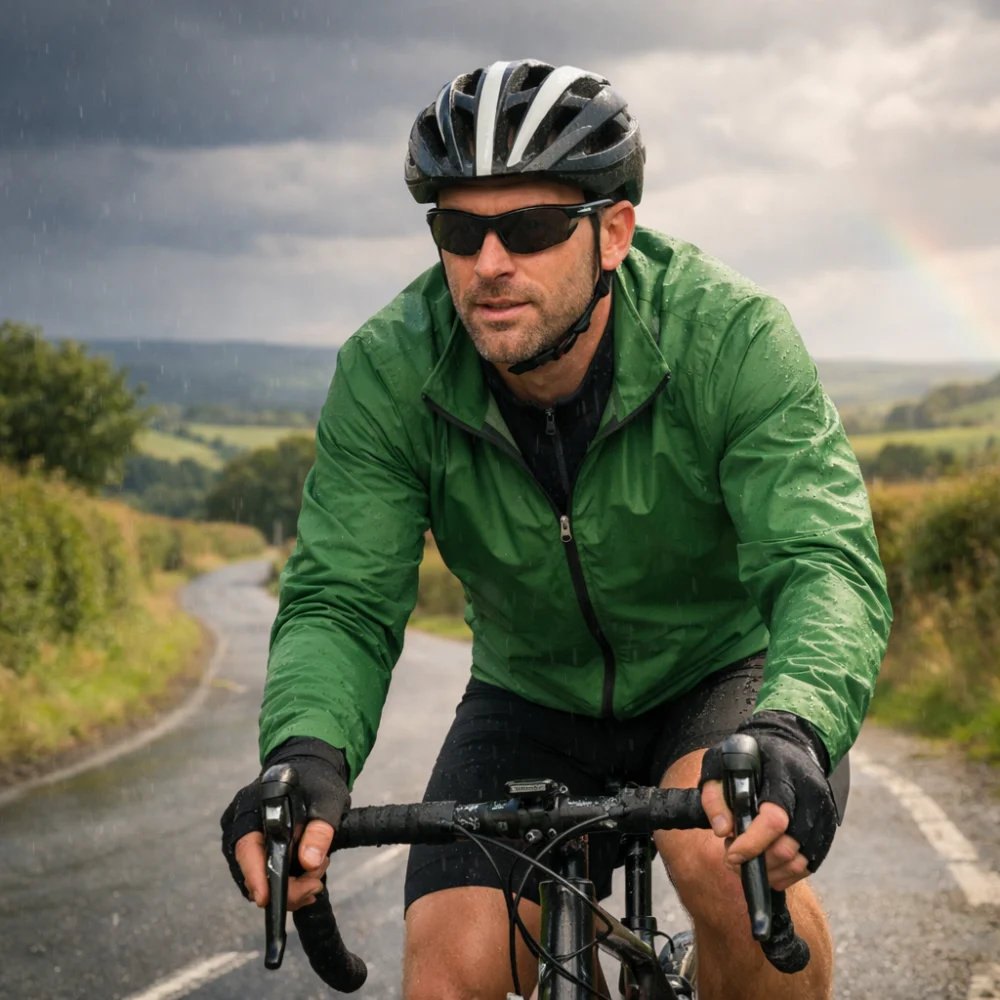

Men’s cycling jackets are chosen for a mix of weather protection, breathability, fit and visibility. The right one depends on when you ride, how hard you ride and how much bulk you are willing to carry or wear.
Because jackets in this category can serve very different conditions, it helps to think about the sort of riding you do most often rather than looking for one jacket that does everything.
Compare Men's Cycling Jackets


As an Amazon Associate we earn from qualifying purchases.
What should you look for in a men’s cycling jacket?
Start with the weather you expect to face. A light windproof layer can be ideal for changeable rides, while a more protective jacket may suit colder or wetter conditions. Fit matters too, because a cycling jacket needs enough room for movement without flapping excessively in the wind. Breathability, packability and visibility are the other features most buyers compare first.
Specifications vary by model, so always check the individual product page before buying.
| Feature | What it means | Why it matters | What to check |
|---|---|---|---|
| Weather protection | How much wind, rain or spray the jacket is designed to resist | Helps match the jacket to dry, damp or wet rides | Look for the level of protection described on the product page |
| Breathability | How well the jacket lets heat and moisture escape | Important if you ride hard or climb hills, where overheating is a concern | Check whether the jacket is described as breathable, vented or lightweight |
| Fit | How closely the jacket sits on the body | Affects comfort, layering and how much the jacket flaps in the wind | Check sizing guidance and whether the cut is close, relaxed or layer-friendly |
| Visibility | How easy the jacket is to see in low light | Useful for commuting and winter riding | Look for reflective details or brighter colours if visibility matters to you |
| Packability | How easily the jacket can be carried when not worn | Useful for mixed-weather rides or commuting | See whether it is described as lightweight or easy to stow |
Key decision criteria explained
Weather protection
Some jackets are aimed mainly at blocking wind, while others are better suited to showers or heavier rain. The more protection a jacket offers, the more likely it is to feel warmer or less breathable. If your rides are often short, fast or in unsettled weather, that trade-off may suit you well.
Breathability and comfort on the bike
Ride intensity matters. A jacket that feels ideal on a gentle commute may feel too warm on a harder training ride. Breathability is especially important if you tend to climb, push a higher pace or wear layers underneath.
Fit and layering
Cycling jackets are usually shaped with movement on the bike in mind, but cuts still vary. A closer fit can reduce flapping and feel more streamlined, while a roomier cut can make layering easier over a jersey or mid-layer. Check size guidance carefully if you plan to wear extra layers underneath.
Visibility and style
Many riders prefer a jacket that stands out in poor light, especially for commuting or winter riding. Brighter colours and reflective details can help, but style and low-key looks also matter to many buyers. Think about where you ride most and whether you need to be noticed from a distance or simply want a practical outer layer.
Weight and packability
A jacket that packs down neatly is useful if the weather changes during the ride. Heavier or more protective jackets may take up more space but can be more comfortable in harsher conditions. Choosing between them is often a question of convenience versus coverage.
Common jacket types and how they differ
Within this category, buyers usually compare jackets by purpose rather than by a strict set of subtypes.
- Windproof jackets suit cool, breezy rides and often work well for changeable conditions.
- Water-resistant or waterproof jackets are more relevant when showers or persistent wet weather are part of the ride.
- Thermal or winter-oriented jackets are designed with colder rides in mind and may feel warmer and less airy.
- Lightweight packable jackets are useful when you want an emergency layer you can carry easily.
The main limitation is that stronger protection usually means less ventilation, so it helps to decide which condition matters most to you.
Choosing by rider type or use case
| Buyer need | What to prioritise | Why |
|---|---|---|
| Commuting | Visibility, weather protection and easy layering | You may ride in low light and want a jacket that works over everyday kit |
| Training rides | Breathability, close fit and lower bulk | Comfort matters more when effort is higher and temperature rises |
| Cold-weather riding | Thermal comfort and wind resistance | Keeping out the chill can matter more than maximum ventilation |
| Mixed-weather outings | Packability and adaptable protection | A jacket that can be carried when not needed is often more convenient |
Common mistakes to avoid
- Choosing too much protection for the ride. A highly protective jacket can be uncomfortable if you mainly need a light layer.
- Ignoring fit over layers. A jacket that is fine over a base layer may feel restrictive with a jersey or warmer mid-layer underneath.
- Focusing only on waterproof claims. A jacket that keeps rain out may still feel too warm or damp from the inside if breathability is poor.
- Overlooking visibility for dark conditions. If you ride early or late, reflective or brighter details can be more useful than style alone.
Safety and suitability checks
Choose a jacket that suits the conditions you actually ride in, not just the most severe weather you can imagine. If you ride on busy roads, visibility features may be important, but they are not a substitute for sensible route choice and good lighting where required. Check the product page for any model-specific guidance on intended use, layering or care.
Maintenance, storage and lifespan considerations
Jackets in this category usually last better when they are washed and stored according to the care instructions on the item page or label. If a jacket has reflective elements, membranes or water-resistant treatment, those details may affect how you clean and store it. Think about how often you will use it and whether you want a layer that is easy to dry after wet rides.
How to compare options efficiently
- Decide whether your main need is wind protection, rain protection, warmth or visibility.
- Check whether you prefer a close fit for riding or a roomier fit for layering.
- Compare breathability and packability against the amount of protection offered.
- Look at visibility details if you ride in traffic or low light.
- Read the individual product page carefully before choosing.
Summary buyer decision checklist
- Does the jacket suit your usual weather conditions?
- Will the fit work over the layers you plan to wear?
- Is breathability suitable for your riding pace?
- Do you need reflective or brighter visibility details?
- Is it light enough or compact enough for your use?
- Have you checked the product page for the exact model details?
Frequently asked questions
What is the difference between a cycling jacket and an ordinary jacket?
Cycling jackets are usually shaped with riding posture in mind, so they may fit differently around the arms, shoulders and back. They also tend to place more emphasis on wind resistance, breathability or visibility. An ordinary jacket can still be worn for cycling, but it may not feel as comfortable or practical on the bike.
Do I need a waterproof jacket for cycling?
Not always. If you mainly ride in dry or only lightly damp conditions, a windproof or water-resistant jacket may be enough. A waterproof option makes more sense if you expect regular rain, but it may be warmer and less breathable.
Should I buy a close-fitting or looser cycling jacket?
That depends on how you ride. A closer fit is often better for faster riding because it reduces flapping, while a looser fit can be more comfortable if you want to layer underneath. Think about your usual pace and the clothing you wear below the jacket.
Are bright colours always necessary?
No, but they can help if you ride in low light, traffic or poor weather. Reflective details are also useful, especially for commuting. If visibility is not a priority for your riding, you may prefer a subtler colour.
What matters more: waterproofing or breathability?
That depends on your riding conditions. For wet commutes or unsettled weather, waterproofing may matter more. For hard-effort rides, breathability can be just as important because overheating can become uncomfortable quickly.
Can one cycling jacket cover every season?
Some jackets work across a wider range of conditions, but few are ideal for everything. A lightweight layer may be fine for spring and autumn, while colder or wetter months may call for more protection. It is usually better to match the jacket to the conditions you face most often.
Check the fit in a riding position
A jacket can feel comfortable when standing but pull across the shoulders or ride up when you lean towards the handlebars. When comparing sizing, consider how it sits with your arms extended and whether the sleeves and back provide the coverage you want in that position. Check the product’s fit guidance and allow for the layers you expect to wear underneath.
Details such as cuff shape, collar height, pockets and zip ventilation can also affect everyday comfort and convenience. Their usefulness depends on your riding style and preferences, so check the product information rather than assuming every jacket includes them.
More Men's Cycling Jackets
See all 245 Men's Cycling Jackets →


As an Amazon Associate we earn from qualifying purchases.


