

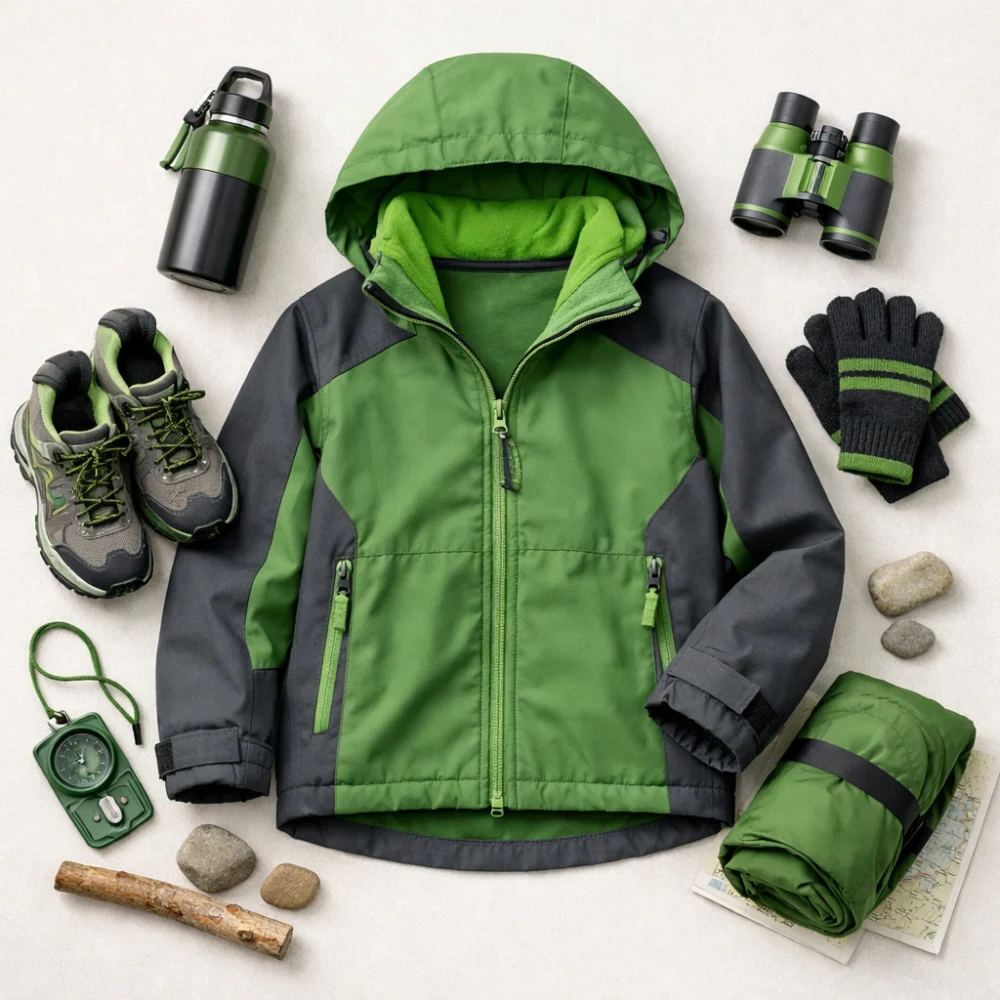

Kids’ softshell jackets are a practical middle ground for walking, school runs and everyday outdoor use. They are usually chosen for comfort, flexibility and light weather resistance rather than full waterproof protection.
If you are buying for a child who gets warm easily, moves a lot or needs a jacket for mixed weather, a softshell can be a sensible option. The main challenge is judging where a softshell is enough on its own and where a waterproof shell or warmer layer would be more suitable.
This guide explains the main differences to look for so you can choose a jacket that fits the weather, activity level and how your child will actually wear it.
Compare Kids Softshell Jackets


As an Amazon Associate we earn from qualifying purchases.
What should you look for in a kids’ softshell jacket?
The best starting point is how the jacket will be used. A softshell is usually about balancing wind resistance, light rain resistance, breathability and ease of movement, so the right choice depends on which of those matters most.
For active children, comfort and freedom of movement often matter as much as weather protection. For more stop-start use, such as walking to school or standing around outdoors, a slightly more protective and easy-to-layer option may make more sense.
| Feature | What it means | Why it matters | What to check |
|---|---|---|---|
| Weather resistance | How well the jacket handles wind and light showers | Determines whether it suits breezy days, drizzly walks or more changeable weather | Look at the product description for water resistance, wind resistance and any limits on wet-weather use |
| Breathability | How easily warmth and moisture can escape | Helps keep active children more comfortable when they are running or walking | Check whether the jacket is described as breathable or suitable for active use |
| Fit and layering | How the jacket sits over base layers or jumpers | Affect comfort, movement and how useful the jacket is across seasons | Check sizing guidance, room for layers and whether the fit is slim or relaxed |
| Hood design | Whether the hood is fixed, detachable or absent | Changes protection, convenience and how the jacket feels in use | See if the hood is removable and whether that suits your child’s needs |
| Fastenings and cuffs | Zips, cuffs and hem details | Influence ease of use, comfort and how well the jacket seals out draughts | Look for features that make dressing easier and help reduce cold air getting in |
| Pockets and practicality | Storage and everyday usability | Useful for school, walks and carrying small items | Check pocket placement and whether closures are likely to suit your child’s routine |
Which features matter most?
Weather protection
Softshell jackets are often chosen because they cope well with everyday outdoor conditions, but they are not all the same. Some are designed mainly to block wind, while others also offer more resistance to light rain.
If your child is likely to be outside in frequent rain, consider whether a waterproof jacket would be a better fit. A softshell can still be useful for drier days or as part of a layering system, but it is usually about versatility rather than maximum wet-weather protection. Specifications vary by model, so always check the individual product page before buying.
Warmth versus breathability
Many buyers focus on warmth, but for active children breathability can be just as important. A jacket that holds in too much heat can feel uncomfortable once a child starts moving.
If the jacket will be worn for brisk walking or playground use, look for a balance that suits movement. For slower-paced use, you may prefer a slightly more insulating feel, provided it still layers comfortably.
Fit and freedom of movement
A good kids’ softshell should allow easy arm movement without feeling bulky. This matters for cycling to school, climbing, reaching and general play, as well as for wearing a jumper underneath.
Check the size guidance carefully, especially if the jacket is meant to last through more than one season. A little room for layering is useful, but too much extra space can reduce comfort and make the jacket feel awkward.
Hood choice
Some jackets have fixed hoods, some have detachable hoods and some do not include one. The right option depends on how the jacket will be used and whether your child dislikes hoods up or down.
A detachable hood can be convenient if you want flexibility, while a fixed hood may be simpler for everyday use. If a hood is important to you, check how it sits with the collar and whether it is likely to stay comfortable in windy conditions.
Common types and variants
Within this category, the main differences are usually about construction and features rather than dramatic style changes.
- Lightweight softshell jackets are often better for milder days and active wear, where flexibility and comfort matter most.
- More structured softshell jackets may feel a little more robust and suit mixed outdoor use, where a bit more coverage is helpful.
- Hooded softshell jackets give extra flexibility for changeable weather, while hood-free designs can feel simpler and less bulky.
- Detachable-hood styles can suit families who want one jacket for more than one kind of outing.
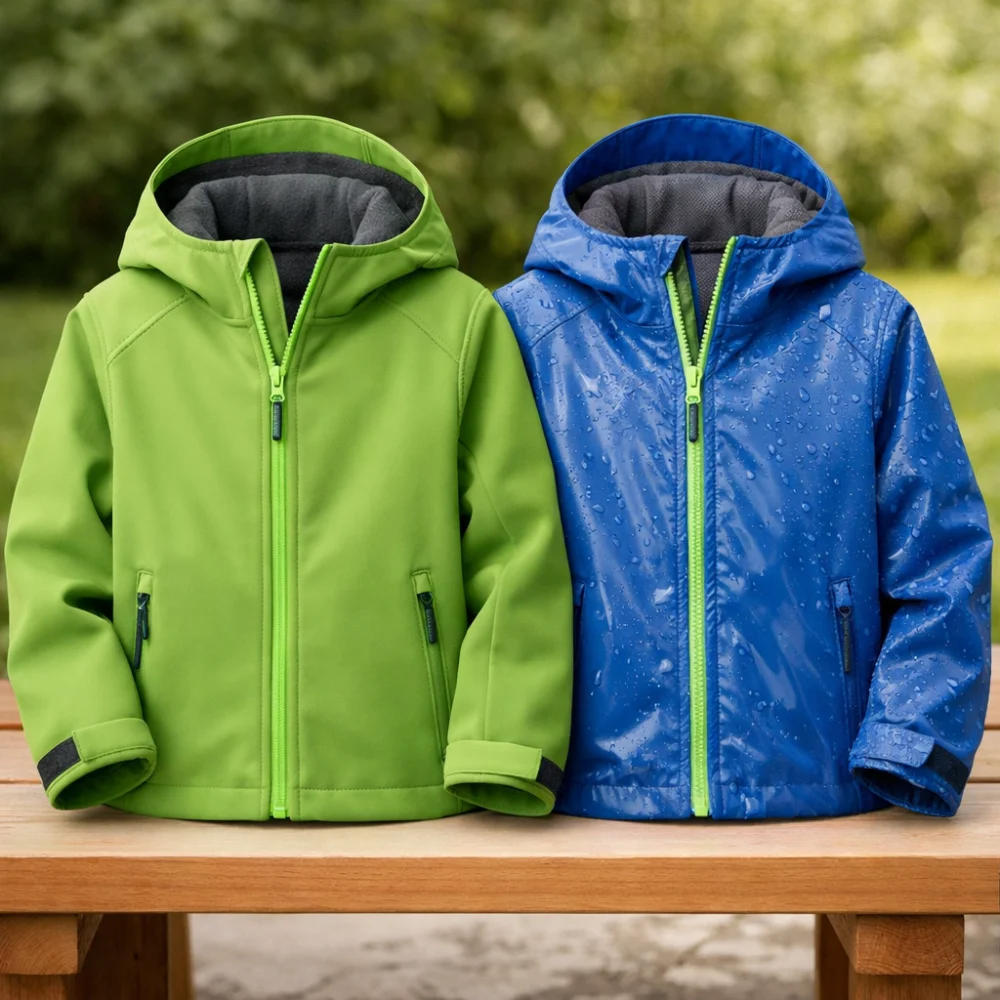
These differences are useful, but the exact balance of warmth, protection and fit still depends on the individual model.
How different buyers may choose
| Buyer need | What to prioritise | Why |
|---|---|---|
| School runs and everyday wear | Easy layering, comfort and wind resistance | The jacket needs to work often, not just in ideal conditions |
| Walking and active outdoor use | Breathability, movement and practical hood design | Active children can overheat if the jacket is too heavy or restrictive |
| Mixed weather and uncertain forecasts | Balanced weather resistance and layering potential | Versatility matters when the weather changes through the day |
| Buying for growth or hand-me-down use | Adjustable-feeling fit and straightforward styling | A jacket that layers well is often easier to reuse across seasons |
Common mistakes and misunderstandings
- Assuming all softshells are waterproof. Many are only water resistant or designed for light rain, so check the product details rather than relying on the category name.
- Choosing only by thickness. A thicker-feeling jacket is not always more suitable if your child will be active and needs breathability.
- Ignoring layering. The most useful jacket is often the one that works well over a base layer or jumper, not just on its own.
- Overlooking fit in the shoulders and arms. Freedom of movement matters in children’s outerwear, especially for play and walking.
- Buying for the wrong weather pattern. A softshell is a good all-round choice, but if wet weather is frequent, a waterproof layer may be more practical.
Safety and suitability checks
For children’s outerwear, the main buying concern is suitability rather than technical complexity. Make sure the jacket feels comfortable, allows movement and matches the conditions it will be worn in.
If a child is likely to wear the jacket near heavy rain, strong wind or prolonged outdoor exposure, check whether the jacket’s level of protection is enough on its own. It is also sensible to confirm that cuffs, zip and hood features suit the child’s day-to-day use.
Care, storage and everyday use
Softshell jackets are generally chosen because they are convenient for regular wear, but care needs can still vary. Check the garment care guidance on the individual product page and care label, especially if the jacket will be worn often or used for muddy walks.
It is also worth thinking about drying space, storage and whether the jacket will be kept in school bags, car boots or hallway hooks. A jacket that is easy to put on, take off and store tends to get used more consistently.
How to compare options efficiently
- Start with the main use: school, walking, active outdoor time or all-round wear.
- Decide how much weather resistance you need versus how much breathability matters.
- Check fit, layering room and whether the child needs a hood.
- Compare practical details such as cuffs, zip design and pocket layout.
- Read the individual product page carefully for the exact balance of features.
Summary buyer decision checklist
- Is a softshell the right middle ground for your child’s weather and activity needs?
- Do you need more wind protection, more rain resistance or better breathability?
- Will the jacket fit comfortably over the layers your child usually wears?
- Is the hood style useful, optional or unnecessary?
- Does the size guidance suggest enough room without being too loose?
- Are the practical details easy enough for your child to use day to day?
Frequently asked questions
Are kids’ softshell jackets waterproof?
Not always. Some offer water resistance that helps in light showers, but that is different from full waterproof protection. If your child will often be out in steady rain, it is worth checking whether a waterproof jacket would be more suitable.
Are softshell jackets warm enough for winter?
They can be useful in colder conditions when layered properly, but warmth varies by model and by what your child wears underneath. For very cold or wet weather, you may need a different outer layer or a more insulated option.
What is the main advantage of a softshell jacket?
The main advantage is balance: it often gives a useful mix of comfort, movement and light weather resistance. That makes it a practical choice for children who are active and need a jacket they can wear regularly.
Should I buy a size up?
Only if the size guidance and your child’s layering needs make that sensible. A little extra room can help with growth and jumpers, but too much space can make the jacket feel cumbersome and less comfortable.
Are hooded softshell jackets better for kids?
They can be, if your child benefits from extra coverage in windy or changeable weather. Some children prefer a hood-free design, so it often comes down to comfort and how the jacket will be used.
Can a softshell replace a waterproof jacket?
Sometimes for light, mixed weather, but not as a universal replacement. If your child spends time in heavier rain, a waterproof jacket is usually the more dependable choice.
What should I check on the product page before buying?
Focus on weather resistance, fit, hood style, layering room and care guidance. Those details usually tell you more about whether the jacket will work in practice than the category name alone.
More Kids Softshell Jackets
See all 74 Kids Softshell Jackets →


As an Amazon Associate we earn from qualifying purchases.


