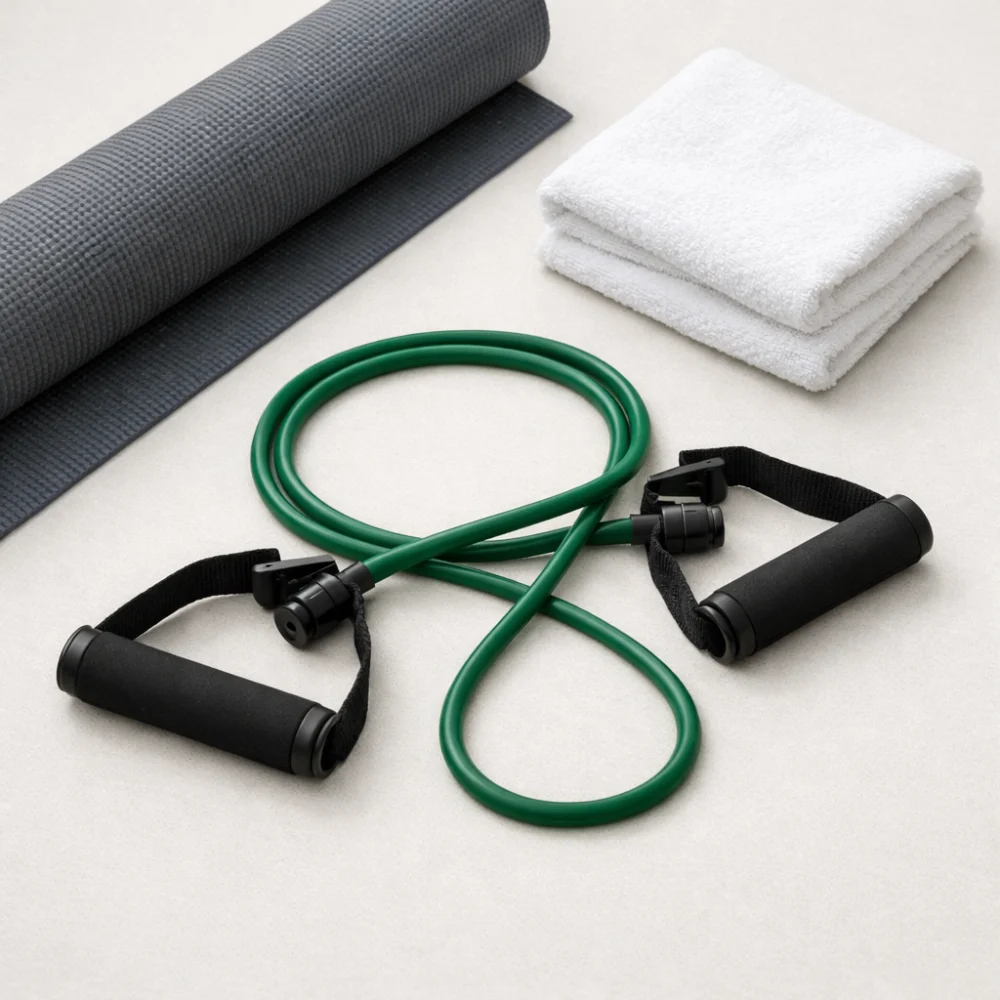
Pilates resistance bands are simple, versatile pieces of exercise equipment used to add resistance to mat work, stretching and controlled strength exercises. They can support home routines, warm-ups and mobility work, but the right choice depends on how you plan to use them.
If you are comparing bands for Pilates, the main decision is not just how much resistance they provide. Material, length, width, comfort and how easily the band stays in place can matter just as much, especially for slow, repeated movements.
Because product listings vary, it helps to focus on the type of band, the level of tension and the exercises you want to do. Specifications vary by model, so always check the individual product page before buying.
What should you look for in Pilates resistance bands?
The best starting point is to match the band to your routine. A lighter band can suit controlled arm, shoulder and mobility work, while a firmer band may be more appropriate for lower-body work or progression. The useful trade-off is simple: more resistance can make exercises harder, but it may also reduce comfort or control if the band is too demanding.
| Feature | What It Means | Why It Matters | What To Check |
|---|---|---|---|
| Resistance level | How much effort the band creates when stretched | It affects exercise difficulty and how smoothly movements feel | Look for a level that suits your current routine and progression needs |
| Band material | Whether the band is latex-style, fabric or another flexible material | Material affects grip, feel, comfort and how the band behaves on the body | Check product photos and description for the material type and intended use |
| Length and width | The band’s physical dimensions and working area | These influence how easy it is to hold, loop and use for different exercises | Confirm the size is suitable for the exercises you want to do |
| Grip and comfort | How the band feels against skin, clothing or footwear | Comfort matters in repeated reps and slower Pilates movements | Check whether the band is described as soft, wide, textured or designed for better hold |
| Set or single band | Whether you buy one band or several resistance levels | A set offers progression and variety, while a single band keeps the choice simpler | Compare how many levels are included and whether they match your routine |
| Accessories | Extras such as a carry bag or exercise guide | Useful extras can make storage and use more convenient | Treat these as bonuses rather than the main reason to buy |
Key decision criteria explained
Resistance level
Resistance level is the most obvious difference, but it is also the easiest to misunderstand. A band that feels fine for one exercise may feel far too strong for another, because movement range and body position change the load. If you are unsure, a lower or mixed set can be more forgiving than starting with a very strong band.
Material and feel
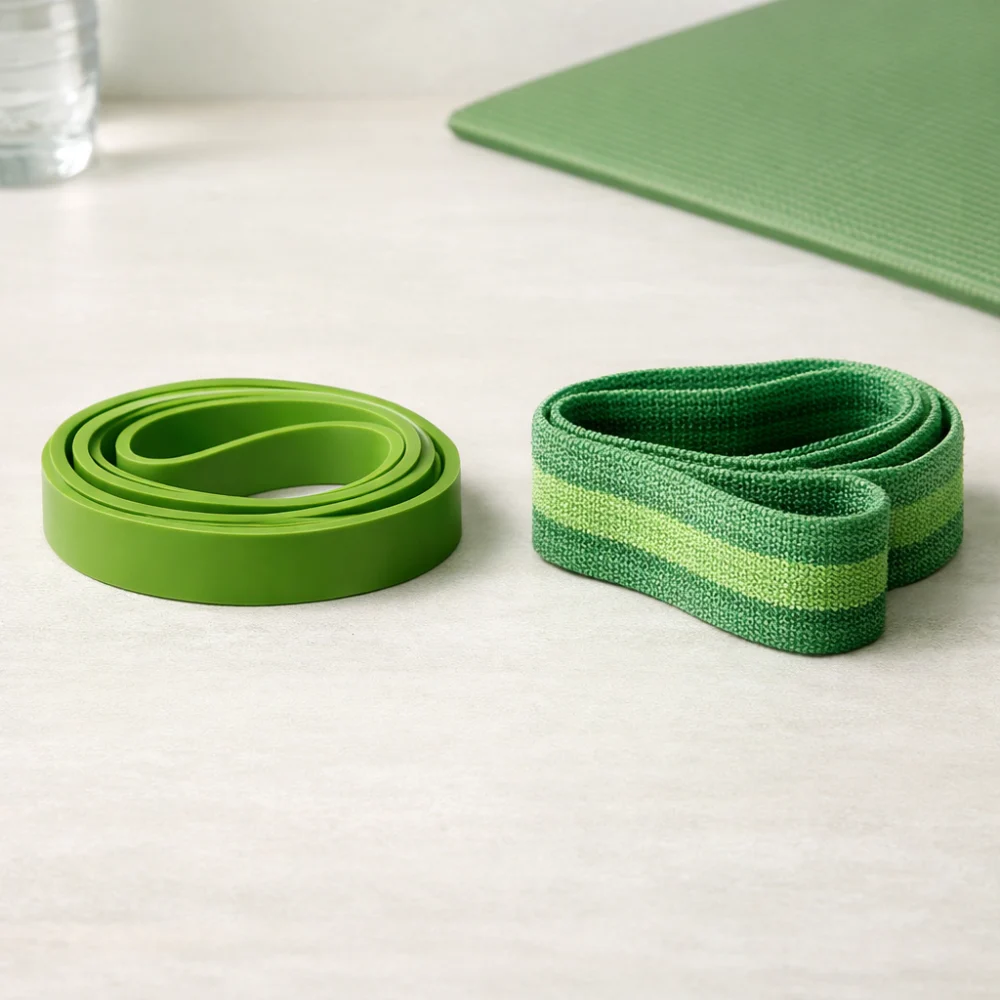
Some buyers prefer a smooth stretchy band, while others want a fabric-style band that feels different against the skin and is less likely to roll during certain movements. The right choice depends on comfort, grip and the type of exercise you expect to repeat. For floor work, the way the band sits on the body can matter more than the headline resistance figure.
Length and format
Long loop bands, flat bands and shorter bands can all be used in Pilates-style training, but they suit different movements. Longer bands often give more room for controlled upper-body or full-body exercises, while shorter bands can feel more focused for glute and lower-body work. Choose the format that matches the exercises you are most likely to repeat.
Set size and progression
Buying several bands together can help if you want to build up gradually or share equipment across users. A single band may be enough if you already know the resistance you want. The main trade-off is between flexibility and simplicity: sets offer more options, but single-band purchases are easier to choose.
Types and variants you are likely to see
Pilates resistance bands usually fall into a few practical variants.
- Long resistance bands: useful for a wider range of stretches and controlled strength work.
- Fabric bands: often chosen for comfort and stability during lower-body exercises.
- Loop-style bands: convenient for repeated Pilates movements and compact storage.
- Multi-band sets: useful if you want different resistance levels for progression or varied routines.
Each format has a limitation. Longer bands can take a little more space to manage, shorter bands may feel less versatile, and fabric bands are not the same as elastic flat bands in how they stretch and feel. Consider the exercises you actually do most often, not just the name of the product.
Which band suits which buyer?
| Buyer need | Likely better choice | Reason |
|---|---|---|
| Beginner starting at home | Lighter band or small set of bands | Gives more room to learn movements and find a comfortable level |
| Regular Pilates mat work | Band with comfortable grip and suitable length | Repeated exercises are easier when the band feels stable and easy to handle |
| Lower-body focused training | Band format that stays in place well | Comfort and stability can matter more than maximum stretch |
| Progression over time | Multi-band set with different levels | Lets you increase challenge without changing equipment type |
| Small storage space | Compact loop or band set with simple accessories | Easy to store and carry between sessions |
Common mistakes to avoid
- Choosing by resistance alone: a band that is technically strong enough may still be awkward or uncomfortable for Pilates-style movements.
- Ignoring the exercise style: a band that suits stretching may not be ideal for glute work, and vice versa.
- Assuming all bands feel the same: material and width can change how a band behaves in use.
- Buying a large set without a plan: more options are not always useful if you only need one or two resistance levels.
Safety and suitability notes
Resistance bands are generally straightforward, but they still need to suit the user and the exercise. Check that the band type, resistance and size are appropriate for the movements you intend to do, and inspect the individual product page for any care or use notes. If you are buying for someone else, think about their experience level and comfort with elastic exercise equipment.
Maintenance, storage and general care
Most resistance bands are easy to store, but keeping them clean and away from sharp edges or excessive heat can help them stay usable for longer. If a band comes with a bag, that can make transport and storage simpler. Wipe-clean care and simple packing are common practical advantages, but always follow the individual product information where provided.
How to compare options efficiently
- Decide whether you want a single band or a small set.
- Match the resistance level to your current routine, not your ideal future routine.
- Check the material and length against the exercises you do most often.
- Compare comfort, grip and how the band is meant to sit on the body.
- Read the individual product page for any model-specific details before buying.
Summary buyer checklist
- Does the resistance level suit your current exercises?
- Is the band type comfortable for the movements you do most?
- Is the length or format practical for your routine?
- Would a single band or a set give you better value for your needs?
- Have you checked the product page for model-specific details?
Frequently asked questions
Are Pilates resistance bands the same as gym resistance bands?
Not always. They may overlap in use, but Pilates buyers often care more about controlled movement, comfort and how the band behaves during mat work. Gym bands can be chosen for broader strength training needs, so it is worth checking the intended use rather than relying on the name alone.
Should I buy one band or a set?
If you already know the level you need, one band may be enough. A set is more useful if you want to progress over time or use different resistances for different exercises. The right answer depends on how varied your routine is.
What is the difference between fabric bands and elastic bands?
Fabric bands and elastic bands can feel quite different in use. Fabric styles are often chosen for comfort and stability, while elastic bands may feel more traditional and versatile for stretching. The better choice depends on the exercises you want to repeat.
How do I know which resistance level to choose?
Think about the exercises you already do comfortably and whether you want a gentle challenge or a stronger one. If you are unsure, starting lighter is often easier than buying something that feels too demanding. Check the product description for any guidance the seller provides.
Do longer bands work better for Pilates?
Not necessarily. Longer bands can be useful for a broader range of movements, but shorter formats may be better for certain lower-body exercises or compact storage. The best choice depends on your routine and the space you have to train.
What should I check before buying a band online?
Look at the material, resistance level, dimensions and any notes about how the band is meant to be used. Product titles can be helpful, but the individual product page is the place to confirm the details that matter most. Specifications vary by model, so always check the individual product page before buying.