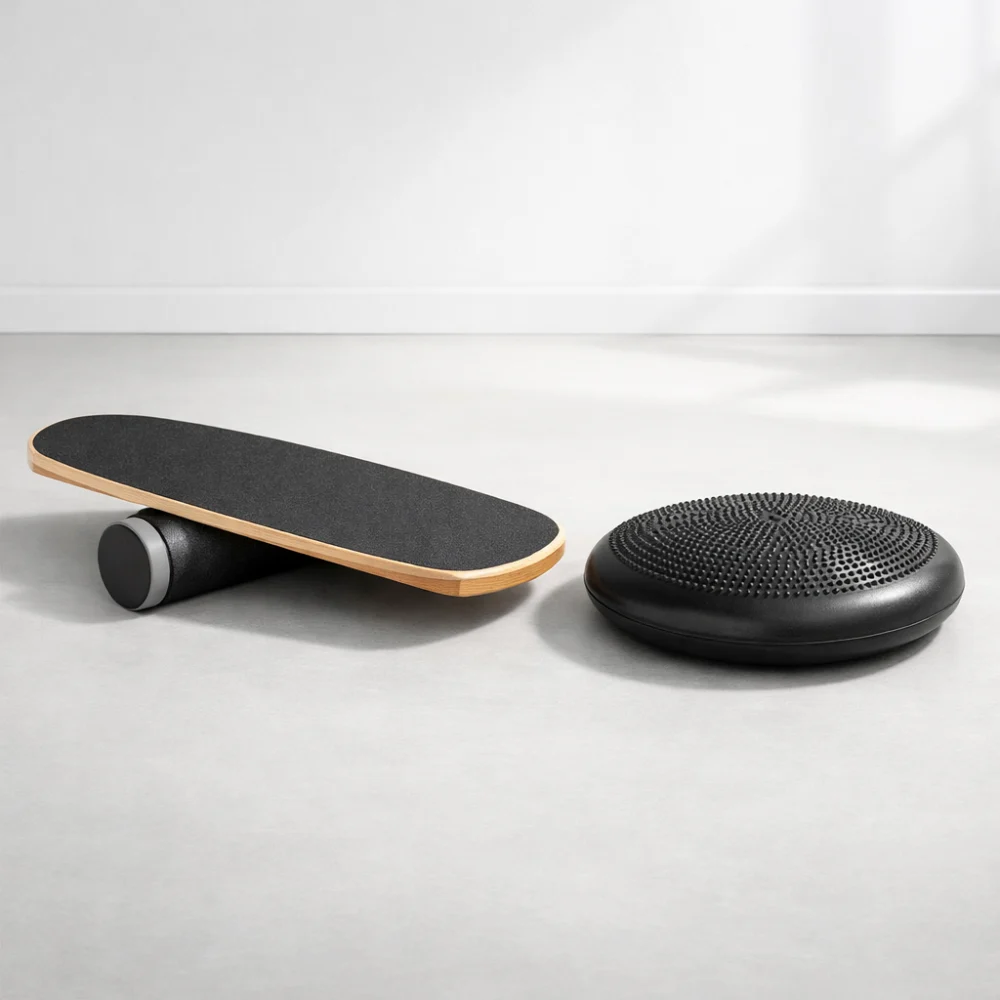
Balance boards and discs are simple pieces of fitness kit, but they are not all aimed at the same kind of use. Some are better for controlled balance practice, others for wobble work, warm-ups or light core training, and some are designed with a more playful feel for general movement.
The right choice depends on who will use it, how stable you want it to feel and whether you want a gentle challenge or a more demanding balance exercise. It also helps to separate floor-based stability accessories from other mind-body equipment so you compare like with like.
What should you look for in a balance board or disc?
Start with the kind of movement you want. A board usually gives a more directional rocking or tilting action, while a disc or cushion tends to feel smaller and less structured, which can suit seated work, standing balance or light exercise. The main trade-off is usually between control and challenge: more stability makes learning easier, while more movement can make exercises harder.
| Feature | What it means | Why it matters | What to check |
|---|---|---|---|
| Type of movement | Rocking, tilting, wobbling or compressing feel | Changes how difficult the exercise feels and what exercises suit it | Read the product description for the intended movement style |
| Stability level | How much support the product gives before it moves | Affects confidence for beginners and the intensity of balance work | Look for wording that indicates beginner-friendly, moderate or more challenging use |
| Size and footprint | The amount of floor space or standing area it uses | Helps with comfort, room to move and storage | Check dimensions and whether the product suits one foot, two feet or seated use |
| Surface feel | The texture or comfort of the contact area | Can affect grip, comfort and how secure the feet feel | Check for non-slip language, foot platform shape or comfort details |
| Intended user | Whether it is aimed at adults, children or general home use | Not every design suits every body size or use case | Read the product page carefully for any intended audience or limitations |
Key decision criteria explained
Board or disc?
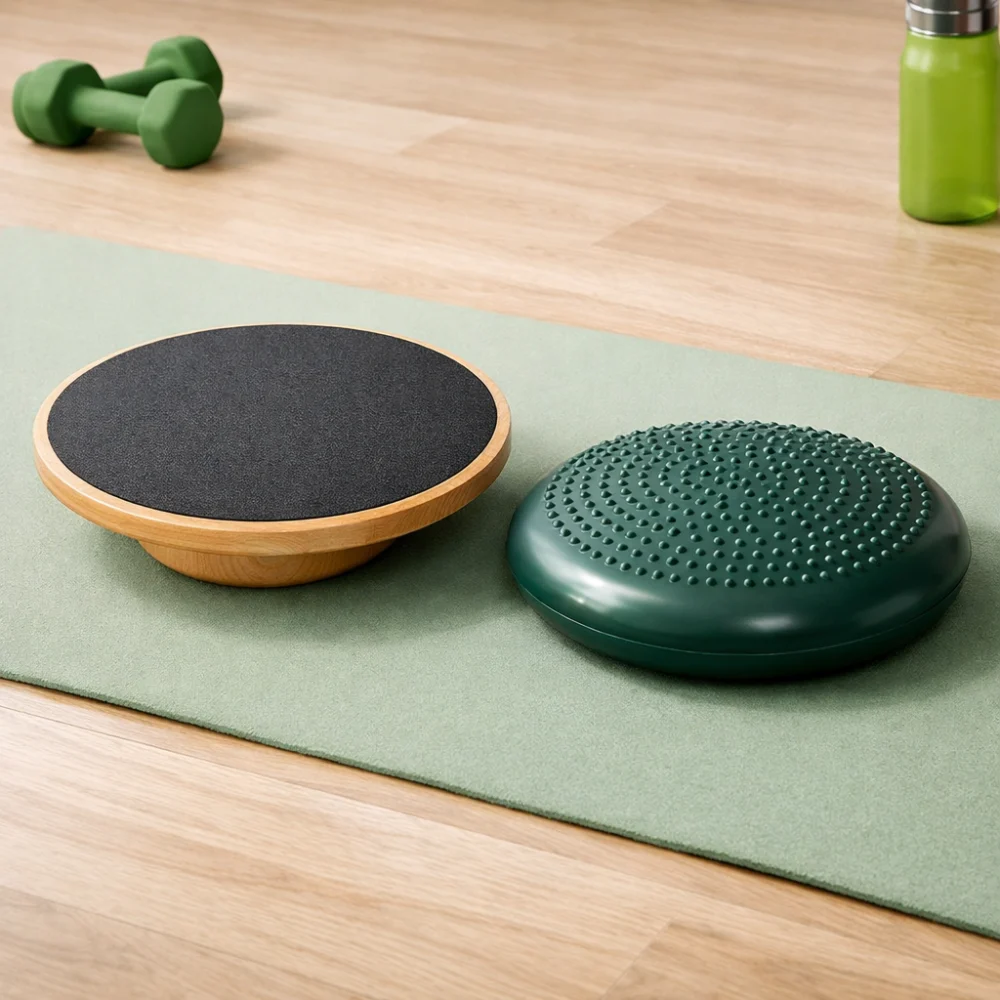
A balance board is usually the better starting point if you want a more obvious training challenge and clearer movement pattern. A disc or cushion may suit someone who wants a smaller, simpler option for standing drills, posture work or light balance practice. If you are unsure, think about whether you want structured exercise or a more subtle instability effect.
How much challenge do you want?
Some buyers want a gentle introduction to balance training, while others want a product that makes the exercise feel more demanding. More movement is not automatically better; it can simply be less forgiving. Beginners often do better with a steadier product, especially if they plan to build confidence gradually.
Where will you use it?
Floor space, storage space and the surrounding area matter more than many buyers expect. A larger board may feel better underfoot, but it also needs more clear space around it. If you plan to use it in a small room, a compact disc can be easier to manage.
What kind of training do you want?
For warm-ups, coordination drills and general fitness, a straightforward board or disc may be enough. For seated use, standing balance or longer exercise sessions, comfort and surface feel become more important. Specifications vary by model, so always check the individual product page before buying.
Common types and variants
The category usually includes a few broad patterns, even when the exact styling varies from one product to another.
- Balance boards: Designed to tilt or rock, often used for balance practice and coordination work.
- Balance discs: Compact, portable options that can create a smaller instability challenge.
- More playful or smart versions: Some products focus on game-like use or guided movement, which may appeal if motivation is a concern.
- Board-and-stretch hybrids: Some designs also work for stretching or angled exercise positions, which can suit buyers who want one item for more than one use.
The main limitation with any variant is that it should be matched to the user’s confidence and space. A more advanced-feeling board is not automatically a better choice for a first-time buyer.
Which option suits which buyer?
| Buyer need | More suitable characteristics | Why |
|---|---|---|
| Beginner balance practice | Steadier feel, clear foot placement, simple movement | Helps build confidence before moving to a harder challenge |
| Small-space home use | Compact footprint, easy storage, simple setup | Makes it easier to keep the product accessible |
| General fitness or warm-ups | Moderate instability, comfortable surface, versatile movement | Supports short sessions and varied routines |
| Family or mixed-user use | Clear intended use, manageable challenge, durable-feeling design | Different users may need different levels of stability |
Common mistakes and misunderstandings
- Choosing the hardest option first: A very unstable product can be frustrating rather than useful. A steadier start is often better if you are building confidence.
- Ignoring the available space: A product that seems compact online may still need more room than expected once in use.
- Assuming all balance accessories work the same way: Boards, discs and cushions create different kinds of instability, so they suit different training styles.
- Focusing only on price: Value also depends on comfort, stability and whether the design matches your goal.
Safety and suitability caveats
Balance products can feel simple, but they still need sensible use and a suitable environment. Check whether the product is intended for the age, size and activity level of the person who will use it, and make sure the surrounding floor space is clear enough for the movement involved. If you have concerns about balance, mobility or recovery from injury, choose conservatively and check the individual product information carefully.
Maintenance, storage and lifespan considerations
Most buyers will want something easy to keep clean and easy to store. A board may need a little more space than a disc, while a compact disc or cushion may be quicker to put away after use. It is sensible to check whether the product needs any special cleaning method or whether textured surfaces may hold dust or marks more visibly over time.
How to compare options efficiently
- Decide whether you want a board, a disc or another balance accessory feel.
- Match the stability level to the user’s confidence and experience.
- Check the size, footprint and storage needs against your space.
- Compare the surface feel, intended use and any notes about who it suits.
- Read the individual product page for the exact details before deciding.
Buyer decision checklist
- Does the product type match the kind of balance work you want?
- Is the stability level appropriate for the main user?
- Will it fit the space where you plan to use it?
- Does the surface and shape suit standing, seated or general exercise use?
- Have you checked the individual product page for the exact details?
Frequently asked questions
Are balance boards and discs only for fitness training?
No. They are often bought for exercise, but some people also use them for warm-ups, coordination practice or light movement during the day. The key is to choose a type that suits the intended use rather than assuming every product serves the same purpose.
Is a balance disc easier than a balance board?
Not always, but many buyers find discs feel smaller and less structured, while boards give a more obvious rocking or tilting pattern. The right choice depends on whether you want subtle instability or a more defined training movement.
What should a beginner prioritise?
A beginner usually benefits from stability, comfort and a clear standing area. It is generally better to start with a manageable challenge and increase difficulty later if needed.
How much space do I need?
That depends on the size and movement style of the product, as well as how you plan to use it. Check the dimensions and think about the area around it, not just the footprint of the item itself.
Can children use these products?
Some products may be suitable for younger users, but that depends on the individual design and the intended audience stated on the product page. Choose conservatively and make sure the size, stability and use case match the child’s needs.
Do I need special shoes?
Usually this depends on the product and the exercise style, so it is best to follow the individual product information. What matters most is having enough grip and a safe, clear space to use it.
How do I choose between a more playful and a more traditional design?
Choose the one that fits how you will actually use it. A playful design may help with motivation, while a more traditional board or disc may suit straightforward exercise more closely.