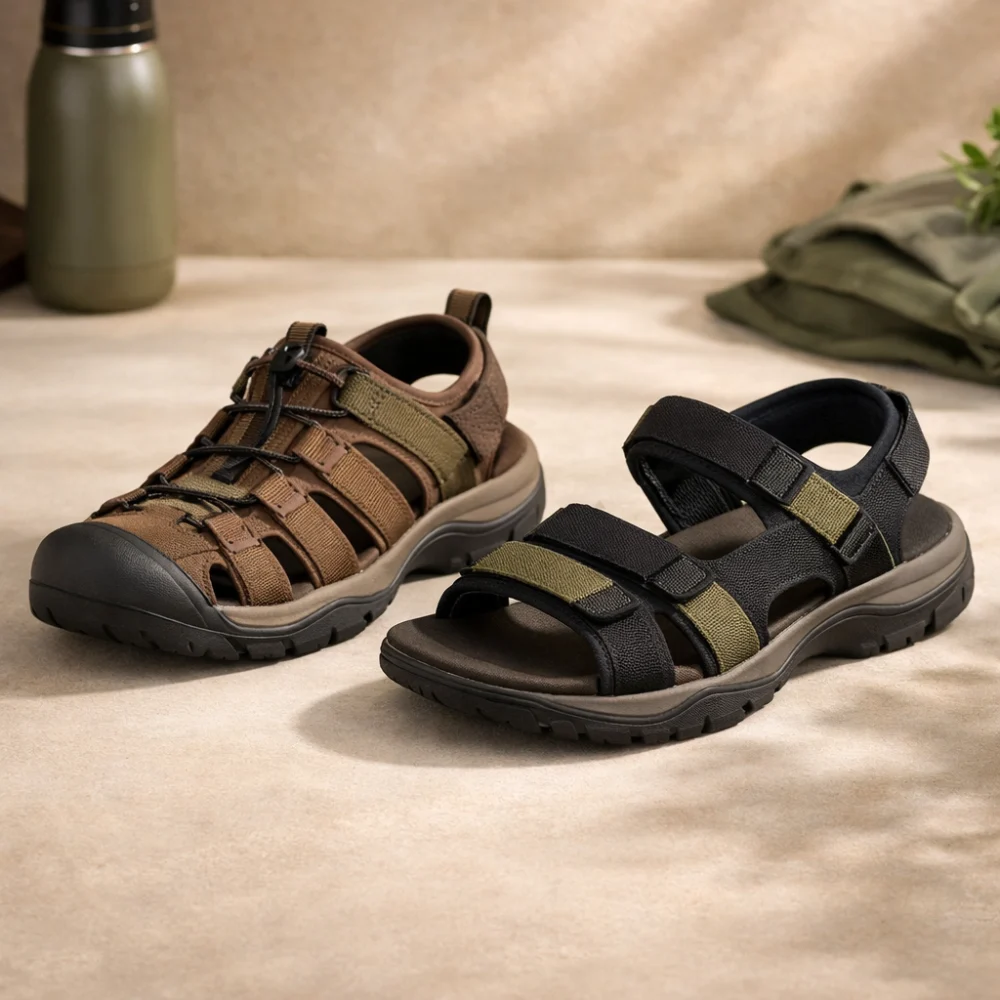
Men’s sandals cover a wide range of uses, from simple warm-weather footwear to more supportive designs for walking and holidays. The right choice depends on where you plan to wear them, how much coverage you want, and whether comfort or quick on-off wear matters most.
Because styles vary so much, it helps to compare sandals by fit, strap design, foot support and sole type rather than by appearance alone. A pair that feels right for short everyday use may not be the best option for longer walks or uneven ground.
This guide focuses on the buying choices that matter most, so you can narrow the category quickly and avoid paying for features you do not need.
What should you look for in men’s sandals?
Start with the way you plan to use them. If you want something for casual wear, ease and comfort may matter more than structure, while walking-oriented sandals usually need a more secure fit and a sole that feels stable underfoot. The best starting point is to decide how much support, coverage and adjustability you need, then check each product page for the details that match that use. Specifications vary by model, so always check the individual product page before buying.
| Feature | What it means | Why it matters | What to check |
|---|---|---|---|
| Fit and fastening | How the sandal holds the foot, such as slip-on, adjustable straps or buckle fastenings | A secure fit helps reduce slipping and makes the sandal feel more controlled | Look for adjustability if you want a more exact fit or expect to wear socks occasionally |
| Toe coverage | Whether the toes are open, partly protected or fully enclosed | More coverage can feel more protective, while open designs usually feel lighter and cooler | Choose based on where you will wear them and how much toe protection you prefer |
| Foot support | The level of shaping or support under the foot | Support can affect comfort during longer wear | Check the footbed description and whether the sandal is aimed at casual use or walking |
| Sole grip | The outsole pattern and how it is intended to behave on different surfaces | Grip matters more if you will use them outdoors or on varied ground | Look for notes about tread or outdoor suitability, without assuming all sandals handle the same terrain |
| Materials and finish | The upper, lining and footbed materials used in the sandal | Materials influence comfort, feel and how easily the sandal may clean or dry | Check whether the construction suits your climate, use and care preferences |
Key decision criteria explained
Fit and security
Sandals vary from easy slip-on styles to designs with multiple adjustable straps. A looser sandal may be fine for short, relaxed wear, but a more secure fit is usually better if you want confidence on the move. Think about heel hold, instep hold and whether you want the sandal to stay snug without feeling restrictive.
Support and comfort
Some sandals are built mainly for casual, lightweight wear, while others place more emphasis on foot support. If you expect to wear them for long periods, check for details such as shaped footbeds, cushioning or a more substantial sole. Comfort is personal, so avoid assuming that a style described as supportive will suit every foot shape equally.
Coverage and protection
Open-toe sandals can feel airy and simple, but they leave the front of the foot more exposed. Closed-toe or more enclosed designs may suit buyers who want a little more protection or who plan to use the sandals in busier environments. The trade-off is usually between breathability and coverage.
Surface and use
Consider whether you need sandals for indoor-outdoor casual wear, holiday use or light walking. A sandal that feels fine around town may not be ideal on uneven paths, wet ground or longer routes. If you need a pair for outdoor use, look closely at the outsole and the intended style of the sandal rather than relying on appearance alone.
Material preference
Material affects feel, maintenance and how formal or casual the sandal looks. Some buyers prefer a softer, more relaxed finish, while others want a cleaner appearance or easier care. Choose the material that matches your routine and the conditions you expect to wear them in.
Common sandal types and what they suit
There is no single sandal shape that suits every buyer, but a few broad styles appear often within the category.
- Slides: Simple slip-on styles that are easy to wear and remove. They suit relaxed use, but they may offer less hold than strapped designs.
- Strap sandals: Designs with adjustable straps for a more secure fit. They often suit buyers who want a balance between comfort and stability.
- Closed-toe sandals: More covering at the front of the foot. They can be a practical choice if you want extra protection without moving to a full shoe.
- Walking-oriented sandals: Sandals intended to feel more supportive and stable for longer wear. They can be useful for holidays and more active days, though comfort will still depend on the individual model.
Which features matter most for different buyers?
| Buyer need | Useful features | Why they help | Trade-off to keep in mind |
|---|---|---|---|
| Everyday casual wear | Easy fit, comfortable footbed, simple fastening | Makes the sandal quick to put on and pleasant for short periods | Very simple styles may provide less hold or support |
| Longer walks or active use | Secure straps, supportive sole, stable fit | Helps the sandal stay controlled and comfortable over more time | More structure can feel less minimal and less airy |
| Hot weather and holiday use | Breathable design, light feel, easy cleaning | Useful when comfort and convenience matter most | Lightweight designs may not suit rougher ground |
| Extra toe protection | Closed-toe or more enclosed front | Provides more coverage than open styles | Can feel warmer and less open than a traditional sandal |
Common mistakes to avoid
- Choosing on appearance alone: A style you like may not have the support or fit you need. Always check how the sandal is meant to be worn.
- Assuming all sandals are interchangeable: Slides, strap sandals and closed-toe designs serve different needs. Compare the structure, not just the colour or upper material.
- Ignoring adjustability: If your feet vary in width or you prefer a more precise feel, adjustable straps can make a real difference.
- Overlooking the sole: The sole affects how stable the sandal feels and how suitable it may be for different surfaces.
Safety and suitability points to check
Sandals are generally straightforward to buy, but suitability still matters. Check that the design matches the conditions you expect, especially if you will wear them on rougher ground, for longer periods or in busy environments. If you need more protection or a more secure feel, a more enclosed style may be a better fit than a very open sandal.
Also think about whether you will wear them with bare feet or socks, and whether the fastening system can accommodate that comfortably. A sandal that fits well in one scenario may feel less suitable in another.
Care, storage and wearing life
General care affects how long sandals stay comfortable and presentable. Some materials are easier to wipe clean than others, and some designs may cope better with moisture or frequent use. If you expect to wear them often in warm weather, choose a style that fits your normal cleaning routine and storage space.
It is also sensible to consider how quickly a sandal may show wear in the areas you use most, such as the sole, straps or footbed. That does not mean every model behaves the same way, but it does make material choice and construction worth checking before you buy.
How to compare options efficiently
- Decide where and how often you will wear the sandals.
- Choose the broad type first: slide, strapped, closed-toe or walking-oriented.
- Compare fit, support, coverage and sole grip before colour or style.
- Read the product page for material, fastening and intended use details.
- Balance comfort, security and breathability against the way you will actually use them.
Summary buyer decision checklist
- Have I chosen the right sandal type for my intended use?
- Does the fit look adjustable enough for my feet and wearing preference?
- Is the level of support appropriate for how long I expect to wear them?
- Do I want open-toe comfort or more front-of-foot coverage?
- Does the sole seem suitable for the surfaces I will walk on?
- Have I checked the product page for the exact model details?
Frequently asked questions
Are men’s sandals only for casual wear?
Not necessarily. Many sandals are designed for relaxed everyday use, but some are made with more secure straps and more supportive soles for walking or longer wear. The main question is whether the specific model is suited to your intended use.
What is the difference between slides and strapped sandals?
Slides are usually easier to slip on and off, while strapped sandals often give a more secure fit. If you want convenience, slides may appeal more; if you want hold and adjustability, straps are often the better starting point.
Should I choose open-toe or closed-toe sandals?
Open-toe styles feel lighter and more breathable, while closed-toe designs offer more front-of-foot coverage. The better choice depends on whether comfort, airflow or added protection matters more to you.
How important is sole grip in sandals?
It matters more if you plan to use them outdoors or on varied ground. A more textured sole can feel reassuring, but you should still check whether the sandal is intended for casual wear or something more active.
Can sandals be worn for walking longer distances?
Some can, but not all. For longer use, look for a more secure fit, a supportive footbed and a sole that feels stable. If you expect regular walking, avoid assuming a lightweight casual style will be comfortable enough.
What if I am between sizes or prefer a looser fit?
Adjustability becomes especially useful in that case. Look for straps or fastening details that let you fine-tune the fit rather than relying on a simple slip-on design alone.