

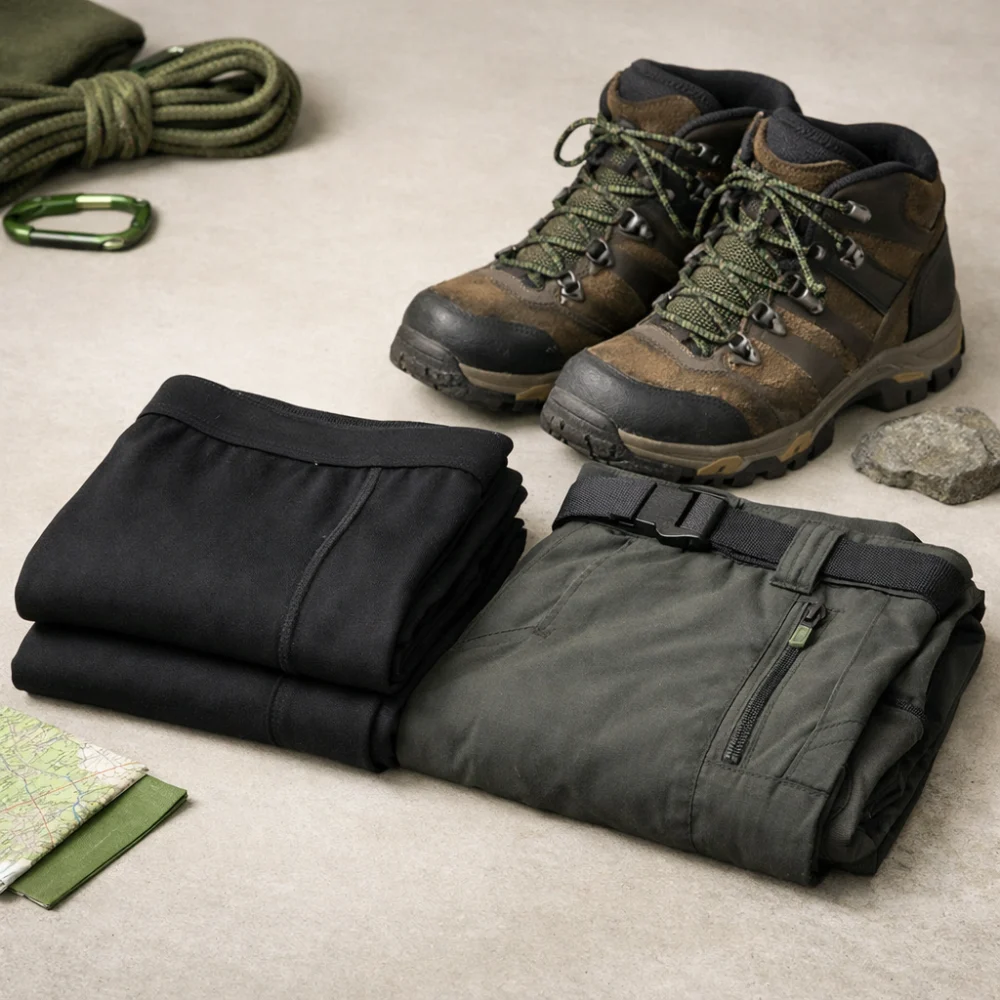

Men’s base layer bottoms are the first insulating or moisture-managing layer worn under walking trousers, winter kit or other outdoor clothing. They are usually chosen for comfort, warmth and how well they work during active use rather than for looks alone.
The right pair depends on how cold you expect to be, how hard you will be moving and whether you prefer a close, stretchy feel or a softer, warmer layer. Some buyers want light support for active days; others want more insulation for slower walking, colder starts or sitting around campsites.
This guide explains the main buying factors so you can compare options quickly and avoid choosing a pair that is too warm, too loose or not breathable enough for your use.
Compare Men's Base Layer Bottoms


As an Amazon Associate we earn from qualifying purchases.
What should you look for in men’s base layer bottoms?
Start with the type of activity and the temperature range you are buying for. A lighter, close-fitting base layer usually suits higher-output walking, while a warmer option may feel better for cold conditions or lower-intensity use. The main trade-off is usually warmth versus breathability, plus snug fit versus all-day comfort.
Specifications vary by model, so always check the individual product page before buying.
| Feature | What it means | Why it matters | What to check |
|---|---|---|---|
| Fit | How close the garment sits to the body | A close fit helps base layers work as intended and reduces bunching under outerwear | Look for the stated fit guidance and whether the cut suits your usual trouser size |
| Fabric feel | The texture and softness of the material | Comfort affects whether you will want to wear the layer for long periods | Check whether the product is described as smooth, soft, brushed or thermal |
| Warmth level | How much insulation the layer is likely to provide | Too much warmth can feel stuffy; too little may not be enough in cold weather | Consider the intended season, activity level and any thermal or merino wording |
| Breathability | How easily heat and moisture can move away from the body | Important if you walk briskly, climb hills or build up heat quickly | Look for product wording that suggests moisture management or quick drying |
| Length | Whether the leg finishes above the ankle or lower | Length affects layering with boots, socks and trousers | Check the leg length style and how it is described on the product page |
| Stretch | How much the fabric moves with you | Helpful for stride comfort, bending and long days outdoors | Read the fit description and any mention of elastane or similar stretch fibres |
Key decision criteria explained
1) Warmth versus breathability
This is the most important decision for many buyers. Warmer base layer bottoms can feel more comfortable in cold, still conditions, but they may become too hot if you are walking hard or moving between temperatures. If your days vary a lot, a more versatile middle-ground option is often easier to live with than a very heavy thermal layer.
2) Fit and layering comfort
Base layers should sit close enough to work under your other clothing without twisting or bagging. A fit that is too loose can bunch up, while one that is too tight may feel restrictive over a long walk. Check how the product is described and consider whether you usually prefer a firmer or softer feel at the waist and thigh.
3) Fabric choice
Different fabrics are chosen for different reasons. Some buyers prefer synthetic fabrics for quick drying and active use, while others prefer merino or blended materials for a softer feel and more temperature flexibility. The right choice often depends on whether you prioritise easy care, comfort against the skin or warmth for the conditions you expect.
4) Length and intended use
Some base layer bottoms are full-length, while others may be cropped or shorter in leg. The best choice depends on how much coverage you want with boots, walking trousers and socks. If you will mainly wear them under other trousers, the key question is whether the length and hem finish will stay comfortable throughout the day.
5) Everyday practicality
Think beyond the label and consider how often you will wear them, wash them and pack them away. A pair that is easy to care for and comfortable for long periods may suit regular use better than one chosen only for maximum warmth. If you need one pair for mixed conditions, aim for the most balanced option rather than the warmest one available.
Common types and variants
Within men’s base layer bottoms, the main differences are usually about warmth, fabric and cut rather than dramatic style changes. That makes it helpful to think in practical groups rather than expecting every product to be fundamentally different.
- Lightweight base layer bottoms suit active walking and milder weather, especially when you want less bulk.
- Thermal base layer bottoms are more focused on insulation and are often chosen for colder conditions or slower-paced use.
- Compression-style leggings may feel firmer and more body-hugging, which some buyers prefer for a close athletic fit.
- Merino or blended options may appeal to buyers who want a softer feel and more adaptable comfort across changing conditions.
Not every product uses the same naming, and the same label can mean different things from one brand to another. That is why it helps to compare the intended use, fabric description and fit guidance rather than relying on the category name alone.
Which type suits different buyers?
| Buyer need | What to prioritise | What to avoid |
|---|---|---|
| Cold-weather walkers | More warmth, reliable coverage and comfortable layering | Very light or overly minimalist options |
| Brisk or high-output hikers | Breathability, quick drying and a close but not restrictive fit | Heavy thermal layers that hold too much heat |
| All-day comfort seekers | Soft fabric, steady fit and enough stretch for movement | Anything that feels tight, rough or fiddly to layer |
| Mixed-condition buyers | A balanced mid-weight option that works across more than one use | A very specialised pair that only suits one temperature range |
| Gift buyers | Simple sizing information and a general-purpose design | Overly specific performance claims you cannot verify |
Common mistakes and misunderstandings
Choosing warmth without thinking about activity level. A warmer pair is not automatically better if you walk quickly or generate a lot of heat. Match the layer to how active you are, not only to how cold the weather looks.
Buying a loose fit for comfort. Base layers are usually meant to sit close to the body, so a baggy pair may not layer well. Comfort comes from the right size and fabric feel, not from extra room everywhere.
Assuming all thermal labels mean the same thing. Thermal is a general description, not a universal standard. Check the product page for fabric details, intended use and fit guidance before comparing options.
Overlooking the trousers you will wear over them. A base layer that feels fine on its own may feel awkward under slimmer walking trousers. Consider how the layer will work with the rest of your kit.
Safety and suitability caveats
Base layer bottoms are about comfort and layering, not guaranteed protection. If you are buying for very cold, wet or highly variable conditions, choose with care and check the product description closely. The most useful checks are fit, intended activity and the layer’s warmth level.
It is also worth thinking about skin comfort and personal preference. Some fabrics may feel better than others against the skin, particularly on longer days or if you are sensitive to texture.
Maintenance, storage and lifespan considerations
General care can affect how long base layer bottoms stay comfortable and usable. Check the washing guidance on the product page or label, because different fabrics may need different treatment. If you plan to wear them often, choose a pair that looks easy to launder and rotate with your other layers.
Storage matters too. Keep them dry and folded or stored with your other outdoor clothing so they are ready when the temperature drops. If you buy a warmer pair for seasonal use, think about how easily it will fit into your clothing rotation when you do not need it every week.
How to compare options efficiently
- Decide what you need them for: active walking, colder conditions or general layering.
- Choose the warmth level that fits that use rather than picking the heaviest option by default.
- Check the fit description and make sure it sounds suitable under your walking trousers.
- Compare fabric feel, stretch and breathability for comfort over a full day.
- Read the individual product page carefully before deciding.
Summary buyer decision checklist
- Have you matched the warmth level to your likely weather and activity?
- Does the fit sound close enough for layering without feeling restrictive?
- Is the fabric likely to feel comfortable for the length of time you will wear it?
- Will the leg length and cut work with your trousers and footwear?
- Have you checked the individual product page for the most important details?
Frequently asked questions
Are base layer bottoms meant to be worn close to the body?
Yes, usually they are. A close fit helps them sit smoothly under other clothing and supports their intended purpose as a base layer. They should still feel comfortable enough for movement and all-day wear.
What is the difference between thermal and regular base layer bottoms?
Thermal options are generally chosen with warmth in mind, while regular base layers may focus more on light layering or moisture management. The exact meaning depends on the product, so it is worth checking the description rather than relying on the label alone.
Should I choose merino or synthetic?
That depends on what matters most to you. Some buyers prefer synthetic fabrics for quick drying and easy care, while others value the feel and temperature flexibility often associated with merino or blended fabrics. Compare the individual product details rather than assuming one is always better.
Do I need the same size as my usual trousers?
Not always. Base layer sizing can vary, and the intended fit may be closer than you are used to for outer trousers. Check the product page for fit guidance and any sizing notes before choosing.
Can I wear base layer bottoms on their own?
Some people may do so in certain settings, but they are primarily designed as a layering item. If you plan to wear them alone, think about appearance, opacity and how the fabric feels outside the context of walking clothing.
How many pairs do I need?
That depends on how often you walk, how often you wash clothing and whether you want one pair for colder days or a small rotation. If you use them regularly, having more than one pair can make it easier to keep them ready for the next outing.
More Men's Base Layer Bottoms
See all 421 Men's Base Layer Bottoms →


As an Amazon Associate we earn from qualifying purchases.


