

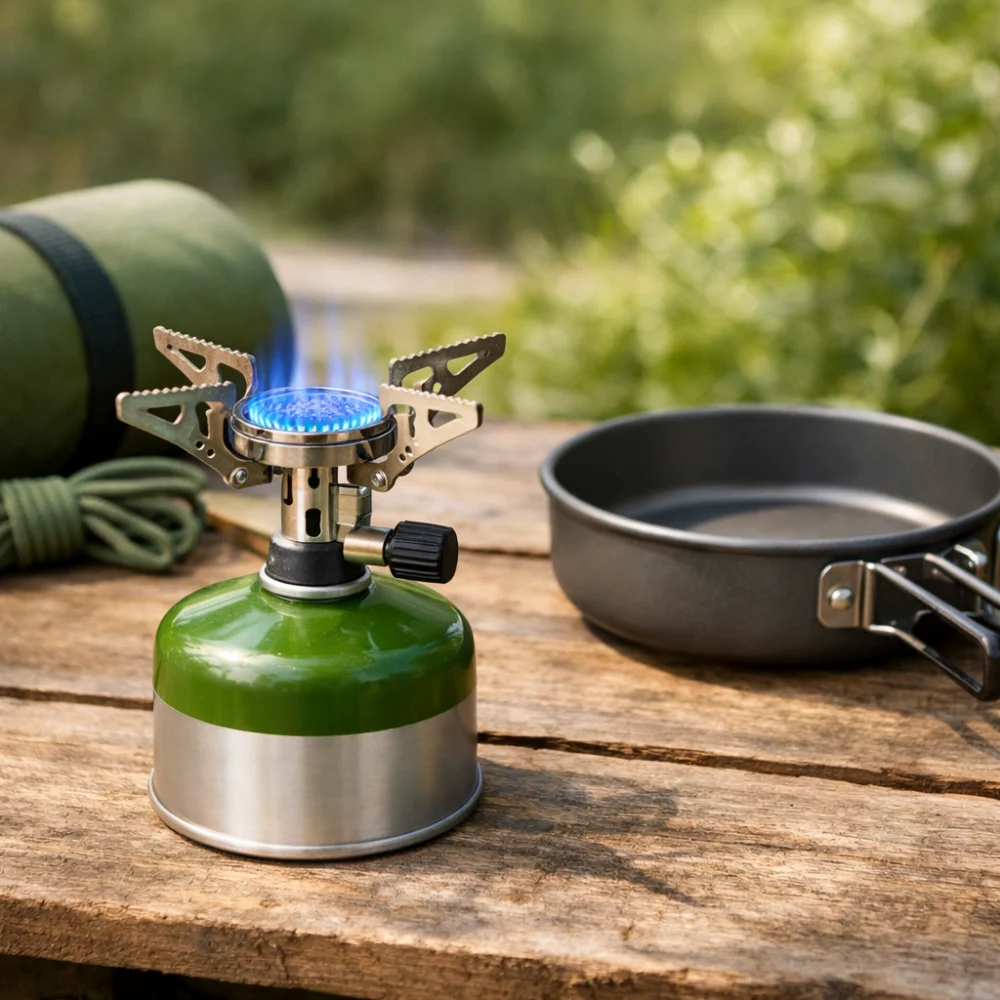

Camping gas stoves are a practical way to cook outdoors when you want quick heat, simple control and less setup than a wood-burning fire. They suit everything from weekend camping to longer trips, but the right choice depends on how many people you are cooking for, how much weight you want to carry and which fuel system you prefer.
This guide focuses on the buying decisions that matter most: stove size, burner layout, fuel compatibility, stability and ease of use. It also helps you avoid common mistakes such as choosing a stove that is too small for your pans or forgetting to check the cartridge or canister type.
Specifications vary by model, so always check the individual product page before buying.
Compare Camping Gas Stoves


As an Amazon Associate we earn from qualifying purchases.
What should I look for in a camping gas stove?
The best starting point is to match the stove to your cooking style and trip length. A compact single burner can be enough for simple meals, while a larger multi-burner or table-top design is more convenient for family cooking or preparing several dishes at once. The main trade-off is usually portability versus cooking space and control.
It also helps to think about fuel convenience. Some stoves are designed around small cartridges, others use larger canisters, and the right option is the one that fits how you travel and resupply. If you expect to cook often, stability and simmer control may matter more than the smallest packed size.
| Feature | What It Means | Why It Matters | What To Check |
|---|---|---|---|
| Burner count | How many separate burners or cooking zones the stove has | Affects how many pans you can use and how flexible meal prep will be | Whether one burner is enough or you need space for two pans |
| Size and portability | The overall footprint and how easy it is to carry or store | Important for backpacking, car camping and limited packing space | Packed size, carry handle or case, and whether it suits your transport method |
| Fuel type | The cartridge or canister system the stove uses | Must suit your preferred fuel setup and where you buy spares | Exact fuel connection and the cartridge or canister format required |
| Pan support and stability | How securely cookware sits on the stove | Helps reduce wobble and makes cooking easier with different pan sizes | Pan support shape, base width and whether your cookware feels secure |
| Heat control | How easily you can adjust the flame | Useful for boiling water, gentle simmering and avoiding burnt food | Whether the control feels suitable for the meals you plan to cook |
| Ignition method | How the stove is lit | Can make setup quicker and simpler, especially in poor light | Whether ignition is built in or whether you will need a separate lighter |
Key decision criteria explained
Portability and pack size
If you are carrying your stove by hand or fitting it into a small boot, weight and packed size can matter as much as cooking performance. A lighter, more compact stove is easier to live with on short trips, but it may offer less space for larger pans. Table-top stoves can be more comfortable for basecamp-style camping, but they take up more room.
Fuel compatibility
The fuel system should fit the way you already camp. Some buyers want a simple cartridge that is easy to connect, while others prefer a canister style they can pack separately. Check the exact fuel type and connection before buying, because a stove and fuel source need to match correctly.
Cooking capacity
Think about who you are cooking for and what you normally make. One burner may be fine for a single pot, but family meals often become easier with more space and more than one heat source. If you mainly boil water or heat tins, a simpler stove may be enough; if you want to fry, simmer and warm at the same time, a larger setup is usually more practical.
Stability and cookware fit
Stable pan support is one of the most useful features to compare because it affects everyday confidence. A stove that feels fine with a small mug may be less secure with a wide pan. Check the burner layout and support shape against the pots and pans you already own, especially if they have a wider base or unusual shape.
Ease of control
Good flame adjustment makes outdoor cooking more forgiving. If you want to simmer rather than just boil, look for a stove that appears easy to turn down smoothly. Specifications vary by model, so always check the individual product page before buying.
Common types and variants
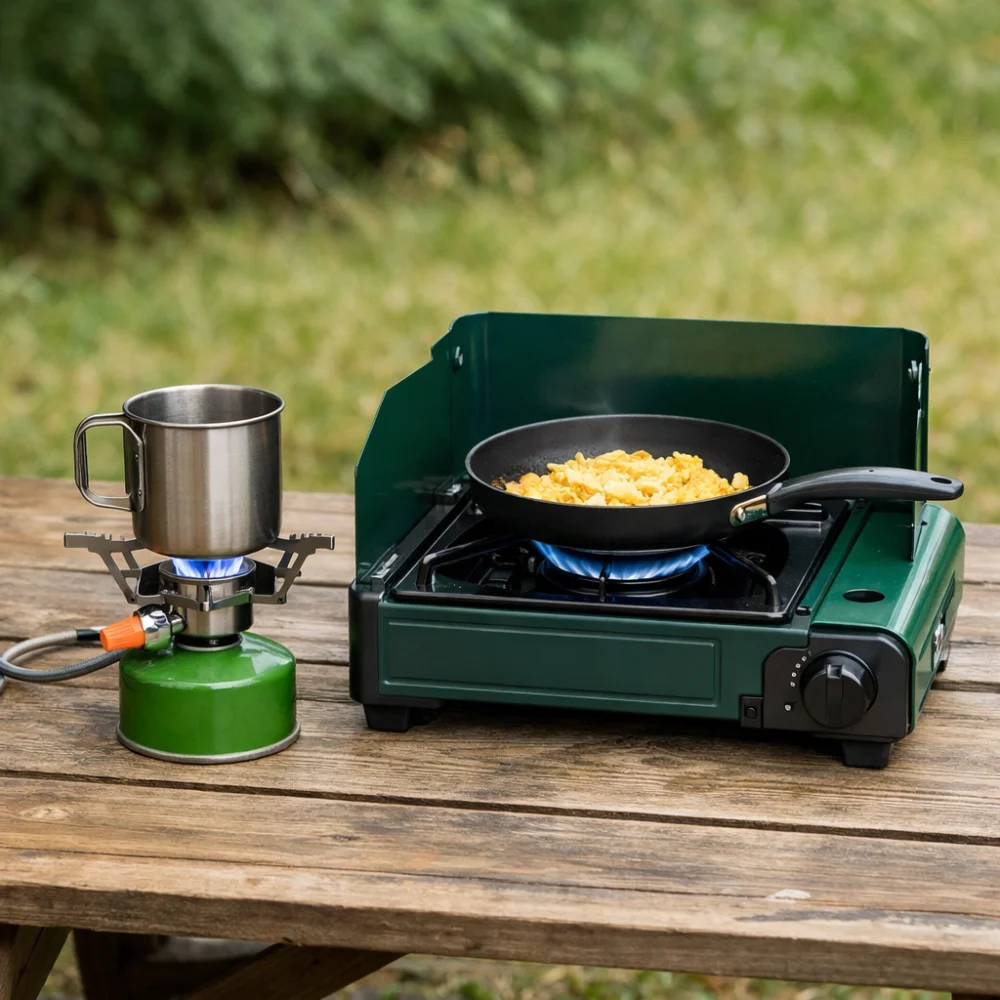
Camping gas stoves in this category usually fall into a few broad patterns.
- Compact single-burner stoves suit lighter packing and simpler meals.
- Table-top or larger stoves are more comfortable for group cooking and longer stays.
- Stoves with built-in ignition can be convenient for quick setup, though a separate lighter is still sensible to carry.
- Kit-style products may bundle the burner with cookware or carry storage, which can simplify buying for beginners.
The right variant depends less on status or style and more on whether you want portability, cooking space or convenience.
Which stove suits which kind of buyer?
| Buyer need | What usually matters most | Likely better fit |
|---|---|---|
| Solo or light pack camping | Low bulk, simple use, easy storage | Compact single-burner stove |
| Couples on short trips | Balanced size and enough space for one or two pans | Compact but stable stove with good control |
| Family camping | Cooking area, stability and convenience | Larger stove or multi-burner setup |
| Basecamp or car camping | Comfort, flexibility and easier meal prep | Table-top style stove with solid pan support |
| Beginners | Simple setup and clear fuel compatibility | Straightforward stove with easy-to-understand fuel requirements |
Common mistakes and misunderstandings
- Choosing only by size. A very small stove is convenient, but it may not suit the pans or meals you actually want to cook.
- Ignoring fuel compatibility. The stove and fuel type need to match, so check the connection and cartridge or canister format before ordering.
- Underestimating stability. A stove that feels fine for boiling water may be awkward with a wider pan or a fuller pot.
- Assuming all ignition systems feel the same. Built-in ignition can be helpful, but many buyers still prefer to carry a spare lighter.
Safety and suitability caveats
Camping gas stoves are generally straightforward to compare, but they are still fuel-burning products, so suitability matters. Check that the stove is intended for the kind of camping you plan to do, that your cookware fits securely and that you understand the fuel it uses. Use only as intended and follow the manufacturer information supplied with the product.
If you are buying for a group, a child-friendly campsite or a shared cooking setup, consider whether the stove layout and stability feel practical for that environment. The safest choice is the one that matches the setting, the fuel system and the user’s experience level.
Maintenance, storage and lifespan considerations
Most camping gas stoves benefit from simple care: keep them clean, store them dry and inspect the fuel connection and supports before trips. After use, it is sensible to let the stove cool fully and pack it so it will not be bent or knocked in transit. If a stove has detachable parts or a carry case, that can make storage easier.
Consumable fuel is a separate purchase, so factor that into ownership rather than looking only at the stove itself. The long-term convenience of a stove often depends on how easy it is to keep fed with the right cartridges or canisters.
How to compare options efficiently
- Decide what kind of camping you do most often and how many people you usually cook for.
- Choose the stove size and burner layout that fits your meals and cookware.
- Check fuel compatibility so you know what cartridges or canisters you will need.
- Compare stability, ignition and heat control for everyday convenience.
- Read the individual product page for any model-specific details before buying.
Summary buyer decision checklist
- Does the stove suit solo, couple or family cooking?
- Is the packed size practical for how you travel?
- Does the fuel type match what you want to carry and buy?
- Will your pans sit securely on the supports?
- Is the heat control suitable for boiling, frying or simmering?
- Do you want built-in ignition or are you happy using a separate lighter?
- Have you checked the individual product page for exact specifications?
Frequently asked questions
Are camping gas stoves suitable for beginners?
Yes, many are designed to be simple to set up and use. The main thing for a beginner is to choose a model with clear fuel compatibility and a layout that feels stable enough for everyday cooking.
How do I know which fuel type I need?
Start with the stove’s product information and check the exact cartridge or canister it uses. Do not assume fuel is interchangeable, because the connection and format need to match the stove you buy.
Is a single-burner stove enough?
It can be, if you mainly boil water or cook one-pot meals. If you want to prepare a full meal for more than one person, a larger stove or multiple burners may be more convenient.
What matters more: ignition or stability?
For most buyers, stability is the more important everyday feature because it affects how safely and comfortably you can use your cookware. Built-in ignition is useful, but it is usually best treated as a convenience rather than the main reason to choose a stove.
Can I use any pan with a camping gas stove?
Not always. The pan needs to sit securely on the supports, and some wider or heavier cookware may feel less stable than smaller camping pans.
Are larger stoves always better?
No. Larger stoves can be more comfortable for cooking, but they also take up more space and are less convenient to carry. The better choice is the one that matches your trip style, storage space and cooking habits.
Should I buy a stove kit or just the burner?
That depends on whether you already have compatible cookware and storage. A kit can be convenient for beginners, while a burner-only purchase may suit someone who already owns suitable pans and wants to build a lighter setup.
More Camping Gas Stoves
See all 276 Camping Gas Stoves →


As an Amazon Associate we earn from qualifying purchases.


