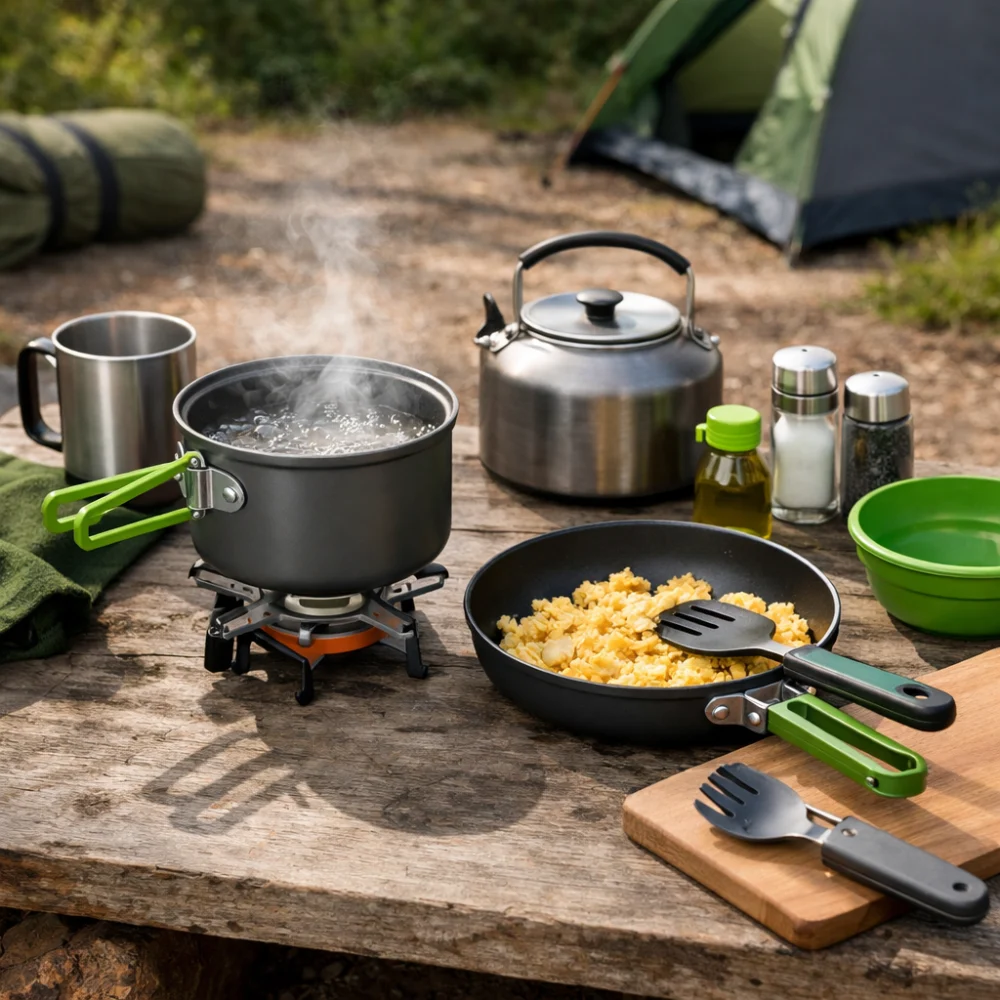
Camping pots and pans are for cooking away from a home kitchen, whether you are boiling water, heating a simple meal or frying food at a campsite. The right choice depends less on brand name and more on how you travel, what you cook and how much you want to carry.
Some buyers want a compact set for backpacking, while others want a more comfortable setup for car camping or family use. A good guide is to start with your cooking style, then narrow the material, size and handle style from there.
What should you look for in camping pots and pans?
The best starting point is to match the cookware to your trip rather than to a long feature list. Lightweight and compact cookware is easier to carry, while larger or more robust pieces can be more comfortable to use at a campsite. The main trade-off is usually between portability, cooking space and ease of cleaning.
Specifications vary by model, so always check the individual product page before buying.
| Feature | What It Means | Why It Matters | What To Check |
|---|---|---|---|
| Size and capacity | How much food or liquid the pot or pan can hold | Helps you avoid cookware that is too small for your group or too bulky for your bag | Whether it suits solo use, two people or a larger group |
| Material | The metal or construction used for the cookware | Affects weight, handling, heat response and how durable the piece feels in use | How the material fits your priority: lighter carry, sturdier feel or easier cleaning |
| Weight and packed size | How heavy the cookware is and how much space it takes up | Important if you are carrying it by hand, in a rucksack or with other kit | Whether the item packs inside another item or needs separate space |
| Handle design | How you hold, lift or fold the pot or pan | Influences convenience, storage and how easy it is to serve food safely | Whether the handle folds, locks or stays attached in a way that suits your packing style |
| Set or single item | Whether you buy one piece or several matched pieces | Sets can simplify buying, but single items may suit buyers who already own some cookware | Exactly what is included and whether the pieces match what you actually cook |
| Cleaning and finish | How easy the surface is to wipe or wash after use | Useful when water is limited or you want a quicker pack-down | Whether the finish and shape are practical for the foods you normally make |
Key decision criteria explained
Capacity and serving size
Think about how many people you normally cook for and whether you make one-pot meals, boiled water or pan-fried food. A compact item can be ideal for one person, but it may feel cramped for group cooking. Bigger cookware can be more flexible, but it may be less convenient to carry.
Material choice
Different materials suit different priorities. Lighter options are often attractive for walkers and backpackers, while more substantial cookware may suit campers who value a steadier feel over minimum weight. The right answer depends on the balance between portability, durability and how you like to cook.
Pack size and storage
If space is tight, the packed shape matters as much as the cooking surface. Some buyers prefer cookware that nests neatly with other items, while others are happy to carry a separate pot or pan for easier use. Check whether the set fits your bag or box without awkward gaps.
Handle style and usability
Handles affect both packing and everyday convenience. Folding handles can save space, while fixed or larger handles may feel easier to grip when cooking. The most practical option depends on whether you value compact storage or a more familiar kitchen-like feel.
Set contents and duplication
Some camping cookware is sold as a set, which can be useful if you want a ready-made combination. The trade-off is that a set may include pieces you do not need, or leave out one item you expected. Check the contents carefully so you are not paying for extras that will stay unused.
Common types and variants
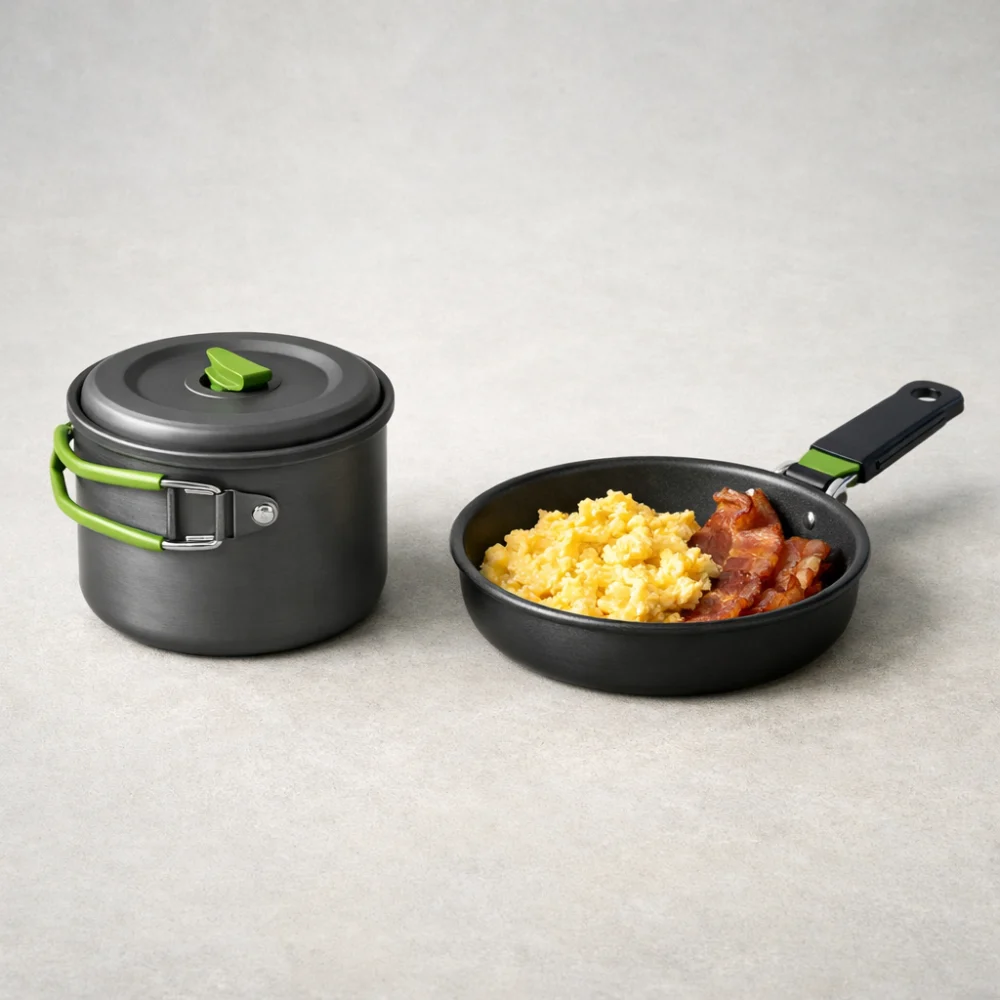
Within this category, the main differences are usually between single pots, single pans and matched cookware sets. Single items suit buyers who already have some camping kit or only need one cooking vessel. Sets suit people who want a more complete starting point, but they can be less efficient if you only use one or two pieces.
You may also see cookware aimed at different styles of use, from ultralight travel to more general campsite cooking. The right variant is the one that fits how you travel most often, not the one with the longest list of included pieces.
Which type suits which buyer?
| Buyer need | What usually matters most | Likely better fit | Main trade-off |
|---|---|---|---|
| Solo camper | Compact size and easy packing | A smaller pot or pan, or a compact set | Less flexibility for cooking for others |
| Couple or small group | Enough capacity without becoming too bulky | Mid-sized cookware or a practical set | More weight and storage than the smallest options |
| Backpacker | Weight and packed size | Light, compact cookware with simple storage | May sacrifice cooking space or comfort |
| Car camper or family buyer | Ease of use and serving capacity | More substantial cookware or a broader set | Less convenient to carry by hand |
Common mistakes and misunderstandings
- Buying too much cookware for the trip. A large set can be useful, but it is unnecessary if you mostly boil water or cook one-pot meals.
- Focusing only on weight. Very light cookware may be convenient to carry, but it is not always the most comfortable choice for campsite cooking.
- Ignoring storage shape. A piece that sounds compact can still be awkward in a real bag or box if its shape does not nest well.
- Assuming a set includes everything you need. Always check what is actually included, especially if you want both a pot and a pan.
Safety and suitability caveats
Choose cookware that suits your heat source, intended use and group size. Some items are designed mainly for simple campsite cooking, while others may be better for backpacking or smaller meals. Do not assume that a product will work well for every stove or every food type unless the product page clearly supports that use.
Maintenance, storage and lifespan considerations
Camping pots and pans usually last longer when they are cleaned soon after use and stored dry. If you are buying for regular trips, look for a finish and shape that will be easy to keep in good condition with the amount of cleaning you are realistically prepared to do. Compact storage also helps protect handles and surfaces from damage in transit.
How to compare options efficiently
- Decide how you will mainly use the cookware: solo meals, two-person trips or group camping.
- Choose between a single pot, a single pan or a set based on that cooking style.
- Compare size, packed shape, handle design and material before looking at extras.
- Check whether the item matches your travel style: backpack, car camping or mixed use.
- Read the individual product page for the exact contents and any model-specific details.
Summary buyer decision checklist
- Does the size suit the number of people you cook for?
- Is the weight and packed size practical for your trip?
- Do you need a single item or a full set?
- Is the handle style convenient for packing and cooking?
- Does the material fit your priority: lighter carry, easier handling or a more substantial feel?
- Have you checked the exact contents and model-specific details on the product page?
Frequently asked questions
Should I buy a pot, a pan or a set?
Choose a pot if you mainly boil, simmer or heat meals in liquid. Choose a pan if you want to fry or sauté more often. A set is useful if you want a ready-made combination, but only if you will actually use most of the pieces.
What size camping cookware do I need?
Start with the number of people you usually cook for and the type of meals you make. Solo buyers often prioritise compact cookware, while two or more people may need more usable capacity. Bigger is not always better if you carry your kit by hand.
Is lightweight cookware always the best choice?
Not necessarily. Lightweight cookware is attractive when space and carrying comfort matter, but some buyers prefer a sturdier feel or easier handling at camp. The better choice depends on whether you value portability or a more substantial cooking experience.
Are camping cookware sets worth it?
They can be, especially if you want a simple starting point and do not already own camping kitchen gear. The main thing to check is whether the set includes the pieces you will genuinely use, rather than extras that add bulk.
How important is the handle style?
More important than many buyers expect. Handles affect storage, grip and how easy the cookware is to move when hot. If you are short on space, a folding or compact handle may be helpful, but comfort and ease of use still matter.
What should I check before ordering?
Check the size, contents, handle style, storage shape and the way the cookware is intended to be used. Specifications vary by model, so always check the individual product page before buying.