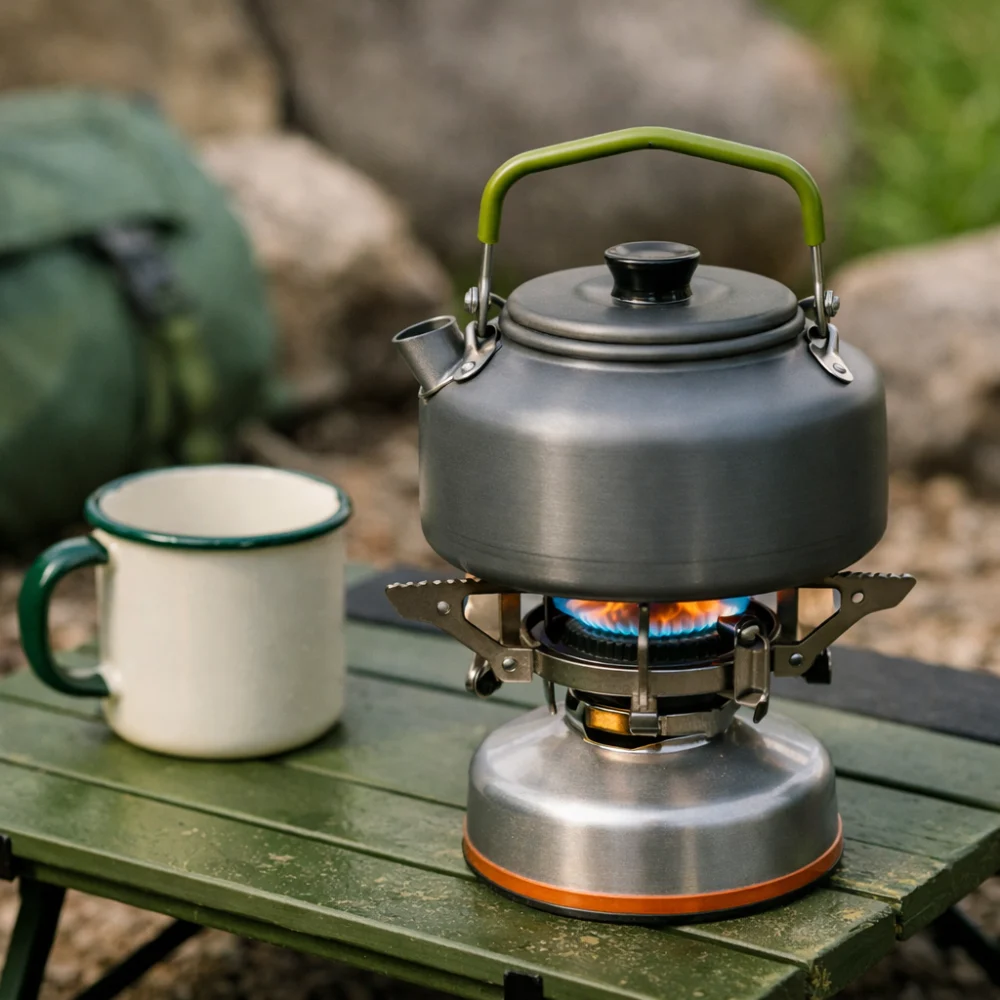
Camping kettles are a simple part of outdoor cooking, but the right choice depends on how you travel, what heat source you use and how many hot drinks or meals you want to make. Some buyers want a compact kettle for solo trips, while others need a larger option for a family campsite or fishing session.
This guide focuses on the practical differences that affect everyday use: size, material, heating style and packability. It should help you narrow the choice without overcomplicating it.
What should you look for in a camping kettle?
The best starting point is to match the kettle to your cooking setup and the number of people you usually serve. After that, compare capacity, material, handle design and how easily it fits with the rest of your gear. A kettle that looks similar at first glance can feel very different once you factor in storage space and the heat source you plan to use.
Specifications vary by model, so always check the individual product page before buying.
| Feature | What it means | Why it matters | What to check |
|---|---|---|---|
| Capacity | How much water the kettle can hold | It affects how many cups or servings you can make in one go | Choose a size that fits your group and your usual drink or meal routine |
| Material | The main body material, such as metal or silicone-based designs | It can influence packability, durability and how the kettle feels in use | Check how the material suits your stove, storage space and handling preferences |
| Heat source | Whether the kettle is intended for a stove, hob or other camping cooker | Not every kettle suits every setup | Confirm compatibility with the cooker you actually use |
| Handle and grip | The way the kettle is lifted, poured and carried when hot | Comfort and control matter when water is boiling | Look for a design you can handle safely and comfortably |
| Pack size | How much space it takes in a bag, box or cook set | Compact kit is easier to carry, especially on short trips or when space is limited | Check whether it nests, folds or stores neatly with your other cooking items |
| Pouring design | The spout and body shape that affect flow | A better pour can reduce spills and make filling mugs easier | Consider whether you want a more precise pour or a straightforward general-purpose kettle |
Key features that affect the choice
Capacity and group size
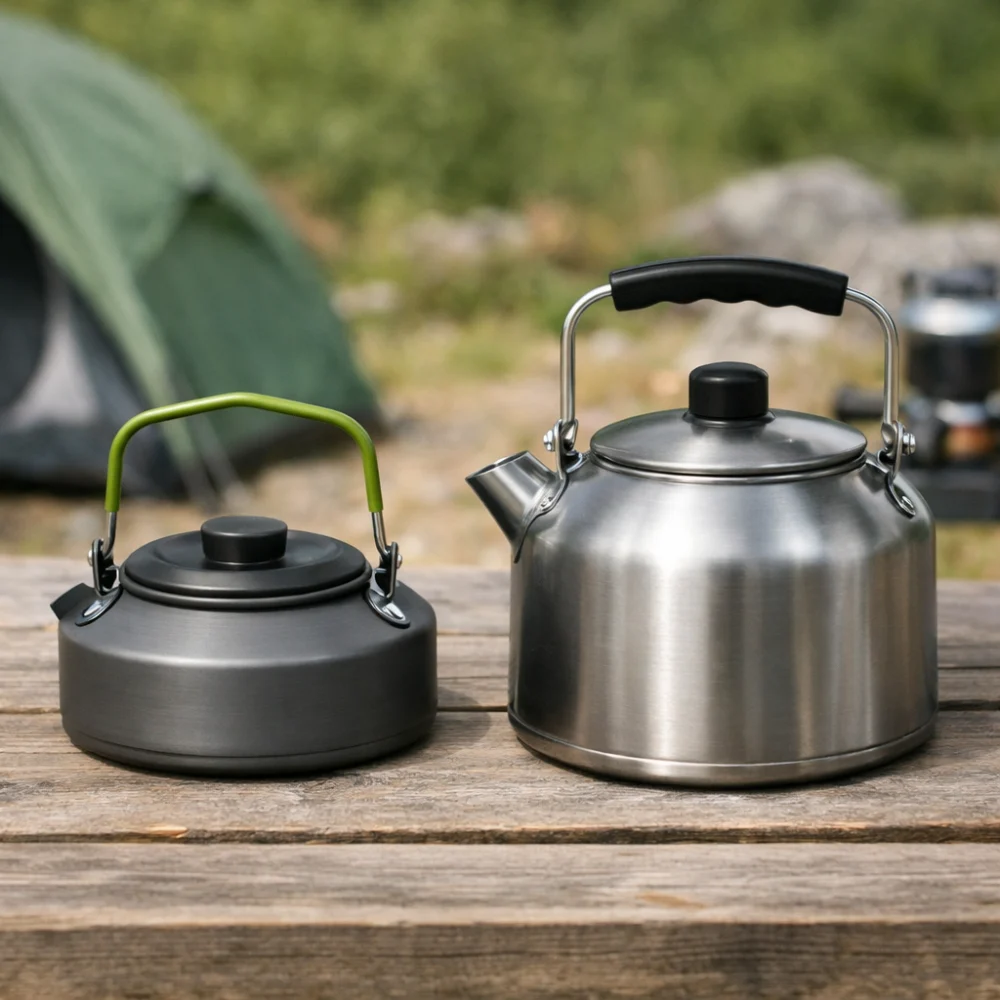
Capacity is one of the clearest ways to narrow the options. A smaller kettle may be easier to pack and quicker to heat, while a larger one can be more convenient if several people want tea, coffee or hot water around the same time. The trade-off is simple: more capacity usually means more size and weight.
Material and packability
Camping kettles are often chosen for durability, weight and how neatly they store. Some buyers prefer a more rigid kettle for regular campsite use, while others prioritise a design that takes up less room in a packed bag. If your space is tight, think about whether the kettle needs to fit inside a cook set, a rucksack side pocket or a storage box.
Heat source compatibility
Not every kettle is suited to every cooking setup, so this is worth checking carefully. Some are designed for stove-top use, while others may suit compact camping cookers better. The important point is not the label alone, but whether the kettle matches the equipment you already own.
Handle, lid and pouring control
Small details can make a big difference in the campsite. A handle that feels stable, a lid that is easy to manage and a spout that pours cleanly all affect how pleasant the kettle is to use. If you often make drinks for a group, these details matter more because you will use the kettle repeatedly.
Common camping kettle types
Camping kettles generally fall into a few practical groups. Traditional rigid kettles suit buyers who want a familiar shape and simple handling. More compact or collapsible styles suit those trying to save space. Some designs are better suited to quick drinks, while others are chosen to serve a small group more efficiently.
The main limitation is that a more compact design may ask you to compromise on capacity or rigidity, while a larger design may be less convenient to pack. The right type depends on whether your priority is convenience, space-saving or serving several people at once.
Which kettle suits different buyers?
| Buyer need | What to prioritise | Likely trade-off |
|---|---|---|
| Solo camper | Compact size, easy packing, quick heating | Less capacity for multiple drinks |
| Couple or small group | Balanced capacity and manageable pack size | May be slightly bulkier than the smallest options |
| Family campsite use | Larger capacity and comfortable pouring | More space taken in the kit |
| Fishing or base-camp use | Convenient handling, dependable everyday use, simple cleaning | May not be the smallest option for carrying long distances |
Common mistakes to avoid
- Buying only by appearance. A kettle can look suitable but still be awkward for your cooker, storage space or group size.
- Ignoring capacity. A kettle that is too small may slow things down, while an oversized one can be unnecessary for short trips.
- Overlooking the heat source. Always check that the kettle works with the stove or camping cooker you already have.
- Forgetting storage shape. A kettle that is fine at home may be inconvenient once packed with cookware, fuel and food.
Safety and suitability checks
Camping kettles are straightforward products, but suitability still matters. Check that the kettle is intended for the kind of outdoor cooking you plan to do, and make sure the handle, lid and pouring arrangement suit your comfort level. If you are choosing for a group, think about whether the kettle is easy to use when hot and full, especially in a busy campsite setting.
Care, storage and everyday use
General care is usually simple: keep the kettle clean, dry it before storage and store it where it will not be dented or crushed by heavier kit. If the design has moving parts, folding sections or a lid that comes off easily, check that those parts sit securely in your pack. Long-term convenience often comes down to how easy the kettle is to rinse, dry and stow after use.
How to compare camping kettles efficiently
- Start with your usual camping setup and decide where the kettle will be used.
- Choose a size that matches the number of people you typically serve.
- Check the material and shape for packability and handling.
- Confirm compatibility with your stove or cooker.
- Look at the practical details such as lid fit, pouring control and storage space.
Buying checklist
- Does the capacity suit your usual group size?
- Will it fit your stove or camping cooker?
- Is the shape convenient for your pack or storage box?
- Is the handle and pour likely to feel comfortable when hot?
- Does the design suit short trips, family camping or regular outdoor use?
Frequently asked questions
What size camping kettle do I need?
That depends on how many people you usually make drinks for and how often you want to boil water. A smaller kettle can suit solo trips or minimalist packing, while larger options are more convenient for groups. The best choice is the one that matches your routine rather than the largest available.
Are camping kettles different from kitchen kettles?
Yes, the main difference is usually in portability and suitability for outdoor use. Camping kettles are chosen with packing space, campsite handling and cooking setups in mind. A home kettle may not be as practical when storage and travel matter.
Can I use any camping kettle on any stove?
Not necessarily, so this is an important check. Some kettles are better suited to certain camping cookers or heat sources than others. Always confirm the product details before assuming it will work with your setup.
Is a collapsible kettle a good idea?
It can be, if saving space is your main concern. Collapsible styles are often appealing to people with limited packing room, but they may not suit everyone who prefers a more rigid feel. Think about whether compact storage or sturdier handling matters more to you.
What matters more: capacity or portability?
It depends on how you camp. If you want to make several drinks at once, capacity may matter more. If you travel light or have limited storage, portability may be the deciding factor.
Do I need a special kettle for family camping?
Not always, but family use often benefits from a larger, easier-to-pour design. The main goal is to reduce repeat boiling and make serving simpler. Look for a kettle that suits the amount of water you typically need.