

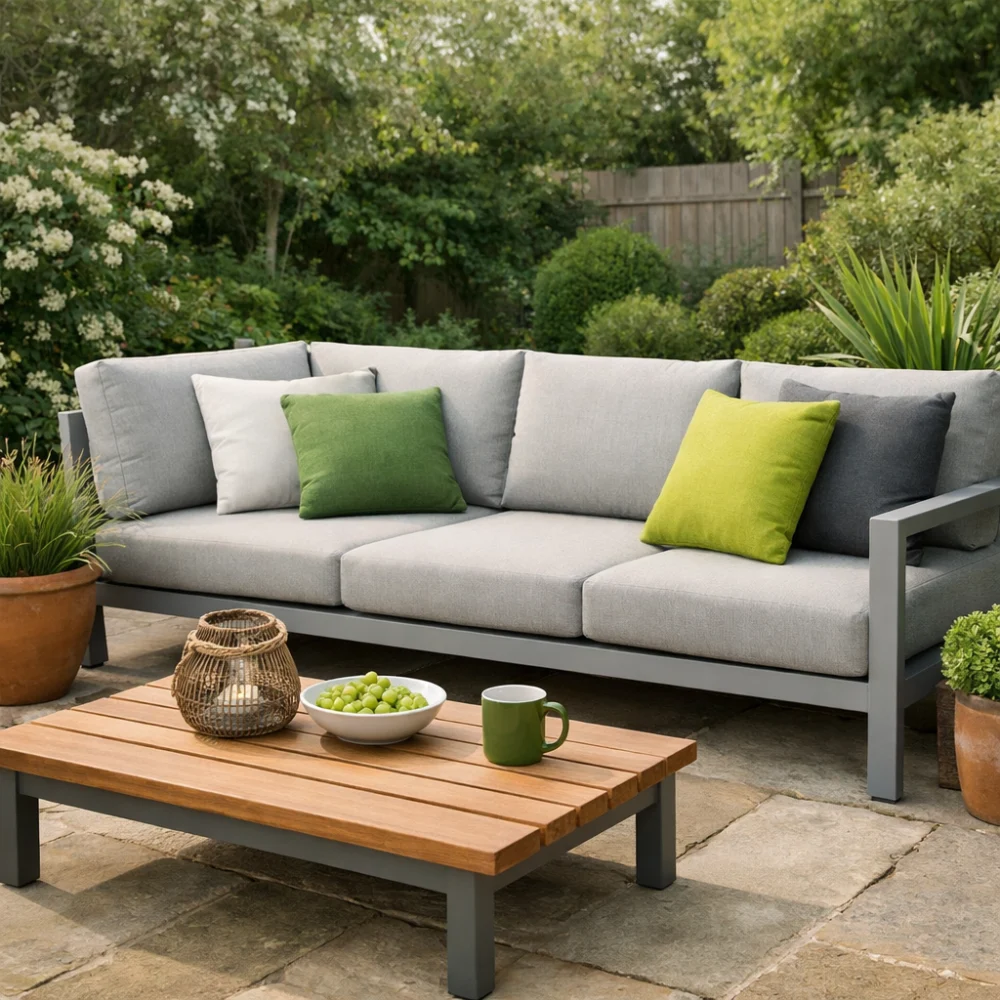

Garden sofas are for people who want comfortable outdoor seating with a more relaxed feel than a dining set or a pair of separate chairs. They can work well on patios, balconies, decks and other sheltered garden spaces, but the right choice depends on how you plan to use the seat, how much room you have and how much care you want to give it.
This guide focuses on the buying decisions that tend to matter most: size, layout, materials, cushions, storage and practical upkeep. It is designed to help you narrow the options before comparing individual product pages.
Because garden sofas vary widely in shape and construction, the most useful approach is to start with your space and seating needs, then work back to the style that fits them.
Compare Garden Sofas




As an Amazon Associate we earn from qualifying purchases.
What should you look for in a garden sofa?
The best starting point is to match the sofa to your available space, the number of people you want to seat and the level of maintenance you are comfortable with. After that, focus on the frame material, cushion style and whether the layout suits the way you use the garden. A simple straight sofa can be easier to place, while a corner or modular design may make better use of a larger area.
Specifications vary by model, so always check the individual product page before buying.
| Feature | What it means | Why it matters | What to check |
|---|---|---|---|
| Size and layout | The overall footprint and shape of the sofa | It affects where the sofa fits and how people sit together | Measure your space and compare the full dimensions and arrangement |
| Seating capacity | How many people the sofa is designed to seat comfortably | It helps you avoid buying something too small or unnecessarily large | Check the seating style, not just the headline seat count |
| Frame material | The main structure that supports the sofa | It influences weight, appearance and care needs | Look for the material used and consider how it suits outdoor exposure |
| Cushions | Seat and back padding included with the sofa | They affect comfort and how much storage or protection may be needed | Check whether cushions are included and what care is advised |
| Modularity | Whether sections can be rearranged or used separately | It gives flexibility for different spaces and gatherings | See whether sections are fixed or can be repositioned |
| Maintenance | How much cleaning and protection the sofa may need | Outdoor furniture is exposed to weather, dirt and seasonal storage needs | Review cleaning guidance and whether covers or storage are sensible |
Key decision criteria
Space and footprint
Garden sofas are often chosen for comfort, but the footprint matters just as much. A sofa that looks compact in a photograph may still take up more room than expected once you allow space to walk around it, open doors or move a table nearby. Measure the area you plan to use, including any corner turns, and compare that with the full product dimensions rather than the seating area alone.
Shape and layout
Straight two-seaters, three-seaters, corner sofas and modular arrangements each suit different spaces. Straight designs are usually easier to position and can work well on smaller patios or balconies. Corner and modular layouts are better when you want to create a larger social area, but they need more planning and more room to breathe.
Frame and materials
The frame affects both appearance and practical care. Some buyers want a lighter, more contemporary look, while others prefer a traditional or natural finish. More important than style alone is how the material suits outdoor use, how much weather exposure the sofa will face and how much maintenance you are prepared to do.
Cushions and comfort
Cushions can make a big difference to comfort, but they also change the care routine. Thicker cushions may feel more relaxed, yet they may need more storage or more attention in wet weather. If you expect frequent use, consider how easy the cushions are to move, clean and keep dry when not in use.
Storage and seasonal care
Outdoor sofas are often left outside for part of the year, so think about how you will protect them when not in use. Some buyers prefer furniture that is easier to cover or move, while others plan to keep it in a more sheltered spot. That practical choice can matter as much as the look of the sofa itself.
Garden sofa types and variants
Straight sofas
These suit buyers who want a simple, versatile seating option. They are often easier to place and can work in smaller outdoor areas. The main limitation is that they may offer less flexible seating than a modular arrangement.
Corner sofas
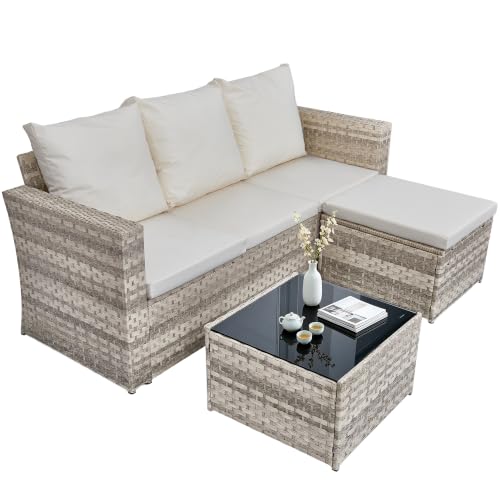
Corner sofas can make good use of space and create a sociable seating area. They may suit larger patios or set-up areas where you want a defined lounge zone. Their drawback is that they usually need more room and more careful planning.
Modular sofas
Modular designs let you arrange sections in different ways, which can be helpful if your space changes over time. They can suit buyers who want flexibility or who may rearrange the garden furniture seasonally. The trade-off is that you may need to manage more parts and think more carefully about layout.
Loveseats and compact two-seaters
These are useful when space is limited or when you only need seating for one or two people. They can also work as part of a wider seating plan with separate chairs. The limitation is obvious: they provide less group seating than larger sofa formats.
Which garden sofa suits which buyer?
| Buyer need | Likely better fit | Why | What to focus on |
|---|---|---|---|
| Small patio or balcony | Compact straight sofa or loveseat | It is easier to place without crowding the area | Overall footprint, arm width and room to move around it |
| Family entertaining | Corner or modular sofa | It can create a larger shared seating area | Layout, section arrangement and how many people it comfortably seats |
| Low-maintenance buying | Simpler sofa with easy care guidance | Less complex furniture can be easier to keep tidy and protected | Cleaning advice, cushion handling and storage needs |
| Flexible garden layout | Modular design | It can adapt if you change the layout later | Whether sections are fixed or repositionable |
| Occasional seating | Smaller two-seater or loveseat | It gives comfortable seating without taking over the space | Comfort, proportions and whether cushions are included |
Common mistakes and misunderstandings
- Choosing by seat count alone: A sofa described as a two-seater or three-seater may still feel cramped or generous depending on its proportions. Check the actual dimensions and the seating layout.
- Forgetting the full footprint: The space needed includes room to sit, walk past and place nearby furniture. Measure carefully before deciding.
- Overlooking cushion care: Cushions improve comfort, but they also affect storage and maintenance. Think about where they will go in wet weather.
- Assuming all outdoor materials behave the same: Different frames and finishes need different levels of care. Compare the cleaning and protection guidance rather than relying on appearance alone.
- Picking a layout that does not match the space: A corner sofa can be attractive, but it may overwhelm a smaller patio. A simpler shape is often easier when space is limited.
Safety and suitability caveats
Garden sofas are mainly a suitability and care decision, but it is still worth checking how and where the furniture is intended to be used. Outdoor conditions, shelter and surface type all affect how well a sofa fits your space. If a product page mentions specific care or placement guidance, follow that information rather than assuming every sofa is suitable for the same setting.
Maintenance, storage and lifespan considerations
Maintenance needs vary, but outdoor sofas usually benefit from regular cleaning and sensible storage planning. Think about whether cushions need to be brought indoors, whether covers are sensible and whether the furniture will be exposed to rain, sun or seasonal weather changes. A sofa that is easy to look after may be a better long-term choice than one that needs constant attention.
If you want to reduce upkeep, compare how much of the sofa is exposed, whether the cushions are easy to move and how practical the frame finish seems for your garden routine.
How to compare options efficiently
- Start with the space you have and the number of people you want to seat.
- Choose the broad style first: straight, corner, modular or compact.
- Compare the full dimensions, cushion setup and frame material.
- Think about how much maintenance and storage you are happy to handle.
- Read the individual product page carefully before deciding.
Summary buyer decision checklist
- Have I measured the space, including walking room?
- Does the shape suit my patio, balcony or garden area?
- Is the seating capacity realistic for how I will use it?
- Do I understand the cushion and storage needs?
- Am I comfortable with the cleaning and seasonal care required?
- Have I checked the individual product page for the exact details?
Frequently asked questions
What is the difference between a garden sofa and a garden bench?
A garden sofa is usually chosen for a more relaxed lounge feel, often with cushions and a softer seating style. A bench is generally simpler and may suit more formal or compact outdoor layouts. The right choice depends on whether you want comfort, flexibility or a more minimal look.
Are modular garden sofas worth considering?
They can be a good choice if your space or hosting needs may change. The main benefit is flexibility, while the main trade-off is that you may have more pieces to arrange and care for. If you rarely change your layout, a simpler sofa may be enough.
How do I know what size garden sofa to buy?
Start by measuring the space where it will sit and then allow room for access around it. Compare the full dimensions on the product page, not just the number of seats. A sofa should fit the area without making it hard to move around comfortably.
Do I need to store cushions indoors?
That depends on the product guidance and how exposed your outdoor space is. Many buyers prefer to store cushions when not in use to keep them cleaner and drier. Check the individual product page for care advice and consider how easy the cushions are to move.
What kind of garden sofa is easiest to place in a small space?
A compact straight sofa or loveseat is often the simplest option. These tend to be easier to position than corner or modular layouts and can still give comfortable seating. The key is to compare actual dimensions rather than relying on the label alone.
Should I choose a sofa with a more substantial frame or a lighter design?
That depends on your priorities. A more substantial design may feel more grounded, while a lighter one may be easier to move or reposition. Consider how often you will rearrange the furniture and how exposed the seating area is.
More Garden Sofas
See all 246 Garden Sofas →


As an Amazon Associate we earn from qualifying purchases.


