
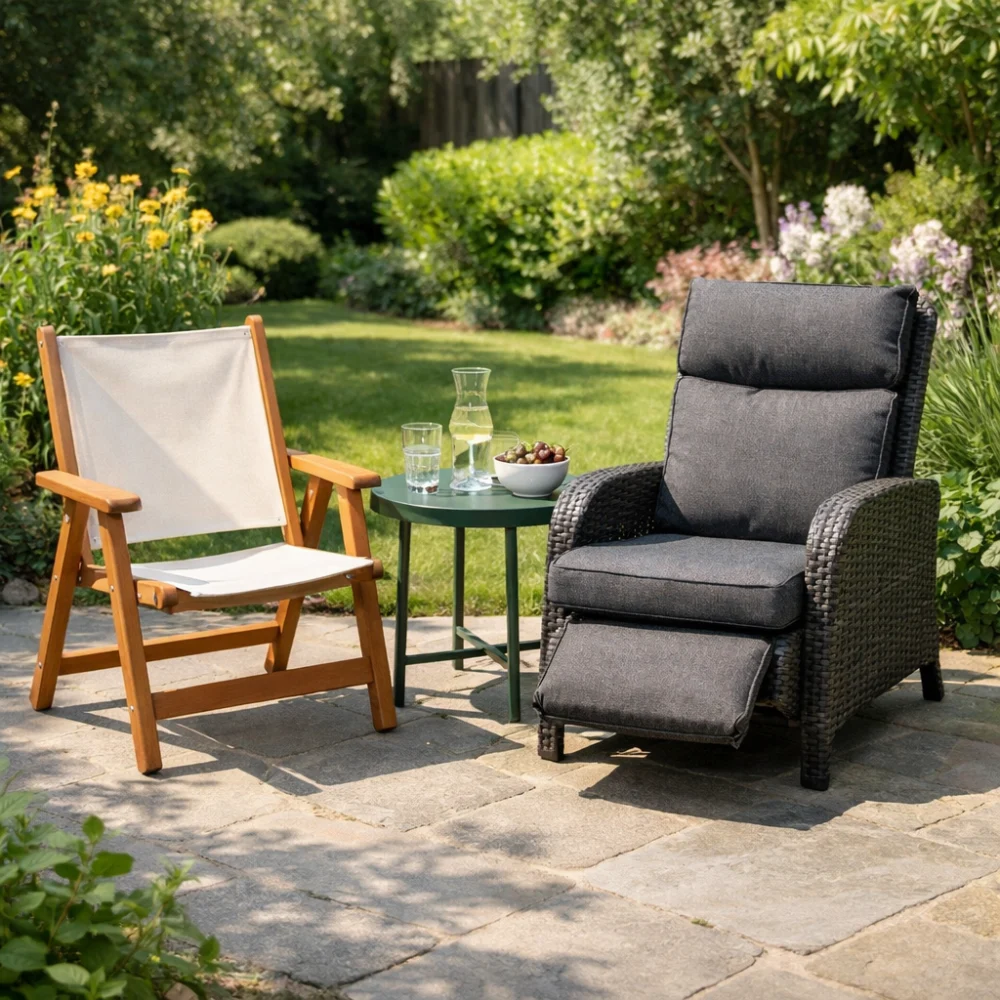
Garden chairs come in many forms, from simple stackable seats to reclining styles and more relaxed lounge options. That variety is useful, but it also means the right choice depends on where the chair will sit, how often it will be moved and how you plan to use it.
This guide focuses on the practical differences that matter before you buy. It can help you narrow down comfort, storage, material and maintenance choices without getting lost in product names.
If you are replacing a single chair, adding extra seating or choosing a set of matching chairs, it helps to start with the way the chair will be used day to day. Specifications vary by model, so always check the individual product page before buying.
What should I look for in garden chairs?
Start with comfort, size and storage. For many buyers, the best option is the chair that suits the space you actually have, feels comfortable for the length of time you plan to sit in it and is easy enough to bring out, move or store when needed.
The main trade-off is usually between convenience and comfort. Lightweight folding or stackable chairs are easier to handle, while more substantial chairs may feel more relaxed but take up more room.
| Feature | What it means | Why it matters | What to check |
|---|---|---|---|
| Chair type | Whether it folds, stacks, reclines or is more lounge-like | Shapes how you use the chair and how easy it is to store | How it will be used most often and where it will be kept |
| Comfort | Seat shape, back support and whether cushions are included | Affects how long you can sit comfortably | Back height, seat depth and any cushion details on the product page |
| Material | The main frame and seat material | Influences appearance, upkeep and handling | Cleaning needs, storage needs and suitability for outdoor use |
| Portability | How easy the chair is to move or put away | Important for smaller gardens, patios and seasonal use | Weight, folding mechanism and whether stacking is possible |
| Space use | How much room the chair occupies when in use or stored | Helps you avoid overcrowding a terrace or shed | Chair footprint, stack height or folded size where shown |
Key decisions that affect the right choice
Comfort and sitting position
Some garden chairs are designed for upright dining, while others are better for longer, more relaxed sitting. Upright chairs suit smaller tables and casual meals, while deeper, more reclined seating can feel more restful but may not work as neatly around a compact table.
Think about how long people are likely to sit in them. A short coffee break needs less support than an afternoon of reading or entertaining.
Folding, stacking or fixed
Folding chairs are useful when storage space is limited or when you only need extra seating sometimes. Stackable chairs can also save space, especially if you want several chairs that can be put away together. Fixed chairs tend to feel more substantial, but they are less flexible if your space changes often.
Choose the version that fits your routine rather than the one that sounds most versatile in theory.
Material and maintenance
Materials affect both the look of the chair and how much care it needs. Some buyers prefer low-maintenance options that are easy to wipe clean, while others are happy to do a little more upkeep for a particular style or feel. The important point is to match the material to the amount of attention you want to give it.
Check whether the chair needs periodic cleaning, cushion care or indoor storage during poor weather. Do not assume all outdoor chairs need the same level of maintenance.
Weight and handling
If you will move the chairs often, handling matters as much as appearance. A chair that is easy to lift and reposition can be more practical for patios, balconies and mixed-use spaces. If the chair will mostly stay in one place, handling may matter less than comfort or style.
For buyers with limited storage, the convenience of folding or stacking may outweigh other features.
Garden chair types and who they suit
There is no single garden chair type that suits every setting. The main choices usually come down to how formal or relaxed you want the seating to feel, and how much space you have to spare.
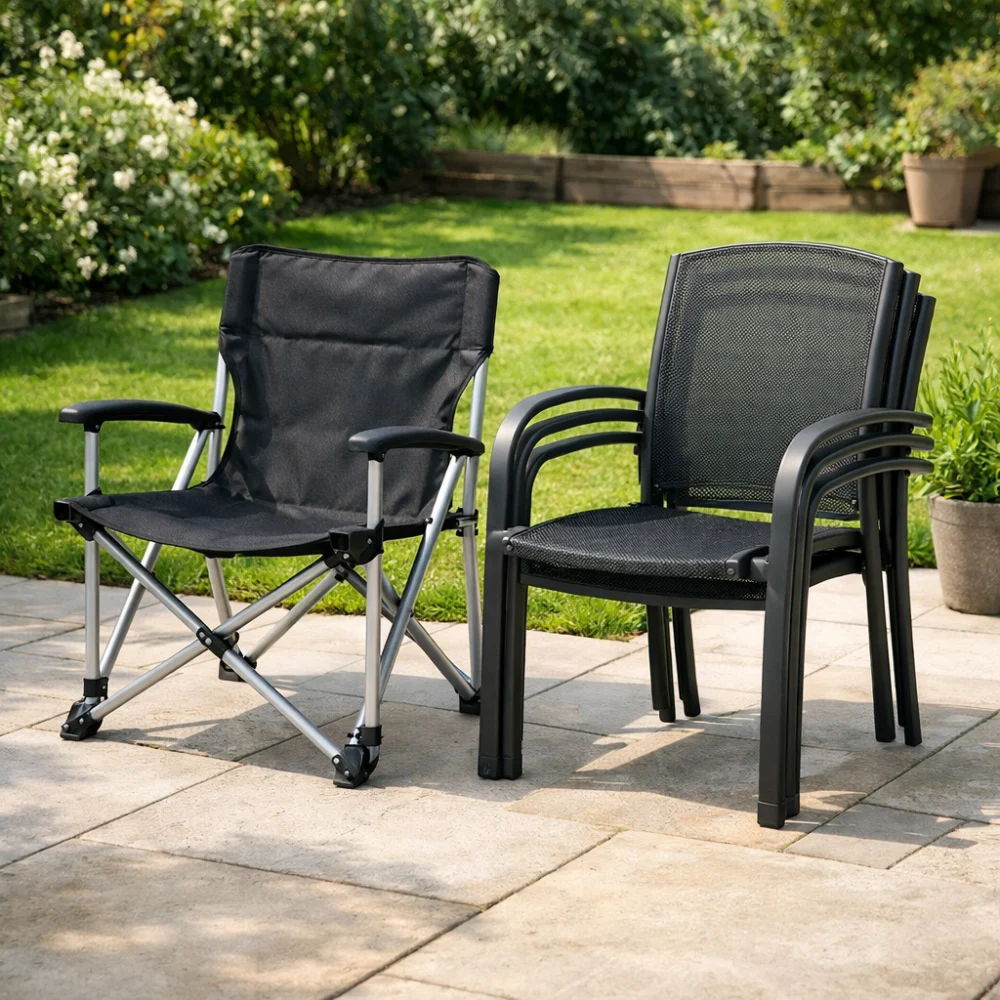
- Stackable chairs are practical when you need several seats that can be stored together. They suit flexible entertaining but are usually chosen for convenience rather than maximum relaxation.
- Folding chairs are useful for occasional seating, smaller homes and storage-conscious buyers. Their main limitation is that they may feel less substantial than fixed seating.
- Reclining or adjustable chairs suit people who want a more relaxed sitting position. They can be excellent for lingering outdoors, but the extra adjustability may take up more space.
- Dining-style garden chairs work well with outdoor tables and eating areas. They are often the easiest option when the main use is shared meals rather than lounging.
Which garden chair suits different needs?
| Buyer need | Useful chair features | Main trade-off |
|---|---|---|
| Small patio or balcony | Compact size, folding or stackable design | Less bulk, but possibly less generous seating |
| Frequent entertaining | Easy storage, simple handling, consistent look across several chairs | Convenience may matter more than luxury feel |
| Long relaxed sitting | Supportive back, deeper seating, optional cushions | More comfort, but usually less compact |
| Low-maintenance buying | Easy-clean materials and simple construction | Practical care, but fewer decorative choices |
| Occasional use | Foldable or stackable design | Good for space-saving, but check comfort if used for long periods |
Common mistakes to avoid
- Choosing for appearance alone. A chair can look right in a photo but still feel wrong for your space or seating habits.
- Forgetting storage. A bulky chair may be fine in a large garden but awkward on a balcony or in a crowded shed.
- Overlooking comfort details. Seat depth, back shape and cushion use can matter more than the style name.
- Assuming all outdoor chairs need the same care. Some finishes and materials are easier to look after than others.
Safety and suitability checks
Choose chairs that suit the intended user and the setting. If the chair will be used by different people, check that the proportions and ease of getting in and out feel sensible for your household.
For unstable ground, windy areas or uneven patios, it is sensible to think about whether the chair feels appropriate for the surface and space it will sit on. Also check whether cushions, moving parts or folding mechanisms affect the way you plan to use the chair.
Maintenance, storage and lifespan factors
Garden chairs are easier to live with when their care needs match your routine. Some need only simple cleaning, while others may benefit from being stored under cover or brought indoors when not in use. Cushions, if included, can add comfort but may need more attention than the chair itself.
If you want a chair for regular outdoor use, think about how often you are willing to clean it and where it will live between uses. A chair that is easy to store and straightforward to maintain is often the more practical choice in the long run.
How to compare garden chair options efficiently
- Start with the main use: dining, relaxing, occasional guests or everyday seating.
- Decide whether you need folding, stacking or fixed seating.
- Compare comfort, size, handling and material care side by side.
- Check how much storage space you have and how often the chair will be moved.
- Read the individual product page carefully for the details that matter most to you.
Summary buyer decision checklist
- Will the chair be used mainly for dining, relaxing or occasional extra seating?
- Do you need folding, stacking or fixed seating?
- Is the chair comfortable enough for the time you expect to spend in it?
- Will it fit the space you have, both in use and in storage?
- Are you happy with the material care and cleaning involved?
- Does it suit the people who will use it most often?
Frequently asked questions
Are folding garden chairs a good choice?
They can be a very practical choice if you want flexible seating or limited storage use. They are especially useful when chairs are brought out only for guests or seasonal use. The main thing to check is whether the folding design still feels comfortable and sturdy enough for your needs.
What is the difference between stacking and folding chairs?
Stacking chairs are stored on top of one another, while folding chairs reduce in size by folding flat or near-flat. Stackable chairs can be useful when you have several of the same chair, while folding chairs can be easier to tuck away individually. The better choice depends on how you store furniture and how often you move it.
Do I need cushions for garden chairs?
Not always. Some chairs are comfortable enough without them, while others benefit from added cushioning for longer sitting. If cushions matter to you, check whether they are included or need to be bought separately.
Which garden chairs are easiest to maintain?
Usually the simplest designs with easy-clean materials are the most straightforward to look after. Fewer moving parts can also mean less to worry about. That said, the best low-maintenance choice still depends on how much weather exposure and storage you expect.
How do I know if a chair will suit my outdoor space?
Think about the size of the area, the table height if you are pairing it with a table, and how much room people need to move around it. A chair that seems fine on its own may feel cramped when several are placed together. Measuring your available space before buying is often worthwhile.
Should I buy one chair or a matching pair?
That depends on how you use the space. One chair may be enough for a reading corner or quiet spot, while a pair can suit a small seating area or patio layout. If you want a more coordinated look, matching chairs can make planning easier.

