

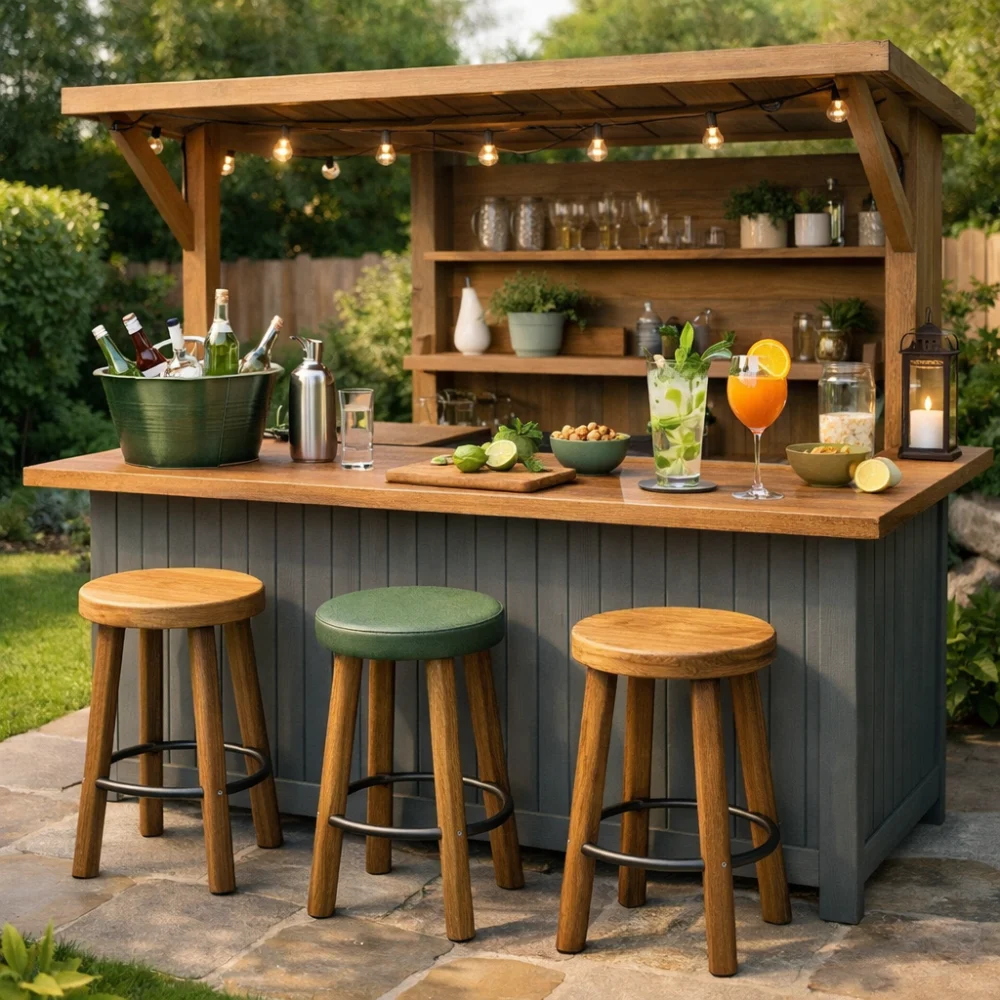

Garden bars are a practical way to create a serving or social space outdoors, whether you want a compact drinks station for occasional use or a more permanent feature for entertaining. The right choice depends less on appearance alone and more on where it will sit, how often you will use it and how much storage or prep space you need.
Because styles vary widely, it helps to compare materials, footprint, storage, weather resistance and assembly before you decide. Some garden bars are simple tables or cabinets, while others are larger furniture pieces designed to stay in place through the season.
If you are choosing between different styles, think about whether you need somewhere to mix and serve drinks, a place to store glasses and accessories, or a decorative focal point that also works as a bar. Specifications vary by model, so always check the individual product page before buying.
Compare Garden Bars


As an Amazon Associate we earn from qualifying purchases.
What should I look for in a garden bar?
The best starting point is to match the bar to your space and the way you will use it. A small garden or patio usually suits a compact bar table or wall-mounted option, while a larger entertaining area can accommodate a freestanding bar with more storage or serving space. The main trade-off is usually between size, storage and how permanent the piece feels in the garden.
You should also check whether the bar is intended mainly for serving, for storage, or for both. A decorative design may look impressive but offer limited practical space, while a simpler layout can be easier to use and maintain.
| Feature | What it means | Why it matters | What to check |
|---|---|---|---|
| Footprint | The space the bar takes up once positioned | It affects whether the bar fits comfortably on a patio, deck or lawn area | Overall dimensions and whether there is room to move around it |
| Storage | Built-in shelves, cupboards or compartments | Useful for glasses, bottles and serving items | How much enclosed or open storage is provided |
| Material | The main construction material | It influences appearance, care and suitability for outdoor use | Whether the finish suits your weather exposure and maintenance tolerance |
| Layout | Freestanding, wall-mounted or table-style design | Different layouts suit different spaces and entertaining styles | How it will be used, positioned and accessed |
| Assembly | How much putting together is required | Important if you want quick setup or a more permanent installation | Whether assembly is straightforward and whether the item is heavy or fixed in place |
| Weather exposure | How well the bar is suited to being outside | Outdoor furniture can need more care if left exposed | Any guidance on covering, sheltering or storing it when not in use |
Which features matter most?
Size and layout
Size is often the deciding factor because a bar that looks ideal online can feel too large once placed in a real garden. Measure the intended spot and think about surrounding chairs, access routes and door openings. A wall-mounted or folding style may be better where space is tight, while a freestanding bar suits a dedicated entertaining corner.
Storage and serving space
Some buyers mainly want a surface for serving drinks, while others need shelves or cupboards for accessories. If you like to keep items close to hand, look for a design that balances display space with practical storage. An open layout can be easy to access, but it may suit tidier storage habits less well.
Material and finish
Material affects both the look and the upkeep. Timber can suit a natural garden setting, while synthetic or metal designs may suit a more contemporary space. Consider whether you are happy with occasional cleaning, covering or moving the bar during poor weather, as outdoor furniture generally benefits from sensible care.
Mobility and permanence
Some garden bars are easier to reposition than others. If you like to rearrange your outdoor space, a lighter or folding design may be more practical. If you want a more established feature, a heavier freestanding unit may feel more stable and purposeful, but it can be less flexible.
Common garden bar types
There is no single standard design, so it helps to narrow the style before comparing individual products.
- Freestanding bars: Suitable if you want a dedicated entertaining feature and have the space for it. The main limitation is that they can take up more room and may be less easy to move.
- Bar tables and compact drinks stations: A good fit for smaller gardens, patios or occasional use. They usually offer less storage than larger bar units.
- Wall-mounted or folding bars: Useful where floor space is limited or where you want a more discreet option. Their limitation is reduced capacity and less flexibility for larger gatherings.
- Bar cabinets and storage-led designs: Best for buyers who want somewhere to keep drinks or accessories out of sight. They may prioritise storage over open serving area.
What suits different buyer needs?
| Buyer need | Likely priority | What to favour |
|---|---|---|
| Small patio or balcony area | Compact footprint | Foldable, wall-mounted or slim bar designs |
| Occasional entertaining | Simple serving space | Easy-access tabletop or minimal storage layout |
| Regular hosting | Storage and organisation | Shelves, cupboards or larger bar surfaces |
| Decorative garden feature | Visual style | A finish and shape that suits the rest of the outdoor space |
| Low-maintenance buyer | Ease of care | Simpler construction and materials that are easy to wipe down and protect |
Common mistakes to avoid
- Choosing on looks alone: A stylish bar still needs enough room, storage and practical access to work well in daily use.
- Ignoring the available space: Measure carefully and allow for chairs, movement and any doors or paths nearby.
- Overlooking weather exposure: If the bar will sit outdoors for long periods, check how much protection or upkeep it may need.
- Expecting every design to do the same job: Some are mainly decorative, while others are better for serving or storage.
Safety and suitability checks
Make sure the bar suits the people and the space that will use it. Check that any shelving, doors or folding sections are easy to access in the chosen location, and think about whether the surface height and layout suit the way you plan to serve drinks. If the product will be used in a shared garden or around children, choose a design and position that remain stable and do not create unnecessary trip hazards.
Specifications vary by model, so always check the individual product page before buying.
Care, storage and long-term use
Garden bars usually last better when they are cleaned regularly and protected from prolonged exposure to poor weather. The amount of care depends on the material and finish, so check whether the product can stay outside all year or whether it should be covered or stored when not in use. If the bar includes storage, keep it organised and dry so it remains practical over time.
How to compare options efficiently
- Start with the space you actually have and decide whether you need a compact, folding or freestanding style.
- Work out whether your main need is serving space, storage, or a balance of both.
- Compare the material, finish and maintenance expectations for each option.
- Check how much assembly or positioning will be needed before use.
- Read the individual product page carefully for model-specific details before making a final decision.
Summary buyer decision checklist
- Have I measured the area where the bar will go?
- Does the layout suit serving, storage or both?
- Is the style appropriate for how often I will use it?
- Am I happy with the expected care and weather protection?
- Will the design work well with the rest of my outdoor space?
- Have I checked the individual product page for the model-specific details?
Frequently asked questions
Do garden bars need to be permanent fixtures?
Not necessarily. Some are freestanding and can be moved or repositioned, while others are designed to stay in one place or even mount to a wall. The right choice depends on how flexible you want the space to be.
Are garden bars only for large gardens?
No. Compact bar tables, folding designs and wall-mounted options can work in smaller spaces. The key is choosing a style that leaves enough room to move around comfortably.
What is the difference between a bar table and a garden bar?
A bar table usually focuses on serving surface, while a garden bar may offer a more complete drinks station with added storage or a more structured layout. The best option depends on whether you need simple surface space or a fuller entertaining setup.
Should I choose timber or a synthetic material?
That depends on the look you want and how much upkeep you are willing to do. Timber can feel warm and natural, while synthetic materials may suit buyers who want a simpler clean-down routine. Check the individual product page for the finish and care guidance.
How much storage do I need?
Think about what you plan to keep in the bar, such as glasses, bottles or serving items. If you only need a surface for occasional use, minimal storage may be enough, but regular hosts often prefer more organised space.
Can a garden bar stay outside all year?
Some may be intended for longer outdoor exposure, but that varies by model and material. It is sensible to check the product information and consider whether covering or storing it during poor weather would help preserve it.
What should I measure before buying?
Measure the available floor space, nearby furniture clearances and any access routes that the bar must not block. It is also worth checking the height and depth so the piece feels comfortable in the space rather than cramped.
How do I decide between a decorative and a practical design?
Start with how often you will use it. If you want a focal point for occasional entertaining, appearance may matter more; if you want a working drinks station, storage, access and layout should take priority.
More Garden Bars
See all 265 Garden Bars →



As an Amazon Associate we earn from qualifying purchases.


