

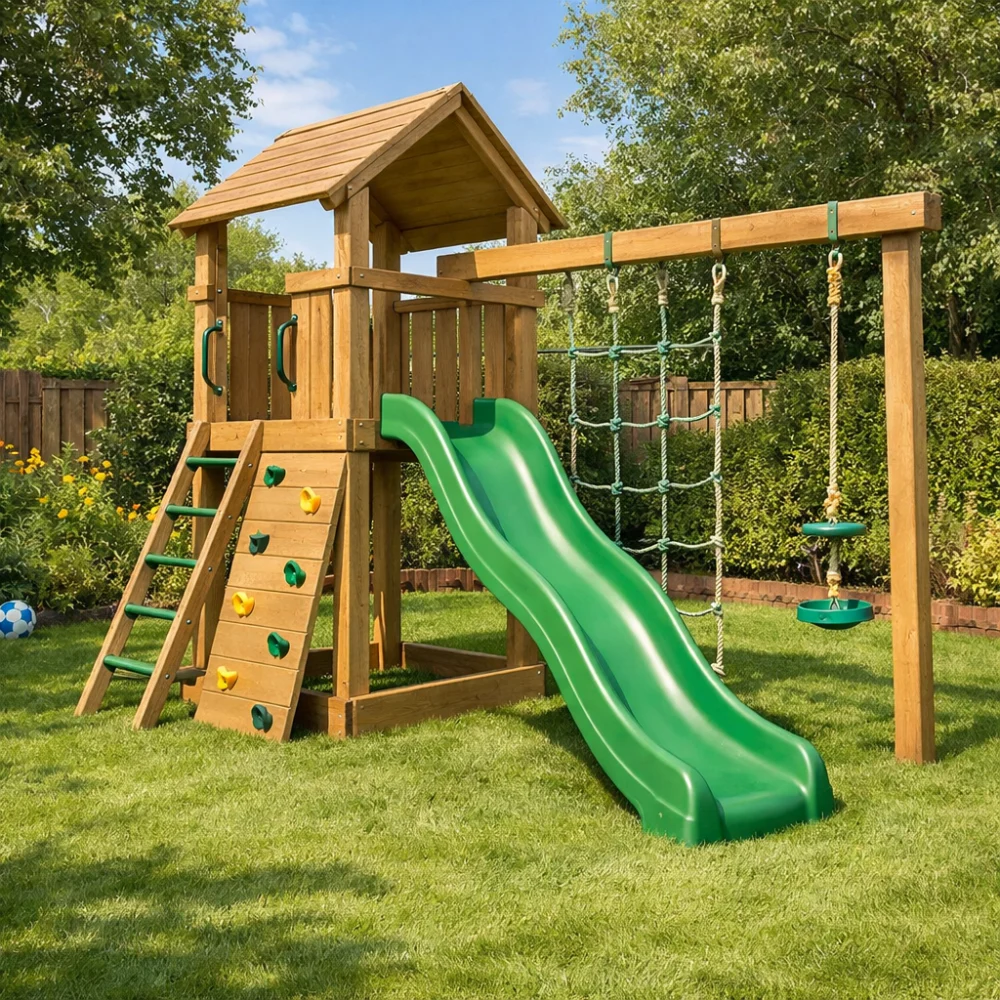

Climbing frames are a popular way to add active outdoor play to a garden, but the right choice depends on more than just how much equipment looks good at first glance. Buyers often need to balance space, age suitability, play value, material choice and how much assembly and upkeep they are prepared for.
This guide helps you compare climbing frames sensibly, whether you are choosing a first frame for a smaller garden or looking for a more elaborate setup with extra features. It focuses on the practical decisions that affect everyday use rather than on short-term appeal.
Compare Climbing Frames


As an Amazon Associate we earn from qualifying purchases.
What should you look for in a climbing frame?
The best starting point is to match the frame to the available space, the age and confidence of the children who will use it, and the kind of play you want it to encourage. A simpler frame can be a better fit for limited gardens or younger children, while larger designs may offer more variety but need more room and careful planning. The main trade-off is usually between compactness and play features.
Specifications vary by model, so always check the individual product page before buying.
| Feature | What It Means | Why It Matters | What To Check |
|---|---|---|---|
| Footprint | The space the frame takes up in the garden | Helps you judge whether it will fit comfortably with safe play space around it | Overall size, clearance needed and whether the layout suits your garden shape |
| Play features | Elements such as slides, monkey bars, nets, swings or domes | Affects how varied and engaging the frame will be | Which features are included and whether they match the children’s interests |
| Material and finish | The main construction material and surface treatment | Influences appearance, upkeep and how the frame weathers outdoors | Material description, treatment and whether periodic care is needed |
| Age suitability | The intended age range or style of play | Helps avoid choosing something too challenging or too simple | Any stated suitability information on the product page |
| Assembly and anchoring | How the frame is put together and secured | Can affect installation effort and how stable the finished frame feels | What is supplied, what extra tools may be needed and whether ground fixing is recommended |
Key decision criteria explained
Space and layout
Measure the area carefully, then think beyond the frame itself. Children need room to move safely on and around it, and awkward garden features such as fences, sheds, walls or sloping ground can limit where it can go. A compact frame may suit a narrow garden, while a larger multi-feature design can dominate a small space.
Play style and confidence level
Some climbing frames are built around straightforward climbing and sliding, while others add balance challenges, hanging elements or more complex routes. Younger or less confident children may prefer a lower, simpler layout, whereas older children may value variety and physical challenge. Choosing more complexity than is needed can make a frame feel less inviting in practice.
Construction and durability
The main material matters because it affects weight, appearance and maintenance expectations. Metal and timber frames can both work well, but they tend to differ in how they age and how much care they may need. Look for clear product-page information about finish, treatment and any maintenance expectations rather than assuming all outdoor frames behave the same way.
Assembly and long-term ownership
Many climbing frames are substantial items that need careful assembly, and some may be easier to maintain than others once in place. If you want a low-fuss option, check how much building is involved, whether the frame needs periodic tightening or treatment, and how easy it is to keep clean. The more features a frame has, the more time it may take to inspect and maintain over time.
Common climbing frame types and variants
Climbing frames in this category can range from simple structures to larger multi-activity designs. The right type depends on the age of the users, the available space and how much variety you want.
- Simple climbing frames: Good for families who want a straightforward climbing option without a large footprint. Their limitation is that they may offer fewer play routes or accessories.
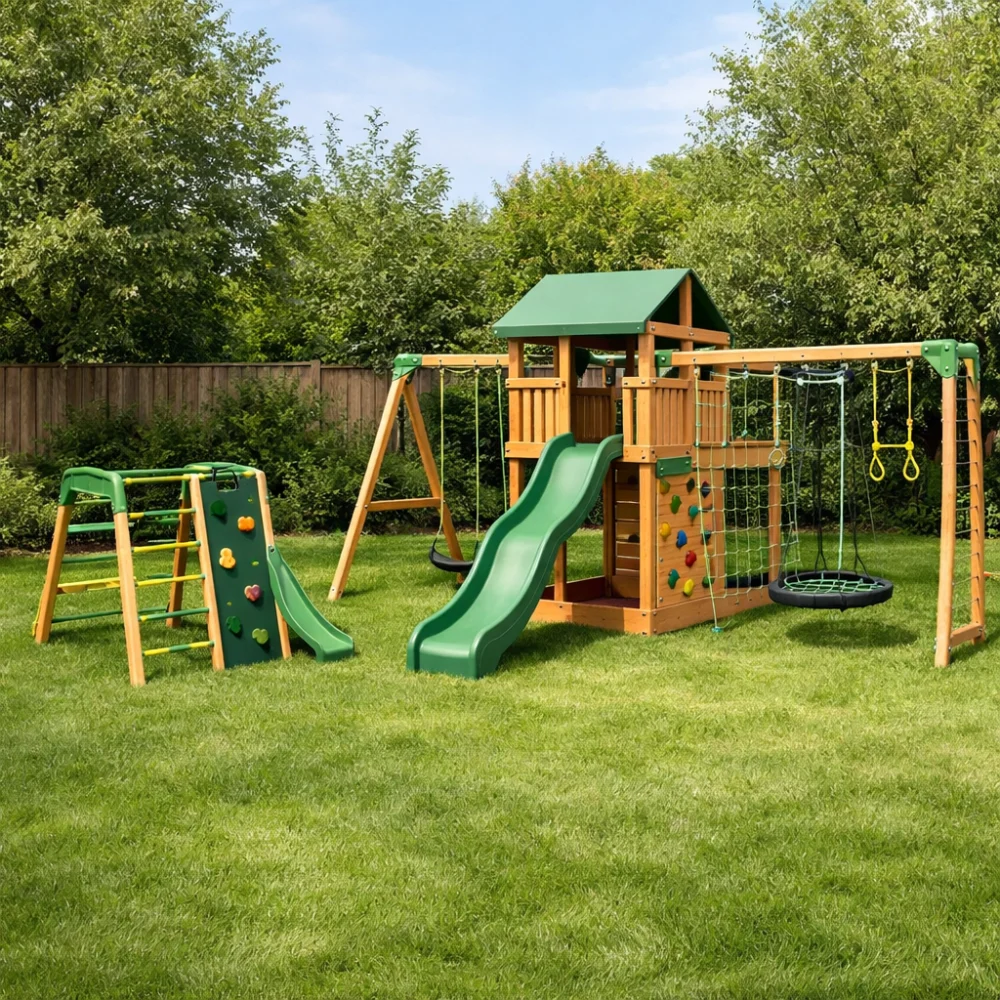
- Multi-activity frames: Better when you want more to do in one structure, such as climbing, sliding or swinging. Their limitation is that they usually need more space and more planning.
- Dome-style climbers: Often chosen for open-ended climbing play and a lower, more compact profile. Their limitation is that they may not offer the same variety as larger tower-style frames.
- Frames with add-ons: Useful if you want to expand play value with extra elements. The trade-off is that additional features can increase complexity and the space needed.
Which climbing frame suits which buyer?
| Buyer need | What to prioritise | Why |
|---|---|---|
| Smaller garden | Compact footprint and a simple layout | Helps the frame fit without taking over the whole space |
| Multiple children | More than one activity or route | Reduces waiting and makes shared play easier |
| Younger children | Lower height and simpler climbing options | Often feels more approachable and easier to supervise |
| Older or more active children | Greater variety and a more challenging design | Supports longer use as confidence and ability grow |
| Low-maintenance preference | Clear material information and manageable upkeep | Makes ownership simpler over time |
Common mistakes and misunderstandings
Buying for the equipment rather than the space. A frame can look manageable online but still feel crowded once installed. Measure the garden carefully and think about access, boundaries and room around the frame.
Overestimating how much complexity is useful. Extra features are not always better if the children using the frame prefer simpler play. It is often better to choose a design they will use regularly than one that looks impressive but is too demanding.
Assuming all outdoor frames need the same level of care. Maintenance expectations vary by material and finish, so check what the individual product page says. That can save surprises later, especially if you want a lower-maintenance option.
Ignoring assembly and installation effort. A climbing frame may require more time and planning than a smaller garden toy. Check what is involved before you buy so you are comfortable with the setup process.
Safety and suitability checks before buying
Climbing frames are for active play, so suitability matters as much as appearance. Check the intended age range, the recommended use and the amount of space needed around the frame. It is also sensible to confirm whether the product information mentions ground fixing, anchoring or any other installation requirements.
Do not assume that a frame with more features is automatically the safest or most suitable option. The right choice is the one that matches the children’s ability, the garden layout and the level of supervision you are comfortable providing.
Maintenance, storage and lifespan considerations
Outdoor play equipment is exposed to weather, so owners usually need to think about cleaning, inspection and occasional upkeep. Some frames may need periodic checks for movement, wear or surface condition, while others may ask for more involved care depending on the material used. If the product page mentions treatment, protective finishing or seasonal care, factor that into your decision.
If you plan to leave a frame outside all year, make sure you are happy with the expected upkeep and weather exposure. A simpler design with fewer accessories may be easier to look after than a larger setup with several moving or removable parts.
How to compare climbing frames efficiently
- Start with the garden space you actually have, including room around the frame.
- Decide whether you want a simple climber or a multi-activity design.
- Check the age suitability and the level of challenge you want.
- Compare the materials, finish and maintenance expectations.
- Review assembly, anchoring and any installation requirements before ordering.
Summary buyer decision checklist
- Have you measured the available space carefully?
- Does the layout suit the shape of your garden?
- Does the frame match the children’s age and confidence?
- Are the play features useful rather than just numerous?
- Do you understand the material and upkeep expectations?
- Are assembly and anchoring requirements clear?
- Have you checked the individual product page for the latest details?
Frequently asked questions
What is the main difference between a simple and a multi-activity climbing frame?
A simple frame usually focuses on climbing and basic play, while a multi-activity design brings together more features in one structure. The choice comes down to space, budget sensitivity and how much variety you want. If you want a lower-key option that is easier to fit into a garden, a simpler frame may be the better starting point.
How much space should I allow around a climbing frame?
Allow more space than the frame’s footprint alone suggests, because users need room to move safely around it. Boundaries, sheds, walls and garden furniture can all affect the practical layout. Check the product page for any stated clearance or installation guidance.
Are climbing frames suitable for different age groups?
Some are better suited to younger children, while others are designed to stay interesting for older children too. The key is to match the height, challenge level and layout to the intended users. If several children will use it, think about the youngest regular user as well as the most adventurous one.
Is metal or timber better for a climbing frame?
Neither is automatically better; each has trade-offs. Metal may appeal if you want a particular look or lower visual bulk, while timber may suit buyers who prefer a different style in the garden. Check the product information for finish, treatment and care needs rather than assuming one material will suit every buyer.
Do I need to think about maintenance before buying?
Yes, because outdoor equipment is affected by weather and regular use. Some frames will be easier to keep in good condition than others, depending on the material, finish and number of parts. If you want less upkeep, focus on clear product-page details about care and cleaning.
What is the most common buying mistake?
The most common mistake is choosing a frame that looks suitable online but does not fit the garden or the intended users as well as expected. Measuring properly and checking the layout usually prevents that. It also helps to decide in advance whether you want simple play or a more feature-rich design.
Check shared-use limits
If several children may use the frame at once, do not assume that the number of play features tells you how many users it can accommodate. Check the individual product information for any stated user limit or load capacity, and consider whether the layout lets children take turns without crowding.
Where the product information gives limits, use them when judging suitability; do not estimate capacity from the frame’s size or appearance. If no clear information is provided, avoid assuming that a frame is suitable for simultaneous use by a particular number of children.
More Climbing Frames
See all 370 Climbing Frames →


As an Amazon Associate we earn from qualifying purchases.


