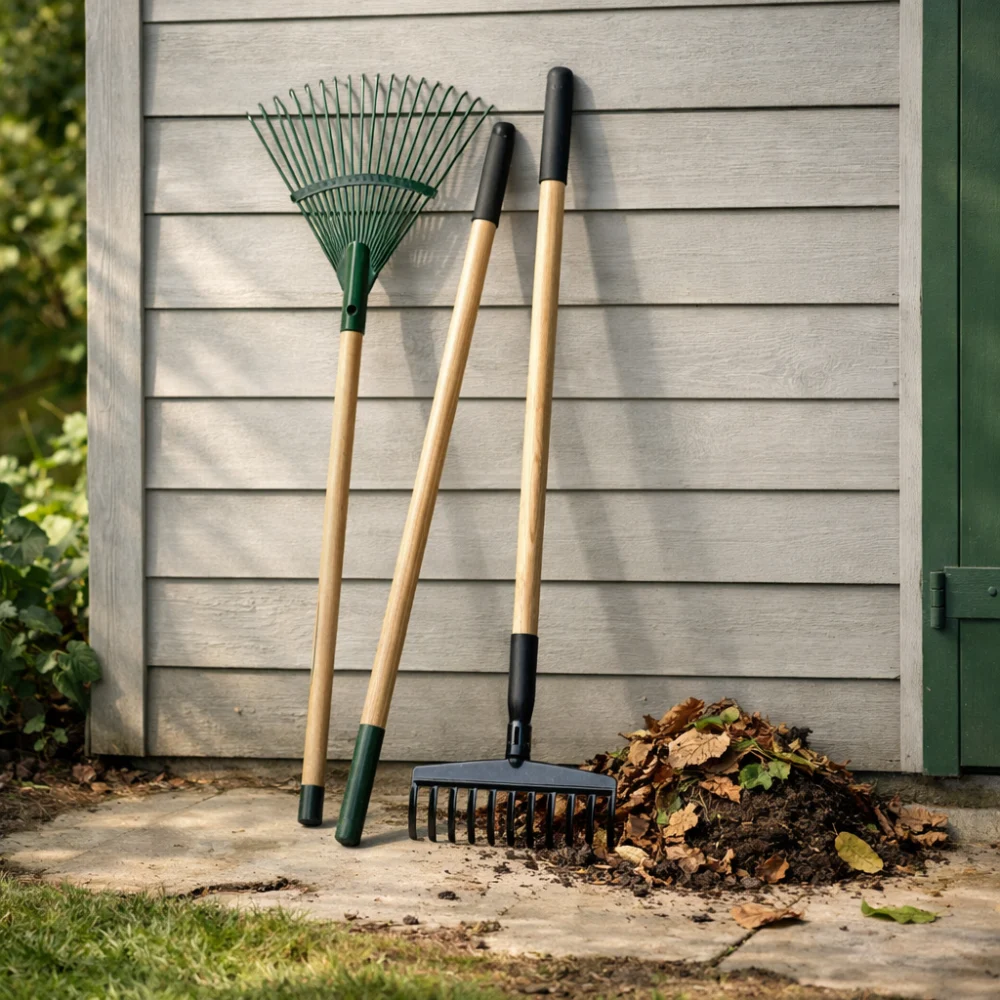

Garden rakes are simple tools, but the right choice depends on the job you want to do. Some are made for gathering leaves and light debris, while others are better for spreading soil, breaking up surface material or dealing with denser garden waste.
If you are replacing an old rake or buying one for the first time, it helps to compare the head shape, tines, handle length and overall weight rather than choosing on appearance alone. A rake that feels comfortable for one task may be less effective for another.
Use this guide to narrow down the type that suits your garden, your height and the kind of work you do most often.
Compare Garden Rakes



As an Amazon Associate we earn from qualifying purchases.
What is the best garden rake for my needs?
The best garden rake is the one matched to the job, not the one with the most tines or the longest handle. A leaf rake is usually better for collecting light material, while a more rigid rake is more suitable for shifting soil, levelling beds or handling heavier debris. Start by deciding whether you need collection, spreading or breaking-up performance, then check the head width, handle style and build materials on the individual product page.
| Feature | What it means | Why it matters | What to check |
|---|---|---|---|
| Rake type | The general design of the head and tines | Different designs suit leaves, soil or tougher garden work | Whether it is intended for leaves, general use, bow-style work or thatch removal |
| Tine spacing and flexibility | How closely the tines sit together and how much they give | Affects how well the rake gathers light debris or moves heavier material | Whether the head looks suited to delicate collection or firmer ground contact |
| Handle length | The reach between your hands and the rake head | Influences comfort, posture and control | Whether the handle is fixed or adjustable and whether it suits your height |
| Head width | How wide the raking area is | A wider head can cover more ground, while a narrower one may be easier to control in tight spaces | Whether you need speed on open lawns or accuracy in borders and beds |
| Material and weight | The balance of the head and handle construction | Changes durability, feel and how tiring the tool is to use | Whether the product page describes a lighter or sturdier build |
Key factors that matter when choosing a rake
Rake type and task
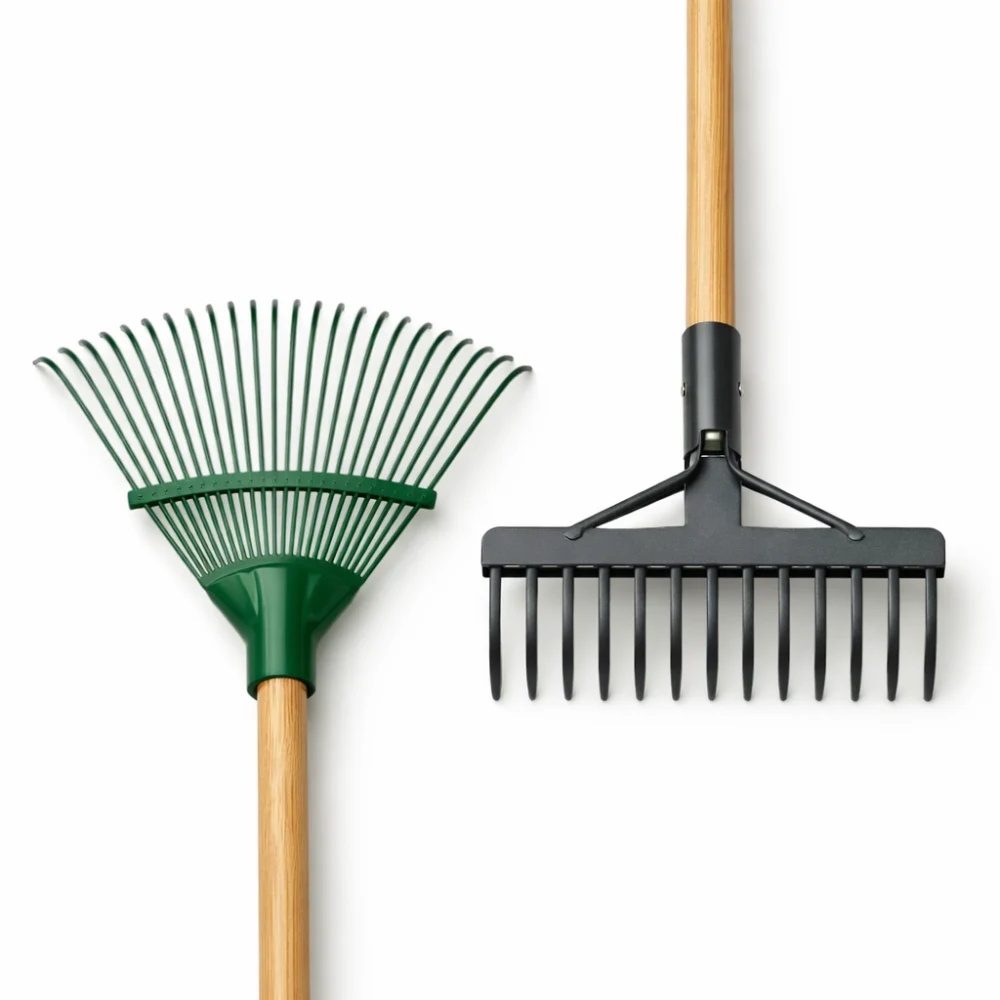
The main decision is what you want the rake to do. Leaf rakes are usually designed to collect loose material with less drag, while firmer garden rakes are better for surface levelling and moving heavier matter. Thatch rakes and similar designs focus on more specific jobs and can feel less versatile if you only want one general-purpose tool.
Tines and head feel
Tines affect how the rake behaves on the ground. More flexible tines can be gentler and better for light debris, while stiffer tines tend to be more effective where you need a stronger contact with the surface. Specifications vary by model, so always check the individual product page before buying.
Handle length and adjustability
A handle that suits your height can make a big difference to comfort. Longer or adjustable handles can help reduce awkward stooping, but they may also change the balance of the tool. If several people will use the same rake, adjustability can make it easier to share.
Weight and balance
Weight is often overlooked, yet it matters for longer jobs. A lighter rake may be easier to use for sweeping leaves over a large area, while a more solid tool can feel steadier for tougher work. Balance matters too: a tool can be light overall but still feel awkward if the head and handle are not well matched.
Storage and size
Garden rakes take up space, so the shape of the head and whether the handle separates or adjusts can matter if storage is tight. If you keep tools in a shed or small cupboard, think about how easy it will be to hang or tuck the rake away.
Common rake types and where they fit
Most buyers will come across a few broad styles rather than a huge number of completely different tools.
- Leaf rakes: suited to gathering leaves, grass clippings and other light garden debris.
- Bow or garden rakes: usually better for heavier-duty surface work, such as levelling or moving material.
- Thatch rakes: aimed at removing or lifting thatch and similar compacted surface material.
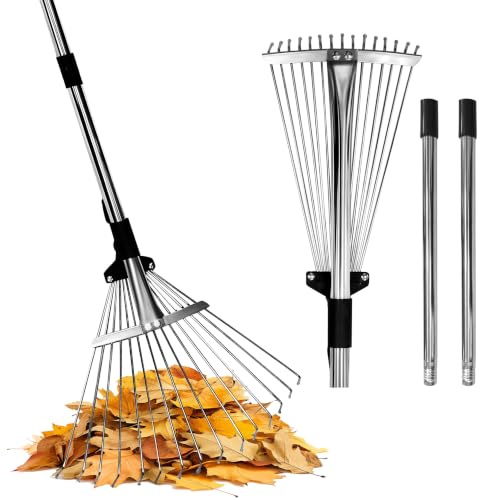
- Adjustable or telescopic rakes: useful when you want more flexibility in reach or storage.
The useful question is not which type sounds strongest, but which one matches the kind of work you do most often.
Which rake suits different buyers?
| Buyer need | Helpful characteristics | Why |
|---|---|---|
| Leaf clearance on lawns | Lightweight rake, wider head, flexible tines | Helps gather loose material efficiently without digging into the lawn |
| General border and bed work | More rigid head, manageable width, comfortable handle | Gives better control for levelling and tidying |
| Heavier soil or rougher ground work | Sturdier construction, firmer tines, secure handle | Supports more forceful use and more demanding surfaces |
| Shared family use | Adjustable handle, sensible weight, simple design | Makes it easier for different users to work comfortably |
| Smaller storage space | Compact head or adjustable handle | Helps reduce storage frustration when space is limited |
Common mistakes to avoid
- Choosing only by tine count: the number of tines matters less than the rake’s overall design and how it feels in use.
- Ignoring handle length: a rake that is too short or too long can make work more tiring than necessary.
- Using one rake for every task: a leaf rake and a more rigid garden rake serve different purposes.
- Overlooking storage: a tool that is awkward to store can become inconvenient even if it works well.
- Assuming all adjustable handles feel the same: look at how adjustment is described and whether the rake still seems well balanced.
Safety and suitability checks
For garden rakes, the main concerns are comfort, control and using the tool for the right task. Check whether the handle length suits the person who will use it most, and think about whether the head is intended for light debris or firmer ground work. If a rake is likely to be used in a shared garden or by different people, a more forgiving and easy-to-handle design can be a sensible choice.
Care, storage and everyday use
Garden rakes are usually straightforward to look after, but cleaning off soil, grass and sap after use can help keep them in better condition. Dry storage is sensible, especially if the head or handle includes metal parts. If the rake has an adjustable handle or moving sections, it is worth checking that they remain secure during use and are stored safely when not in action.
How to compare garden rakes efficiently
- Decide what job you need most often: leaves, levelling, thatch or general tidying.
- Choose the rake style that matches that job before looking at finer details.
- Check handle length, head width and weight for comfort and control.
- Look at the build description to judge whether it sounds light, rigid or more versatile.
- Read the individual product page carefully for any model-specific details.
Garden rake buyer checklist
- Does the rake suit the main task you need it for?
- Is the handle length comfortable for the main user?
- Is the head wide enough for open areas but still manageable where you garden?
- Does the tines’ feel suit light debris or tougher work?
- Will it be easy to store when not in use?
- Have you checked the individual product page for model-specific details?
Frequently asked questions
What is the difference between a leaf rake and a garden rake?
A leaf rake is generally designed for collecting light material such as leaves and grass clippings. A garden rake is usually firmer and more suited to levelling soil, spreading material or handling heavier garden tasks. If you mainly clear lawns, a leaf rake is often the better fit; if you do more mixed work, a sturdier rake may be more useful.
Are adjustable rakes worth considering?
They can be useful if more than one person will use the same tool or if you want flexibility in reach. They may also be easier to store. The trade-off is that you should check whether the rake still feels balanced and solid when adjusted.
How wide should a rake head be?
Wider heads can cover more ground, which helps in open spaces. Narrower heads are often easier to guide in borders, around plants or in tighter corners. The right choice depends on whether you value speed or precision more.
What should I look for if I want one rake for several jobs?
Choose a general-purpose design with a comfortable handle, a practical head width and a build that seems neither too delicate nor too heavy. You may not get the very best performance for every task, but you can get a good balance of versatility and ease of use. Checking the product page for the intended use is especially important here.
Do heavier rakes work better?
Not always. A heavier rake can feel more solid for tougher work, but it may also be more tiring over longer sessions. For light clearing, a lighter tool is often easier to handle.
How can I tell if a rake will suit my height?
Look at the handle length and whether it is adjustable. If the product page gives only a single length, compare it with the way you usually work and whether you prefer a more upright stance. Comfort matters because an awkward rake can quickly make routine jobs feel harder.
More Garden Rakes
See all 300 Garden Rakes →


As an Amazon Associate we earn from qualifying purchases.