

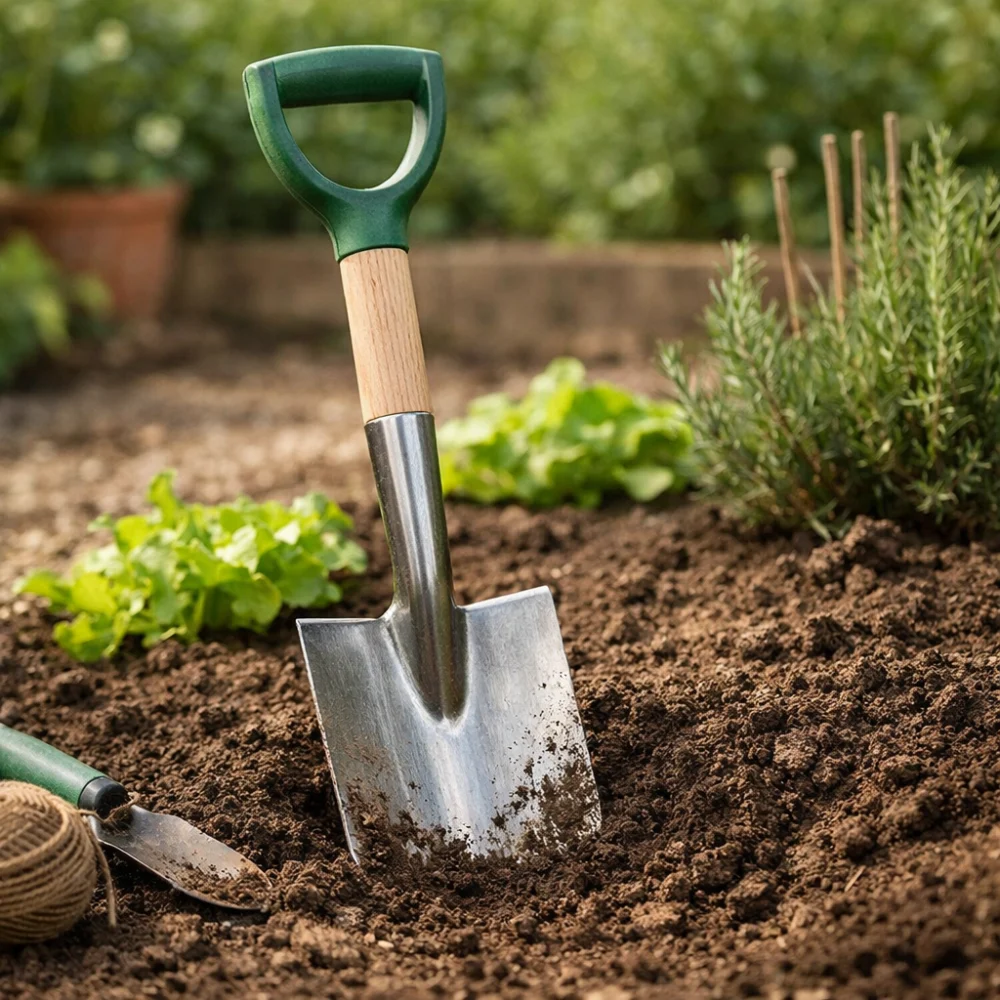

A garden spade is one of the most useful hand tools for digging, cutting neat edges and moving soil in the garden. The right choice depends less on brand language and more on how you plan to use it, how often you will use it and how comfortable it feels in your hands.
If you are replacing an old tool, the main decision is usually between a digging spade, a border spade or another shape suited to lighter work. For a first purchase, it helps to focus on blade shape, handle style and overall feel rather than on broad claims about strength.
Specifications vary by model, so always check the individual product page before buying.
Compare Garden Spades


As an Amazon Associate we earn from qualifying purchases.
What should I look for when choosing a garden spade?
Start with the task. A deeper blade and a longer shaft can suit general digging, while a smaller format may feel easier to control for tidying borders or working in tighter spaces. The most important trade-off is between reach and manoeuvrability: a larger tool may move more material per pass, but a smaller one can be easier to place accurately.
Comfort matters just as much as shape. Look at the handle style, the neck and shaft length, and whether the grip is likely to feel secure when your hands are wet or muddy. A well-chosen spade should feel balanced enough for repeated use without forcing you into an awkward stance.
| Feature | What it means | Why it matters | What to check |
|---|---|---|---|
| Blade shape | The outline and tip of the spade blade | Affects how easily the tool cuts into soil and how controlled it feels | Choose a shape that suits digging, edging or lighter border work |
| Handle style | The end grip you hold with your upper hand | Influences control, comfort and leverage | Check whether a D-handle, T-handle or straight handle looks most comfortable for you |
| Shaft length | The distance from blade to handle | Changes posture and reach | Look for a length that should let you work without excessive bending |
| Blade size | How much soil the blade can take in one movement | Smaller blades can be easier to handle; larger ones can be more efficient | Match size to the space you work in and the amount of digging you expect |
| Material and finish | The main construction and surface treatment | Can affect weight, maintenance and general durability | Check the stated materials and any care advice on the product page |
Which spade type suits the job?
Garden spades are not all used in exactly the same way. A digging spade is typically chosen for general soil work, while a border spade is usually a better fit where space is tighter or where a lighter, more compact tool feels easier to manage. Some products are described in ways that suggest a particular task, so pay attention to the intended use rather than the name alone.
Rounder or pointed shapes can help when you need to start a hole or work through firmer ground, but they are still only part of the decision. The handle and overall balance can matter just as much, especially if you will be using the tool for longer periods.
Digging spades
These suit general-purpose jobs where you want a fuller blade and a tool built for ordinary digging tasks. They are often the default choice for buyers who want one main spade for the garden.
Border spades
These may suit smaller spaces, raised beds and neater work close to plants. Their smaller format can make them easier to control, though they may move less material per scoop.
Special-purpose shapes
Some spades are aimed at particular digging styles, such as pointed or round-pointed forms. These can be useful when you want a more specific feel, but it is worth checking whether that shape matches your own tasks before choosing it.
How do different buyers compare their options?
| Buyer need | What to prioritise | Why |
|---|---|---|
| General garden maintenance | Balanced size, comfortable handle and a shape suited to ordinary digging | Gives a versatile tool that can cover most common tasks |
| Small borders or raised beds | More compact blade and easier control | Helps in tight spaces where a full-size tool may feel cumbersome |
| Frequent use | Comfort, balance and clear material information | Repeated work makes ergonomics and general build more important |
| Replacing an older tool | Similar size and handling to what already feels familiar | Reduces the chance of choosing a shape that does not suit your working style |
| First-time buyer | A straightforward, general-purpose option | Usually the easiest way to avoid overcomplicating the decision |
Common mistakes when buying a garden spade
- Choosing by appearance alone: a neat finish does not tell you how the tool will feel in use.
- Ignoring size and reach: a spade that is too large or too small can be tiring even if it looks suitable.
- Overlooking the handle: the top grip affects comfort and control more than many buyers expect.
- Assuming one shape suits everything: a tool designed for general digging may not be the easiest choice for border work.
Safety and suitability checks
Garden spades are simple tools, but it is still sensible to match the product to the task and to your own comfort level. Check the product page for any size guidance, material notes or care information, and think about whether the tool seems suitable for the type of soil and the space you usually work in. If a spade feels too heavy or too large for your needs, it is better to choose a more manageable option.
Care, storage and everyday use
Basic care can help a spade stay comfortable and usable for longer. After use, remove soil, dry the tool before storing it and keep it somewhere sheltered if possible. If the product uses a particular material or finish, any care notes on the product page are worth following, because maintenance needs can vary.
A simple storage check also helps at purchase stage: make sure you have somewhere dry and convenient to keep the tool, especially if it is part of a broader set of garden hand tools. A spade that is easy to store is often easier to keep in good condition.
How to compare garden spades efficiently
- Decide what you will use it for most often.
- Choose the type and size that match that task.
- Compare handle style, shaft length and blade shape.
- Check the stated materials and any care guidance.
- Read the individual product page before you buy.
Summary buyer checklist
- Is the spade intended for digging, edging or lighter border work?
- Does the blade shape suit the way you garden?
- Will the handle style feel comfortable for your hands?
- Is the size appropriate for your height, reach and working space?
- Have you checked the materials and care notes on the product page?
- Does the tool seem practical for the amount of use you expect?
Frequently asked questions
What is the difference between a garden spade and a garden shovel?
In everyday use, the terms can overlap, but a spade is usually associated with digging and edging, while a shovel is often thought of as more scoop-like. For buying purposes, it is more useful to focus on the blade shape and the task rather than the word alone.
What handle style is easiest to use?
That depends on hand size, grip preference and the job you want to do. A D-handle often gives a secure top grip, while a straight handle can feel familiar to some users. The best choice is the one that feels stable and comfortable for your own working position.
Do I need a full-size spade or a border spade?
If you do most of your work in open beds or general digging, a full-size spade is often the more versatile option. If you mainly work in tight spaces, raised beds or smaller borders, a border spade can be easier to control.
Are heavier spades better?
Not necessarily. A heavier tool may feel sturdy, but it can also be more tiring during longer sessions. The right balance depends on how much control you want and how often you expect to use it.
Should I choose stainless steel or carbon steel?
Those terms usually point to different material preferences and care expectations, but the right choice depends on the individual product. Check the product page for the stated material and any maintenance advice rather than assuming one will always suit every garden.
How important is shaft length?
Very important if you want to work comfortably. A suitable shaft length can reduce awkward bending and improve control, so it is worth checking alongside blade shape and handle style.
Can one spade do every garden job?
One spade can cover a lot of general tasks, but no single shape is ideal for every situation. If your work is varied, a versatile digging spade is often a sensible starting point, while more compact tools can be better for narrower areas.
More Garden Spades
See all 289 Garden Spades →


As an Amazon Associate we earn from qualifying purchases.


