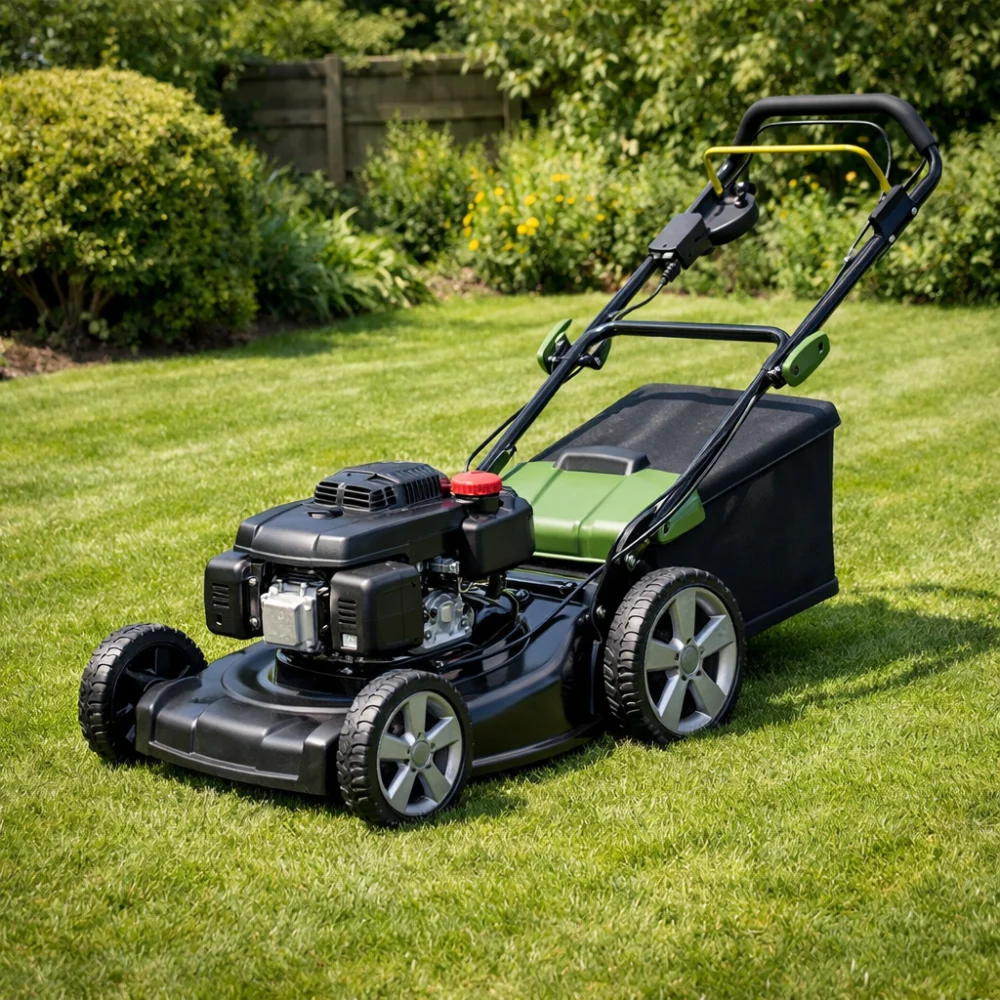
Petrol lawn mowers are a familiar choice for gardens where a mains cable would be awkward and battery charging would be inconvenient. They are often considered by people with larger lawns, tougher grass or uneven ground, but the right choice depends on how you cut, store and maintain the mower.
This guide focuses on the buying decision rather than any one model. It helps you compare petrol lawn mowers by the features that affect everyday use, from cutting width and propulsion to collection and storage.
If you are deciding between petrol, cordless, electric or manual mowing, the most useful question is not simply which is more powerful, but which suits your lawn size, terrain and appetite for maintenance.
What should you look for in a petrol lawn mower?
Start with your lawn and how you prefer to mow. A petrol mower can be a practical option when you need freedom from cables and want to cover ground without managing a battery charge, but there are trade-offs in weight, upkeep and storage. The most useful first check is whether the mower’s size, drive system and cutting options match the way you actually maintain the garden.
Specifications vary by model, so always check the individual product page before buying.
| Feature | What It Means | Why It Matters | What To Check |
|---|---|---|---|
| Cutting width | The width of grass cut in one pass | Affects how quickly you can mow and how easy the mower is to manoeuvre | Whether a narrower or wider deck better suits gates, paths and the size of your lawn |
| Drive system | Whether the mower is push or self-propelled | Changes how much effort you need on slopes and larger lawns | How much pushing you are comfortable with and whether the ground is flat or uneven |
| Cutting height adjustment | The range and convenience of setting grass length | Helps you match the mower to seasonal growth and lawn condition | How the adjustment works and whether it gives enough flexibility for your lawn |
| Grass collection | How clippings are gathered or discharged | Influences how tidy the finish is and how often you stop to empty | Collector size, mulching options or side discharge where available |
| Engine and starting method | The petrol engine used and how it is started | Affects ease of use and day-to-day convenience | Any starting aid, priming requirement or other model-specific features listed |
| Weight and storage | How heavy and compact the mower is when in use or stored | Important for lifting, turning and putting the mower away | Foldable handles, storage dimensions and whether you have steps or limited space |
Key decision criteria explained
Cutting width and garden size
Cutting width is one of the quickest ways to narrow the choice. A wider mower usually covers ground faster, which can help on larger lawns, but it may be less convenient in tight spaces or narrow side passages. A narrower mower can be easier to steer around borders and obstacles.
Push or self-propelled
Push mowers rely more on the user, while self-propelled mowers reduce the effort needed to move forward. Self-propelled models can be helpful on slopes, longer grass or larger gardens, but they may feel like more mower than you need on a small, level lawn. If you value a lighter, simpler feel, a push mower may be enough.
Grass collection and finish
Some buyers want a tidier finish with less raking afterwards, while others are happy to leave clippings where they fall or use a mulching function where offered. A larger collector can mean fewer interruptions, but it can also add bulk. Think about whether you want speed, tidiness or flexibility from the cut.
Height adjustment
Different lawns need different cutting heights through the season. A mower with easy, clear adjustment helps you adapt after dry spells, heavy growth or a first cut of the season. Check how many height settings are offered and whether the adjustment suits the way you prefer to maintain the lawn.
Storage and handling
Even if a petrol mower is a good cutting match, it still needs to fit your storage space and handling ability. Consider whether you will need to lift it through a narrow shed door, turn it in place, or fold the handles down after use. Practical size can matter as much as cutting performance.
What types of petrol lawn mower are there?
Within this category, the main differences are usually about how the mower is moved and how the cut is managed rather than about a completely different kind of machine.
- Push petrol mowers: suited to smaller or flatter lawns, and to buyers who do not mind providing the forward movement themselves.
- Self-propelled petrol mowers: better suited to larger lawns, slopes or users who want less physical effort while mowing.
- Collectors and mulching mowers: collection-focused models are useful when you want a tidier finish, while mulching options can suit buyers who prefer to return fine clippings to the lawn where available.
Not every model will offer every feature, and some designs combine several approaches. The practical question is how you want the mower to behave during a typical cut.

Which petrol lawn mower suits different needs?
| Buyer need | More suitable feature | Why it helps | Possible trade-off |
|---|---|---|---|
| Small, straightforward lawn | Narrower, lighter push mower | Easier to store and manoeuvre | May take longer on bigger areas |
| Sloped or uneven ground | Self-propelled mower | Reduces the effort of moving the mower forward | Can add weight or complexity |
| Fewer emptying stops | Larger grass collector | Lets you mow longer between interruptions | May increase bulk when collecting clippings |
| Seasonal lawn care flexibility | Clear height adjustment | Makes it easier to adapt to changing growth | Settings and controls vary by model |
| Tidy finish with less clearing up | Reliable collection or mulching choice | Supports the result you prefer after cutting | What is offered differs from one mower to another |
Common mistakes and misunderstandings
- Choosing by engine type alone: engine details matter, but they are only part of the picture. Cutting width, drive and collection are often more important for day-to-day satisfaction.
- Assuming bigger is always better: a wider mower is not always easier to live with if your lawn has narrow sections or limited storage space.
- Ignoring handling effort: a mower that looks suitable on paper may still feel awkward if it is too heavy for regular use.
- Overlooking storage and maintenance: petrol mowers generally need more attention than simple electric alternatives, so think beyond the cutting job itself.
Safety and suitability caveats
Petrol lawn mowers are practical tools, but they are not the right choice for every user or every garden. Consider who will be using the mower, whether the ground is even enough for comfortable operation, and whether you are happy with the upkeep that comes with a petrol engine. Specifications vary by model, so always check the individual product page before buying.
Maintenance, storage and ownership
When comparing petrol mowers, think about the practical side of ownership as well as the cut. Petrol engines typically need more storage consideration than cordless models, especially if your shed or garage is tight. It is sensible to check how easy the mower is to clean after use, whether the handle folds for storage, and what the manufacturer says about routine care and fuel requirements.
For many buyers, the maintenance question is less about technical detail and more about how much effort feels acceptable after each mow.
How to compare petrol lawn mowers efficiently
- Start with the lawn itself: size, shape, slopes and access points.
- Decide whether you want push or self-propelled operation.
- Compare cutting width, height adjustment and collection setup.
- Check how much storage space you have and how the mower folds or lifts.
- Read the individual product page for the exact model details and make sure the trade-offs suit your routine.
Summary buyer decision checklist
- Does the mower suit the size and shape of your lawn?
- Do you want a push model or self-propelled assistance?
- Is the cutting width practical for your access and storage space?
- Does the grass collection or mulching setup match how you like to mow?
- Is the height adjustment flexible enough for seasonal use?
- Will the mower be comfortable to move, turn and store?
- Have you checked the individual product page for the exact specification?
Frequently asked questions
Are petrol lawn mowers good for small gardens?
They can be, especially if you want to avoid cables and prefer a self-contained mower. However, a petrol model may be more than you need if the lawn is very small, simple and easy to reach with another type of mower. The key is to balance convenience with storage space and the effort of upkeep.
What is the advantage of a self-propelled petrol mower?
Self-propelled models reduce the need to push the mower forward yourself, which can make mowing less tiring. They are often worth considering for larger lawns, slopes or users who want a steadier pace with less physical effort. The trade-off is usually added complexity or weight.
Does a wider cutting width always mean a better mower?
No. A wider cut can reduce mowing time, but only if it still fits your lawn layout and storage space. Narrow paths, awkward corners and small sheds can make a more compact mower the smarter choice.
Should I choose collection or mulching?
That depends on how you want to deal with clippings. Collection is useful if you like a cleaner finish and want to remove cut grass, while mulching can suit buyers who prefer to return fine clippings to the lawn where offered. If you are unsure, think about how often you mow and how tidy you want the result to look.
How important is height adjustment?
Very important for most buyers. Different seasons and grass conditions call for different cutting heights, and a mower that is easy to adjust gives you more control over the result. Check both the range and how simple the adjustment is to use.
What should I check before buying a petrol mower?
Focus on the mower’s fit for your lawn, the effort needed to use it, the amount of storage space you have and the level of maintenance you are comfortable with. It is also worth checking the individual product page for the exact specification, because features and setups vary from model to model.