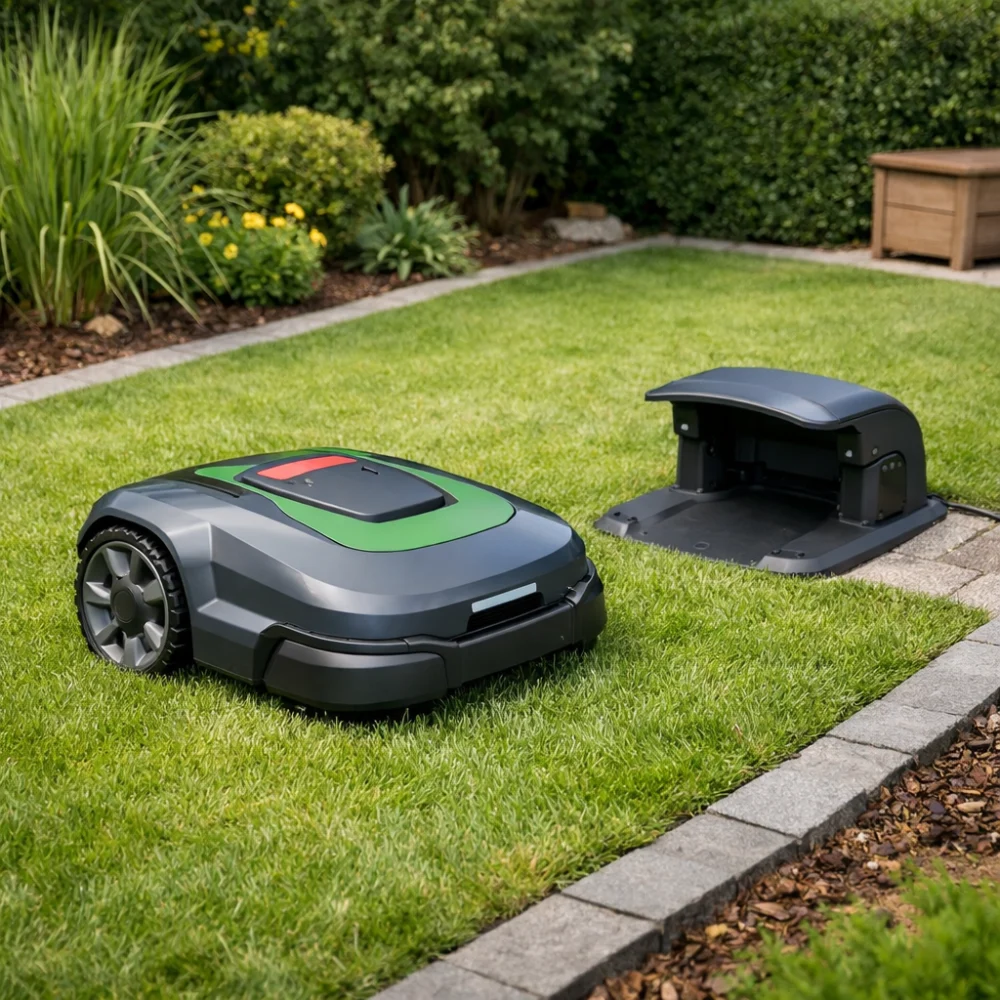
Robot lawn mowers can suit buyers who want regular grass cutting with less hands-on effort, but the right choice depends heavily on the shape and behaviour of the lawn. Some models are aimed at simple small gardens, while others are designed to cope with more complex layouts, slopes or multiple zones.
This guide helps you compare the important differences before you choose. It focuses on the practical questions that matter most: how the mower navigates, what area it is meant to cover, what setup it needs and how well it fits your garden routine.
If you are comparing robot mowers for the first time, start by matching the mower to the garden rather than to the longest feature list. A simple model can be a good fit for an uncomplicated lawn, while a more advanced one may be worth considering if your garden has obstacles, narrow passages or changing levels.
What should you look for in a robot lawn mower?
The best starting point is the relationship between your lawn and the mower’s intended use. After that, navigation, installation method, control options and cutting adjustment tend to make the biggest difference. Specifications vary by model, so always check the individual product page before buying.
| Feature | What it means | Why it matters | What to check |
|---|---|---|---|
| Lawn size guidance | The approximate area the mower is intended to maintain | Helps you avoid choosing a mower that is too small for the job | The area figure on the product page and whether it matches your whole lawn or just one zone |
| Navigation method | How the mower finds its way around the garden | Affects setup, reliability and how well it handles complex spaces | Whether it uses a boundary wire, wire-free mapping or another guidance system |
| Garden layout | How simple or complex the lawn is to move around | Some mowers suit open rectangles, while others are better for narrow or divided spaces | Doorways, paths, edges, obstacles and whether the lawn is split into sections |
| Cutting height adjustment | The range or method for changing grass height | Useful if you want a neater finish or need to cope with different seasons | The adjustment range and how easy it is to set on the chosen model |
| Control features | How you schedule or manage mowing | Can make the mower easier to live with, especially if you want custom routines | App control, onboard controls or simpler automatic operation |
| Terrain handling | How well the mower copes with slopes and uneven ground | Important for gardens that are not flat | Any slope information and whether the lawn has areas that may challenge movement |
Key decision criteria explained
Lawn size and lawn shape
Area guidance is usually the first filter, but shape matters nearly as much. A mower that suits the total size of your garden may still be a poor fit if the lawn is split into several areas or has very narrow routes between them. Think about the grass the mower will actually need to reach, not just the headline size of the garden.
Boundary wire or wire-free setup
Robot lawn mowers are available with different guidance systems, and this affects both installation and day-to-day use. Boundary-wire models can be a good fit when you want a defined mowing area, while wire-free systems may appeal if you want a different style of setup. The trade-off is that different systems suit different garden shapes, and the simpler-looking option is not always the easiest match in practice.
Navigation and obstacle handling
Some gardens contain trees, borders, furniture, washing lines or narrow crossings that make navigation more important than raw coverage. A mower that can map the lawn clearly and move around obstacles sensibly may be easier to live with than one that only suits open grass. Look closely at how the product describes mapping, route planning and obstacle handling rather than assuming all robot mowers behave the same way.
Cutting height and finish
Cutting height is one of the easiest features to overlook. If you prefer a tidier look, or if your lawn changes through the season, a suitable adjustment range can matter more than a long list of smart features. Check how the height is adjusted and whether the mower offers enough flexibility for your grass type and mowing preference.
Control, scheduling and convenience
Some buyers want a mower they can leave to its routine, while others want more direct control over timing and zones. App control can be convenient, but it is not essential for everyone. If you prefer straightforward operation, focus on whether the mower’s basic controls and scheduling suit how you actually manage the garden.
Product types and variants
Within this category, the main differences usually come from how the mower is installed and how it navigates the garden. A basic automatic model may suit a straightforward lawn with few complications, while a more advanced wire-free or mapping-led model may be more helpful for gardens with awkward shapes or multiple areas.
- Boundary-wire models: Often suitable for clearly defined lawns where you are happy to set a mowing area in advance.
- Wire-free or mapped models: May suit buyers who want a different setup approach and more flexible navigation, especially in more complex gardens.
- Smaller-lawn models: Can be a sensible match for compact gardens where simplicity matters more than advanced features.
- More capable terrain-focused models: May help on gardens with slopes or uneven sections, provided the individual product information supports that use.
The main limitation of this category is that not every robot mower suits every lawn shape. A model that looks advanced may still be the wrong fit if the garden layout is awkward or the setup method does not suit your space.
Which type of buyer needs which features?
| Buyer need | Features to prioritise | Why this matters |
|---|---|---|
| Simple small garden | Straightforward area fit, easy setup, clear basic controls | Reduces unnecessary complexity and makes ownership easier |
| Busy household | Scheduling, dependable navigation and easy maintenance | Helps the mower fit around everyday life |
| Garden with obstacles | Mapping, obstacle awareness and careful route handling | Can improve day-to-day usability in a crowded lawn |
| Split or awkward lawn | Multi-zone support, flexible navigation and suitable setup method | Important when grass is not one simple open area |
| Sloping or uneven garden | Terrain suitability and slope information | Not all mowers are equally suited to uneven ground |
Common mistakes and misunderstandings
- Choosing by lawn size alone: Shape, access and obstacles can be just as important as area.
- Assuming every robot mower is easy to install: Setup varies, especially between boundary-wire and wire-free systems.
- Overlooking cutting height: A mower can be the right size but still not suit the finish you want.
- Ignoring garden layout: Narrow links, steps and separate zones can affect whether a model will be convenient to use.
- Paying for features you will not use: App control and advanced mapping are helpful for some buyers but unnecessary for others.
Safety and suitability caveats
Robot lawn mowers are meant for outdoor grass cutting, but suitability still depends on the details of your garden. Check the product information for any limits on slope, layout, obstacles and the type of lawn it is intended to maintain. If your garden has unusual features, irregular access or sensitive areas, it is worth taking extra care when comparing models.
Maintenance, storage and lifespan considerations
Buying a robot lawn mower is not just about the initial setup. You will also want to think about cleaning, blade changes where relevant, charging arrangements and where the mower will be stored between uses or outside the mowing season. A design that is easy to clean and simple to live with can be more convenient over time than one with slightly more headline features.
Check whether the mower needs a charging base, how much space that setup may require and whether access to the lawn area is straightforward. If you want a low-effort ownership experience, practicality matters as much as cutting performance.
How to compare options efficiently
- Start with your lawn size and layout, including any narrow sections or separate areas.
- Decide whether you prefer boundary-wire setup, wire-free mapping or a simpler automatic approach.
- Compare the navigation, cutting height and control features that matter most to you.
- Check whether the mower seems suitable for slopes, obstacles and day-to-day garden access.
- Read the individual product page carefully before choosing.
Summary buyer decision checklist
- Does the mower suit the size of the lawn you actually want maintained?
- Will the navigation method suit your garden layout?
- Is the setup style practical for your space and preference?
- Does the cutting height adjustment meet your needs?
- Will the control and scheduling options suit how you use the garden?
- Have you checked any limits on slopes, obstacles or multi-zone use?
- Is the charging and storage arrangement practical at home?
Frequently asked questions
Do robot lawn mowers work in small gardens?
Yes, but the key is choosing a model that suits the actual area and shape of the lawn. In a small garden, easy setup and sensible navigation can matter more than advanced features.
Are wire-free robot lawn mowers easier to use?
They can be, especially for buyers who prefer to avoid a boundary wire setup. That said, the easiest option depends on your garden layout, so it is worth checking how the mower defines and follows its mowing area.
Can a robot mower handle a garden with obstacles?
Many can cope with ordinary garden features, but the level of ease varies by model. If your lawn has furniture, trees, narrow routes or awkward corners, look closely at navigation and obstacle handling rather than assuming all models perform the same way.
Do I need app control?
Not necessarily. App control can be convenient for scheduling or adjustments, but some buyers prefer simple automatic operation and do not need more than that.
What matters more: lawn size or lawn shape?
Both matter, but shape is often underestimated. A mower that matches the area on paper may still be inconvenient if the garden is divided, narrow or difficult to move through.
How important is cutting height adjustment?
It is worth checking because it affects how closely the mower can match your preferred finish. The right adjustment range can make a real difference if you like a particular look or your grass conditions vary.
Should I choose the most feature-rich model?
Not always. It is usually better to choose the model that fits your garden and your routine, rather than paying for features you are unlikely to use.