

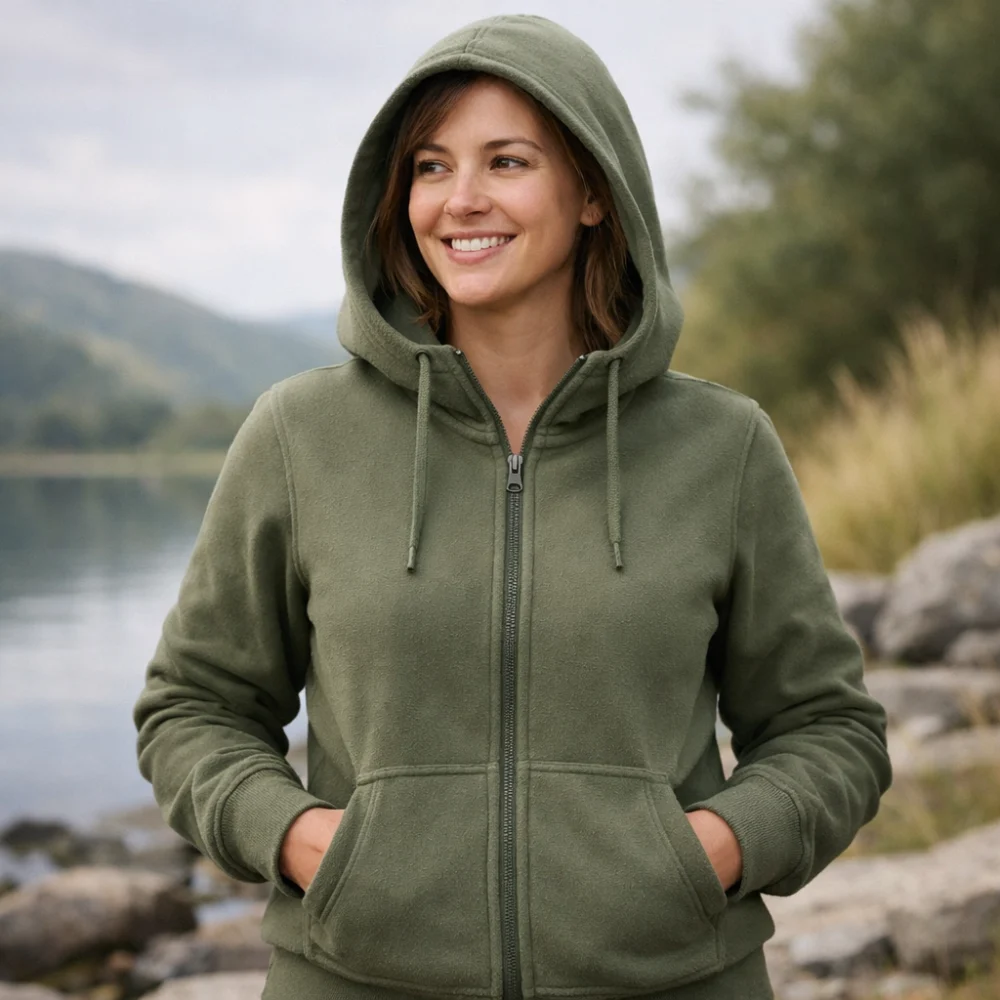
A women’s hoodie can be a casual top on its own or an extra layer when heading outdoors. The right choice depends on how you want it to fit, whether you prefer a pullover or zip-front design, and what you expect it to do as part of your clothing layers.
Look beyond appearance: check the product information for measurements, fabric details, care instructions and features such as pockets. A hoodie is not automatically windproof, waterproof or suitable as an outer layer in every condition.
Which women’s hoodie should you choose?
Start with where and how you expect to wear it: everyday use, relaxed layering or a closer-fitting layer beneath other clothing. Choose a pullover if you prefer a continuous front, or a zip-up style if you want an opening you can adjust. Fit and fabric affect comfort and layering, but the best balance depends on your preferences and the clothing you plan to wear with it.
Compare the details that affect your choice
| Feature | What it means | Why it matters | What to check |
|---|---|---|---|
| Style | Pullover or zip-front construction | Changes how the hoodie is put on and worn with other layers | Whether it has a full zip, and how the front is described |
| Fit and length | The cut and coverage of the garment | Affects comfort and how easily it layers over or under other clothes | Size guide, garment measurements where provided, and the stated fit |
| Fabric | The material and any stated fabric finish or lining | Influences feel, weight and care needs | Fabric composition and care instructions |
| Hood and pockets | Design details that vary between styles | May affect convenience and how the hoodie sits when worn | Whether these details are included and how they are described |
| Layering use | How the hoodie fits into your clothing system | A bulky or close fit may work differently beneath a jacket | Fit notes and whether the garment can accommodate your intended layers |
What to consider before buying
Choose a fit for the way you will wear it
A closer fit may be easier to wear beneath another layer, while a roomier cut can leave more space for clothing underneath. Neither is automatically better: think about whether you want the hoodie to sit close to the body or feel relaxed. Check the product’s size guide rather than relying only on a size label, especially if you are between sizes or want a particular silhouette.
Decide between a pullover and a zip-up
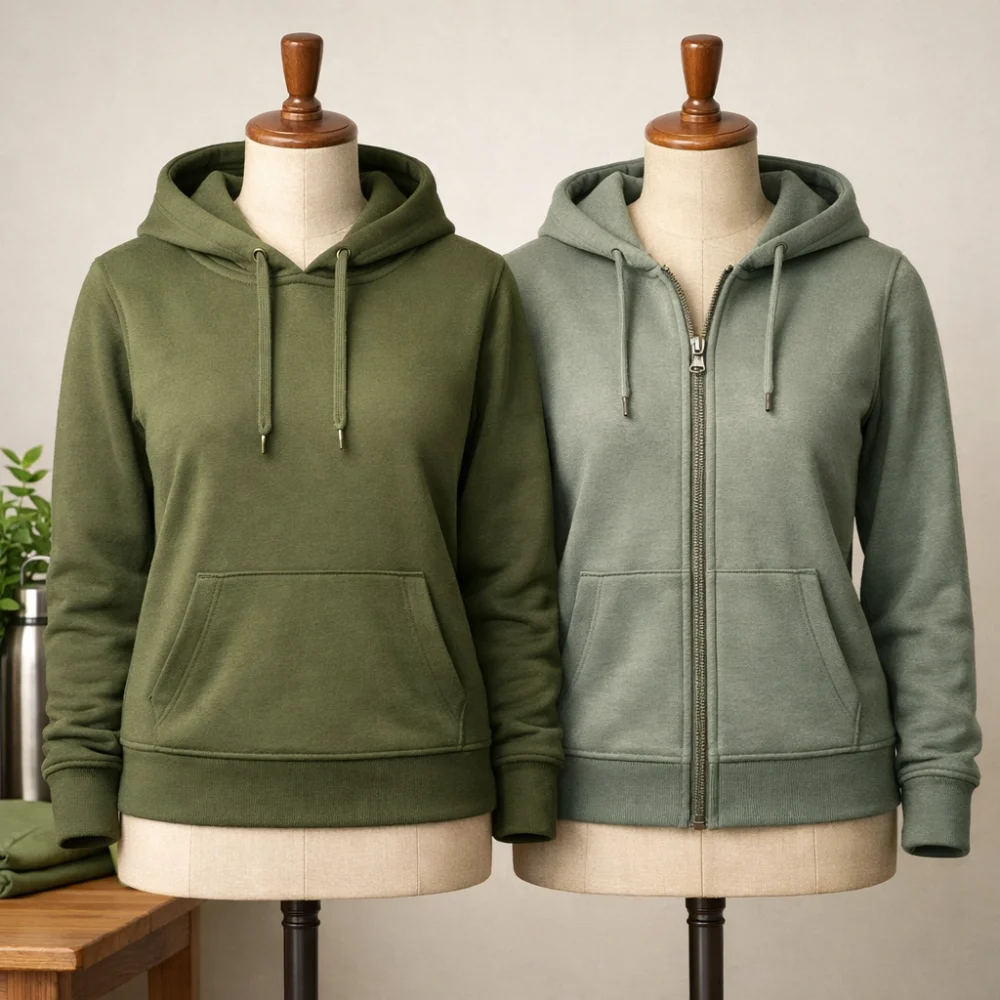
A pullover has an uninterrupted front, while a zip-up can be opened or closed to suit your preference and outfit. A zip adds a fastening to consider, and its position may affect how the hoodie sits under another garment. Check the product description and images to confirm the construction rather than assuming all hoodies share the same details.
Consider length and layering
Standard, longline and oversized descriptions can indicate different coverage or proportions, but labels alone do not guarantee how a garment will fit you. Compare the measurements and fit notes with clothes you already find comfortable. If you plan to wear a jacket over the hoodie, consider whether the combined layers will feel comfortable and allow you to move freely.
Check the fabric and care details
Fabric composition can help you compare feel and likely care requirements, but a material name by itself does not establish warmth or weather resistance. Read the stated composition and care instructions, and look for any lining or finish only if it is explicitly described. Specifications vary by model, so always check the individual product page before buying.
Look at practical design details
Hood shape, pocket arrangement, cuffs and fastening details can affect everyday convenience and how the garment feels. Decide which of these matter to you, then confirm they are present in the product information. Do not assume that a hood or a particular pocket style is included just because it appears on another hoodie.
Common hoodie styles
- Pullover hoodies: A simple choice if you prefer a continuous front without a full-length opening. They may be less convenient if you want to change how open the garment is while wearing it.
- Zip-up hoodies: Useful if you prefer an opening at the front or want to wear the garment open. Check the fastening details and how the front fits beneath other layers.
- Oversized or longline styles: May suit someone looking for a roomier feel or more coverage. The proportions can differ between designs, so check measurements and fit notes.
- Fleece-described hoodies: The term can signal a fabric or lining description, but does not by itself confirm a particular warmth level. Check the stated materials and construction.
Match the hoodie to your needs
- For layering beneath a jacket: Prioritise a fit that leaves comfortable room for the layers you plan to wear, and consider whether a pullover or zip front suits the combination.
- For relaxed everyday wear: Compare the cut, length and details you will use, such as pockets, rather than choosing by a style label alone.
- For a gift: Check the recipient’s preferred fit and the garment’s size guide. A relaxed or oversized description does not guarantee a particular fit across different designs.
- For a specific outdoor setting: Treat the hoodie as one clothing layer unless the product information clearly states otherwise. Consider whether you also need a separate layer suited to the conditions.
Mistakes and misunderstandings to avoid
- Assuming all hoodies fit alike: Cuts and measurements vary. Use the individual size guide and fit notes to make a more informed choice.
- Choosing by a material label alone: A fabric description does not establish warmth, weather resistance or suitability for every activity. Check the full product information.
- Expecting a hoodie to replace outerwear: A hood does not mean the garment is made to protect against rain or wind. Check for explicit claims and choose other clothing layers where needed.
- Ignoring care instructions: Different fabrics may have different care requirements. Read these before choosing, particularly if ease of care is important to you.
- Assuming a named fit describes exact measurements: Terms such as oversized and longline are useful clues, not a substitute for checking dimensions and fit guidance.
Safety and suitability
Choose a hoodie that feels comfortable for its intended use and does not restrict the movement you need. For outdoor wear, consider the conditions and whether additional clothing is needed; a hoodie should not be assumed to provide protection from weather unless the product information explicitly supports that use.
Care and storage
Follow the care instructions for the individual garment, since washing and drying guidance can depend on its materials and construction. Check any stated instructions before buying if you have particular laundry requirements. Store the hoodie clean and dry in a way that suits the space available and the garment’s care guidance.
A simple buying process
- Decide where you will wear the hoodie and whether it will be a standalone top or a layer.
- Choose the style that suits you, such as a pullover or zip-up, and decide how much room or coverage you prefer.
- Compare fit notes, measurements, fabric information and practical details such as pockets.
- Consider the trade-offs: a roomier cut may be more comfortable over other clothing, while a closer cut may suit layering beneath it.
- Read the individual product information, including care instructions, before making your choice.
Buyer checklist
- Does the style match how you plan to wear the hoodie?
- Have you checked the size guide, fit notes and available measurements?
- Will the fit and length work with the layers you expect to wear?
- Have you checked the stated fabric composition and care instructions?
- Are the hood, pockets and fastening details you want clearly described?
- Are you relying only on weather or warmth claims that the product information actually makes?
Frequently asked questions
Is a pullover or zip-up hoodie better for layering?
Either can work, depending on the fit and the other clothes you plan to wear. A zip-up has an opening at the front, while a pullover does not; compare the product’s measurements and consider how the front will sit under a jacket.
How can I choose the right hoodie size?
Use the individual size guide and fit notes, and compare any garment measurements with a similar item you own. Consider whether you want room for another layer rather than relying on the size label alone.
Does a fleece hoodie guarantee extra warmth?
No. The word fleece does not establish a specific warmth level. Check the product’s fabric and construction details, and consider how you intend to layer it.
Can I wear a hoodie as an outdoor jacket?
A hoodie may work as a clothing layer, but it should not automatically be treated as weatherproof outerwear. Check whether the product information explicitly describes weather protection and choose layers suited to your conditions.
What should I check when buying a hoodie as a gift?
Confirm the recipient’s preferred fit, style and length if possible, then consult the size guide for the individual garment. Care instructions and fabric preferences can also help narrow the choice.
Are oversized and longline hoodies the same?
Not necessarily. Oversized usually describes a roomier look or cut, while longline refers to additional length, but descriptions can vary. Check the measurements and fit information to understand the proportions of a particular garment.


