

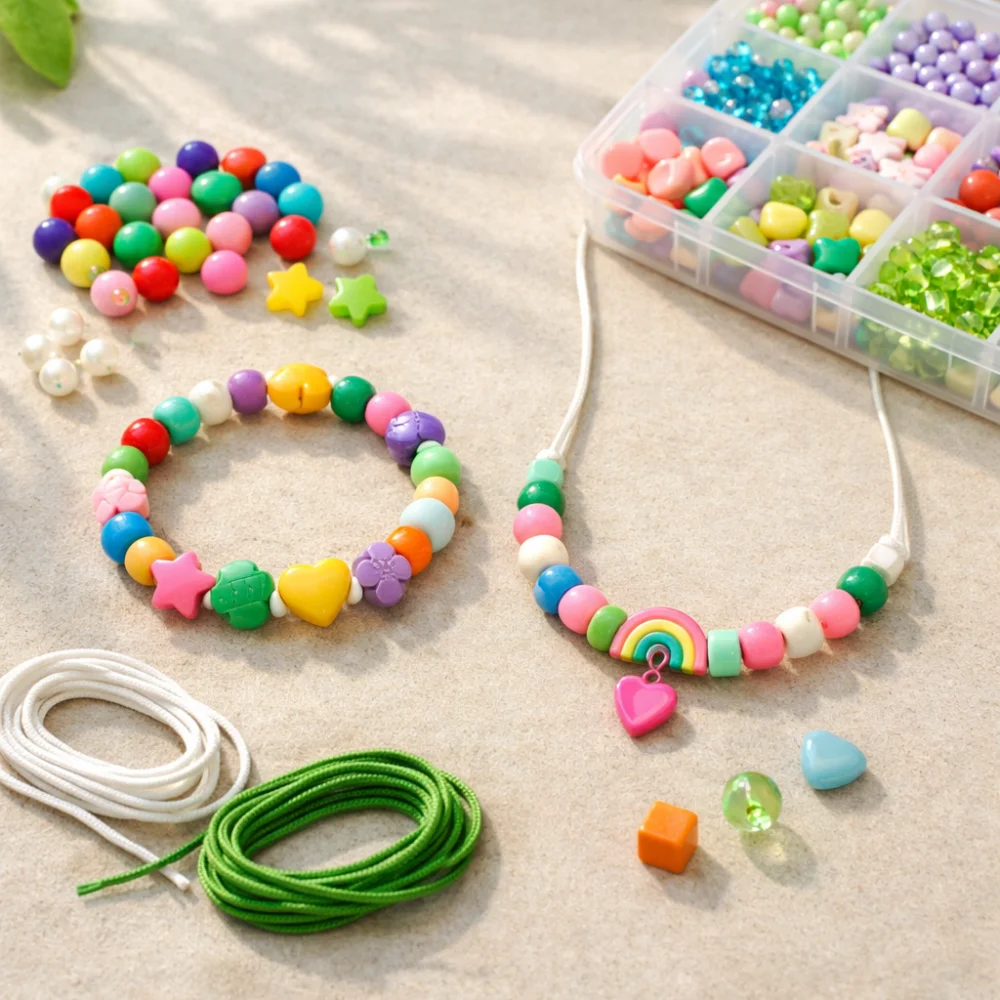
Kids jewellery kits bring together materials and instructions for making items such as bracelets, necklaces or other simple accessories. They can suit children who enjoy hands-on creative projects, or make a gift for someone who likes choosing colours and putting small pieces together.
The main choice is not simply how many pieces a kit contains. Consider the intended projects, the child’s experience and dexterity, what the set includes, and whether an adult will need to help. Kits differ, so check the individual product information rather than assuming every set offers the same materials or finished projects.
What should you look for in a kids jewellery kit?
Start with a kit that makes a clearly described type of jewellery the child will want to create, at a level they can manage. Then check the listed contents, instructions and suitability guidance. A larger assortment may offer more ways to experiment, but a focused set can be easier to understand and keep organised.
Compare the main buying factors
| Feature | What it means | Why it matters | What to check |
|---|---|---|---|
| Projects | The types of jewellery the kit is intended to make | Helps match the activity to the child’s interests | Which finished items and project ideas are described? |
| Components | The beads, cords, charms or other listed materials supplied | Determines what the child can make and how much variety is offered | Read the contents list and note whether any project materials are not included |
| Instructions | Guidance supplied for making the projects | Clear guidance can make the activity easier to follow independently or together | Check what format of instructions is specified and whether the projects appear suitable for the child |
| Difficulty and suitability | The level of handling and concentration the activity may involve | Small components or intricate tasks may need more support | Read the stated age guidance and consider the child’s dexterity and experience |
| Organisation | How the components are presented or stored, where specified | Can affect how manageable the activity is before and after use | Check whether a case or other storage is explicitly included |
Choose by project, contents and ease of use
Match the projects to the child’s interests
Some kits focus on bracelets, while others describe necklaces, mixed projects or charm-based designs. Look at the project examples rather than relying on a broad “jewellery kit” label. A child keen to make one particular kind of accessory may prefer a focused set; someone who likes trying different designs may value a wider range of project ideas.
Read the contents list carefully
Compare the kinds of materials and components named in the product information, not just a headline piece count. A high count does not by itself show how many finished projects can be made or how varied they will be. Check whether cords, fastenings or other items needed for the described projects are included where this information is provided.
Consider the making process
Threading, arranging and securing small components can call for different levels of patience and hand control. If the child is new to this kind of activity, look for clear project guidance and consider whether an adult will be available to help. An experienced maker may be more interested in variety or freedom to create designs of their own.
Specifications vary by model, so always check the individual product page before buying.
A kit’s project focus, included components and instructions can help you judge whether its making activity fits the child.
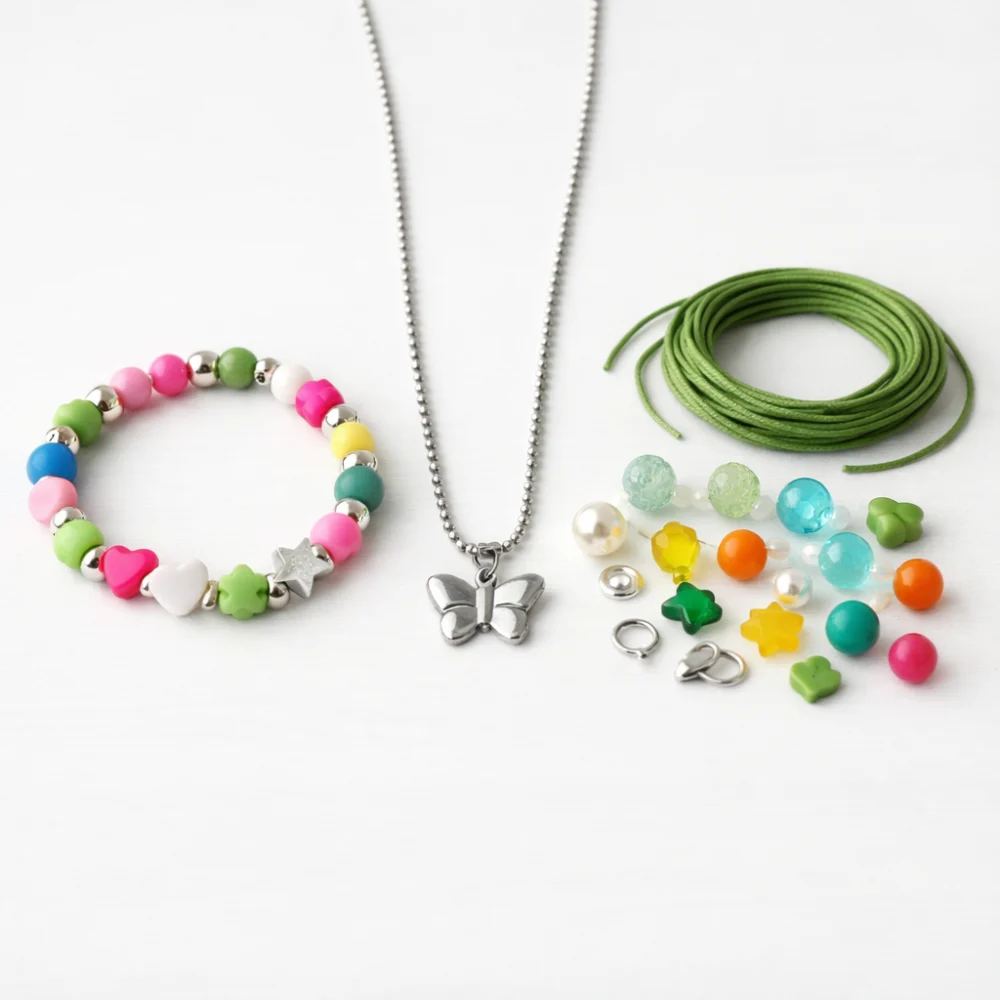
Types of kids jewellery kits
- Bracelet-focused kits: Centre on making wrist accessories and may suit a child who has a particular interest in bracelets. Check how the described designs are made and what components are included.
- Necklace or mixed-project kits: May offer a different finished project or more than one kind of accessory. The contents and project instructions determine how much variety the set actually provides.
- Bead and charm kits: Emphasise choosing and combining decorative components. They can appeal to children who enjoy customising designs, but the number and type of components should be checked in the listing.
- Themed or presentation-led kits: Some sets use a particular look or presentation. Consider whether the theme and proposed activity suit the recipient, rather than treating packaging or a theme as a substitute for checking the contents.
Suitability for different needs
For a first jewellery-making activity, prioritise understandable instructions, a manageable project and suitability guidance that fits the child. For a child who already enjoys crafts, the freedom to combine components or the range of described projects may matter more. If the kit is intended as a shared activity, consider whether the projects allow for adult support and whether the components are practical to handle together.
Common buying mistakes
- Choosing by piece count alone: A large count does not guarantee a better fit. Compare the listed component types and the projects they support.
- Assuming the pictured accessories are all included: Product images can show examples or styling. Use the written contents list to establish what the kit supplies.
- Overlooking the making experience: A design may look appealing but still involve small pieces or fiddly steps. Consider the child’s dexterity, patience and need for help.
- Expecting instructions to cover every design: Check what guidance is described and whether the set is intended for following set projects, experimenting, or both.
- Forgetting where the components will go afterwards: Check whether storage is included and think about a suitable place to keep small parts together.
Safety and suitability
Check the maker’s stated age guidance and consider the child’s individual abilities, particularly where a kit contains small components. Keep suitability in mind if younger children may be nearby, and provide adult supervision where appropriate. If material sensitivities are a concern, check whether the product information identifies the relevant materials; do not assume that all kits use the same components.
Care and storage
Follow any care guidance supplied with the kit, as components and finished pieces may differ between sets. Keeping small parts together after the activity can make them easier to find and reduce the chance of losing them. If storage is important, verify whether a container is included rather than assuming it comes with the kit.
A simple buying process
- Decide which jewellery-making projects are most likely to interest the child.
- Choose between a focused project and a kit describing several kinds of activity.
- Compare listed components, instructions and any stated storage provision.
- Consider the child’s experience, dexterity and likely need for adult help.
- Read the individual product information for suitability guidance and included contents before choosing.
Buyer checklist
- Are the described projects a good match for the child’s interests?
- Have you checked the listed components rather than relying on a piece count or image?
- Are the instructions and level of making likely to suit the child?
- Have you read the stated suitability guidance and considered supervision?
- Is storage included, if that matters to you?
- Have you checked material information if sensitivities are a concern?
Frequently asked questions
What should a beginner look for in a kids jewellery kit?
Look for a clearly described project, understandable guidance and suitability information that fits the child. A simpler, focused activity may be easier to approach than a set chosen mainly for a high component count.
Are all kids jewellery kits bead-based?
No. The project and components vary by kit. Read the product description to see whether it focuses on beads, charms, cords or another stated approach.
How can I tell what is included?
Use the written contents list as your main reference and check which materials are specified. Do not assume that every item shown in a product image is part of the set.
Will a child be able to make the jewellery without help?
That depends on the child and the kit’s projects and instructions. Consider the child’s dexterity and experience, and check the maker’s suitability guidance before deciding whether adult help will be needed.
What if the child has material sensitivities?
Check the product information for details about the materials used. If the relevant information is not clear, do not assume the components will be suitable for that child.
Should I choose a kit with more pieces?
Not necessarily. The usefulness of the contents depends on the projects, the variety of components and whether the child can comfortably use them. Compare what the pieces are for, rather than treating a larger count as a guarantee of a better fit.


