

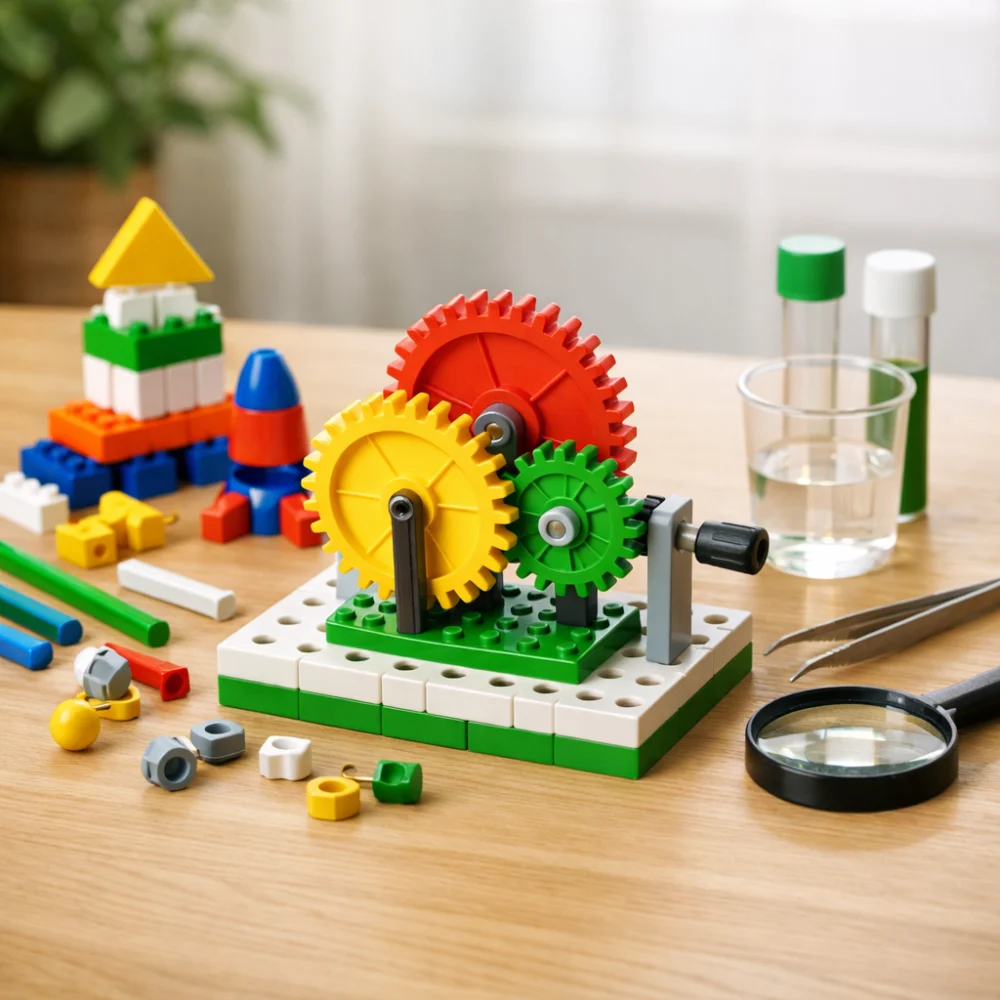
STEM kits bring together activities related to science, technology, engineering or mathematics. For children, that might mean exploring a concept through a practical project, building something or experimenting with components.
The right choice depends less on a broad label such as “STEM” and more on the activity itself: what the child will make or investigate, how much guidance is included and whether the project suits their interests and experience.
What should you look for in a STEM kit?
Start with the project description and choose a kit whose central activity genuinely interests the child. Then check the stated age guidance, what is included, how instructions are presented and whether any extra components or adult support may be needed. A more involved project can offer greater scope to explore, but may be frustrating if it asks for more independence than the child is ready for.
Compare the main buying factors
| Feature | What it means | Why it matters | What to check |
|---|---|---|---|
| Project focus | The main activity, such as building, experimenting or exploring a scientific idea. | Interest in the activity is often a better guide than the STEM label alone. | Read what the child will actually do and whether the project suits their interests. |
| Age guidance | The age suitability stated for the particular kit. | It can help indicate the expected level of reading, coordination or independence. | Check the product information and consider the child’s experience as well as age. |
| Instructions and support | How the activity is explained and whether help from an adult may be expected. | Clear guidance can make a project easier to approach; some children may enjoy a more open-ended challenge. | Look for information about instructions, supervision or adult involvement. |
| Included components | The parts and materials supplied for the activity. | An appealing project may depend on particular parts being present or on additional items being sourced separately. | Check the contents and any stated requirements before buying. |
| Power and consumables | Whether the activity uses power or materials that may be used up. | These requirements can affect when and how the kit can be used, and whether it can be repeated. | Check whether batteries, extra materials or other items are required, if applicable. |
| Repeat use | Whether the activity can be revisited or adapted after the first project. | A kit that supports more than one attempt may suit a child who likes to keep experimenting. | Look for details about repeat projects, replacement materials or reusable components. |
Choosing a kit: the details that matter
Match the activity to the child’s interests
STEM is a broad term, not a guarantee that every kit will cover every subject. One kit may centre on a build, while another may focus on experimenting with a scientific idea. Read the specific activity description and choose something the child is likely to want to explore, rather than relying on a high project count or a broad educational claim.
Think about challenge and independence
Check the stated age guidance, the complexity described and how much reading or following instructions the activity appears to involve. A child who enjoys figuring things out may welcome a less prescribed project; someone new to this kind of activity may appreciate clearer, more guided instructions. Specifications vary by model, so always check the individual product page before buying.
Check what the kit requires
Look at the contents and any stated extra requirements. If the activity uses batteries, power, materials that are consumed or household items, confirm what is and is not included. This helps avoid choosing a project that cannot be started as expected or may require additional purchases.
Consider how the activity fits into home life
Some projects may need a clear surface, room to assemble parts or adult participation; others may be simpler to put away between sessions. Check the product information for any stated setup or space considerations, and think about whether the activity suits the time and support available at home.
Types of STEM kit activities
Broadly, kits may focus on construction, simple mechanisms, electronics or practical science activities. These are useful ways to compare the kind of experience on offer, not a promise that any particular kit contains specific parts or covers multiple subjects. Check the individual description for the actual project and requirements.
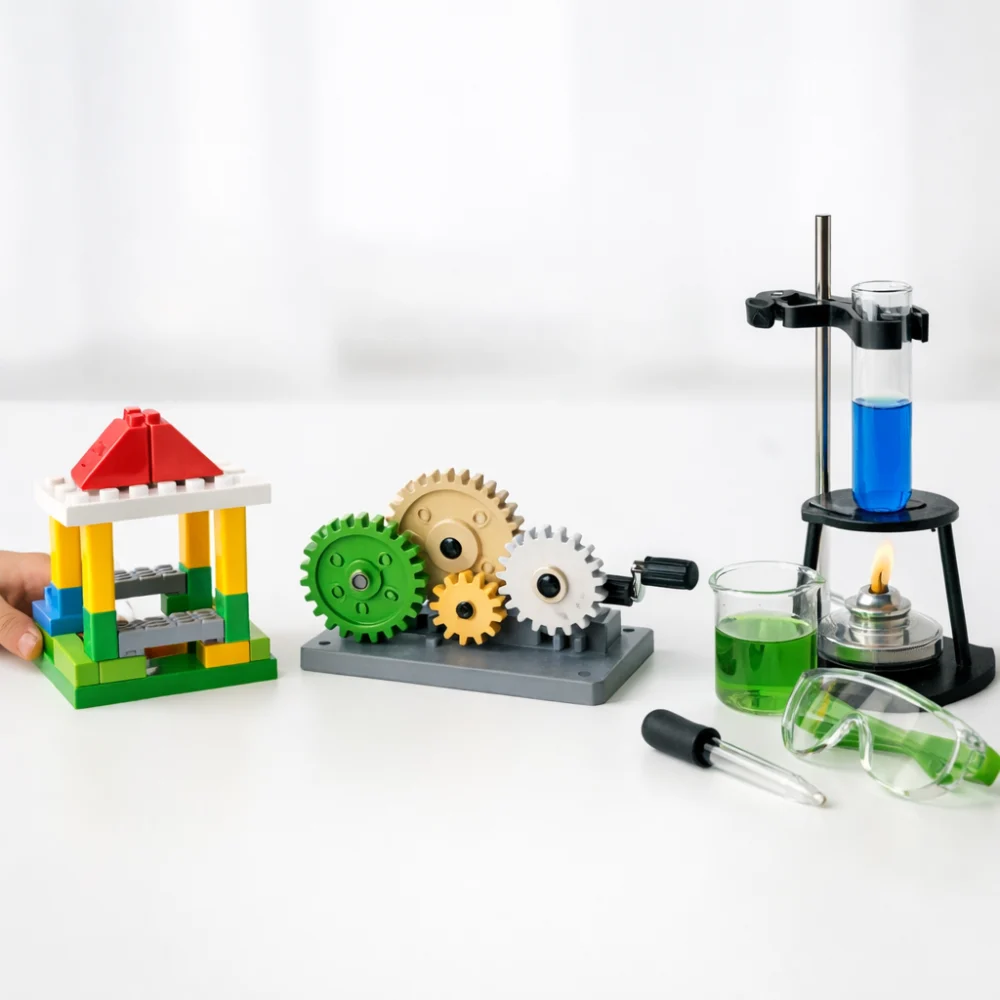
A building-focused activity may appeal to a child who likes assembling and testing ideas, while an experiment-led kit may suit one who prefers observing and comparing outcomes. A kit involving electronic or powered elements may have additional component or power requirements, so check these carefully. The main limitation in each case is that a child’s interest in the subject does not necessarily mean the project’s difficulty or format will suit them.
Choose for the child’s needs
| If the child… | Look for… | Keep in mind… |
|---|---|---|
| Is new to practical projects | Clear instructions and an activity that appears manageable from its description. | Check the stated age guidance and whether adult help is expected. |
| Enjoys making and assembling things | A project where building or constructing is central. | Confirm what components are included and whether anything else is required. |
| Likes investigating how things work | An experiment or exploration-led activity with a clear description of what it involves. | Check whether materials are reusable or may be used up. |
| Has already tried similar activities | A project that appears to offer a suitable next challenge or room to explore ideas. | Do not assume that a higher project count means greater depth; compare the instructions and activities described. |
| Will use the kit with an adult | An activity that the child and adult can approach together. | Check the product information for any stated supervision or support expectations. |
Common buying mistakes to avoid
- Choosing on the STEM label alone: The label does not explain the activity. Read the project description and match it to the child’s interests.
- Treating a high activity count as a measure of quality: Counts do not tell you how involved each activity is. Check what the activities involve and how they are explained.
- Assuming everything needed is included: Contents can differ. Look for stated requirements, including power or additional materials where relevant.
- Ignoring guidance and support: An interesting project may still be a poor fit if its instructions or expected independence do not suit the child. Check age guidance and any information about adult help.
- Assuming every kit can be reused in the same way: Some activities may use materials up or depend on particular components. Check the product information for repeat-use details.
Safety and suitability
Use the age guidance and suitability information provided for the individual kit, and consider whether the child will need adult support. Check the product details for any stated cautions, supervision requirements or small components relevant to the intended user. Do not assume that all STEM kits have the same requirements or are suitable for every child.
Care, repeat use and storage
Before choosing, consider whether the kit’s parts can be kept together and whether the project uses materials that may need replenishing. If power or batteries are relevant, check the product information for its stated requirements. Storage and repeat-use needs vary by kit, so use the individual description rather than assuming that all components are reusable or that consumables are included.
A simple buying process
- Identify what kind of activity the child is most likely to enjoy.
- Use that preference to narrow the project type, such as building or experimenting.
- Compare the stated age guidance, instructions and expected level of independence.
- Check the contents and any stated requirements for power, extra materials or adult support.
- Weigh the project’s challenge and repeat-use details against what will suit the child and home.
- Review the individual product information before making a decision.
STEM kit buyer checklist
- Does the described project match the child’s interests?
- Is the stated age guidance suitable for the intended user?
- Are the instructions and expected level of adult support appropriate?
- Have you checked what components are included?
- Are any extra materials, batteries or other requirements stated?
- Does the project’s level of challenge and potential for repeat use suit the child?
Frequently asked questions
What does STEM mean on a kit?
STEM refers to science, technology, engineering and mathematics. The label alone does not tell you which area a particular kit focuses on, so check the activity description to see what the child will actually do.
How do I choose a STEM kit for a child?
Start with the child’s interests, then compare the project, age guidance, instructions and any stated requirements. Consider whether the activity calls for adult help or experience the child may not yet have.
Are STEM kits suitable as independent activities?
That depends on the individual kit and the child. Check the product information for guidance about age suitability, instructions and adult involvement rather than assuming that all projects are designed for independent use.
Do STEM kits include everything needed?
Contents and requirements vary. Review the individual product details for the listed components and check whether batteries, materials or other items are required separately.
Can a STEM kit be used more than once?
Some activities may be repeatable, while others may use up materials or depend on particular components. Check the product description for information about repeat projects and any stated consumables.
Does a higher number of activities mean a better kit?
Not necessarily. A count does not show how detailed, challenging or engaging each activity is, so compare the described projects and instructions with the child’s interests and experience.


